
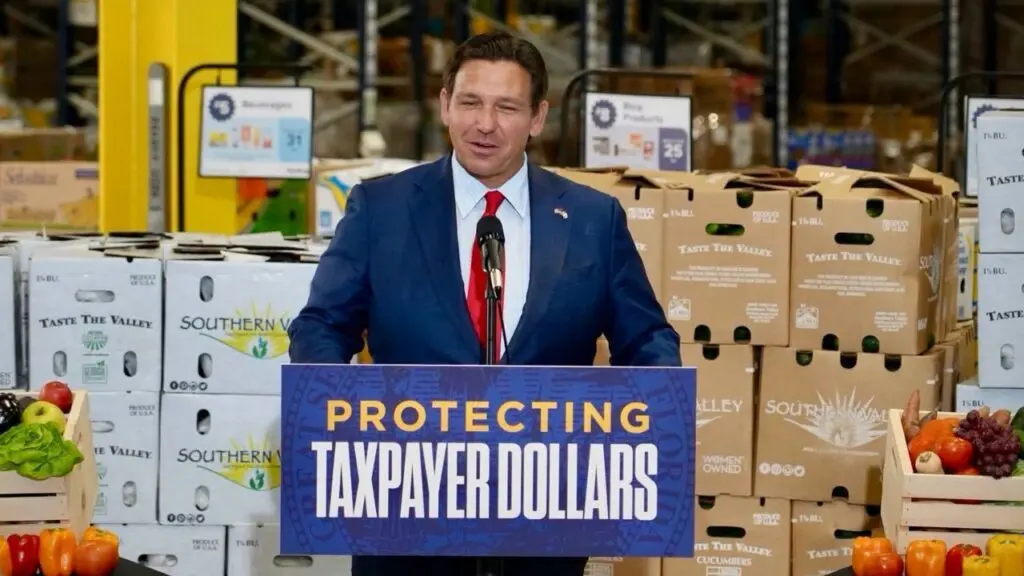

TAMPA, Fla. — In a landmark policy shift that positions the Sunshine State at the vanguard of national welfare reform, Florida has become the first state in the nation to overhaul its Temporary Assistance for Needy Families (TANF) plan. Announced by Governor Ron DeSantis, the new measures prohibit the direct purchase of a wide-ranging catalog of luxury, entertainment, and non-essential goods and services using taxpayer-funded cash assistance.
The initiative marks a significant escalation in the state’s multi-year effort to tighten accountability, maximize government transparency, and refocus public safety-net programs on foundational survival needs and pathways to self-sufficiency. By drawing a sharp legal line between essential emergency support and discretionary spending, the policy sets a bold precedent that other conservative states are already watching closely.
Executive Overview: Redefining the Safety Net
At the heart of the policy changes is Florida’s Temporary Cash Assistance (TCA) program, the state’s vehicle for distributing TANF benefits to eligible low-income families via electronic benefit transfer (EBT) cards. According to state demographic and financial data, the average household enrolled in the TCA program receives roughly $250 per month—a modest stipend designed to bridge critical financial gaps during periods of acute economic hardship.
Under the newly amended TANF State Plan, recipients will face strict transaction-level prohibitions when using their EBT cards. While the program has historically targeted specific venues (such as casinos and adult entertainment facilities), the updated framework dives down to the product and service level. It specifically bans the purchase of:
- Tobacco, nicotine, and vaping products
- Alcohol, drugs, and intoxicants
- Pornography and adult media
- Video games and entertainment tickets
- Theme park admissions
- Entertainment subscriptions
- Tattoos, body modification, and piercing services
- Spa treatments and tanning services
- Psychic, astrological, or fortune-telling services
State officials emphasize that these restrictions do not dismantle the program’s core mission. Instead, they reinforce it. TCA funds remain explicitly designated for critical, life-sustaining expenses: food, clothing, housing, utilities, essential household goods, and personal care products. Furthermore, the broader TANF budget will continue to support vital secondary initiatives, such as Florida’s Relative Caregiver Program, which currently provides financial assistance to relatives caring for more than 4,000 vulnerable children statewide.
Detailed Chronology: The Evolution of Florida’s Welfare Restrictions
To understand the magnitude of Governor DeSantis’s latest announcement, it is necessary to examine the incremental tightening of Florida’s public assistance programs over the past decade.
The Foundation: Venue-Based Restrictions
Long before the implementation of product-level bans, Florida pioneered efforts to prevent public welfare dollars from being funneled into vice industries. State law long prohibited the use of EBT cards for alcohol purchases and established strict geofencing and merchant-category blocks. Transactions were automatically flagged and rejected at establishments deemed incompatible with the spirit of public assistance, including:
- Casinos and gaming facilities
- Commercial bingo halls
- Pari-mutuel wagering tracks
- Slot machine parlors
- Adult entertainment venues
While these merchant-level blocks prevented cardholders from physically swiping their EBT cards inside strip clubs or casinos, they left a glaring loophole: recipients could still purchase non-essential luxuries, entertainment items, and vice products at standard retail stores, grocery chains, and online outlets using the same cash assistance funds.
The Healthy SNAP Precedent (April 2026)
The groundwork for the current TCA overhaul was laid earlier this year with the rollout of Florida’s "Healthy SNAP" initiative. Taking effect in April 2026, the state expanded its nutritional welfare oversight by barring Supplemental Nutrition Assistance Program (SNAP) benefits from being used to purchase items deemed detrimental to public health.

Under Healthy SNAP guidelines, recipients were barred from buying soda, energy drinks, candy, and certain ultra-processed prepared desserts. This aggressive nutritional stance signaled a philosophical shift within the executive branch: public assistance is not merely about providing purchasing power, but about actively promoting health, fiscal responsibility, and long-term well-being.
The 2026 TANF State Plan Overhaul
Building directly on the momentum of the Healthy SNAP initiative, Governor DeSantis announced that Florida would formally amend its overarching TANF State Plan. By taking this step, Florida becomes the undisputed pioneer among all fifty states in applying granular, product-specific restrictions directly to temporary cash welfare benefits.
The implementation process will not happen overnight. State administrators have outlined a phased rollout. The new restrictions will launch initially through major retailers authorized to accept SNAP benefits, gradually incorporating sophisticated, transaction-level software controls across all approved merchants in the state.
Supporting Context & Metrics: Analyzing the Data
To evaluate the impact of these changes, policymakers and economists must examine the quantitative reality of Florida’s welfare landscape.
Financial Scope of the TCA Program
With an average disbursement of approximately $250 per month per household, Florida’s TCA program is designed to be a temporary bridge, not a permanent lifestyle support system. Given the modest size of the monthly stipend, state auditors and legislative analysts have long argued that every single dollar must be optimized for survival essentials. When a limited welfare grant is diverted toward theme park tickets, video games, or spa treatments, recipient families are left structurally vulnerable regarding basic shelter, nutrition, and utility payments.
Broader Integration: Workforce Development
Financial assistance without a roadmap to employment often creates generational cycles of dependency. Recognizing this economic reality, the state is coordinating its welfare reforms directly with workforce development initiatives.
According to CareerSource Florida President and CEO Adrienne Johnston, the state is aggressively scaling its efforts to connect cash assistance recipients with viable employment pipelines. These include:
- Customized job training programs
- Industry-recognized professional credentials
- Registered apprenticeships
- Direct job placement services
By pairing strict consumption limits with aggressive upward mobility programs, the state aims to transform temporary assistance from a passive holding pattern into an active springboard toward economic independence.
Official Statements and Political Reactions
The policy announcement has ignited a robust national debate, drawing praise from fiscal conservatives and intense scrutiny from welfare advocacy groups.

Governor Ron DeSantis framed the policy as a moral and fiduciary imperative for the state government.
"Taxpayer-funded assistance should help families put food on the table, keep the lights on, purchase clothing, provide for their children and overcome barriers on the path toward independence," DeSantis declared during his policy address. "We will continue supporting Floridians who genuinely need assistance, while working to improve accountability and transparency so that these programs operate as intended."
This sentiment was echoed by Department of Children and Families (DCF) Interim Secretary Kate Williams, who emphasized that administrative tightening does not compromise the compassionate intent of the safety net.
"Temporary Cash Assistance is designed to provide families with flexibility during times of need, and these commonsense changes preserve that flexibility while strengthening the integrity of the program," Williams noted.
CareerSource CEO Adrienne Johnston reinforced the administrative alignment between welfare oversight and labor market integration, stating:
"These efforts help ensure temporary assistance serves as a bridge to greater stability, independence, and opportunity for Florida families."
Conversely, critics and social welfare advocates have raised concerns over the administrative complexity of enforcing product-level bans at point-of-sale registers. Some civil rights organizations and anti-poverty groups argue that overly rigid restrictions can stigmatize low-income shoppers and create bureaucratic hurdles for families grappling with complex, multi-faceted crises. However, state officials maintain that the software controls will operate seamlessly behind the scenes, protecting program integrity without publicly embarrassing vulnerable individuals.
Future Outlook: What’s Next for Florida and the Nation?
As Florida implements its phased rollout of the revised TANF State Plan, all eyes will be on the Sunshine State to measure the practical success and administrative feasibility of product-level welfare restrictions.
- Technological Implementation: The primary short-term challenge will involve coordinating with major national retailers, regional grocery chains, and corner stores to ensure point-of-sale systems can accurately segregate approved versus prohibited items during EBT cash withdrawals and card swipes.
- National Ripple Effects: Florida has frequently acted as a laboratory for conservative governance and administrative reform. If the state successfully curbs non-essential spending without destabilizing low-income families—and simultaneously boosts employment transition rates through CareerSource integration—other Republican-led states are expected to draft mirror legislation.
- Long-Term Program Evaluation: Economists and state legislators will closely monitor longitudinal data regarding household stability, duration of time spent on TCA, and re-application rates. The ultimate metric of success will not simply be the elimination of luxury purchases, but whether the reformed safety net successfully accelerates families out of poverty and into permanent self-reliance.
By boldly stepping forward as the first state in the nation to enact these comprehensive curbs, Florida has fundamentally redefined the social contract governing public assistance—demanding absolute fiscal discipline from recipients while doubling down on the ultimate goal of welfare policy: helping citizens achieve true, lasting independence.

0 Comments