

Executive Overview
In an aggressive posture of preemptive safety, Florida A&M University (FAMU) administration officially announced a sweeping campus-wide shutdown beginning Tuesday, September 24, 2024, in direct response to the escalating trajectory of Tropical Cyclone #9. Forecasted by meteorologists to intensify into a major, catastrophic hurricane prior to making landfall along the Florida Big Bend, the impending weather system poses an existential threat to the safety and security of the university’s student body, faculty, and administrative staff.
The emergency protocols initiated by FAMU leadership reflect a broader statewide sense of urgency. With early impacts predicted to buffet the region as early as Wednesday night and persist through Friday, September 27, university officials elected to prioritize human life over academic continuity. Effective at 12:15 p.m. on Tuesday, all classes were abruptly canceled, kicking off a sequence of coordinated facility closures that encompasses the main campus, auxiliary educational branches, on-campus childcare facilities, and high-profile weekend collegiate traditions.
As the Florida Panhandle and the state’s west coast brace for what could be historic storm surges and devastating hurricane-force winds, FAMU’s leadership is navigating the immense logistical challenges of evacuating, securing, and pausing operations across a sprawling academic ecosystem. This comprehensive report details the operational chronology of the shutdown, analyzes the meteorological context of the storm, relays critical directives from university officials, and outlines the broad socio-economic and logistical ripple effects hitting Tallahassee and the wider academic community.
Detailed Chronology of the Emergency Response
The swiftness with which Florida A&M University transitioned from standard daily operations to an absolute emergency shutdown underscores the rapidly changing nature of modern tropical storm forecasting.
Tuesday, September 24: The Preemptive Pivot
- 12:15 p.m.: Academic instruction came to an abrupt halt. FAMU leadership ordered the immediate cancellation of all classes to give students, particularly those commuting or relying on public transportation, sufficient daylight and clear roads to secure their living arrangements or evacuate the path of the storm.
- 5:00 p.m.: General campus administrative operations remained partially functional to allow essential business to conclude, but this marked the definitive threshold. By early evening, non-essential personnel were instructed to vacate university grounds. Simultaneously, the FAMU Educational Research Center for Child Development (ERCCD) locked its doors for the week, ensuring that the youngest members of the FAMU community were safely accounted for.
Wednesday, September 25, through Friday, September 27: Full Suspension
- During this 72-hour window, the entire university sits in a state of suspended animation. Academic buildings, libraries, administrative offices, and recreational centers are completely closed to the public and general student body.
- Only designated essential personnel—individuals tasked with facilities maintenance, campus safety, emergency management, and critical infrastructure oversight—are permitted on site, reporting directly to their respective supervisors as weather conditions permit.
- Furthermore, the FAMU Developmental Research School (K-12) aligned with the university’s safety posture, shutting its doors on Wednesday and maintaining closures through the remainder of the week to protect students, teachers, and administrative staff.
The Canceled Weekend Showcase
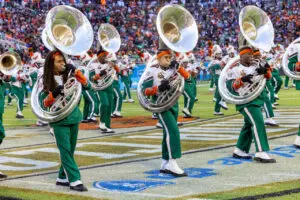
Beyond day-to-day academics, the hurricane’s timing dealt a heavy blow to the university’s social and community calendar. High-profile events slated for the upcoming weekend—including the Fall Preview recruitment event, the eagerly anticipated FAMU home football game, and the university’s signature Parents and Family Weekend—have been formally postponed. University administrators noted that these milestone gatherings will be rescheduled for later in the academic year, though no concrete dates have been set as recovery timelines remain entirely dependent on the storm’s aftermath.
Supporting Context & Meteorological Metrics
To fully grasp the gravity of FAMU’s administrative decisions, one must examine the meteorological data driving state and local emergency declarations. Tropical Cyclone #9 entered the Gulf of Mexico basin with atmospheric conditions exceptionally favorable for rapid intensification.
The Science of Rapid Intensification
Warm sea surface temperatures, low wind shear, and high moisture content in the middle troposphere created a meteorological powder keg. Forecasters at the National Hurricane Center (NHC) tracking Tropical Cyclone #9 warned that the system possessed the structural characteristics necessary to transform into a major hurricane (Category 3 or higher on the Saffir-Simpson Hurricane Wind Scale) prior to impact.
[Warm Gulf Waters] + [Low Wind Shear] + [High Atmospheric Moisture]
       │
       ▼
[Rapid Intensification]
       │
       ▼
[Major Hurricane Threat to Florida Big Bend & Panhandle]
Unlike slow-moving, well-defined systems that offer predictable trajectories days in advance, Tropical Cyclone #9 presented a unique forecasting nightmare during its initial stages. Because the system lacked a clearly defined, consolidated center of circulation during its developmental phase, numerical weather prediction models struggled to pinpoint the exact point of landfall. This structural uncertainty amplified the risk profile for the entire Florida Big Bend, Panhandle, and west coast regions.
Historical Precedents and Vulnerability
The Florida Big Bend and Panhandle regions are uniquely vulnerable to storm surge due to the shallow bathymetry of the continental shelf in the eastern Gulf of Mexico. When a major hurricane pushes ashore in this geographic corridor, it acts as a massive hydrodynamic piston, shoving walls of seawater miles inland. For Tallahassee and FAMU—situated just inland from the coast—the threats extend beyond coastal inundation to include:
- Catastrophic Wind Damage: Widespread structural failures, ripped roofs, and shattered windows caused by sustained winds exceeding 111 mph.
- Prolonged Power Outages: Downed transmission lines and catastrophic damage to regional electrical grids, potentially leaving hundreds of thousands without electricity for weeks.
- Severe Inland Flooding: Torrential rainfall totals ranging from 6 to 15 inches, overwhelming local drainage basins, creeks, and urban stormwater management systems.
Official Statements and Administrative Directives
In moments of crisis, institutional leadership must project clarity, calm, and absolute authority. FAMU’s administration met this standard by issuing explicit directives aimed at minimizing confusion and safeguarding the university community.
Academic Flexibility and Compassion
Recognizing that students were thrust into a state of sudden upheaval, university provost and academic leadership issued strict guidelines to the faculty. All academic deans and professors were formally instructed to work closely with students, exercising maximum flexibility regarding assignments, exams, and project deadlines disrupted by the storm. Recognizing that students may be forced to evacuate to areas with poor internet connectivity or face power outages lasting days, the administration emphasized that academic penalties for storm-related disruptions will not be tolerated.
Communication Channels and Real-Time Alerts
FAMU’s Office of Communications stressed the importance of relying exclusively on verified institutional channels for ongoing updates. The primary transmission vehicles for emergency instructions include:
- FAMU Alert: The university’s mass notification system, capable of pushing urgent text messages, emails, and phone calls to registered students and staff.
- Official Web Portal: Real-time updates hosted centrally at famu.edu.
- Social Media Outlets: Official university social media handles monitoring feed developments around the clock.
Preparedness Resources for the Community
Rather than merely instructing stakeholders to shelter, university leadership provided actionable guidance rooted in state emergency management protocols. Members of the FAMU community were directed to review their personal hurricane safety plans and utilize state resources via the official Florida Division of Emergency Management Portal.
The administration underscored foundational preparedness steps:
- Assemble Disaster Supply Kits: Ensuring a minimum of three days’ worth of non-perishable food, bottled water (one gallon per person per day), medications, and first-aid supplies.
- Secure Living Quarters: Bringing loose outdoor items indoors, clearing balconies, and taping or shuttering windows where applicable.
- Establish Communication Trees: Ensuring out-of-state family members know your location and emergency contact status if local cellular towers experience outages.
Future Outlook: Recovery, Resilience, and Rescheduling
As Tropical Cyclone #9 barrels toward its eventual rendezvous with the Florida coastline, Florida A&M University faces a complex and demanding recovery horizon. Once the storm passes and local authorities issue all-clear declarations, the university’s emergency management teams will pivot immediately from crisis response to damage assessment and recovery operations.
Assessing Infrastructure and Facilities
The physical plant of the university will undergo rigorous inspections before any general repopulation of the campus is permitted. Facilities management teams will systematically check for:
- Structural compromises to academic halls, residence dormitories, and athletic complexes.
- Downed electrical wires, fallen trees blocking roadways, and localized flooding hazards.
- Potability of campus water systems and integrity of backup generators.
The Ripple Effect on Academic and Athletic Calendars
Rescheduling the massive slate of postponed events—ranging from the high-stakes recruitment drives of Fall Preview to the deeply ingrained cultural traditions of a home football game during Parents and Family Weekend—will require extraordinary logistical choreography. University athletic directors, student affairs coordinators, and academic schedulers will spend the subsequent weeks working overtime to find alternative dates that do not overload the existing fall semester schedule.
Ultimately, FAMU’s response to Tropical Cyclone #9 serves as a masterclass in institutional readiness. By favoring a decisive, proactive shutdown over a reactive scramble, the university has once again demonstrated that the safety, health, and well-being of its students, faculty, and staff remain the absolute cornerstone of its institutional mission. As the storm makes its historic approach, the Rattler community stands unified in preparedness, resilience, and mutual support.

0 Comments