A routine political press appearance in Tampa, Florida, devolved into chaos on Wednesday when Health and Human Services (HHS) Secretary Robert F. Kennedy Jr. abruptly cut short a media availability alongside U.S. Senator Ashley Moody. The event—nominally organized to promote a federal child nutrition initiative at a local elementary school—was derailed by aggressive questioning from a foreign journalist regarding ethical controversies, regulatory decisions, and high-stakes political donations tied to the herbal supplement industry.
The abrupt termination of the press conference highlights the growing scrutiny facing the nation’s top health official. While federal authorities attempt to roll out new agricultural programs to replace terminated Biden-era initiatives, critics and reporters are increasingly training their lenses on the intersection of Kennedy’s personal political action committees, recent Department of Justice (DOJ) decisions, and lucrative corporate contributions.
Wednesday’s volatile 12-minute press conference not only exposed deep fissures regarding the administration’s sweeping overhaul of domestic food assistance programs, such as the Supplemental Nutrition Assistance Program (SNAP), but also dragged international attention toward unresolved questions about federal oversight of commercial wellness products.
Detailed Chronology: From School Visit to Abrupt Shutdown
Morning Promos and Policy Promotion
The day began with what administration handlers anticipated would be a standard, positive photo opportunity. Secretary Robert F. Kennedy Jr. and Senator Ashley Moody arrived at a public elementary school in Tampa to highlight the federal government’s newly minted "Harvest to Hallways" initiative. The program is designed to incentivize public schools to source locally produced meat, dairy, and agricultural produce directly from regional farmers for student meal programs.
Flanked by local administrators, Kennedy and Moody posed with students, discussed the importance of wholesome diets, and toured cafeteria facilities. The visit was strategically designed to showcase the administration’s commitment to combating childhood obesity and improving the nutritional value of school lunches—core tenets of Kennedy’s broader "Make America Healthy Again" platform.
However, the tone quickly shifted when reporters from local, national, and international outlets began probing the financial realities underpinning the federal initiatives. Questions quickly pivoted from idealistic concepts of farm-to-school pipelines to the hard-nosed fiscal arithmetic governing federal nutritional support.
Interrogation Over SNAP Revisions
Tensions mounted when reporters pressed the HHS Secretary on sweeping operational and eligibility changes made to the Supplemental Nutrition Assistance Program (SNAP) under the Trump administration. Independent estimates and tracking data indicate that at least 1.5 million children have lost access to vital nutritional benefits following the implementation of stricter federal eligibility criteria.
When asked by local independent media outlet WMNF whether he harbored concerns regarding the long-term nutritional health of children stripped of these safety-net benefits, Kennedy offered a sharp and unyielding defense of the policy shifts.
"The only people kicked off of SNAP were people who were not eligible for it," Kennedy stated flatly. "They were not eligible because their income is too high or because they were illegal aliens."
This hardline stance immediately drew criticism from welfare advocates and local agricultural workers who argue that the administrative purges are stripping vulnerable families of essential food security during an era of persistent inflation.
The Turning Point: Botanic Tonics and the Sky News Confrontation
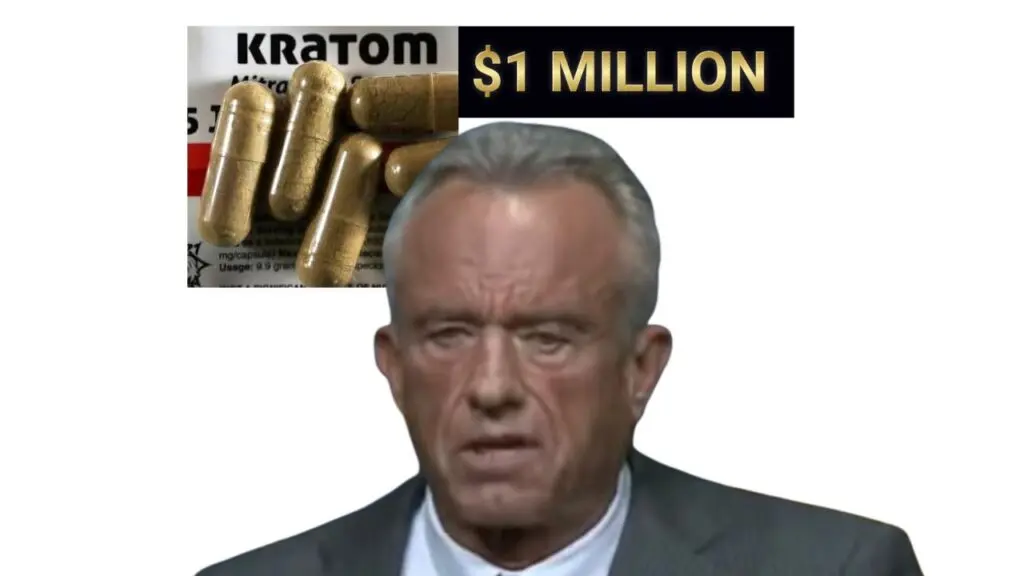
The tipping point of the press conference occurred when a correspondent representing the British news network Sky News broke away from domestic policy questions to address a swirling national controversy: Kennedy’s financial and regulatory ties to Botanic Tonics, the manufacturer of the kratom-infused herbal beverage known as Feel Free.
Earlier this year, the Department of Justice abruptly dropped a high-profile product-safety lawsuit targeting the company. In the weeks immediately following the dismissal of federal litigation, the "Make America Healthy Again" (MAHA) PAC—a political action committee closely aligned with Kennedy’s political network—received a massive $1.
0 million campaign contribution directly linked to corporate interests associated with Botanic Tonics.
The intersection of a federal regulatory agency dropping litigation and a subsequent multi-million-dollar political payout to a related PAC has raised intense ethics concerns in Washington. A Democratic member of the Senate Finance Committee has already launched a formal congressional inquiry into the connection, demanding internal communications, transparency regarding scheduling, and a detailed accounting of the financial transactions.
As the Sky News reporter directly questioned Kennedy about whether the $1 million contribution influenced federal posture toward the controversial herbal beverage, Senator Ashley Moody physically intervened. Swiftly stepping in front of the microphone, Moody brought the media availability to an abrupt halt.
"Thank you very much for joining us today to talk about our kids and their healthy futures," Moody declared over the persistent follow-up inquiries of the press corps.
Within seconds, microphones were powered down, handlers whisked the officials away, and the total duration of the media session was capped at under 12 minutes.
Supporting Context & Metrics: Navigating the Agricultural Overhaul
To fully understand the friction that dominated Wednesday’s press conference, one must examine the broader fiscal landscape surrounding the "Harvest to Hallways" program and the programs it replaced.
The "Harvest to Hallways" vs. "Local Food for Schools" Disparity
The cornerstone of the administration’s current school nutrition push is the "Harvest to Hallways" initiative. This program allocates $25 million in targeted Farm to School grants intended to bridge the gap between local agricultural producers and institutional cafeterias.
However, agricultural economists and industry watchdogs point out that this funding structure represents a drastic contraction of federal support compared to previous iterations. The initiative was rolled out immediately following the Trump administration’s decision to dismantle the "Local Food for Schools" program—an expansive federal effort that pumped approximately $660 million into regional agricultural economies to secure locally grown provisions for student meals.
Previous Funding: ~$660 Million (Local Food for Schools program)
Current Funding: $25 Million (Harvest to Hallways initiative)
Net Reduction: A drop of over 96% in direct federal support for institutional local food procurement.
Critics from agricultural sectors have been vocal about the shortfall. Representatives from the Iowa Cattlemen’s Association told regional broadcaster KWQC that the newly introduced grants do not come close to replacing the vast pools of capital lost with the cancellation of the prior program.
Economic Fallout for Florida Farmworkers
The cuts have also sent shockwaves through regional farming communities, particularly in agricultural powerhouses like Florida. Last year, Ernesto Ruiz of the Farmworkers Association of Florida warned local media outlet WFLA that the elimination of robust federal local food initiatives would inevitably trickle down to the fields, resulting in reduced work hours, suppressed wages, and widespread economic precarity for undocumented and documented farmworkers alike.
Despite these warnings, Secretary Kennedy defended the administrative maneuvers on Wednesday, dismissing predecessor programs as inefficient.
"The programs that were canceled were programs that were not functioning," Kennedy asserted during the press conference.
Official Statements and Stakeholder Reactions
The fallout from the Tampa press conference has catalyzed a wave of sharp reactions across the political, agricultural, and public health spectrums.
The Administration’s Stance
Administration surrogates continue to frame the policy updates as essential corrections designed to eliminate government waste, tighten entitlement criteria, and restore fiscal sanity to federal welfare systems. From the perspective of HHS leadership, redirecting resources toward targeted grants while purging rolls of ineligible recipients is vital to preserving the long-term integrity of American health and nutrition programs.
Congressional Scrutiny Intensifies
On Capitol Hill, the controversy surrounding the $1 million PAC donation from Botanic Tonics continues to gather momentum. While Senate investigations are in their preliminary stages, members of the minority party—and select ethics watchdogs—are calling for independent oversight. The central question remains whether regulatory leniency was traded for political capital, a federal offense that, if proven, could carry severe legal and political ramifications for the health secretary.
Agricultural and Public Advocacy Responses
The Cattlemen’s Associations: Regional farming groups remain deeply skeptical. While nominally supportive of farm-to-school concepts, they argue that $25 million is a drop in the bucket that fails to support large-scale agricultural infrastructure.
Welfare Advocates: Organizations tracking child poverty and nutritional access have condemned the administration’s defense of SNAP rollbacks. Advocacy groups emphasize that removing 1.5 million children from nutritional assistance programs exacerbates food insecurity at a time when families are struggling with basic living expenses.
Future Outlook: What Lies Ahead for Secretary Kennedy and HHS?
As Robert F. Kennedy Jr. navigates his tenure as Secretary of Health and Human Services, Wednesday’s aborted press conference serves as an ominous indicator of the turbulence ahead.
Intensified Congressional Investigations: The Senate Finance Committee’s ongoing inquiry into the Botanic Tonics donation is expected to escalate. Subpoenas for financial records, PAC communications, and correspondence between HHS and the Department of Justice regarding the dropped product-safety lawsuit could materialize in the coming weeks.
Pushback on Domestic Food Policies: As agricultural cooperatives and state-level farming associations feel the pinch of reduced federal subsidies, political pressure will mount on the administration to either scale up local food funding or face a concerted backlash from rural voters.
Media Relations Strategy: The defensive posture displayed by Senator Moody and administration handlers in Tampa suggests that future public appearances by Secretary Kennedy will be tightly choreographed, with strict parameters around journalistic questioning.
Ultimately, the events in Tampa demonstrate that the convergence of controversial health policies, sweeping entitlement reforms, and lingering ethical queries will remain central flashpoints as Secretary Kennedy attempts to implement his sweeping vision for American public health.



0 Comments