

Executive Overview
ST. PETERSBURG, Fla. — In a powerful demonstration of how targeted educational intervention can reshape the trajectory of at-risk youth, the Florida Department of Juvenile Justice (DJJ) recently joined forces with Pinellas Technical College (PTC) and community partners to host a momentous signing day event. The ceremony celebrated students enrolled through the Florida Youth College—an innovative workforce education and credentialing initiative formerly known as Project Anchor.
Designed specifically for youth served within the state’s juvenile justice system, this program provides an indispensable bridge from the justice system to higher education, specialized career training, and gainful employment. By granting students residing at the Britt Technical Youth Academy—a specialized career and technical education (CTE)-focused residential commitment program—direct access to PTC’s rigorous curriculum, the partnership aims to dismantle traditional barriers to success.
Participants in the signing day committed to pursuing high-value workforce credentials, positioning themselves not only to re-enter society with marketable skills but also to secure sustainable careers that offer long-term financial stability. As juvenile justice systems nationwide grapple with the challenge of reducing recidivism, Florida’s proactive, education-centric model serves as a compelling blueprint for systemic reform. By treating education as a fundamental human right and a core pillar of rehabilitation, state leaders, educators, and community stakeholders are proving that a juvenile record does not have to dictate a lifetime of limitation.
Detailed Chronology: From Concept to Community Impact
To fully understand the significance of the recent signing day at Pinellas Technical College, it is essential to examine the strategic evolution of the initiative that made it possible.
The Birth of Project Anchor (August 2022)
The framework for today’s success was officially laid in August 2022, when the Florida Department of Juvenile Justice launched Project Anchor. Conceived as a pioneering partnership with Tallahassee State College, Project Anchor was established to fundamentally transform workforce education and career readiness for youth residing in residential commitment programs, as well as those transitioning back into their home communities.
For decades, juvenile justice education was often narrowly defined by traditional, remedial high school coursework. While academic completion remains vital, policymakers and juvenile justice administrators recognized a critical gap: young people leaving the system frequently lacked industry-recognized credentials, leaving them vulnerable to economic instability and subsequent involvement with the justice system. Project Anchor sought to change that narrative by integrating post-secondary vocational training directly into the residential experience.
Expansion and Evolution: The Birth of the Florida Youth College
Building upon the early successes and foundational framework of Project Anchor, the initiative was officially rebranded as the Florida Youth College. This strategic name change reflected the program’s expanding scope, growing institutional partnerships, and elevated academic ambitions.
The Florida Youth College was designed to scale statewide, forging alliances with local technical colleges and state institutions that could offer specialized, hands-on training tailored to modern labor market demands. To date, the program has achieved a major milestone, successfully admitting nearly 500 youth across its participating campuses.
The Pinellas Technical College Signing Day
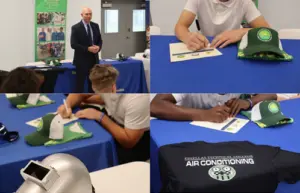
The recent event at Pinellas Technical College marked a major milestone in this ongoing expansion. Modeled after traditional college athletic or academic signing days, the ceremony celebrated the dedication of Britt Technical Youth Academy students as they officially committed to their chosen technical programs.
Surrounded by family members, instructors, state officials, and community leaders, the students stepped up to sign their letters of intent—a symbolic and psychological turning point. For many of these young individuals, the ceremony represented the first time their academic and professional ambitions were publicly acknowledged, celebrated, and supported by figures of authority and community leadership.
Supporting Context & Metrics: Re-Engineering Juvenile Rehabilitation
The partnership between the Florida Department of Juvenile Justice and Pinellas Technical College is not merely an isolated feel-good community event; it is grounded in evidence-based strategies designed to address the root causes of juvenile delinquency.
The Economic Imperative of Workforce Education
Criminological and socio-economic research consistently demonstrates a direct correlation between poverty, lack of educational attainment, and criminal behavior. Youth who leave the juvenile justice system without a high school diploma, a General Educational Development (GED) certificate, or marketable technical skills face immense hurdles in the legitimate labor market. Without legal means of financial self-sufficiency, the temptation to return to illicit activities increases exponentially.
By embedding high-value workforce education directly into residential commitment facilities like the Britt Technical Youth Academy, the DJJ addresses this vulnerability head-on. Programs at Pinellas Technical College focus on industries experiencing high labor demand, such as automotive technology, construction trades, information technology, culinary arts, and healthcare support services.
Bridging the Post-Release Gap
A major historical flaw in juvenile rehabilitation has been the "cliff effect"—the abrupt cessation of support and structure when a youth transitions from a secure or residential facility back into their home community.
The Florida Youth College mitigates this risk by establishing continuous pipelines. Training started within the structured environment of the Britt Technical Youth Academy can be seamlessly continued or completed through institutional partners like PTC, ensuring that students do not lose momentum during their reintegration phase. Furthermore, these institutions often maintain close ties with local employers, facilitating apprenticeships, job placements, and mentorship opportunities that endure long after a student completes their formal coursework.
Official Statements: Voices of Leadership, Family, and Hope
The success and momentum of the Florida Youth College and its partnership with Pinellas Technical College are driven by the collective dedication of state policymakers, institutional directors, families, and the students themselves.
DJJ Leadership
Emphasizing the transformative potential of the collaboration, Florida Department of Juvenile Justice Secretary Eric Hall noted the profound impact of the initiative:
"DJJ is proud to partner with Pinellas Technical College in providing transformative opportunities for Britt Technical Youth Academy students to pursue a college education. This partnership underscores DJJ’s commitment to accelerating academic achievement for the students we serve and helping them create lasting and meaningful change in their lives."
Secretary Hall’s remarks highlight a broader philosophical shift within Florida’s juvenile justice agency—moving away from a purely punitive model toward an empowerment- and rehabilitation-focused framework.
Legislative Support
State lawmakers have taken notice of the program’s early triumphs, championing its expansion as a smart investment in public safety and human capital. State Representative Berny Jacques praised the collaborative effort during the event:
"The educational opportunities at Pinellas Technical College that will be made available to these youth who have completed their secondary education will cultivate a foundation for their successful futures. I applaud the partnership between the Department of Juvenile Justice and Pinellas Technical College to find innovative ways to best serve the youth in the department’s care."
Educational Administration
On the ground level, academic leaders play a critical role in fostering an environment where formerly troubled youth can see themselves as scholars and professionals. Pinellas Technical College St. Petersburg Campus Director Sylester “Boe” Norwood emphasized the community-wide benefits of the initiative:
"The partnership between Pinellas Technical College and DJJ will result in success not only for the students but for our community. Our partnership will help students gain a competitive edge and give them a second chance at a better life and to make their families proud."
Director Norwood’s perspective underscores the dual benefit of technical education: it empowers individual students while strengthening the local workforce pipeline with skilled, dedicated professionals.
The Student Perspective
Ultimately, the success of the program is measured by the personal transformations experienced by its participants. Speaking candidly about his aspirations, a student from the Britt Technical Youth Academy shared how the program has altered his outlook on life:
"This program will benefit me in the future by helping me to provide for myself and my family. It will help me make better decisions and become a positive role model."
Parental and Family Engagement
Family support remains a vital component of successful juvenile rehabilitation. The emotional weight of the signing day was particularly palpable for families who have witnessed their children struggle, falter, and ultimately find a path toward redemption. Reflecting on her son’s journey, a parent of a Britt Technical Youth Academy student expressed profound gratitude:
"My son was doing stuff he shouldn’t have been doing, but he’s witty and wise. When he came to the program, I could see that he was learning and changing. I know he’s in good hands. I’m thankful he’s getting another chance, and I hope he continues doing the same when he comes back home."
Future Outlook: Scaling Success and Shaping the Future of Juvenile Justice
As the Florida Youth College celebrates its nearly 500 admissions milestone, stakeholders are already looking toward the horizon. The model established by the collaboration between the Florida Department of Juvenile Justice, Tallahassee State College, Pinellas Technical College, and other regional educational partners offers a scalable framework that could serve as a national model for juvenile justice reform.
Strategic Priorities for Growth
- Expanding Institutional Partnerships: DJJ plans to actively recruit additional technical colleges, state colleges, and vocational institutions across Florida’s 67 counties to ensure that every youth exiting a residential commitment program has geographic access to continuing education.
- Curriculum Modernization: Program administrators are continuously reviewing local labor market data to align PTC and partner course offerings with emerging industries, ensuring that graduates are trained for high-wage, high-demand careers.
- Enhanced Post-Release Support: Strengthening mentorship networks, housing assistance coordination, and employer partnerships will remain a top priority to minimize recidivism and maximize long-term retention in the workforce.
A Paradigm Shift in Public Safety
The true legacy of initiatives like the Florida Youth College lies in redefining how society views accountability and rehabilitation. By investing in the intellectual and professional capacity of youth who have stumbled, Florida is demonstrating that true public safety is not achieved merely by locking individuals away, but by unlocking their potential.
As the newly minted students at Pinellas Technical College embark on their respective paths—tool belts in hand, credentials in sight, and futures reclaimed—they carry with them not only the technical skills required to build a career, but the renewed dignity of knowing that their community believes in their capacity to succeed.

0 Comments