

Executive Overview
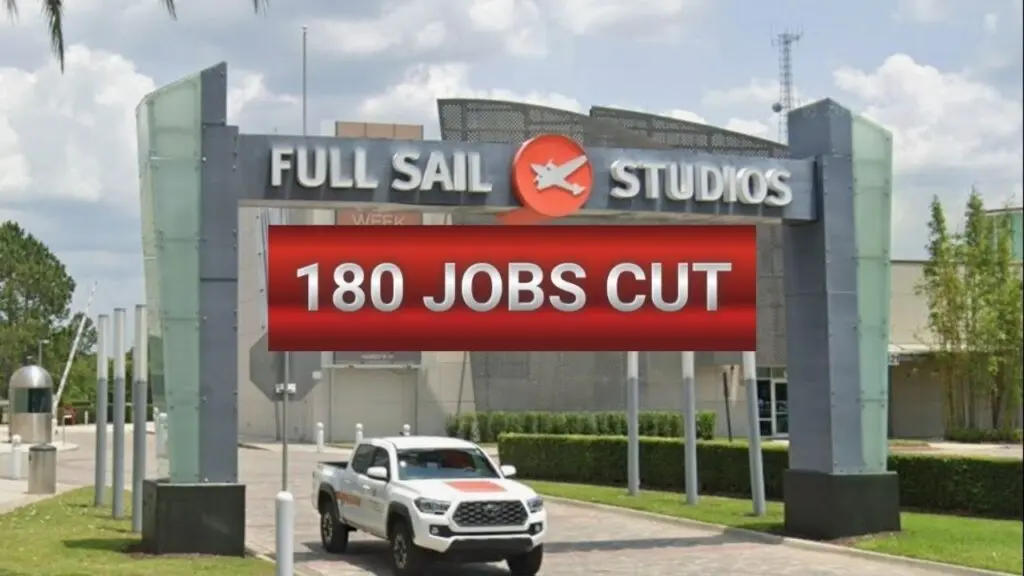
Full Sail University, a prominent higher education institution in Winter Park, Florida, widely recognized for its immersive programs in film, digital media, entertainment, and technology, has implemented a significant reduction in its workforce. According to reports initially published by the Orlando Business Journal (OBJ), the university eliminated 180 positions across multiple departments. This marks the second consecutive year that the institution has resorted to structural downsizing.
Despite the elimination of nearly two hundred jobs—affecting academic, administrative, and operational sectors—the university’s physical footprint continues to grow. High-profile infrastructure initiatives, most notably the ambitious Dream Lofts student housing project along University Boulevard, remain actively under development.
The juxtaposition of substantial layoffs against multi-million-dollar real estate expansions has drawn scrutiny from industry observers, former staff members, and students alike. University leadership has attributed the staff reductions to evolving workflows, shifts in enrollment trends, and technological advancements that have altered operational priorities. Concurrently, administration officials have moved quickly to reassure current and prospective students that no degree programs are being cut, instruction will continue without interruption, and the long-term educational mission of the institution remains uncompromised.
This report provides a comprehensive examination of the recent layoffs at Full Sail University, contextualizing the cuts within broader trends in modern higher education, analyzing the institution’s ongoing real estate investments, and exploring the long-term implications for Florida’s creative and digital media education landscape.
Detailed Chronology and Scope of the Restructuring
The Announcement and Immediate Impact
The sweeping workforce reduction materialized quietly before being brought to light by regional business reporting. The university confirmed that 180 roles were excised from its organizational chart. While specific job titles and departmental breakdowns have not been publicly itemized by university administration, institutional statements confirm that the cuts cut deep across a wide array of operational tiers.
Academic personnel, administrative support staff, and day-to-day operational employees were all touched by the restructuring. For an institution that prides itself on specialized, hands-on mentorship and technical instruction, the loss of 180 workers represents a substantial blow to the human capital that underpins its day-to-day campus experience.
A Pattern of Retrenchment: The 2025–2026 Shift
The latest round of layoffs is not an isolated event. It represents the continuation of a worrying downward trajectory for institutional stability at Full Sail. Coming on the heels of a comparable workforce reduction enacted roughly a year prior, this second consecutive annual contraction suggests that the university is wrestling with systemic structural pressures.
In higher education, back-to-back downsizing events typically signal deeper financial adjustments, shifts in market demand, or the painful realization that pre-pandemic operational models are no longer economically viable. While Full Sail has not declared a state of financial exigency, the repetition of substantial job cuts within a twenty-four-month window indicates that temporary belt-tightening has evolved into permanent structural downsizing.

The Human Element: Severance and Support
As news of the layoffs spread, questions immediately arose regarding the fate of the affected employees. In its official communications, Full Sail University stressed that its human resources department is actively assisting displaced workers. However, details regarding severance packages, extended health benefits, or outplacement services remain sparse.
For many veteran educators and media professionals who built careers at the Winter Park campus, the sudden nature of the transition has proved deeply unsettling. The absence of transparency concerning which specific positions were eliminated—coupled with the lack of a definitive timeline for when the cuts took effect—has fueled an atmosphere of uncertainty among the remaining faculty and staff.
Supporting Context, Metrics, and Institutional Realities
Navigating the Shifts in Technology and Enrollment
To understand the rationale behind Full Sail’s recent decisions, one must examine the official justification provided by the university. Administration officials pointed to a triad of catalysts: changing workflows, shifting enrollment trends, and the rapid integration of new technologies.
- Technological Disruption: The digital media, film production, and gaming industries have undergone seismic transformations in recent years. The advent of generative artificial intelligence, real-time virtual production tools (such as Unreal Engine volumes), and cloud-based collaborative workflows have revolutionized how media is created. Universities teaching these subjects must constantly adapt their curricula, which often requires automating administrative processes and rethinking how instruction is delivered.
- Enrollment Dynamics: Like many private, career-focused institutions across the United States, Full Sail has faced shifting demographics. The traditional college-age population is plateauing in many regions, and prospective students are increasingly questioning the return on investment of higher education. Economic pressures, inflation, and alternative, self-taught pathways into the digital creator economy have all influenced enrollment pipelines.
- Operational Workflow Optimization: In response to financial tightening, institutions are aggressively consolidating roles. Administrative redundancies are being eliminated, and hybrid or remote capabilities are being leveraged to reduce overhead costs associated with physical office spaces.
The Real Estate Paradox: The Dream Lofts Project
Perhaps the most striking paradox of the current situation at Full Sail is the simultaneous occurrence of mass layoffs and major real estate expansion. While 180 employees saw their jobs eliminated, construction cranes and development plans along University Boulevard tell a very different story of growth.
The university is forging ahead with its high-profile Dream Lofts student housing project, developed in partnership with Terian Capital. Key details of this major infrastructure play include:
- Bed Capacity: The project is slated to inject 570 new student beds directly adjacent to the Winter Park campus.
- Timeline: Initial groundbreaking and construction milestones point toward a targeted debut in 2028.
- Future Phases: Master planning documents suggest that the Dream Lofts project is designed with scalability in mind, leaving room for future expansion phases should student housing demand necessitate it.
Reconciling Capital Projects with Operational Cuts
To the uninitiated, cutting staff while simultaneously building multi-million-dollar housing complexes appears contradictory. However, financial analysts specializing in higher education real estate note that capital projects and operating budgets are often funded through distinct financial mechanisms.
Housing developments are frequently financed through public-private partnerships (P3s), dedicated capital campaigns, or long-term bonding that cannot easily be repurposed to cover short-term operating deficits or payroll liabilities. Furthermore, student housing serves as a direct revenue-generating asset for universities, potentially bolstering institutional bottom lines over the long term through room and board fees. Nevertheless, the optics of investing heavily in bricks and mortar while letting go of nearly two hundred workers remain politically and culturally delicate within the campus community.
Official Statements and Administrative Position
Protecting the Core Academic Mission
In the wake of the public disclosures, Full Sail University leadership released structured statements designed to project calm, continuity, and strategic clarity. The overarching message from the administration is clear: the infrastructure of the classroom remains untouched.

Key assurances issued by the university include:
- Zero Program Cancellations: Full Sail has explicitly stated that no degree programs—ranging from its flagship Computer Animation and Film degrees to its robust Audio Engineering and Game Development curricula—are being sunsetted or eliminated as a result of the restructuring.
- Instructional Continuity: University officials emphasized that the structural changes have been meticulously engineered to ensure that current students experience zero disruption in the quality, delivery, or continuity of their instruction.
- Long-Term Confidence: Despite the turbulence of consecutive years of layoffs, executive leadership maintains an optimistic outlook regarding the institution’s capacity to deliver a top-tier, industry-aligned education in the years ahead.
The Communications Strategy: Balancing Transparency and Silence
While the university has been proactive in defending its academic integrity and housing initiatives, its communication regarding the mechanics of the layoffs has been markedly restrained. By declining to specify which job families were targeted or providing an exact calendar date for the execution of the cuts, the administration has sought to manage public perception carefully.
Critics argue that this lack of granular transparency damages morale among remaining personnel, who are left to wonder if further reductions loom on the horizon. Conversely, defenders of the administration suggest that maintaining confidentiality around internal human resources matters is standard corporate practice designed to protect the privacy of affected workers while executing sensitive operational transitions.
Future Outlook: Navigating the Road Ahead for Full Sail University
The Stakes for Florida’s Creative Economy
Full Sail University occupies a unique and vital ecosystem within the state of Florida. For decades, the institution has served as a primary talent pipeline for the state’s burgeoning entertainment, simulation, tech, and digital media industries. Graduates of its programs populate major production houses, game development studios, theme parks, and broadcasting networks across Orlando, Miami, Tampa, and beyond.
Any prolonged instability at the university reverberates outward into the regional economy. Ensuring that Full Sail navigates this turbulent transition successfully is not merely a matter of institutional survival; it is a matter of maintaining Florida’s competitive edge as a hub for creative technology and digital arts talent.
Strategic Priorities for 2026 and Beyond
As Full Sail looks toward the completion of the Dream Lofts project in 2028 and stabilizes its operational posture following consecutive years of layoffs, several critical milestones will define its trajectory:
- Right-Sizing the Workforce: The institution must reach a sustainable equilibrium where its staffing levels accurately reflect post-pandemic enrollment realities and modern technological efficiencies. Two years of consecutive cuts suggest the institution is aggressively hunting for this baseline.
- Curriculum Evolution: To justify its tuition and maintain its reputation among industry professionals, Full Sail must continue aggressively updating its programs to mirror the lightning-fast shifts in artificial intelligence, immersive media, and remote collaboration tools.
- Restoring Internal Trust: Healing campus morale will require intentional leadership, open dialogue between administration and remaining faculty, and tangible evidence that student outcomes and staff support remain top priorities.
Conclusion
Full Sail University stands at a definitive crossroads in its storied history. The elimination of 180 positions highlights the profound economic and technological pressures currently reshaping the higher education landscape. Yet, the simultaneous advancement of multi-million-dollar housing ventures like the Dream Lofts demonstrates that the institution is playing a long-term strategic game.
How leadership balances the human cost of these operational contractions with its ambitious physical expansion plans will ultimately determine whether Full Sail can successfully weather this period of structural transition and emerge as a modernized leader in creative and digital media education.

0 Comments