

Executive Overview
In what Florida law enforcement officials have described as one of the most harrowing and disturbing child exploitation and abuse cases in recent memory, two women have been formally charged in Orange County, Florida, following a multi-year investigation. The defendants—identified as 37-year-old Tamra Marshon Stewart of Jacksonville and 51-year-old Keysha Monique Epps of Atlanta—stand accused of subjecting four young children to a horrific ordeal of captivity, severe neglect, and repeated sexual abuse.
According to case files and statements released by Florida Attorney General James Uthmeier, the victims were forced to live entirely confined within the cramped sleeper cab of a commercial semi-truck for more than six years. Operating as a long-haul transport vehicle traversing major routes primarily between Atlanta and Miami—with frequent stops throughout Florida, including the greater Orlando area—the semi-truck functioned as a rolling prison. Within this confined, mobile space, the four children were allegedly stripped of their basic human rights, denied access to formal education, adequate nutrition, proper hygiene, and essential medical care.
The scope of the charges reflects the gravity of the alleged offenses. Both Stewart and Epps face multiple felony counts, including sexual battery by a person in familial or custodial authority, lewd or lascivious molestation of a child under the age of 12, child neglect resulting in permanent disfigurement, and child neglect without great bodily harm. In addition, Epps faces four distinct counts of failing to report child abuse under Florida law.
State authorities, including the Florida Department of Law Enforcement (FDLE) and local sheriff’s offices, have mobilized specialized legal teams to prosecute the case within Florida’s Ninth Judicial Circuit. As the legal proceedings unfold, the case has ignited intense public scrutiny regarding the vulnerabilities of children living in transient environments, the monitoring of commercial transport spaces, and the systemic gaps that allowed such prolonged abuse to occur in plain sight along America’s interstate highways.
Detailed Chronology and Investigative Findings
The Genesis of Captivity: January 2020
The timeline established by investigators indicates that the nightmare began in January 2020. At this juncture, Keysha Monique Epps, working as a commercial truck driver, and Tamra Marshon Stewart assumed the role of primary caregivers for the four children. Rather than providing a stable home environment, the defendants integrated the children directly into Epps’s long-haul trucking lifestyle.
For over six years—extending until authorities finally intervened in April 2026—the sleeper cab of the semi-truck served as the children’s permanent residence. Investigators mapping the commercial routes noted that the vehicle primarily traveled along major corridors linking Georgia and Florida, specifically moving freight between Atlanta and Miami, while making routine stops in commercial shipping hubs across the Orlando area and central Florida.
Life Inside the Sleeper Cab
The physical conditions inside the semi-truck sleeper cab were described by prosecutors as profoundly inhumane. Four growing children were forced to share a single bunk, leaving them with virtually no personal space or physical comfort.
Beyond the spatial confinement, the victims were systematically deprived of the fundamental necessities of life:
- Nutrition: The children were denied adequate food, leading to signs of malnourishment.
- Hygiene: Soap, clean water, and basic sanitation products were withheld, creating severe health hazards within the enclosed cabin environment.
- Education: The children were completely isolated from any form of schooling, homeschooling, or socialization, effectively hiding them from mandatory state educational tracking systems.
- Medical Care: Routine and emergency medical attention was entirely absent. Investigators uncovered evidence that two of the children suffered severe physical burns during their time in the custody of the defendants. These injuries went completely untreated, ultimately healing improperly and leaving the children with significant, permanent scarring.
Furthermore, medical evaluations conducted after the children were removed from the custody of Stewart and Epps revealed that at least one of the victims had contracted a sexually transmitted infection (STI), pointing to the grave medical and physical consequences of the abuse they endured.
Escalation of Abuse and Retaliation
The investigative findings detail a calculated pattern of physical and sexual abuse perpetrated primarily by Stewart, with the active complicity of Epps. According to testimonies provided to the Attorney General’s Office, the two young female victims endured years of continuous sexual abuse by Stewart behind the closed curtains of the truck’s cab.
When the two young male victims attempted to intervene, confronting Stewart about the abuse and informing Epps of the horrifying reality, they were met with brutal retaliation. Instead of protecting the children, Epps reportedly allowed the physical assaults to continue, and the boys were subjected to physical beatings by Stewart intended to enforce silence and compliance.

The Breakdown and Confession
The investigative wall surrounding the semi-truck finally collapsed as the victims found opportunities to speak with authorities following their rescue in April 2026. Detailed interviews conducted by specialized child abuse investigators laid bare the systematic nature of the crimes.
Confronted with mounting forensic and testimonial evidence, Tamra Marshon Stewart was subjected to a post-Miranda interrogation by law enforcement. During this interview, Stewart reportedly confessed to committing three distinct acts of sexual battery against one of the young female victims, including a specific incident that occurred within the city limits of Orlando.
Keysha Epps, despite holding the legal and moral obligation of a primary caregiver and commercial operator, maintained a posture of willful blindness—or active concealment—knowing full well the atrocities occurring inside her vehicle while failing to alert law enforcement or child welfare agencies.
Legal Architecture and Formal Charges
The severity of the allegations is underscored by the extensive list of felony charges filed against both defendants in Florida’s Ninth Judicial Circuit. The legal framework deployed by the state Attorney General’s Office reflects a multi-pronged prosecution strategy addressing both direct perpetration and systemic criminal negligence.
Tamra Marshon Stewart (37, Jacksonville)
Stewart faces a total of ten serious felony counts:
- Two counts of sexual battery by a person in familial or custodial authority.
- Two counts of lewd or lascivious molestation of a child under the age of 12.
- Two counts of battery of a child by expelling certain fluids or materials.
- Two counts of child neglect without great bodily harm.
- Two counts of child neglect causing permanent disfigurement.
Keysha Monique Epps (51, Atlanta)
Epps faces a total of fourteen felony counts, encompassing both direct complicity in the abuse and statutory failures to act:
- Two counts of sexual battery by a person in familial or custodial authority.
- Two counts of lewd or lascivious molestation of a child under the age of 12.
- Two counts of child neglect without great bodily harm.
- Two counts of child neglect causing permanent disfigurement.
- Four counts of failure to report child abuse (reflecting the four individual victims whose ongoing abuse she allegedly concealed).
Prosecution Team
To ensure a rigorous and thorough prosecution of the case, Florida Attorney General James Uthmeier has assigned a specialized legal team. Special Counsels Rita Peters, Stephanie Bergen, and Beth Shelley will lead the prosecution efforts in the Ninth Judicial Circuit, navigating complex evidentiary standards regarding multi-jurisdictional movement along interstate commercial transport routes.
Supporting Context, Statistics, and Systemic Vulnerabilities
The revelation of children living and being abused inside a commercial semi-truck sleeper cab highlights a distinct and alarming blind spot in child welfare monitoring and commercial transportation regulation.
The Transiency Threat in Child Abuse
According to child welfare advocacy groups and criminological researchers, transient living situations represent one of the highest risk factors for undetected child abuse and neglect. When perpetrators operate mobile lifestyles—such as long-haul trucking, RV living, or frequent relocation between states—they effectively sever traditional community ties.
Traditional safety nets that typically catch abused children—such as public school teachers, pediatricians, pediatric nurses, neighbors, and extended family members—are entirely bypassed when a child’s entire world is restricted to the interior of a commercial vehicle traveling at high speeds across state lines.
Commercial Transport Regulations and Oversight
The case has also prompted questions regarding oversight within the commercial trucking industry. While long-haul drivers are subject to strict regulations concerning hours of service, vehicle maintenance, and freight manifests, the interior of a sleeper cab is generally treated as private living quarters. Law enforcement agencies rarely conduct interior inspections of sleeper cabs absent probable cause of a traffic violation or criminal activity.

Investigators noted that because Epps traversed major economic corridors—specifically the Interstate 75 and Interstate 95 pathways connecting Atlanta to Miami—the truck blended seamlessly into the millions of commercial vehicles moving goods across Florida daily. This high volume of commercial traffic allowed the defendants to move the victims across county and state lines with minimal scrutiny.
Official Statements
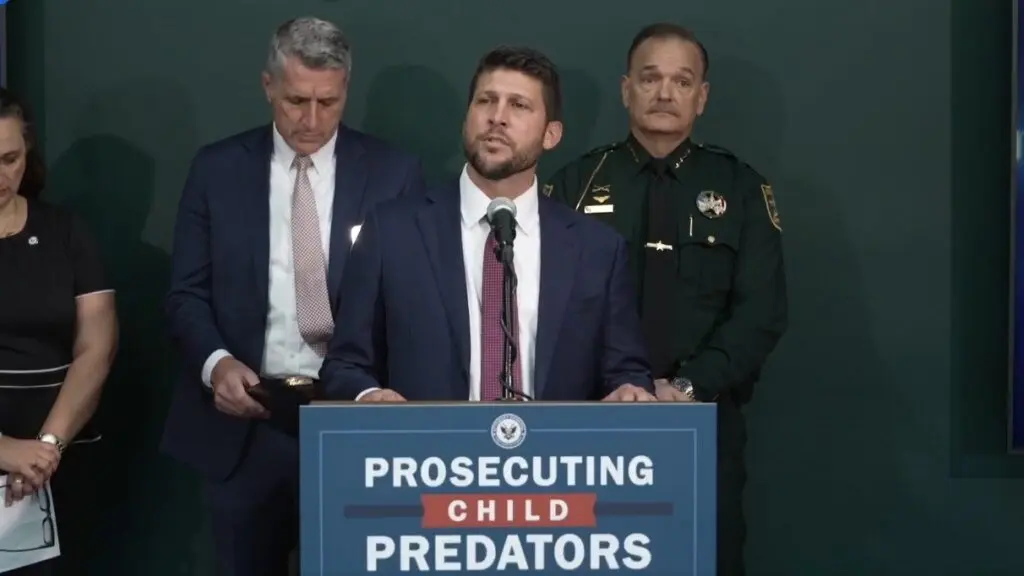
The grim nature of the case drew immediate and forceful condemnation from Florida’s top legal and law enforcement officials, who emphasized the state’s unwavering commitment to protecting vulnerable minors.
"These children were trapped in a rolling prison and abused by the adults who were supposed to protect them," declared Florida Attorney General James Uthmeier. "Florida has zero tolerance for anyone who preys on children. Our office will utilize every resource at our disposal to ensure that justice is swiftly and thoroughly delivered."
FDLE Commissioner Mark Glass echoed these sentiments, highlighting the profound betrayal of trust inherent in the case.
"This case involves a deeply disturbing and serious violation of these children’s safety, innocence, and fundamental trust," Glass stated. "Our agents worked relentlessly alongside our local and state partners to uncover the truth and bring these individuals into custody."
Local law enforcement officials also stepped forward to emphasize the critical role of community vigilance and public reporting in preventing such atrocities. Osceola County Sheriff Chris Blackmon issued a direct appeal to the public:
"If anyone knows of a child in danger, do not wait—immediately contact law enforcement. Cases like this remind us that evil can hide in plain sight, and it takes an alert community and resolute law enforcement response to bring these victims out of the shadows."
Future Outlook and Ongoing Investigation
As Tamra Marshon Stewart and Keysha Monique Epps remain in custody awaiting further court appearances in Orange County, the investigation is far from closed.
Prosecutors and investigators with the Florida Department of Law Enforcement have indicated that the inquiry remains active and ongoing. Given the multi-state nature of the defendants’ travel routes—spanning Georgia and various jurisdictions throughout Florida over a six-year period—authorities are actively investigating whether additional co-conspirators exist, or if other victims may have come into contact with the defendants during their transit operations.
Furthermore, legal analysts anticipate that as discovery proceeds in Florida’s Ninth Judicial Circuit, additional federal or state charges could be added to the indictments, particularly concerning interstate travel for illicit purposes and the systemic deprivation of civil rights.
For the four surviving children, the road ahead will involve extensive physical rehabilitation, psychological trauma counseling, and long-term support managed by state child welfare agencies. While the physical prison of the semi-truck sleeper cab has been permanently dismantled, the legal system now faces the monumental task of securing accountability and delivering justice for a crime that operated silently on America’s highways for more than half a decade.

0 Comments