

Executive Overview
In the heart of Raleigh, North Carolina’s vibrant East End neighborhood, a quiet revolution is taking place behind a candlelit bar top. Songbird—a cozy, chameleon-like establishment operating under the creative vision of co-owners Charlie Blue Arm and Meg Paradise—redefines the boundaries of modern hospitality. Functioning as a sunlit café by day and an intimate dusk-to-dawn cocktail haven by night, the venue is a masterclass in hyper-local curation. Every element of the guest experience, from the reclaimed wood shelves and the rotating local art on the walls to the microgreens garnishing the glassware, is anchored in a deep, unwavering commitment to regional purveyors.
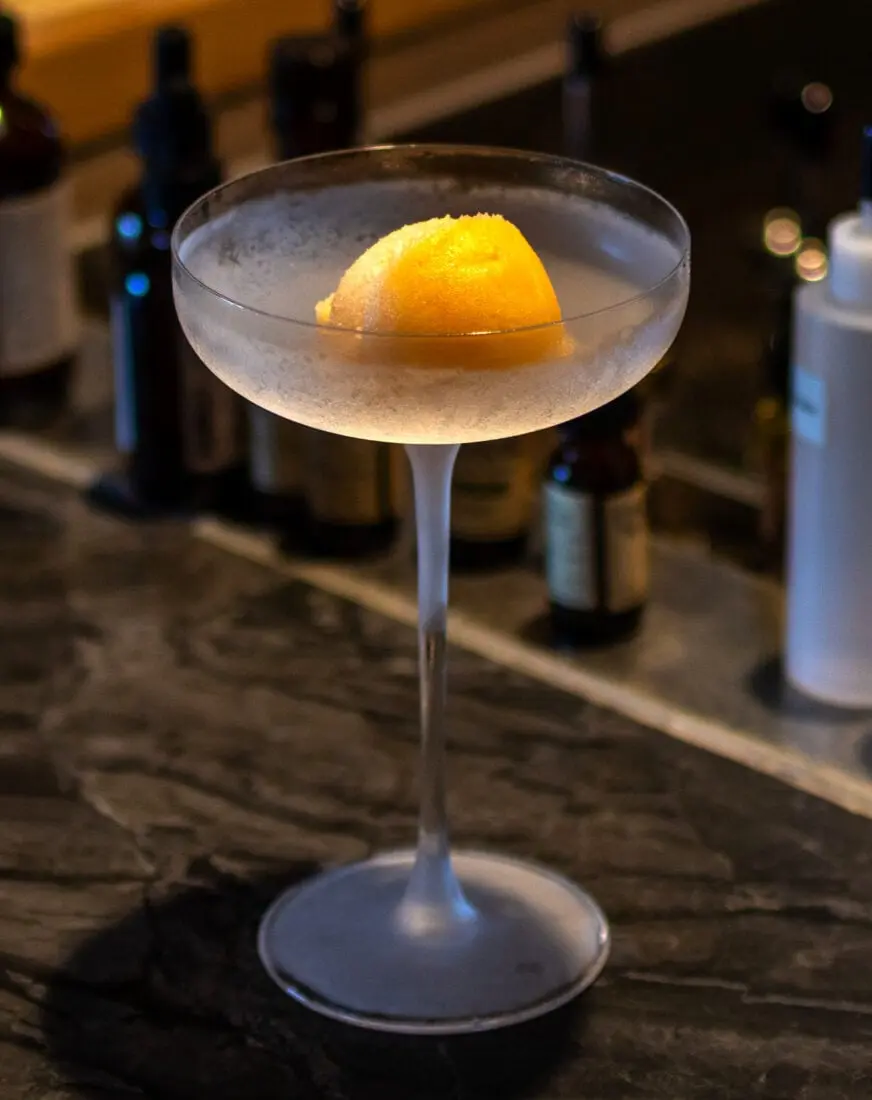
Amidst a rotating menu that seamlessly transitions from morning peach matchas to evening bell pepper gimlets, one creation has captured the imagination of local patrons and culinary purists alike: the Cantaloupe Sgroppino. Debuting in September 2026, this refreshing libation marries a simple, scratch-made cantaloupe sorbet with a crisp splash of Italian prosecco. It is a brilliant, fruit-forward reimagining of the classic Venetian sorbet-and-liquor concoction.
Far more than a seasonal whim, the Cantaloupe Sgroppino serves as a case study in contemporary craft mixology. It highlights a broader cultural shift toward sustainable sourcing, the elevation of farmers’ market produce into high-end cocktail programs, and the democratization of culinary techniques—taking methods once exclusive to molecular gastronomy laboratories, such as liquid nitrogen flash-freezing, and translating them for the home bartender using everyday kitchen appliances. This article explores the genesis of Songbird, the meticulous mechanics of the Cantaloupe Sgroppino, the broader architectural and agricultural philosophy driving Raleigh’s beverage scene, and what the future holds for hyper-seasonal drinking culture.
Detailed Chronology: From Farmers’ Market Stalls to the Bar Top
The journey of the Cantaloupe Sgroppino did not begin behind a stainless-steel cocktail well; it started on the asphalt of a local Raleigh farmers’ market, amidst wooden crates overflowing with late-summer produce.
The Twice-Weekly Ritual
For Charlie Blue Arm and Meg Paradise, sourcing is not a logistical chore—it is an inspiring, exploratory ritual. Twice a week, the co-owners navigate the stalls of regional growers, hunting for peak-season ripeness, unusual flavor profiles, and fleeting agricultural windows.
- The Scouting Phase: "If we see something pop up, we’re right on top of it, using it in a new drink or food item," explains Blue Arm. This agility requires an intimate, trusting relationship with local farmers, who often give the Songbird team first pick of delicate specialty crops.
- The Discovery: In late August, amid a bounty of heirloom tomatoes and summer squash, vibrant, heavy cantaloupes caught their eye. Sweet, aromatic, and deeply perfumed, the melons practically demanded a liquid translation.
Conceptualizing the Sgroppino
Back at Songbird, the culinary gears began to turn. The traditional Sgroppino is a storied Venetian concoction typically composed of lemon sorbet, vodka, and prosecco, historically served as an intermezzo between heavy courses to cleanse the palate, or as an effervescent digestif.
Blue Arm and Paradise saw an opportunity to disrupt the heavy, syrup-laden cocktail trends of late summer with something lighter, more tactile, and grounded in the terroir of North Carolina agriculture. By substituting traditional citrus sorbet with a vibrant, freshly blended cantaloupe sorbet, they anchored the cocktail in a distinctly American South harvest aesthetic while maintaining the Italian elegance of the prosecco pour.
Translating Lab Tech to Kitchen Realism
In its initial experimental phases at the bar, the Songbird team experimented with liquid nitrogen to achieve an impossibly fluffy, cloud-like sorbet texture—a nod to their high-end culinary aspirations. However, recognizing the barrier this creates for home cooks, Blue Arm refined the recipe for accessibility. He proved that a standard household blender, paired with precise fruit-to-sugar ratios, could yield a silky, consistent sorbet base without the need for cryogenic gases or specialized industrial equipment.
Supporting Context & Metrics: The Anatomy of Modern Hyper-Seasonality
To fully appreciate the significance of the Cantaloupe Sgroppino, one must examine the broader economic and cultural ecosystem that birthed it. The American craft cocktail movement has evolved past infusions, house-made bitters, and elaborate garnishes. Today, the cutting edge of mixology is defined by agricultural transparency and operational sustainability.
The Rise of the Dual-Identity Venue
Songbird’s operational model—shifting fluidly from a daytime coffee and matcha program to an evening cocktail destination—is part of an emerging architectural and business trend in secondary and tertiary American cities experiencing rapid growth, such as Raleigh. By maximizing the utility of a compact footprint in the East End, establishments reduce overhead while embedding themselves into the daily rhythms of the neighborhood.
| Operational Phase | Primary Focus | Key Offerings | Sourcing Philosophy |
|---|---|---|---|
| Day (Dusk-to-Dawn Café) | Energy & Focus | Peach matchas, artisan espressos, house pastries | Regional dairy, organic seasonal stone fruits |
| Night (Cocktail Bar) | Relaxation & Craft | Cantaloupe Sgroppinote, bell pepper gimlets | Local farmers’ market produce, microgreens |
The Spritz Evolution and the Sgroppino Revival
The beverage industry has witnessed an unprecedented dominance of the "spritz" category over recent summers, driven by consumer demand for lower-ABV (alcohol by volume), highly refreshing, and visually appealing drinks. While the Aperol Spritz conquered patios nationwide, savvy mixologists have sought sophisticated alternatives.
The Sgroppino offers a textural dimension that standard wine-and-soda spritzes lack. By integrating frozen fruit emulsions into sparkling wine, the drink evolves as it melts, changing texture and flavor concentration from the first sip to the last. According to hospitality market analysts, demand for textural cocktails—those utilizing foams, sherbets, and clarified milks—has risen by over 34% in metropolitan bars over the past three years. Songbird’s cantaloupe iteration capitalizes directly on this consumer appetite for sensory-rich drinking experiences.
The Terroir of Cantaloupe
While wine enthusiasts regularly discuss terroir—how geography, soil, and climate impart unique characteristics to a grape—cocktail purists are increasingly applying the concept to produce. Cantaloupe grown in the rich, loamy soils of the Piedmont region of North Carolina develops a distinct sugar profile and aromatic intensity compared to mass-produced, cross-country-shipped alternatives. Because the Cantaloupe Sgroppino relies on minimal ingredients (fruit, sweetener, and sparkling wine), nothing is hidden. As Blue Arm notes, "You can truly tell the cantaloupe is from the market earlier that day."
Official Statements & Industry Perspectives
The philosophy driving Songbird and its signature seasonal drinks reflects a growing generational shift among modern bartenders and small-business owners who prioritize community integration over mass scalability.
"We don’t view the menu as a static document; it’s a living reflection of what is happening in the dirt around us each week. If the farmers’ market changes, our bar changes with it. That agility is what keeps hospitality exciting for us and engaging for our guests."
— Charlie Blue Arm, Co-Founder of Songbird
Industry analysts have taken note of this hyper-localized approach. Culinary anthropologist Dr. Elena Vance observes that establishments like Songbird represent a counter-movement to corporate uniformity in the food and beverage sector.
"When consumers walk into a neighborhood bar and taste a cocktail made with fruit harvested forty-eight hours prior just a few miles away, they are consuming a narrative of place," Dr. Vance explains. "Drinks like the Cantaloupe Sgroppino bridge the gap between fine dining and neighborhood comfort. They prove that sophistication doesn’t require imported ingredients or esoteric liqueurs; it requires respect for local agriculture."
Furthermore, mixology educators emphasize the pedagogical value of simplifying complex techniques for the public. By demonstrating that a high-end, velvety sorbet cocktail can be executed with a basic kitchen blender, venues like Songbird empower consumers to replicate culinary artistry at home, thereby deepening public appreciation for craft ingredients.
Future Outlook: The Next Wave of Seasonal Mixology
As Songbird continues to anchor itself in Raleigh’s cultural landscape, the success of the Cantaloupe Sgroppino offers a clear roadmap for the future of independent beverage programs.
1. The Decentralization of Fine Mixology
Gone are the days when cutting-edge cocktail techniques were confined to darkened speakeasies in major metropolitan hubs like New York or London. Growing cities across the American Southeast are becoming incubators for culinary innovation. The fluidity with which Songbird moves between morning caffeinated tonics and evening avant-garde cocktails points toward a future where neighborhood bars serve as community anchors offering all-day, farm-focused hospitality.
2. Climate, Agriculture, and Menu Agility
As climate variability increasingly impacts agricultural yields, the ability of a bar program to pivot rapidly based on market availability will become a vital survival skill. Venues that rely on fixed, multi-page menus featuring out-of-season ingredients will struggle to compete with agile, market-driven concepts like Songbird. The future belongs to the flexible: operators who view seasonal shifts not as logistical hurdles, but as creative springboards.
3. DIY Gastronomy at Home
The democratization of technique—exemplified by Blue Arm’s adaptation of molecular sorbet preparation for the home blender—signals a broader trend in consumer culture. Patrons no longer want to be passive spectators of luxury; they want to learn, recreate, and participate. Expect to see a surge in cocktail bars offering retail merchandise paired with fresh local produce kits, allowing patrons to recreate bar-quality seasonal libations in their own kitchens.
Recipe Blueprint: The Cantaloupe Sgroppino at Home
For those inspired to try their hand at this modern classic, here is how to capture the essence of Songbird in your own kitchen:
- The Sorbet Base: Cube a ripe, locally sourced cantaloupe, removing seeds and rind. Freeze the chunks solid. In a standard household blender, blend the frozen cantaloupe with a touch of simple syrup and a squeeze of fresh lemon juice until smooth, silky, and voluminous.
- The Assembly: Scoop a generous spoonful of the chilled cantaloupe sorbet into a champagne flute or coupe glass.
- The Pour: Top gently with a generous splash of dry, crisp Italian prosecco. Watch as the bubbles coax the delicate fruit aromatics into the air, creating a foaming, effervescent crown.
- The Finish: Serve immediately with a small dessert spoon or straw, allowing your guests to experience the magical textural evolution of melting sorbet meeting sparkling wine.
In an era defined by digital saturation and mass-produced convenience, the Cantaloupe Sgroppino stands as a delicious, sparkling reminder of the profound pleasure found in slowing down, stepping out to the local market, and tasting the season precisely when it is ready to be picked.

0 Comments