

Executive Overview
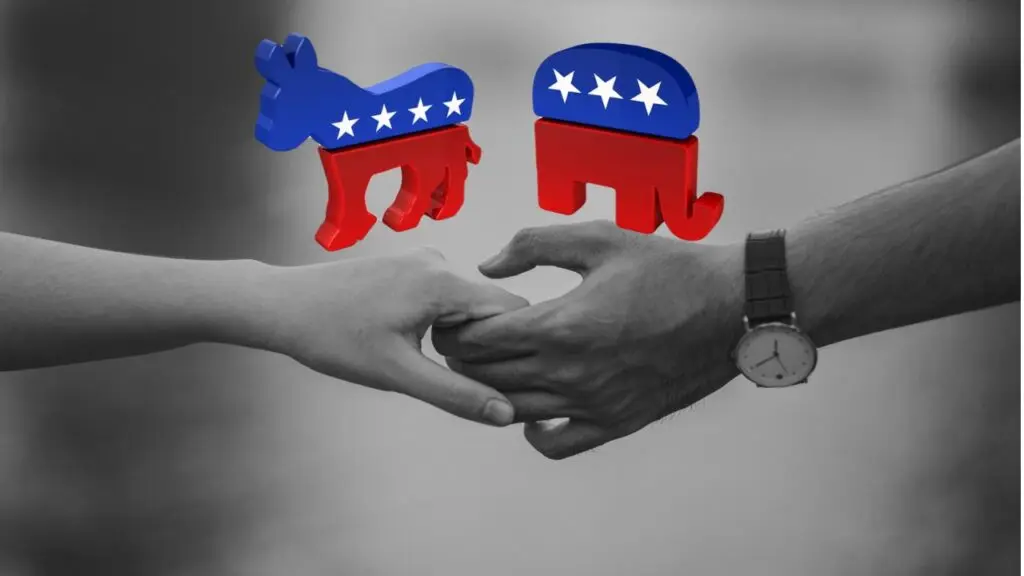
For generations, the conventional wisdom of modern courtship suggested that polite society—and successful romance—avoided two major conversational third rails: religion and politics. First dates were designed as low-stakes explorations of shared hobbies, mutual humor, and baseline chemistry. Disagreements over tax policy, foreign affairs, or partisan identity were typically brushed aside or saved for later stages of a relationship, long after an emotional foundation had been established.
Today, that traditional playbook has been thoroughly discarded.
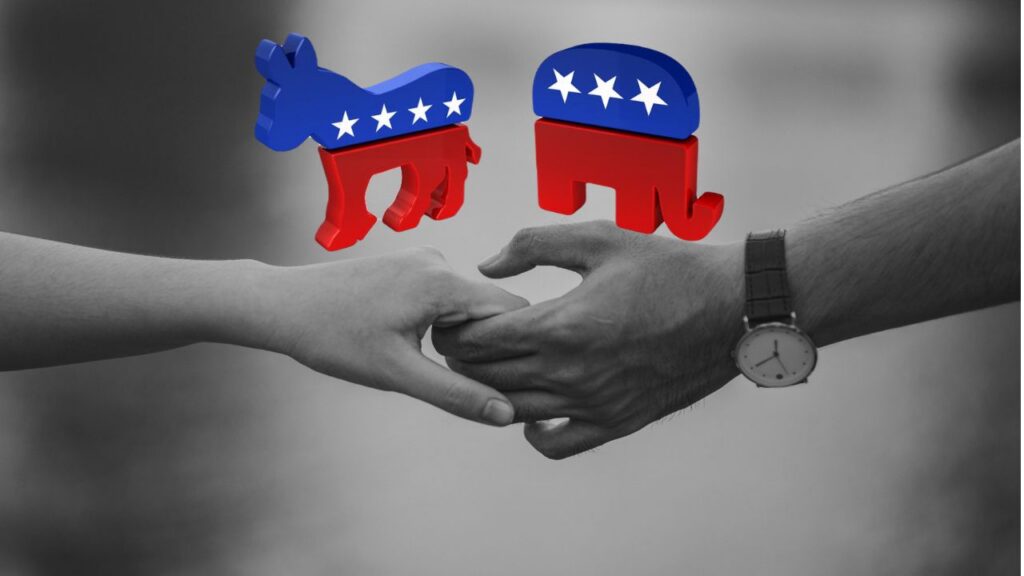
According to sweeping data from major online dating platforms, behavioral analysts, and sociological research centers, political affiliation has officially transitioned from a dinner-table annoyance to a primary filtering mechanism for singles. In the contemporary digital dating marketplace, a potential partner’s stance on the political spectrum—whether they identify as MAGA, conservative, liberal, socialist, or somewhere in between—frequently outranks traditional compatibility metrics like age, geographic proximity, and even religious background.
This deep-seated ideological sorting did not emerge in a vacuum. The seismic societal disruptions of the COVID-19 pandemic temporarily shifted the vetting process, replacing partisan politics with public health compliance. Between 2020 and 2022, metrics such as vaccination status and mask-wearing became the ultimate litmus tests for intimacy. However, as pandemic-era restrictions faded into memory, the cultural landscape pivoted back with a vengeance. Traditional partisan politics reclaimed its throne as the ultimate dealbreaker, reshaping how Americans find love, build families, and evaluate the moral character of potential mates.
Detailed Chronology: The Evolution of the Dealbreaker
To understand how romance became so deeply politicized, one must trace the timeline of dating app culture over the past half-decade. The transition from casual swiping to rigorous ideological screening represents a profound shift in human social behavior.
2020: The Pandemic Pivot and Health as Identity
When the COVID-19 pandemic ground global society to a halt in the spring of 2020, the dating world faced an unprecedented existential crisis. Physical isolation forced romance into the digital sphere via video dates and text messaging, but as lockdowns began to lift, physical meetings required high-stakes risk assessments.
Almost overnight, the traditional criteria for evaluating a partner—sense of humor, career ambition, physical attraction—were superseded by public health protocols. Singles were no longer just asking what a person did for a living; they were interrogating their stance on social distancing, masking, and eventual inoculation. Health status became a proxy for civic duty, empathy, and personal responsibility.
2021: The Height of Biomedical Screening
By 2021, the widespread rollout of COVID-19 vaccines provided a concrete data point around which the dating market could organize itself. Platforms and researchers began quantifying what had previously been whispered about in chat rooms: biological compliance was the new dating prerequisite.
Data released by the Match Group in 2021 painted a stark picture of a deeply fractured dating pool. According to their metrics, a staggering 80% of vaccinated singles expressed a distinct preference for a vaccinated partner. More revealingly, over half of those surveyed stated they would outright refuse a second date or a romantic relationship with an unvaccinated individual.
Simultaneously, a landmark study by UCLA Health surveyed 111 individuals, asking a direct question: "Has COVID-19 changed the way you view dating or being intimate with someone?" An overwhelming 88% answered in the affirmative. Furthermore, 71% of respondents explicitly noted that a person’s vaccination status played a decisive role in their willingness to pursue them romantically. For a significant portion of the dating population, getting the shot was no longer just a personal medical choice—it was a core moral boundary.
2022: The Pendulum Begins to Swing Back
As the acute phase of the pandemic began to subside and public fatigue set in, the Pew Research Center released comprehensive data in April 2022 examining the lingering effects of the era on single Americans. The findings revealed a population exhausted by the friction of pandemic dating, with 56% of respondents indicating that a potential date’s vaccination status no longer mattered to them.
However, deep divisions remained. Even as public health mandates dissolved, 41% of single Americans maintained that they would only consider going out with someone who had been vaccinated. The pandemic had permanently trained the modern dater to view strangers through the lens of institutional trust and compliance, laying the psychological groundwork for the return of hyper-partisan filtering.
2025–2026: The Ascendancy of Partisan Vetting
By late 2025, the dust of the pandemic had largely settled, but the habit of rigorous ideological screening remained firmly entrenched. Political identity had not only returned to the forefront of online dating—it had surpassed almost every other traditional metric of compatibility.
A November 2025 survey conducted by Change Research highlighted the extreme nature of modern dating boundaries. The survey revealed that political red lines crossed gender lines with surprising uniformity: 64% of men and 55% of women identified an association with communism as their absolute biggest dating red flag.
In today’s digital landscape, the swipe left is no longer just about a bad haircut or an uninspired bio; it is a political referendum. As political commentator and social media content creator Kaitlin Colegate observes:
"Liberal or conservative, Republican or MAGA, Socialist or Democrat is what the first thing many singles seem to be looking out for when it comes to dating online."
Supporting Context & Metrics: The Numbers Behind the Divide
The anecdotal evidence of politically charged dating is thoroughly backed by hard data from sociological studies, dating app internal metrics, and public opinion polls. Modern singles are increasingly practicing what sociologists call "homophily"—the tendency to associate and bond with similar others—specifically along partisan lines.
The Hierarchy of Dating Preferences
Historically, demographic variables such as religion, education level, and age served as the foundational pillars of partner selection. While education and age remain important, political affiliation has climbed rapidly up the hierarchy.
- Political Homogeneity: According to recent relationship studies, Americans are increasingly unwilling to cross party lines for romance. The fear of ideological incompatibility is often tied to deeper concerns regarding core values, lifestyle choices, and future planning, such as how to raise children or handle finances.
- The Geographic Divide: Urban versus rural divides have been exacerbated by political sorting. Singles living in heavily progressive metropolitan areas often find themselves using dating app bios to screen out conservative or Trump-supporting profiles, while rural daters frequently do the reverse to protect themselves from cultural friction.
Red Flags in the Digital Age
The Change Research survey from late 2025 underscores how specific ideological labels act as instant deterrents. While communism ranked as the primary universal red flag, other partisan identifiers carry heavy social penalties depending on the geographic and demographic profile of the user.
For many, political labels are viewed as shorthand for a person’s worldview on human rights, economic policy, personal freedoms, and social justice. In an era where politics is treated less as a set of policy preferences and more as a totalizing moral identity, dating someone across the political aisle feels less like a compromise and more like an existential threat.
Official Statements and Expert Perspectives
The intersection of politics, public health, and romance has drawn intense scrutiny from cultural commentators, psychologists, and relationship experts who study the shifting dynamics of human connection.
The Media and Cultural Lens
Political analysts and content creators who monitor digital culture note that dating apps have essentially transformed into micro-political arenas. Kaitlin Colegate points out that the initial vetting process has become almost entirely ideological:

"Liberal or conservative, Republican or MAGA, Socialist or democrat is what the first thing many singles seem to be looking out for when it comes to dating online."
This hyper-focus is driven in part by the curated nature of social media and dating profiles. When users can display their political allegiances via hashtags, profile frames, or explicit bio statements, it invites immediate sorting. Users no longer have to wait for a third-date conversation about the evening news to discover where a partner stands; the information is broadcasted upfront like a digital resume.
The Psychological Impact of COVID-19 on Intimacy
The transition from health-based vetting to political vetting makes psychological sense to behavioral scientists. The pandemic taught an entire generation of singles that physical proximity to the "wrong" kind of person could carry tangible risks.
When UCLA Health asked respondents in 2021 if COVID-19 had changed how they viewed intimacy, the near-unanimous "yes" response signaled a profound cultural shift. People learned to view strangers with heightened suspicion. Once that psychological barrier was erected, it was easily transferred from biomedical compliance back to political and ideological compliance. Trust had become the scarcest commodity on the dating market.
Future Outlook: Where is Modern Romance Headed?
As we look toward the future of dating in an increasingly polarized society, several key trends and consequences are beginning to emerge. The weaponization of politics in romance is unlikely to recede; instead, it is becoming institutionalized within the dating industry itself.
The Rise of Niche Dating Platforms
In response to widespread political fatigue and the frustration of cross-party friction, the market has seen a boom in niche, politically segregated dating applications. Platforms catering exclusively to conservatives, liberals, libertarians, or faith-based traditionalists have gained significant traction.
These apps promise users a friction-free environment where they do not have to worry about ideological dealbreakers. While critics argue this trend further deepens societal echo chambers and political tribalism, proponents view it as a practical solution to dating burnout. After all, if political alignment is the number one priority for modern singles, building platforms specifically designed to facilitate that alignment is simply meeting market demand.
Long-Term Societal Implications
The entrenchment of politics in dating carries significant long-term consequences for family formation and social cohesion. When individuals systematically screen out potential partners based on partisan identity, the pool of eligible matches shrinks dramatically. This hyper-sorting can lead to:
- Delayed Partnerships: Singles spend more time filtering and less time building meaningful connections, potentially contributing to delayed marriage and family formation rates.
- Increased Polarization: By surrounding themselves exclusively with ideological matches, couples reinforce each other’s political viewpoints, potentially driving a deeper wedge into the broader societal fabric.
- The Redefinition of Compatibility: Love, once viewed as a mysterious force that could transcend differences, is increasingly treated as a technical matching exercise based on shared ideological data points.
Conclusion
The transformation of modern dating from a realm of open-minded exploration into a battleground of political and ideological purity reflects the broader state of society. From the health-mandate compliance checks of the pandemic era to the fierce partisan red lines of today, modern singles have made it clear: romance can no longer exist outside the political sphere. Whether this hyper-vigilance protects individuals from heartbreak or simply traps them within tighter ideological boxes remains one of the defining social questions of our time.

0 Comments