

Executive Overview
As the Gulf of Florida warmed to unprecedented summer-like temperatures in late September 2024, meteorological agencies began tracking a massive atmospheric disturbance in the Caribbean Sea. Within days, that system rapidly coalesced, organizing into a formidable tropical cyclone destined to reshape the lives of millions along the southeastern seaboard.
In response to the escalating crisis, Florida Senate President Kathleen Passidomo issued an official administrative memorandum on September 24, 2024, announcing the complete closure of all Florida Senate offices in Tallahassee. The shutdown, spanning from Wednesday, September 25, through Friday, September 27, was implemented to allow lawmakers, legislative aides, and Senate staff critical time to secure their properties, evacuate vulnerable zones, and tend to their families ahead of Hurricane Helene’s expected landfall.
This executive action underscores the severity of the threat posed by Hurricane Helene, a storm characterized by forecasters not only by its immense sustained wind speeds, but also by its staggering geographic footprint and life-threatening storm surge potential. While Tallahassee legislative operations ground to a halt, the memorandum granted individual senators broad discretionary powers regarding the operational status of their local district offices scattered across the state’s projected impact zones. Furthermore, recognizing the inevitable breakdown of modern telecommunications infrastructure during major natural disasters, Senate leadership established protocols for post-storm status reporting, prioritizing personnel safety above all routine administrative functions.
This comprehensive report examines the sequence of events leading up to the closure, analyzes the broader contextual metrics of the 2024 Atlantic hurricane season, reviews the precise language and directives issued by Senate leadership, and assesses the long-term outlook for governance, disaster recovery, and infrastructure resilience in the Florida capital and beyond.
Detailed Chronology: The Genesis and Escalation of Hurricane Helene
The timeline of Hurricane Helene’s development is a masterclass in rapid intensification, driven by anomalously warm sea-surface temperatures in the Caribbean and the Gulf of Mexico. Understanding the chronology of the storm provides vital context for why legislative leaders in Tallahassee took swift, decisive action on September 24.
September 21–22, 2024: Formation and Initial Tracking
Meteorologists at the National Hurricane Center (NHC) began monitoring a broad area of low pressure in the western Caribbean Sea. Initially designated as Potential Tropical Cyclone Nine, the system displayed broad circulation and disorganized shower activity. However, environmental conditions—including high moisture levels, low wind shear, and ocean waters exceeding 88°F (31°C)—provided an ideal thermodynamic environment for rapid organization. By late September 22, the disturbance strengthened into a tropical depression, and shortly thereafter, into Tropical Storm Helene.
September 23, 2024: The Shift Toward Rapid Intensification
As Helene tracked northwestward past the Yucatan Peninsula, computer models began converging on a terrifying trajectory: a direct march up the eastern Gulf of Mexico toward the Florida Big Bend region. Forecasters noted that the storm possessed an unusually large wind field, meaning its destructive impacts would be felt hundreds of miles away from the eventual eye. Warm loop currents in the Gulf acted as rocket fuel, allowing Helene to rapidly escalate from a moderate tropical storm into a Category 1 hurricane, with projections showing it achieving major hurricane status (Category 3 or higher) prior to landfall.
September 24, 2024: Panic, Preparations, and the Senate Memorandum
By the morning of Tuesday, September 24, the National Hurricane Center issued hurricane and storm surge watches and warnings for a vast expanse of Florida’s coastline. Governor Ron DeSantis declared a state of emergency for nearly all of Florida’s 67 counties, ordering widespread evacuations in low-lying coastal communities.
It was against this backdrop of escalating urgency that Senate President Kathleen Passidomo released her official memorandum to all senators and Senate staff. The document acknowledged the compounding uncertainties of the storm’s exact track while emphasizing the absolute necessity of preparation:
"The storm that is anticipated to become Hurricane Helene is strengthening as she approaches Florida, and the exact path remains uncertain. It is important that everyone take the time to make preparations for your home and family."
Recognizing that schools across the region were rapidly shutting their doors and that municipal infrastructure was pivoting entirely to emergency management, Passidomo officially closed the Tallahassee Senate headquarters for the remainder of the week.
September 25–27, 2024: The Closure and Landfall Window
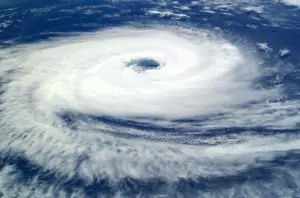
During these three critical days, while Tallahassee braced for severe squalls, power outages, and torrential downpours, the physical seat of Florida’s legislative power remained locked down. Staff members evacuated or hunkered down in hardened structures. On the evening of September 26, Helene officially made landfall in the Big Bend region as a destructive Category 4 hurricane, unleashing historic storm surges, snapping century-old live oaks, and cutting off power to millions of residents across Florida and neighboring states.
Supporting Context and Metrics: Understanding the Scale of the Disaster
To fully appreciate the gravity of Senate President Passidomo’s administrative directive, one must examine the broader environmental and logistical metrics surrounding Hurricane Helene and the operational realities of the Florida Capitol.
Meteorological Metrics of a Monster Storm
Hurricane Helene etched its name into meteorological history books through several alarming statistical benchmarks:
- Intensity at Landfall: Sustained winds reached an estimated 140 mph (225 km/h) at the time of landfall near Perry, Florida, making Helene the strongest hurricane on record to strike the state’s Big Bend region.
- Storm Surge Heights: Coastal communities in the Big Bend and Nature Coast experienced catastrophic storm surges ranging from 15 to 20 feet above normal ground level, entirely submerging coastal homes and obliterating infrastructure.
- Wind Field Extent: Unlike compact storms that pack their punch into a small radius, Helene’s tropical-storm-force winds extended outward up to 340 miles from its center, impacting regions far removed from the eye, including the inland capital of Tallahassee.
- Precipitation Totals: Portions of the Florida Panhandle and southern Georgia received upwards of 15 to 20 inches of rain, triggering catastrophic inland flooding and overflowing river basins.
Legislative Infrastructure and Regional Disruption
Tallahassee is not merely a government seat; it is a sprawling administrative ecosystem dependent on regional infrastructure that is exceptionally vulnerable to extreme weather events.
- School Closures: Leon County Schools and surrounding districts shuttered operations early in the week, creating immediate childcare crises for working legislative staffers who suddenly found themselves balancing urgent domestic preparations with professional duties.
- Power Grid Fragility: The heavily wooded landscape of Florida’s capital city makes its overhead electrical distribution network notoriously susceptible to falling pine and oak trees during high-wind events. Extended power outages were an absolute certainty, threatening the viability of remote work for Senate employees.
- Geographic Spread of Staff: While Tallahassee headquarters represents the central hub, individual senators maintain distinct district offices stretching from the storm-ravaged coastlines of Pinellas and Pasco counties to inland agricultural communities. The decentralized approach ordered by leadership—granting local discretion—was critical given the vastly different threat levels faced by various districts.
Official Statements and Administrative Directives
The memorandum issued by Senate President Kathleen Passidomo serves as an administrative model for how legislative bodies must balance continuity of government with the safety and well-being of public servants during catastrophic natural disasters. Below is a detailed breakdown of the official directives contained within the document.
1. The Closure Window
"Taking into account storm preparations and anticipated school closures, out of an abundance of caution, Senate Offices in Tallahassee will be closed on Wednesday, September 25 – Friday, September 27."
This proactive stance ensured that state employees were not forced to choose between reporting to work and securing their homes against an impending catastrophe. By closing operations three full days ahead of the worst impacts, leadership recognized that safe evacuation and preparation require time—time that is often squandered when administrative inertia delays closures until the last minute.
2. District Office Discretion
"Senators maintain discretion regarding the closure of any district office in the impacted areas."
Because Florida is geographically diverse and experiences weather events with localized severity, a blanket statewide closure for all district offices would have been impractical. Lawmakers representing South Florida or deep inland regions faced different operational conditions than those representing coastal communities in the direct path of the storm surge. Empowering individual senators to evaluate local risks ensured that constituent services could remain open where safe, while shutting down where danger was imminent.
3. Communication Protocols and Post-Storm Reporting
"As we all know, wireless service can be limited in storm-impacted areas, making cell phone and email communications difficult. To the extent possible, please notify your immediate supervisor of any severe impacts following the storm. Please stay safe and cautious during this uncertain time."
Communication blackouts are a hallmark of major hurricanes. Cell towers collapse, fiber-optic cables are severed, and power grids fail. President Passidomo’s advisory demonstrated a pragmatic understanding of post-disaster realities, explicitly lowering administrative reporting burdens for employees who found themselves trapped without electricity, internet, or cellular connectivity. Staff were instructed to check in only "to the extent possible," preventing unnecessary panic and freeing emergency personnel to focus on search-and-rescue operations.
Future Outlook: Governance, Climate Resilience, and Disaster Preparedness
The closure of the Florida Senate due to Hurricane Helene is part of a larger, sobering trend facing public institutions in the 21st century: the increasing frequency and severity of extreme weather events driven by a changing global climate. As state governments grapple with these realities, several critical questions and policy imperatives emerge for the future.
Reassessing Capital Vulnerability
Tallahassee, while geographically inland compared to Miami or Tampa, is no longer insulated from the devastating reach of modern hurricanes. As Gulf waters continue to absorb excess planetary heat, storms are capable of maintaining their destructive intensity much further north and inland than historical averages suggested. The Florida Legislature must continually evaluate the physical hardening of its capitol complex, ensuring that critical data centers, emergency operations rooms, and administrative archives are fully resilient against prolonged grid failures and extreme wind events.
The Evolution of Remote Legislative Governance
The COVID-19 pandemic forced legislative bodies around the world to rapidly adopt remote working technologies, video conferencing platforms, and digital voting systems. While these tools were originally designed for public health emergencies, the experiences of Hurricane Helene demonstrate that they are equally vital during natural disasters.
In the future, the Florida Senate may look toward formalizing hybrid operational protocols that allow legislative committees, staff coordination, and administrative oversight to continue safely even when physical government complexes are shuttered due to extreme weather. However, as the Senate memorandum wisely noted, the primary obstacle in modern storms is not software—it is the physical infrastructure of power and telecommunications. Until the state’s electrical grid is sufficiently buried and hardened against catastrophic wind damage, remote work will remain severely hampered during the immediate aftermath of major hurricanes.
Strengthening Constituent Services in Crisis Zones
District offices serve as the front line of constituent support during disasters, often acting as local information hubs when federal and state agencies are overwhelmed. The decision to leave district office closures to the discretion of individual senators highlights the importance of local leadership autonomy. Moving forward, the Florida Senate will likely need to invest in more robust, decentralized emergency power supplies—such as satellite phones, solar generators, and mobile command units—for district offices situated in notoriously hurricane-prone counties.
Conclusion: A Testament to Human Safety First
Hurricane Helene left an indelible mark on the landscape, economy, and collective psyche of Florida. From the coastal ruins of the Big Bend to the flooded neighborhoods of Tampa Bay and the pine-strewn avenues of Tallahassee, the storm tested the resilience of the Sunshine State to its absolute limits.
In officially locking the doors of the Florida Senate on September 24, 2024, Senate President Kathleen Passidomo prioritized the most important asset of state government: its people. By acknowledging the immense dangers of the approaching meteorological monster and giving staff the necessary time to protect their families, the Senate administration demonstrated responsible, compassionate leadership. As Florida faces an uncertain climatic future, the protocols established during the Hurricane Helene closures will serve as an enduring benchmark for how public institutions navigate the fury of nature while preserving the continuity of democratic governance.

0 Comments