


Executive Overview
In a dramatic sentencing hearing that blended high-stakes professional athletics, federal white-collar crime, and backdoor political maneuvering, a federal judge in St. Louis handed down an 11-year prison sentence to Sid Jawahar on Tuesday. Jawahar, the co-founder of investment firm Swiftarc, masterminded a sprawling, multi-million-dollar Ponzi scheme that defrauded investors out of more than $25 million.
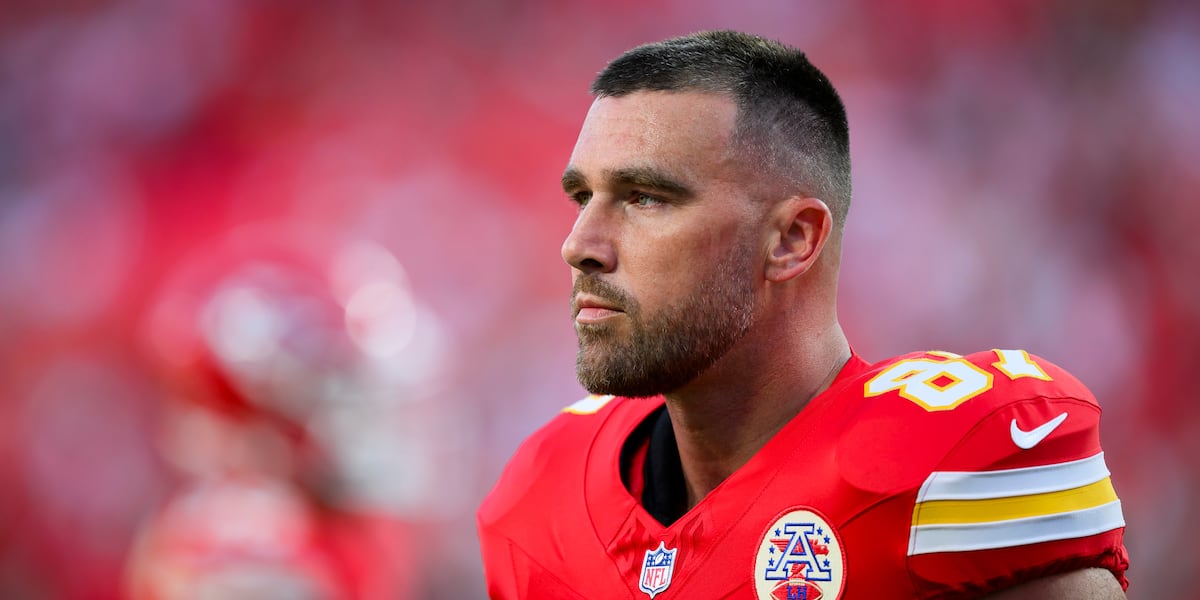
Among the high-profile victims caught in Jawahar’s financial web is Kansas City Chiefs star tight end Travis Kelce. While court proceedings largely skirted deep disclosures regarding individual losses, prosecutors officially named Kelce during the hearing as one of the prominent figures targeted by the fraudulent enterprise.
The sentencing brought to a close months of federal investigation, but it also blew the lid off a sprawling corruption and influence-peddling campaign. Prosecutors revealed that Jawahar attempted to bypass justice by orchestrating a clandestine influence operation from his jail cell. This scheme included paying thousands of dollars to high-powered political consultants, manufacturing deceptive local media coverage designed to "geofence" and manipulate the presiding judge, and securing a lenient sentencing recommendation letter penned on official congressional letterhead by U.S. Representative Sam Graves (R-Mo.).
U.S. District Judge Zachary Bluestone summarily dismissed the political pressure, delivering a prison term nearly triple what Representative Graves had advocated for. Jawahar, who has lived in the United States illegally since 2005, now faces mandatory deportation following the completion of his prison sentence, which will be followed by three years of supervised release.
Detailed Chronology of the Fraud and Sentencing
The unraveling of Sid Jawahar’s financial deception spans several years, transitioning from high-finance venture capital claims to federal indictments, clandestine jailhouse phone calls, and an aggressive, albeit failed, eleventh-hour sentencing mitigation strategy.
1. The Genesis of Swiftarc and the Ponzi Scheme
In the years leading up to federal intervention, Jawahar positioned himself as a savvy venture capitalist and corporate co-founder through Swiftarc, a fund that attracted substantial capital from professional athletes, wealthy private investors, and institutional entities. Public records—including a 2011 Forbes feature highlighting elite sports figures branching into venture capital and real estate—confirm that Travis Kelce was among the investors who placed capital into funds associated with Jawahar.
However, rather than deploying the capital into legitimate, revenue-generating technology or real estate ventures, Jawahar operated a classic Ponzi scheme. Federal prosecutors established that instead of earning legitimate returns, Jawahar utilized incoming funds from fresh waves of investors to pay off earlier financiers—a textbook method designed to project artificial stability and growth.
Concurrently, Jawahar funneled millions of dollars in stolen capital to fuel an extravagant, jet-setting lifestyle. Court documents describe a lavish pattern of expenditures encompassing private jet charters, extended stays at luxury hotels, and high-end outings at elite restaurants, all financed by the retirement and investment savings of unsuspecting victims.
2. The Guilty Plea and Incarceration
Jawahar’s house of cards ultimately collapsed under federal scrutiny. In January, he formally pleaded guilty in federal court to multiple counts of wire fraud. Following his guilty plea, he was remanded to custody, residing temporarily at the Ste. Genevieve County Jail while awaiting his sentencing date before U.S. District Judge Zachary Bluestone.
Court documents subsequently illuminated deeper legal complications, noting that Jawahar is a native of India who has resided in the United States unlawfully since 2005, making him a prime candidate for federal deportation following the satisfaction of any criminal sentence.
3. The Jailhouse Conspiracies and Influence Operations
Realizing he faced a mandatory, lengthy prison sentence for a fraud scheme exceeding $25 million in total losses, Jawahar initiated a brazen campaign to manipulate the judicial system from behind bars. Federal prosecutors amassed a damning cache of recorded jailhouse phone calls detailing these backroom machinations.
On August 24, Jawahar entered into a financial agreement with Axiom Strategies, a prominent political consulting firm, paying them $10,000. According to prosecutors, the explicit purpose of this transaction was to "assist with the development and coordination of approximately one to two advocacy or support letters for consideration in connection with Client’s forthcoming sentencing."
Further investigative findings revealed a coordinated plan to manufacture favorable public relations. Jawahar allegedly paid a consultant to secure a glowing news article in the Jefferson City News Tribune. The fabricated article falsely claimed that Jawahar had established "a comprehensive, peer-to-peer academic and vocational academy" inside the Ste. Genevieve County Detention Center.
Officials at the detention facility swiftly debunked the claims, issuing a categorical statement: "We have never had an incarcerated individual, including this particular detainee, start any programs within our facility."
When discussing the strategy in a recorded August 31 phone call with Axiom Strategies CEO Jeff Roe, Jawahar explicitly stated that the purpose of the planted media coverage was "to influence the judge." Roe allegedly responded by detailing a targeted digital distribution strategy, telling Jawahar that he would financially back a geofencing campaign to ensure the judge viewed the positive press coverage near his home. A transcript of the call filed in court quoted Roe stating: "I’m gonna take that and I’ll put a little money around it and geofence his house and so he’ll see it…"
4. Congressional Intervention on Official Letterhead
As part of the Axiom-coordinated lobbying effort, U.S. Representative Sam Graves (R-Mo.) stepped into the fray. On September 3, Congressman Graves signed and submitted a formal letter on official congressional letterhead to U.S. District Judge Zachary Bluestone.
Writing in what he termed a personal capacity, Graves praised the judge’s legal pedigree—noting his "professional pedigree—shaped by elite analytical training, rigorous appellate oversight and a deep grounding in our state’s legal infrastructure." The congressman then urged the court to show leniency, recommending a sentence of just four years (48 months)—a fraction of what federal sentencing guidelines and prosecutors demanded for a fraud scheme of this magnitude.
Graves argued that a reduced, structured sentence would allow Jawahar the opportunity to re-enter society as a "productive economic agent capable of continuing that restitution."
However, prosecutors and the court noted a glaring hypocrisy: despite claims of facilitating restitution, Jawahar had failed to pay back any substantive funds to his victims throughout the legal proceedings.
5. The Sentencing Verdict
On Tuesday, U.S. District Judge Zachary Bluestone formally handed down his sentence in St. Louis, utterly rejecting the political pleas and manipulative influence operations.
Judge Bluestone sentenced Sid Jawahar to 11 years in federal prison, to be followed by three years of supervised release. During the hearing, the judge addressed the coordinated lobbying efforts and the fabricated PR campaign directly, labeling the attempts to manipulate his judicial impartiality a "ludicrous idea."
Furthermore, the court expressed profound displeasure regarding the total lack of restitution provided to the victims, dismissing Jawahar’s verbal assertions in court that he remained committed to paying back what he stole. With his prison term established, federal authorities confirmed that Jawahar will be transferred to immigration custody for deportation upon his release.
Supporting Context & Metrics
To fully understand the scope of the Sid Jawahar case, it is necessary to examine the financial figures, political footprints, and corporate linkages involved in the scandal.
- Total Fraud Magnitude: Prosecutors established that Jawahar’s Ponzi scheme amassed losses exceeding $25 million across its victim base.
- The Travis Kelce Connection: While federal prosecutors maintain a strict policy of declining public commentary on individual victims, court documents and official proceedings explicitly named Kansas City Chiefs tight end Travis Kelce as one of the prominent investors swept up in the Swiftarc fraud. Public venture capital archives from 2021 previously documented Kelce’s portfolio diversification into funds co-founded by Jawahar.
- The Sentence Discrepancy: Representative Sam Graves formally requested a 4-year (48-month) prison sentence. Federal prosecutors pushed for a far stiffer penalty, and Judge Bluestone ultimately delivered an 11-year federal prison term, more than doubling the congressman’s recommendation.
- Political Consulting Expenditures: Jawahar paid $10,000 on August 24 to Axiom Strategies to coordinate support letters for his sentencing.
- Political Campaign Financial Links: Federal Election Commission (FEC) records indicate a deep, long-standing financial relationship between Representative Sam Graves’ congressional campaigns and Axiom Strategies (alongside its CEO, Jeff Roe). Graves’ campaign committees have funneled approximately $1.77 million to Axiom Strategies since 2006.
Official Statements and Public Reactions
The convergence of professional sports royalty, federal white-collar crime, and congressional lobbying has generated intense public interest and institutional silence across multiple fronts.
- Federal Prosecutors: Throughout the proceedings, the U.S. Attorney’s Office maintained a strict boundary regarding individual victims, stating that they do not publicly discuss specific investors. However, their court filings pulled no punches regarding Jawahar’s attempts to subvert justice, emphasizing that the defendant chose to spend thousands of dollars on political consultants and image-grooming articles rather than fulfilling his financial obligations to the people he defrauded.
- The Judiciary: U.S. District Judge Zachary Bluestone made his disdain for the defense’s external lobbying tactics crystal clear during the sentencing hearing. Describing the attempt to geofence his home and sway his judicial independence with fabricated press as a "ludicrous idea," Bluestone prioritized the severity of the financial devastation over the leniency arguments put forth by federal lawmakers.
- Defense Counsel: Doug Passon, attorney for Sid Jawahar, maintained in court that his client felt genuine remorse for his actions and remained committed to the theoretical concept of future financial restitution, though the court noted these promises lacked actionable backing.
- The Kansas City Chiefs & Representative Sam Graves: Requests for comment sent to the Kansas City Chiefs organization regarding Travis Kelce’s involvement went unanswered. Similarly, multiple requests for comment directed to Representative Sam Graves’ congressional office and Axiom Strategies regarding the congressional support letter and geofencing allegations yielded no responses prior to publication.
Future Outlook
As Sid Jawahar begins processing his 11-year federal prison sentence within the federal correctional system, several lingering questions and institutional repercussions remain on the horizon.
- Immigration and Deportation: Given that Jawahar has resided in the United States unlawfully since 2005, federal immigration authorities are expected to place an immediate detainer on him. Upon the completion of his 11-year sentence and subsequent supervised release, Jawahar will face mandatory removal proceedings to India.
- Asset Recovery and Restitution: Victims of the Swiftarc Ponzi scheme face a steep uphill battle in recovering their lost capital. Because Jawahar utilized investor funds to sustain an extravagant lifestyle rather than maintaining liquid assets or viable investments, court-appointed receivers and federal trustees will continue efforts to trace hidden assets, though full recovery remains statistically unlikely for most victims, including high-profile investors like Travis Kelce.
- Congressional Scrutiny and Ethics Questions: The revelation that a sitting U.S. congressman penned a formal plea for leniency on official letterhead—stemming from a jailhouse solicitation coordinated by a political consulting firm heavily financed by that same congressman’s campaign chest—has drawn sharp scrutiny. Legal and political ethics experts are expected to monitor whether congressional ethics committees or federal investigators will probe the origin and execution of the lobbying letter.
- Travis Kelce’s Focus: For Travis Kelce, the public confirmation of his victim status in the multimillion-dollar fraud case closes a chapter on an unfortunate financial entanglement. With the legal proceedings concluded and the perpetrator behind bars for over a decade, Kelce and his legal representatives can put the matter behind them as the star athlete maintains his focus on his ongoing career with the Kansas City Chiefs.

0 Comments