

Executive Overview
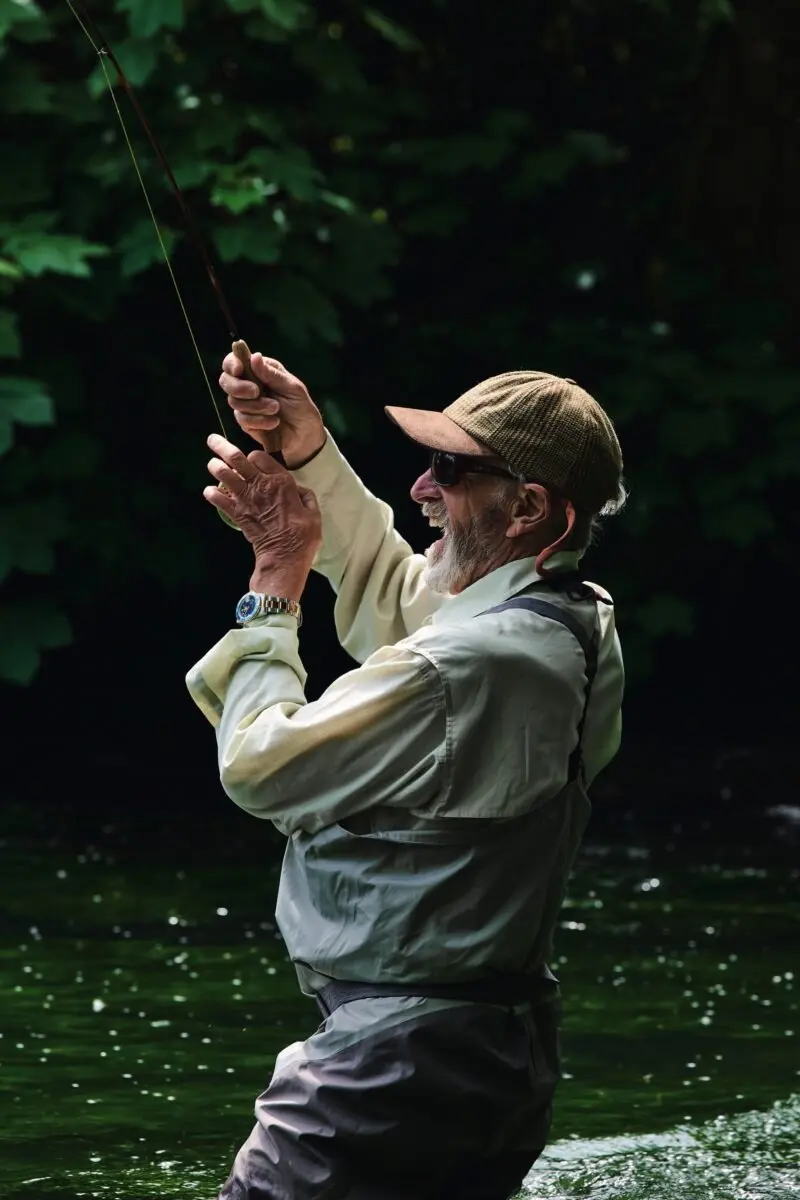
The literary and sporting worlds mourned a profound loss this past July with the passing of Charles Gaines, a legendary author, passionate angler, and foundational contributor to Garden & Gun. To read Gaines was to understand a rare intersection of intellectual rigor and visceral, outdoor adventure. Whether he was casting a fly line into the chalk streams of England, navigating the complex psychological landscapes of elite bodybuilding, or chronicling the architecture of family and human hubris in his memoirs, Gaines operated at the pinnacle of American letters.
In this retrospective, Garden & Gun Editor-in-Chief David DiBenedetto reflects on a decades-long personal and professional relationship with Gaines. From their initial encounters in the mid-1990s at Men’s Journal to their shared global angling expeditions, the portrait that emerges is that of a Renaissance man. Gaines was equally comfortable debating the theological nuances of Saint Francis—the subject of his final, posthumously published novel—as he was coaching a novice on the delicate mechanics of a tarpon strip set.
This article explores the sweeping legacy of a unique voice. It traces his trajectory from an Alabama-born graduate student casting lines with Ralph Ellison to the cultural architect behind Pumping Iron and Stay Hungry. Furthermore, it examines how Gaines came to define the ethos of modern outdoor journalism, embedding deep cultural appreciation, historical curiosity, and philosophical reflection into every story he filed.
Detailed Chronology
The Early Years and Academic Roots
Long before he became a household name in the fitness world or a revered fixture of outdoor journalism, Charles Gaines was a southern boy steeped in the rich literary traditions of Alabama. His innate curiosity and facility with the written word eventually led him to the prestigious Iowa Writers’ Workshop at the University of Iowa.
During his time in graduate school, Gaines moved within elite and diverse artistic circles. In a testament to his eclectic life, one of his formative memories as a young writer involved taking legendary author Ralph Ellison out for a day of fishing on an Iowa farm pond. This anecdote highlights an enduring trait of Gaines’s character: his ability to bridge high literature and the quiet, elemental simplicity of the outdoors with effortless grace.
The Cultural Explosion: Pumping Iron and Hollywood
In the early 1970s, Gaines’s career took a sharp and unexpected turn into the subculture of competitive bodybuilding. Commissioned by Sports Illustrated to write a feature on the burgeoning sport, Gaines immersed himself completely in the world of physical culture.
That single assignment blossomed into the landmark 1974 book Pumping Iron, which introduced a nascent Arnold Schwarzenegger and a stoic Lou Ferrigno to the global consciousness. The book was subsequently adapted into a documentary that Gaines narrated, catapulting Schwarzenegger—as the Hollywood icon later acknowledged—into mainstream superstardom.
Building on this momentum, Gaines penned his first novel, Stay Hungry (1972), which also placed bodybuilding at its narrative core. The book was swiftly adapted into a major motion picture directed by Bob Rafelson, boasting a star-studded cast that included Jeff Bridges, Sally Field, Fannie Flagg, and Arnold Schwarzenegger. While these projects could have pigeonholed a lesser writer into the niche world of fitness, Gaines viewed them merely as another chapter in a varied and adventurous life.
The Return to Journalism and the Men’s Journal Era
By the mid-1990s, Gaines had established himself as a master of the adventure essay, regularly securing enviable assignments that sent him to the corners of the earth in pursuit of big fish and grand stories.
It was during this period, specifically in 1995 at Men’s Journal, that David DiBenedetto—then a young editorial assistant tasked with fact-checking—first crossed paths with the established writer. Gaines represented the archetype of the dream journalist: a man who lived the adventures he wrote about and translated them to the page with wit, authority, and elegance. He knew how to pitch an expedition, charm local guides, and extract the deeper cultural narratives hidden beneath the surface of any sporting trip.
A Family Place and Deeper Introspection
While Gaines was widely celebrated for his external adventures, some of his most enduring work turned inward. His 1993 memoir, A Family Place, ostensibly chronicled the arduous process of building a cabin in Nova Scotia. However, under Gaines’s pen, the timber and nails became metaphors for something far grander.
The book evolved into a brilliant treatise on hubris, fatherhood, generational continuity, and personal rebirth. For many readers and fellow writers—including DiBenedetto, who notes that he returns to the book frequently—A Family Place stands as Gaines’s masterwork. It proved that his observational brilliance applied just as readily to the quiet framing of a doorway as it did to wrestling a tarpon or managing the egos of bodybuilding icons.
The Final Chapter: Garden & Gun and Saint Francis
In his later years, Gaines found a natural home at Garden & Gun. The magazine’s commitment to celebrating southern culture, fine living, sporting traditions, and deep storytelling aligned seamlessly with Gaines’s worldview.
For G&G, Gaines wrote some of his finest late-career pieces, including a definitive, affectionate love letter to the largemouth bass. True to form, even a simple assignment about bass fishing became a vehicle for cultural commentary and historical appreciation.
Gaines spent his final months completing a novel centered on Saint Francis of Assisi—a subject that united his lifelong appreciation for classical studies, his spiritual inquisitiveness, and his deep-seated connection to the natural world. Scheduled for publication in October, the novel serves as a fitting literary capstone for an author who spent his life exploring the duality of the human spirit.
Supporting Context & Metrics
To fully appreciate the impact of Charles Gaines, one must examine the intersection of outdoors journalism, mid-century magazine culture, and the evolution of the sporting essay.
The Evolution of the Sporting Essay
In an era dominated by rapid-fire digital content and listicles, Gaines practiced a slow, immersive brand of journalism. His assignments typically required weeks of travel, deep immersion in local customs, and extensive archival and field research.
- Global Footprint: Over a career spanning more than five decades, Gaines reported from more than 30 countries, filing dispatches on everything from Atlantic salmon streams in Scotland to ancient cultural sites in Slovenia.
- Literary Output: Gaines authored more than a dozen books, encompassing fiction, non-fiction, memoir, and seminal works on sports and fitness.
- Cross-Medium Influence: His work successfully bridged print journalism, documentary film, and Hollywood screenwriting, making him one of the few outdoor writers to achieve genuine crossover cultural impact.
The Angling Philosophy
Gaines viewed fishing not merely as a recreational hobby, but as a lens through which to view human civilization. In his travels for Garden & Gun and other publications—such as his 2022 assignment fishing the chalk streams of England—he consistently demonstrated that a day on the water was incomplete without a dive into local history, gastronomy, and philosophy. Whether sharing a cigar and a glass of Armagnac after a grueling day on the river or conversing with a minister about theological paradoxes while hunting tarpon off Sea Island, Gaines extracted meaning from every ecosystem he entered.
Official Statements and Tributes
The literary and entertainment communities responded with an outpouring of grief and admiration following Gaines’s passing.
Arnold Schwarzenegger
In an emotional post shared on Instagram shortly after Gaines’s death, Hollywood icon and former California Governor Arnold Schwarzenegger credited Gaines with launching his mainstream career.
"Charles Gaines was more than just the man who documented our world in Pumping Iron; he was a brilliant storyteller, a dear friend, and the person who helped introduce our sport—and me—to the mainstream. His intellect was matched only by his adventurous spirit. We have lost a true giant of letters."
David DiBenedetto (Garden & Gun)
In his editorial tribute, Editor-in-Chief David DiBenedetto captured the essence of what made working with Gaines so transformative:
"That was part of Gaines’s magic: A master of the classics and the art of living, he could hold court with anyone on nearly any topic… An Alabama boy at heart, Gaines knew how to enjoy life in high style. He appreciated a great day on the water as much as he did a fine cigar and a glass of Armagnac. And always with notebook in hand, fishing for the story that was more than fish."
Future Outlook
As the literary world prepares for the October publication of Charles Gaines’s final novel on Saint Francis, discussions are already underway regarding the long-term preservation and reissue of his extensive back catalog.
- Posthumous Publication: The release of his novel on Saint Francis is anticipated by critics and fans alike as a profound meditation on faith, nature, and humility—themes that dominated the twilight of Gaines’s life.
- Archival Legacy: Academic institutions and sporting foundations are currently exploring ways to archive Gaines’s extensive notebooks, photographs, and unpublished manuscripts to preserve his methodology for future generations of outdoor writers.
- Enduring Influence on Garden & Gun: The tone that Gaines helped cultivate at G&G—one that refuses to separate the act of fishing or hunting from the broader context of art, history, and good living—remains a guiding light for the publication’s editorial mission.
Charles Gaines leaves behind a standard of living and writing that few can hope to emulate. He proved that an observant eye, a sharp intellect, and a deep love for the natural world can transform a simple fishing trip or a biographical profile into a work of enduring art. As readers turn to his pages—whether revisiting A Family Place, turning the nostalgic leaves of Pumping Iron, or opening the October/November issue of Garden & Gun—the spirit of the quintessential southern gentleman, angler, and scholar remains vibrantly alive.

0 Comments