

Executive Overview
In a major legal offensive targeting the pharmaceutical and healthcare supply chains, Florida Attorney General James Uthmeier has filed a sweeping antitrust and consumer protection lawsuit against several of the nation’s largest insulin manufacturers, pharmacy benefit managers (PBMs), and rebate aggregators. The complaint, formally lodged in Florida’s Eleventh Judicial Circuit, accuses these corporate entities of orchestrating a complex, multi-layered pricing scheme that artificially inflated the costs of insulin and other essential diabetes medications for millions of vulnerable patients across the state.
The litigation places some of the most influential names in the global healthcare and pharmaceutical sectors in the crosshairs. Named defendants include leading insulin manufacturers Eli Lilly, Novo Nordisk, and Sanofi, alongside dominant pharmacy benefit managers CVS Caremark, Express Scripts, and OptumRx. Additionally, the lawsuit targets specialized rebate aggregators—Zinc, Ascent, and Emisar—alleging they played a pivotal role in operationalizing the financial mechanisms driving up retail drug costs.
At the core of the state’s legal challenge is a controversial practice known as the "list-price trap." According to the Attorney General’s Office, the defendants systematically collaborated to drive up published list prices for life-saving medications, while simultaneously funneling massive rebates and administrative fees back and forth behind closed doors. While these secret financial maneuvers often reduced net costs for the corporate entities involved, they left uninsured individuals, patients with high-deductible health plans, and those bound to coinsurance rates directly exposed to punishingly high, inflated sticker prices.
With over 2.3 million Florida adults diagnosed with diabetes, the stakes of this litigation could not be higher. The state’s legal team is pursuing multiple counts under the Florida Deceptive and Unfair Trade Practices Act and the Florida Antitrust Act, seeking permanent injunctions, full restitution for affected consumers, the disgorgement of ill-gotten profits, civil penalties, and sweeping systemic reforms. As this high-stakes legal battle unfolds, it promises to shine an uncompromising spotlight on the opaque economics of prescription drug pricing in America.
Detailed Chronology and Legal Mechanics of the Alleged Scheme
To fully understand the gravity of Attorney General Uthmeier’s lawsuit, one must examine the intricate mechanics of how modern prescription drugs move from manufacturing plants to patients’ hands, and how the defendants allegedly manipulated this ecosystem for financial gain.
The complaint outlines a system where published list prices—often referred to as Wholesale Acquisition Costs (WAC)—are intentionally separated from the actual net prices paid by the supply chain. For years, critics of the pharmaceutical industry have pointed out that insulin list prices have skyrocketed far beyond the rate of inflation, despite the underlying compounds being discovered a century ago and manufactured at relatively low baseline costs.
The Anatomy of a Pharmacy Rebate Loop
According to the state’s filing, the mechanism driving these price hikes relies heavily on the symbiotic relationship between manufacturers and pharmacy benefit managers (PBMs). PBMs act as intermediaries between drug manufacturers, pharmacies, and health insurance plans. Their primary stated function is to negotiate lower drug costs on behalf of insurers and employers. However, the Florida lawsuit alleges that this system has been subverted into a profit-generating engine.
The process detailed in the complaint operates through several key phases:
- Inflating the Sticker Price: Manufacturers such as Eli Lilly, Novo Nordisk, and Sanofi deliberately establish high list prices for their products.
- Securing Formularies via Kickbacks: To ensure their products are included on preferred drug formularies—lists of medications covered by insurance plans—manufacturers offer substantial rebates and administrative fees to PBMs (such as CVS Caremark, Express Scripts, and OptumRx) and rebate aggregators (such as Zinc, Ascent, and Emisar).
- The Exclusionary Effect: PBMs frequently favor higher-priced drugs over cheaper alternatives (including generic or unbranded equivalents) because higher list prices yield larger absolute dollar-value rebates.
- Shifting the Burden to Consumers: While sophisticated insurance plans and corporate entities may benefit from confidential net-price discounts, individuals caught in coverage gaps bear the brunt. Uninsured patients, those who have not yet met their annual insurance deductibles, and patients whose out-of-pocket costs are calculated as a percentage-based coinsurance of the list price are forced to pay figures tied directly to the artificially inflated WAC.
The lawsuit highlights staggering internal discrepancies within these pricing structures. Citing corporate testimony, the complaint points to admissions from a high-ranking Eli Lilly executive revealing that from a roughly $280 list price for a single vial of the popular insulin medication Humalog, approximately $210 could be funneled back through the system as rebates and discounts to PBMs and intermediaries.
Yet, a patient without adequate insurance coverage walking into a retail pharmacy often has to pay the full, unmitigated $280 sticker price—a practice the state argues is unconscionable and illegal under Florida consumer protection laws.

Supporting Context, Market Metrics, and Scope of Impact
The human and economic toll of diabetes in Florida provides a stark backdrop to the legal proceedings. According to epidemiological data cited by the Attorney General’s Office, an estimated 2.3 million adults in the state live with diabetes. For these individuals, insulin is not a lifestyle choice or an elective treatment; it is a vital, non-negotiable biological requirement necessary to sustain life.
Beyond Insulin: Inclusion of GLP-1 and Combination Medications
While the lawsuit bears the colloquial designation of an "insulin case," its scope extends far beyond traditional insulin formulations. The state’s complaint strategically incorporates allegations involving several blockbuster GLP-1 receptor agonists and combination diabetes medications, including:
- Ozempic (semaglutide)
- Trulicity (dulaglutide)
- Victoza (liraglutide)
- Soliqua (insulin glargine and lixisenatide combination)
These medications have surged in popularity in recent years, not only for their efficacy in managing Type 2 diabetes but also for their profound impact on weight loss and cardiovascular health. By including these high-demand drugs in the litigation, the Attorney General’s Office underscores that the pricing distortions identified are systemic features of the contemporary pharmaceutical market rather than isolated incidents limited to traditional insulin.
The Economic Burden on Florida Families
The financial squeeze experienced by diabetic patients has been well-documented by public health advocates for years, but the state’s lawsuit aims to quantify the legal harm caused by the defendants’ practices. High out-of-pocket expenses often force patients into dangerous behaviors, such as "rationing" their insulin—skipping doses or taking less than prescribed to stretch supplies. Medical studies have consistently shown that insulin rationing leads to severe, long-term health complications, including diabetic ketoacidosis, kidney failure, blindness, cardiovascular disease, and, in tragic cases, premature death.
By focusing on the deceptive nature of the pricing model, the lawsuit seeks to demonstrate that the defendants actively marketed themselves as champions of affordability while simultaneously engineering pricing structures that maximized financial extraction from the most vulnerable segments of the population.
Official Statements and Political Reactions
The announcement of the lawsuit has triggered a wave of reactions from political leaders, consumer advocacy groups, and legal observers across Florida. The bipartisan or cross-branch support for addressing healthcare costs highlights the widespread public frustration with the pharmaceutical supply chain.
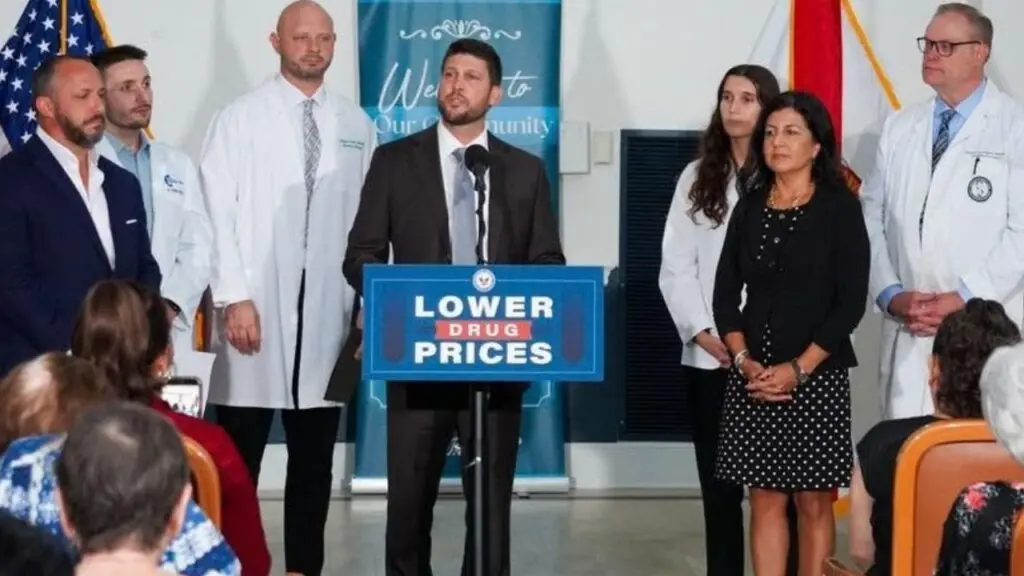
Attorney General James Uthmeier pulled no punches when outlining the state’s motivation for taking legal action.
"These companies told Florida families they were working to make insulin affordable," Uthmeier stated during the announcement of the legal filing. "Instead, they inflated the sticker price of a medicine people cannot live without and left Florida patients to pay it."
The Attorney General’s framing deliberately targets the corporate messaging utilized by both pharmaceutical manufacturers and PBMs, who frequently launch public relations campaigns boasting about patient assistance programs and copay cards while allegedly maintaining structural pricing architectures that keep list prices artificially elevated.
State Representative Danny Alvarez (R-Riverview) quickly stepped forward to voice his strong support for the legal action, emphasizing the human element of the state’s intervention.

"Florida families deserve to be treated fairly, especially our most vulnerable residents," Alvarez remarked. He noted that the lawsuit will serve as an essential fact-finding mechanism to determine the precise extent to which Florida patients suffered financial and physical harm as a direct result of the defendants’ coordinated pricing practices.
Legal scholars note that by deploying both consumer protection statutes (the Florida Deceptive and Unfair Trade Practices Act) and antitrust laws, the Attorney General’s Office has constructed a multi-pronged legal framework designed to attack the problem from both ends: challenging deceptive marketing practices designed to obscure true costs, and dismantling anti-competitive vertical restraints within the pharmaceutical distribution chain.
Legal Demands and Remedies Sought
The complaint filed in Florida’s Eleventh Judicial Circuit is exceptionally comprehensive regarding the remedies it demands from the court. Should the state succeed in proving its allegations, the financial and structural consequences for the defendants could be historic.
Specifically, the Attorney General’s Office is petitioning the court for the following forms of relief:
- Permanent Injunctions: Court orders legally barring the defendant manufacturers, PBMs, and rebate aggregators from engaging in the allegedly deceptive pricing, rebate, and marketing practices outlined in the complaint.
- Consumer Restitution: Financial compensation directed back to Florida residents who overpaid for insulin and diabetes medications as a result of the inflated list prices and exclusionary formulary placements.
- Disgorgement of Profits: Legal mechanisms forcing the corporate defendants to surrender any improper profits amassed through the alleged anticompetitive and deceptive schemes.
- Civil Penalties: Substantial monetary fines levied against each defendant for violations of Florida’s consumer protection and antitrust statutes.
- Attorneys’ Fees and Cost Recovery: Reimbursement for the state’s legal expenses incurred during the investigation and prosecution of the lawsuit.
At this juncture, it is vital to note that the allegations contained within the complaint have not yet been adjudicated in a court of law. The defendants—comprising some of the wealthiest and most legally sophisticated corporations in the world—will have ample opportunity to respond to the claims, challenge the state’s legal theories, and present their own defense arguments before a judge or jury.
Future Outlook and Broader Industry Implications
The filing of this lawsuit by Florida represents a significant escalation in ongoing state-level efforts to regulate the opaque world of pharmacy benefit management and drug pricing. Over the past several years, state attorneys general across the country have increasingly turned their attention toward PBMs and pharmaceutical manufacturers, recognizing that federal gridlock has often stalled comprehensive legislative reform.
A Growing Trend in State-Level Litigation
Florida is far from alone in taking legal aim at the pharmaceutical supply chain. Several other states have initiated investigations, filed lawsuits, or enacted strict transparency laws targeting PBM rebate practices. However, Florida’s inclusion of both manufacturers and the primary PBM monopolies (CVS Caremark, Express Scripts, and OptumRx) in a single, unified action gives the case broad scope and potential nationwide visibility.
Potential Industry Fallout
As the litigation progresses through Florida’s Eleventh Judicial Circuit, several key developments are expected to shape the trajectory of the case:
- Pre-Trial Motions and Jurisdictional Battles: Legal teams for Eli Lilly, Novo Nordisk, Sanofi, and the PBM conglomerates are almost certain to file rigorous motions to dismiss, challenging the state’s standing, preemption doctrines, and the applicability of state antitrust laws to federally regulated benefit structures.
- Discovery and Document Disclosure: If the lawsuit survives initial dismissal phases, the discovery process could compel the release of internal corporate communications, pricing strategy documents, and proprietary rebate contracts. Such disclosures could expose unprecedented details regarding how drug prices are negotiated behind closed doors.
- Legislative Momentum: Regardless of the immediate courtroom outcome, high-profile litigation of this nature invariably exerts pressure on state and federal lawmakers to enact stricter oversight of PBM transparency, pass laws banning "spread pricing," and mandate that drug rebates be passed directly to consumers at the pharmacy counter.
Conclusion
For the 2.3 million adult diabetics in Florida—and countless others nationwide watching the case unfold—Attorney General James Uthmeier’s lawsuit represents a formidable challenge to an entrenched healthcare pricing status quo. By taking on a combined front of pharmaceutical manufacturers, pharmacy benefit managers, and rebate aggregators, the state of Florida has signaled that the era of hidden markups and inflated sticker prices for life-saving medicines will face intense legal scrutiny.
As the legal teams prepare for what promises to be a protracted and fiercely contested courtroom battle, the ultimate outcome could reshape how prescription drugs are priced, sold, and distributed across the Sunshine State and beyond.

0 Comments