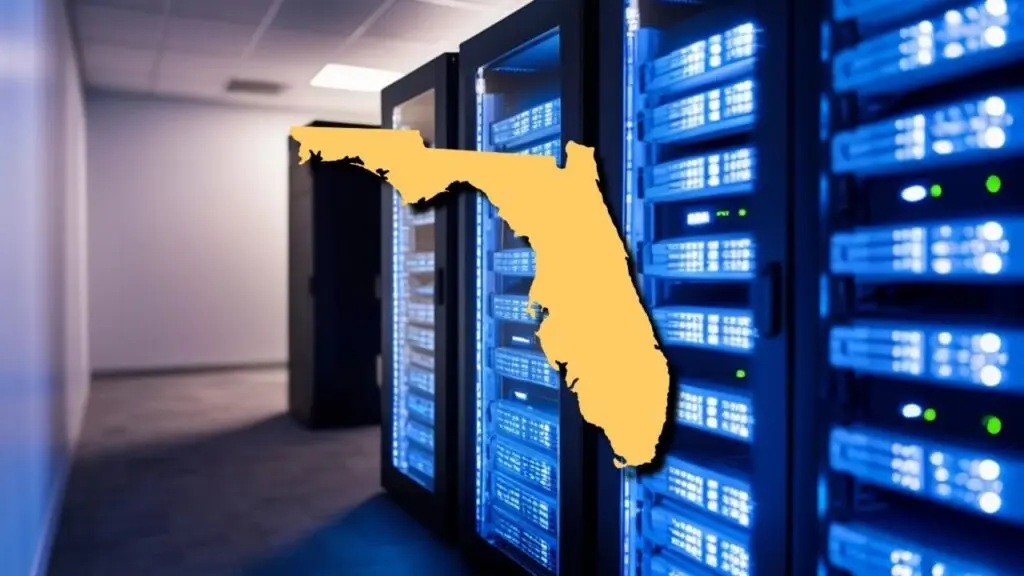
The dawn of the artificial intelligence era has created an insatiable appetite for computational power, triggering a massive real estate and infrastructure gold rush across the globe. According to projections by management consulting titan McKinsey & Company, global spending on artificial intelligence data centers could skyrocket to an astonishing $7 trillion by 2030. A significant portion of this capital expenditure is slated for the United States, with high-growth states like Florida emerging as prime destinations for these colossal digital fortresses.
However, beneath the gleaming veneer of technological progress lies a stark, physical reality: chips cannot install themselves, servers require climate-controlled warehouses, and data centers demand millions of miles of electrical wiring. As big tech giants race to secure land, power grids, and municipal approvals, they have run headlong into one of the most stubborn economic bottlenecks of the 21st century—a critical shortage of skilled trade labor.
The convergence of the AI infrastructure boom and the residential housing deficit has created a high-stakes competition for talent. Electricians, HVAC technicians, plumbers, and structural carpenters are suddenly the most sought-after professionals in the American economy. Recognizing that this labor deficit threatens both the digital future of the United States and its housing market stability, major technology players are beginning to intervene. Most notably, Google has announced a strategic $1 million investment in the Home Builders Institute (HBI) to scale up workforce training.
This investigative report examines the multifaceted collision between the artificial intelligence revolution, commercial real estate development, and skilled trades capacity. Through expert analysis, economic metrics, and official statements, we explore how Florida and the nation at large are attempting to build the physical foundation of the digital age without sacrificing the dream of homeownership.
Detailed Chronology: The Evolution of the AI Infrastructure Squeeze
Phase 1: The Generative AI Explosion (2022–2023)
The launch of advanced generative artificial intelligence models in late 2022 fundamentally altered the trajectory of the technology sector. As enterprises, governments, and startups rushed to integrate machine learning and large language models into their operations, the demand for cloud computing capacity expanded exponentially. Tech conglomerates—including Google, Microsoft, Amazon, and Meta—began acquiring real estate at an unprecedented pace to construct hyper-scale data centers.
Phase 2: The Realization of Physical Limitations (2023–2024)
As capital poured into digital infrastructure, tech executives quickly realized that software development was no longer the primary constraint on growth; physical infrastructure was. Securing high-voltage power substations, water supply for cooling, and local zoning permits became arduous trials. Concurrently, project managers discovered that engineering blueprints meant nothing without boots on the ground. The construction timeline for data centers began to stretch from months to years, primarily due to acute shortages of specialized electrical and mechanical contractors.
Phase 3: The Talent Poaching Crisis (2024–2025)
With billions of dollars on the line, commercial developers engaged in aggressive bidding wars for labor. Data center construction sites began offering premium wages, luring skilled tradespeople away from traditional commercial and residential projects. This talent migration sent shockwaves through the real estate sector, disproportionately impacting residential home building and exacerbating an already severe national housing affordability and inventory crisis.
Phase 4: Corporate Intervention and Strategic Partnerships (Late 2025–Present)
Acknowledging that capital alone could not solve structural labor shortages, technology leaders shifted from passive consumers of construction services to active investors in workforce development. The announcement of Google’s $1 million infusion into the Home Builders Institute marks a pivotal turning point in this evolution—signifying that big tech views vocational education as a core prerequisite for infrastructure deployment.
Supporting Context & Metrics: The Numbers Behind the Crunch
To fully grasp the magnitude of the challenge facing Florida and the broader United States, one must examine the staggering macroeconomic indicators governing construction and technology spending.
The $7 Trillion Horizon
McKinsey & Company’s projection that global data center spending could reach $7 trillion by 2030 underscores a generational transformation in commercial real estate. Traditional office spaces and retail centers are yielding market share to massive, windowless server farms that span hundreds of acres. Florida, with its favorable tax climate, strategic geographic position as a gateway to Latin America, and robust fiber-optic connectivity, has positioned itself as a primary hub for these investments.
The Construction Workforce Gap
Data compiled by Realtor.com and the Associated Builders and Contractors (ABC) reveal a sobering picture of national labor deficits. According to ABC estimates, the American construction industry requires an astounding 349,000 new workers to meet baseline demand, a figure that escalates by another 456,000 net new workers the following year due to high cumulative construction spending across both the public and private sectors.
When broken down by trade, the deficits are even more pronounced:
Electricians: High-voltage systems required by AI clusters demand certified master electricians capable of managing complex switchgear and backup power generators.
HVAC Technicians: Servers generate immense heat; maintaining optimal operating temperatures requires industrial-scale heating, ventilation, and air conditioning expertise.
Plumbers & Pipefitters: Advanced liquid-cooling technologies, increasingly vital for high-density AI chips, require specialized plumbing networks to circulate coolant efficiently.
The Residential Collateral Damage
The United States was already grappling with a multi-million-unit housing deficit before the AI boom accelerated. When commercial mega-projects draw from the same finite pool of trade professionals, residential home builders are systematically priced out of the labor market. The result is delayed housing developments, higher construction costs, and ultimately, inflated housing prices for everyday consumers.
Official Statements and Industry Insights
Ed Brady, President and CEO of the Home Builders Institute (HBI), has been at the forefront of warning industry leaders and policymakers about the impending collision between technology expansion and workforce capacity.
"States like Florida need to be ready for one of the biggest economic challenges facing both big tech and real estate, and that is workforce capacity," Brady asserts. "The data centers can’t be built—nor can we solve the national housing crisis—without expanding the skilled trade talent pool."
Brady emphasizes that piecemeal solutions or poaching workers from residential sectors will only rob Peter to pay Paul. The solution, he argues, requires expanding the total supply of skilled labor through institutional training, pre-apprenticeship programs, and targeted recruitment.
Highlighting the significance of corporate stewardship in vocational education, Brady points to the recent partnership with Google:
"Google’s money will allow us to scale, give our service men and women the opportunity… give them a credential and introduce them to the industry."
By channeling funds directly into programs that train veterans, transitioning military personnel, and underserved populations, the HBI aims to create a sustainable pipeline of talent that can serve both residential housing needs and commercial tech infrastructure.
Future Outlook: Navigating the Intersection of AI and Real Estate
As we look toward the remainder of the decade, the success of the artificial intelligence revolution will depend as much on human capital as it does on silicon chips and algorithms.
1. The Imperative of "Expanding the Pie"
Relying on traditional recruitment methods will no longer suffice. Industry stakeholders, educational institutions, and state governments must collaborate to reposition the trades as lucrative, high-tech career paths. Pre-apprenticeship certifications embedded within high schools and community colleges will be vital in capturing the interest of younger generations.
2. Honoring Veterans and Nontraditional Labor Pools
Programs that transition service members into civilian construction trades—such as those bolstered by the HBI and tech-backed grants—represent an invaluable talent reservoir. Military veterans bring discipline, technical aptitude, and problem-solving skills that translate seamlessly into managing complex electrical and mechanical systems.
3. Policy and Regulatory Adaptation
State and local governments in Florida must streamline vocational funding and zoning approvals while ensuring that infrastructure expansion does not compromise community resources. Public-private partnerships modeled after the Google-HBI collaboration will likely become the benchmark for how modern industries address systemic supply chain constraints.
Conclusion
The $7 trillion AI data center boom represents an extraordinary economic opportunity for Florida and the nation, but it introduces profound structural vulnerabilities. Without a decisive, well-funded commitment to workforce development, the physical infrastructure required to power the future of artificial intelligence—and the homes required for the workforce building it—will remain out of reach. By treating skilled trade training as a foundational prerequisite rather than an afterthought, policymakers and tech titans can build an economy capable of sustaining both digital innovation and American homeownership.



0 Comments