

Executive Overview
Sidewalks are universally recognized as foundational elements of modern urban planning. When properly integrated, they foster public health, encourage pedestrian mobility, reduce vehicular dependency, and provide safe corridors connecting residents to schools, parks, commercial centers, and public transit. However, a contentious planning dispute currently winding its way through the Jacksonville City Council highlights a profound disconnect between municipal policy and physical reality.
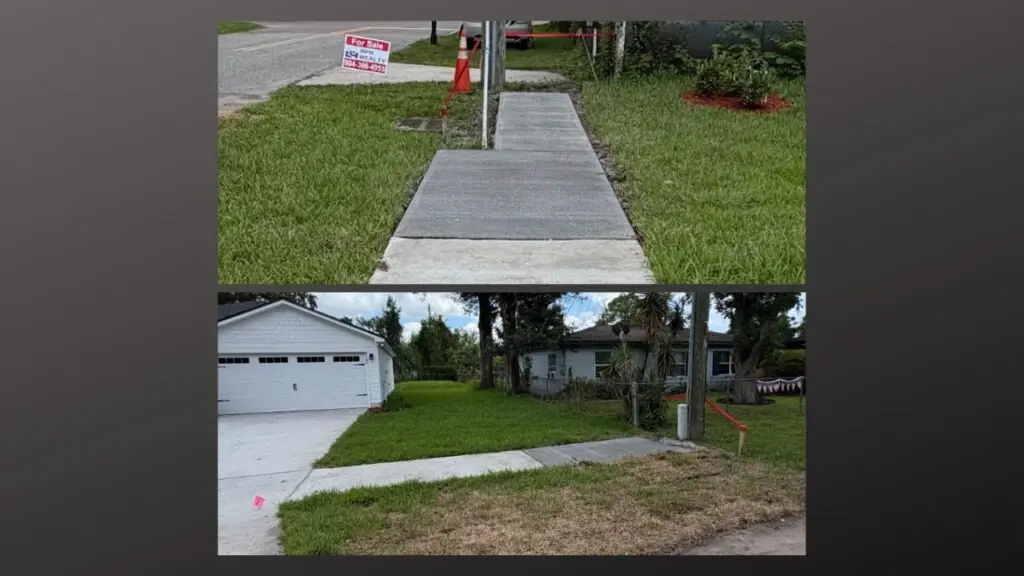
At the center of this controversy is an appeal brought by a local residential homebuilder seeking to construct single-family homes across 19 vacant properties located along "R" Street on Jacksonville’s Northside. The core issue transcends a routine zoning variance; it exposes a systemic flaw in municipal code enforcement—specifically, the rigid requirement to install isolated segments of concrete sidewalks that connect to nothing, serve no current pedestrian network, and fail to lead to any identifiable destination.
Platted in the 1950s, these infill lots sit within a pre-existing, mature neighborhood rather than a newly engineered suburban master-planned community. The surrounding infrastructure is defined by unmaintained municipal roadways, open roadside drainage ditches, overhead utility poles, vacant wooded parcels, and a complete absence of existing pedestrian infrastructure. Despite these topographical and structural realities, city planners have insisted that the developer construct standalone sidewalk segments, a mandate that critics argue introduces unnecessary regulatory burdens and drives up housing construction costs without yielding any tangible public safety benefits.
This investigative report examines the Jacksonville dispute through the lenses of municipal policy, urban economics, infrastructure management, and housing affordability. By exploring the collision between rigid bureaucratic mandates and the practical challenges of urban infill development, we examine whether local government regulations are inadvertently worsening the regional housing affordability crisis.
Detailed Chronology and Case Background
The Genesis of the Northside Infill Project
The dispute began when a Jacksonville-based homebuilder acquired 19 individual, scattered single-family lots along "R" Street on the city’s Northside. These parcels were originally platted during the post-World War II housing boom of the 1950s—an era when suburban and semi-rural design standards placed little emphasis on continuous pedestrian networks, stormwater management systems, or paved curbs and gutters.
Over the decades, development in the immediate area proceeded sporadically. Today, the landscape is a patchwork of established single-family homes, vacant wooded acreage, and unimproved dirt-shoulder roads. Crucially, the municipal government has historically declined to formally maintain these roadways, leaving them outside the standard municipal upkeep schedule.
The Bureaucratic Mandate and the Appeal
As the developer moved forward to secure the necessary permits to build new, affordable single-family housing stock on these long-vacant parcels, municipal planning authorities invoked standard subdivision and development codes. These codes contain blanket requirements for sidewalk installations intended to promote pedestrian connectivity in new developments.
However, the application of a blanket code to a fractured, 1950s infill site quickly ran into logistical brick walls. City officials mandated that the builder construct concrete sidewalks along the property frontages of the newly proposed homes. Because no contiguous sidewalk infrastructure exists anywhere near the site, these newly poured concrete strips would exist in total isolation—beginning abruptly and ending just as suddenly, connecting to no adjacent pathways, crosswalks, or public amenities.

Faced with mounting expenses and logistical impossibilities, the developer formally appealed the sidewalk requirement to the Jacksonville City Council. This appeal frames the debate not merely as a localized zoning disagreement, but as a test case for how Jacksonville handles infill development, regulatory common sense, and the rising cost of residential construction.
Supporting Context, Infrastructure Realities, and Economic Metrics
The Myth of Connectivity Without a Network
To understand the absurdity cited in the developer’s appeal, one must examine the physical geography of the Northside project area. A functional sidewalk network relies on continuity. Urban planners design pedestrian corridors to link residential neighborhoods to commercial districts, schools, parks, and transit stops.
In the case of the "R" Street properties, none of these elements exist within a walkable radius, nor are there any existing sidewalks for the proposed segments to plug into. According to site evaluations, the City of Jacksonville has failed to identify any master-planned route that these isolated sidewalk segments would eventually complete. They lead to no transit hubs, no schools, and no retail centers.
Instead, pedestrians stepping off these mandated patches of concrete would find themselves walking directly into roadside drainage ditches, unpaved shoulders, or dense brush. Rather than enhancing safety, forcing pedestrians onto disconnected stretches of concrete—only to spit them out into unimproved roadway environments—can create dangerous conditions, occasionally forcing pedestrians to navigate active traffic lanes without clear transitions.
Engineering Impossibilities: Ditches, Poles, and Pavement
Beyond the lack of a broader network, the physical conditions of the property present severe engineering hurdles. Standard sidewalk construction is inextricably linked to coordinated civil engineering, specifically the presence of curb-and-gutter drainage systems.
In modern subdivisions, curbs and gutters manage stormwater runoff, direct water into underground storm sewers, and establish a clear horizontal separation between vehicular traffic and pedestrian pathways. "R" Street and its adjacent corridors lack these conventional infrastructure improvements. Instead, the area relies on open drainage ditches running parallel to the asphalt to manage stormwater runoff. Furthermore, utility poles, overhead lines, and drainage culverts occupy the exact spatial footprints where sidewalks would ordinarily be installed.
To comply with the city’s mandate, the builder would not only have to pour concrete over incompatible terrain, but would also be forced to disrupt existing drainage patterns, potentially exacerbating local flooding risks and requiring the relocation of vital utility infrastructure at exorbitant costs.
The Economic Toll on Housing Affordability
At a time when municipalities across the United States—and particularly in high-growth states like Florida—are grappling with severe housing affordability crises, the financial impact of municipal regulations cannot be ignored. Every unnecessary regulatory hurdle, mandate, and fee imposed during the development process is ultimately baked into the final purchase price of the home.

Pouring hundreds of linear feet of concrete in isolated, unserviced areas requires capital for engineering, excavation, grading, formwork, pouring, and potential utility relocation. When these costs are imposed on small-scale infill developers building modest, single-family homes, the profit margins vanish, or worse, the home prices rise beyond the reach of working-class families.
Consider the economic equation from a consumer perspective: why should a first-time homebuyer purchasing a modest home on the Northside be forced to subsidize the cost of thousands of dollars in unused concrete? The mandate creates a classic lose-lose scenario: the developer absorbs an irrational capital expense, the consumer pays an inflated home price, and the public receives zero pedestrian utility in return.
Official Perspectives, Regulatory Friction, and Bureaucratic Inertia
The Clash Between Rigid Codes and Practical Realities
The conflict in Jacksonville illustrates a broader philosophical divide in municipal governance: the tension between rigid, rule-bound bureaucratic compliance and flexible, performance-based urban planning.
From the perspective of municipal administrators and code enforcement bureaucrats, regulations exist to establish uniformity and predictability. Standardized codes prevent developers from cutting corners and ensure that new construction meets long-term city goals. In many instances, this framework works effectively—particularly in master-planned greenfield developments where infrastructure is built from scratch.
However, when these exact same rules are mechanically applied to infill lots platted decades prior, the system breaks down. Critics of the city’s current approach argue that municipal planning departments frequently suffer from institutional inertia—operating under a "because we said so" methodology devoid of analytical justification or contextual reasoning. When asked to justify why an isolated sidewalk is required in an area lacking drainage, connecting paths, and destinations, municipal defenders often fall back on administrative precedent rather than data-driven safety metrics.
The Infill Dilemma: Discouraging Urban Reinvestment
Urban planning experts widely advocate for infill development as a sustainable alternative to endless suburban sprawl. Infill projects utilize existing land within urban service boundaries, leverage established utility grids, reduce infrastructure expansion costs, and revitalize older neighborhoods.
However, when cities impose greenfield-style regulatory burdens onto small infill projects, they actively disincentivize downtown and neighborhood reinvestment. Developers faced with arbitrary, costly mandates for isolated infrastructure often choose to avoid urban infill entirely, opting instead for large-scale, easy-to-permit suburban tracts where economies of scale can absorb regulatory inefficiencies.
By penalizing small builders who seek to revitalize historic or long-neglected plats like those on "R" Street, Jacksonville risks stifling grassroots neighborhood revitalization and worsening urban blight.

Future Outlook: Policy Implications and Recommendations
The Stakes for Jacksonville’s Future
The outcome of the pending Jacksonville City Council appeal will resonate far beyond a single Northside street. It serves as a bellwether for how the city intends to manage its growth, balance regulatory oversight, and address the pressing need for attainable housing.
If the City Council upholds the rigid sidewalk requirement in the face of overwhelming physical and economic illogic, it will send a chilling message to property owners and developers across the region. It will signal that bureaucratic adherence to out-of-touch code trumps common sense, engineering feasibility, and consumer affordability.
Conversely, a ruling in favor of the developer could establish a vital precedent for common-sense regulatory relief. It could pave the way for a more flexible, context-sensitive approach to infill development—one that evaluates infrastructure requirements based on actual utility, connectivity, and public benefit rather than blind regulatory compliance.
Recommendations for Municipal Reform
To prevent similar planning impasses in the future, urban planning and housing advocates recommend several vital structural reforms for Jacksonville’s municipal code:
- Implement Context-Sensitive Infill Standards: Develop a specialized tier of development codes specifically tailored for infill lots platted prior to modern subdivision standards, exempting them from rigid sidewalk mandates where no connecting network exists.
- Conduct Cost-Benefit and Utility Assessments: Require municipal planning departments to perform a formal connectivity and safety audit before enforcing pedestrian infrastructure mandates, ensuring that new sidewalks actually connect to functional transit, school, or commercial networks.
- Establish a Fee-In-Lieu Alternative: In scenarios where sidewalk installation is physically impractical or serves no immediate network purpose, permit developers to contribute a proportional fee-in-lieu into a municipal fund dedicated to building contiguous sidewalks in areas with demonstrated pedestrian demand.
- Improve Inter-Agency Coordination: Ensure that zoning boards, civil engineering divisions, and drainage departments collaborate to prevent contradictory mandates where sidewalks are ordered in areas lacking necessary curbs, gutters, and stormwater management systems.
Conclusion
The Jacksonville Northside sidewalk dispute is more than a localized zoning skirmish; it is a microcosm of the regulatory friction throttling common-sense development across urban America. When municipal bureaucracy divorces itself from physical reality, the results are predictable: inflated housing costs, wasted capital, and infrastructure that serves neither the community nor the pedestrian. As the City Council weighs its decision, the path forward should be clear—prioritize pragmatic urban planning, protect housing affordability, and ensure that public safety mandates are grounded in genuine public benefit rather than blind administrative enforcement.

0 Comments