

Executive Overview
The intersection of municipal governance, foreign policy, and domestic political discourse reached a volatile flashpoint on October 7, 2026. On the solemn three-year anniversary of the Hamas-led terrorist attacks against Israel—an atrocity that fundamentally reshaped modern geopolitics and ignited a protracted regional war—New York City Mayor Zohran Mamdani released an official commemorative statement that immediately triggered a tidal wave of bipartisan condemnation.
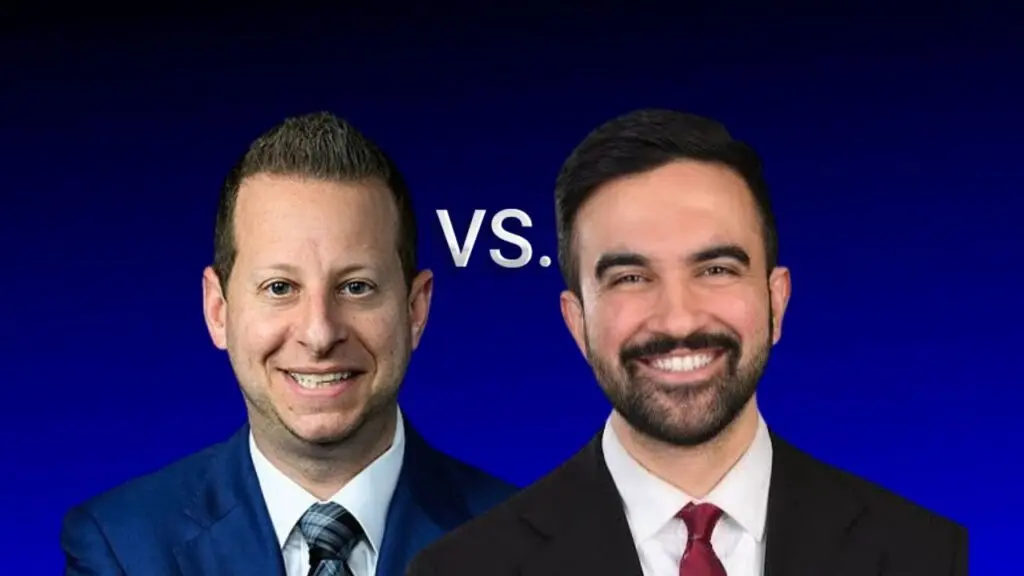
Among the most vocal critics was U.S. Representative Jared Moskowitz (D-FL), who took to social media to excoriate the New York City executive. Moskowitz accused Mamdani of effectively victim-blaming the Jewish people killed on October 7, 2023, while suggesting that the mayor was in dire need of remedial education regarding antisemitism.
The core of the controversy stems from Mamdani’s decision to balance his acknowledgment of the Hamas massacres—which claimed approximately 1,200 lives and saw 251 individuals taken hostage—with a sweeping, unsparing condemnation of Israeli military operations in Gaza. While Mamdani acknowledged the initial violence as "horrific war crimes," the pivot of his statement accused Israel of executing an "ongoing genocide" and targeted American complicity through military aid.
This journalistic report examines the anatomy of the controversy, dissects the specific language used by Mayor Mamdani, analyzes the swift and sharp rebukes from federal lawmakers such as Rep. Moskowitz alongside prominent Jewish organizations, and contextualizes the broader political fallout within the Democratic Party and municipal politics.
Detailed Chronology of Events
The Genesis: Three Years Since October 7, 2023
To fully comprehend the fury surrounding Mayor Mamdani’s October 7, 2026 statement, one must revisit the historical weight of the date itself. Three years prior, on October 7, 2023, Hamas militants breached the border fence surrounding the Gaza Strip, launching a coordinated, multi-pronged assault on Israeli civilian communities, military outposts, and a music festival. The resulting massacres resulted in the deaths of approximately 1,200 people—predominantly civilians, including women, children, and the elderly—and the abduction of 251 hostages into the subterranean tunnels of Gaza.
For the global Jewish community and international allies of Israel, October 7 is marked as the single deadliest day for Jewish people since the Holocaust. Consequently, official statements issued on its anniversaries are heavily scrutinized, traditionally serving as moments of unified mourning, solidarity with victims, and unequivocal condemnation of terrorism.
The Release of Mayor Mamdani’s Statement
On the morning of October 7, 2026, the office of New York City Mayor Zohran Mamdani published an official mayoral statement addressing the anniversary. Initially, the statement struck a conventional tone of sorrow. Mamdani explicitly acknowledged the Hamas attack, referencing the roughly 1,200 fatalities and 251 abducted hostages. He described the events as involving "horrific war crimes" and extended sympathy to those in mourning.
However, the statement quickly shifted focus. Mamdani asserted that "the suffering did not begin nor end that day," pivoting away from the anniversary of the Hamas pogrom to broaden the scope of critique toward Israeli state policy. He accused Israel of conducting a "devastating, ongoing genocide in Gaza," citing a death toll exceeding 74,000 Palestinians. Furthermore, the statement condemned what Mamdani characterized as decades of Israeli occupation and apartheid, while lambasting the United States government for its financial and military complicity through ongoing military assistance.

Rep. Jared Moskowitz’s Social Media Retaliation
Within hours of the statement’s publication, political figures nationwide weighed in, but few critiques were as sharp or direct as the one delivered by Rep. Jared Moskowitz. Writing on the social media platform X (formerly Twitter), the Florida Democrat pulled no punches:
"@NYCMayor He basically said ‘The Jews that died, sad, but it’s their fault.’
He needs the city’s antisemitism policy for himself.
Just an atrocious statement"
Moskowitz’s interpretation struck a nerve across the political spectrum, framing Mamdani’s pivot not merely as foreign policy disagreement, but as a moral inversion that blamed victims of terrorism for the subsequent military actions of their government. The post quickly amassed hundreds of thousands of views, becoming a focal point for national media outlets covering the anniversary.
Supporting Context & Metrics
The Scale of Human Loss in the Conflict
The rhetorical battle lines drawn between Mayor Mamdani and federal lawmakers reflect deeply entrenched divisions over metrics, definitions, and moral accountability in the Middle East.
- The October 7, 2023 Attacks: According to Israeli government and international forensic tallies, approximately 1,200 people were killed in the initial onslaught by Hamas and allied factions. The victims included citizens of over 30 countries. Additionally, 251 individuals were dragged back into Gaza as hostages. Over the subsequent three years, complex rescue operations, military incursions, and delicate multi-phase cease-fire negotiations have gradually accounted for the remaining hostages, though the psychological and physical scars on Israeli society remain profound.
- The Gaza Conflict Metrics: In his statement, Mayor Mamdani cited a Palestinian casualty figure exceeding 74,000 deaths. This figure encompasses both direct fatalities from military strikes and indirect deaths resulting from the systemic collapse of Gaza’s healthcare infrastructure, malnutrition, lack of potable water, and displacement. International bodies, human rights organizations, and local health authorities have struggled to maintain independent verifications due to the intensity of urban combat and restrictions on foreign press access, but the scale of destruction across the Gaza Strip has been universally documented as unprecedented in modern asymmetric warfare.
The Municipal Lens: New York City’s Domestic Landscape
The controversy also carries distinct domestic political implications. As the mayor of New York City, Mamdani presides over the largest Jewish diaspora community outside of Tel Aviv. Municipal leaders in New York have historically walked a delicate diplomatic tightrope, balancing progressive domestic constituencies with the security and emotional well-being of local Jewish and Israeli-American residents.
Mamdani’s explicit use of terms like "genocide" and "apartheid" in an official mayoral capacity marks a departure from traditional mayoral diplomacy. Critics argue that utilizing the platform of the New York City mayoralty to level such severe international accusations—particularly on a day dedicated to mourning victims of antisemitic terror—fractures municipal cohesion and creates an insecure environment for Jewish New Yorkers who already report rising incidents of bias and harassment.

Official Statements and Reactions
The backlash to Mayor Mamdani’s statement was swift, drawing swift condemnations from Jewish advocacy organizations, civil rights groups, and a broad coalition of Democratic and Republican lawmakers.
Jewish Organizations Respond
Major American Jewish organizations released blistering critiques of the mayor’s address. The American Jewish Committee (AJC) and the Anti-Defamation League (ADL) issued joint and separate statements condemning what they termed "contextualized bigotry."
An ADL spokesperson noted: "To use the solemn anniversary of the slaughter of 1,200 innocent human beings—many of them targeted explicitly because they were Jewish—as a vehicle to berate the Jewish state and diminish the nature of the terrorist attack is a profound moral failure. It inflicts deep pain on a community still healing from collective trauma."
Local Jewish leaders in New York expressed deep alarm that the city’s highest-ranking official would issue a statement that they argued effectively justified or minimized the mass murder of Jews by tying their fates to the geopolitical actions of the Israeli government.
Congressional Condemnation
Rep. Jared Moskowitz was far from alone in his federal critique. Several members of Congress, representing both sides of the aisle, expressed dismay over Mamdani’s rhetoric.
Centrist and moderate Democrats, anxious about the shifting ideological boundaries of the party, distanced themselves from the mayor’s remarks. Privately and publicly, lawmakers argued that such rhetoric undermines bipartisan support for Israel’s security while alienating core constituencies within the Democratic coalition.
Republicans, meanwhile, seized upon the controversy to spotlight internal fractures within the Democratic Party regarding foreign policy and antisemitism. GOP lawmakers echoed Moskowitz’s sentiment, arguing that the statement reflected a dangerous normalization of rhetoric that abandons historical allies in times of crisis.
Supporters Defend the Mayor
In defense of Mayor Mamdani, progressive allies and advocacy groups argued that his statement was an exercise in necessary moral consistency. Supporters maintained that true empathy for human suffering must be universal, encompassing both the victims of the October 7 massacres and the tens of thousands of Palestinian civilians killed in the subsequent military campaign.

Proponents of Mamdani’s stance argued that municipal leaders possess a free speech right—and a moral obligation—to speak out against what they define as state-sponsored human rights violations, regardless of geographic boundaries. They contended that attempting to silence critique of Israeli military strategy by labeling it as inherently antisemitic stifles legitimate human rights discourse.
Future Outlook: Political and Social Ramifications
As the immediate shockwaves of the October 7, 2026 anniversary begin to settle, the long-term political fallout for Mayor Zohran Mamdani and the broader American political landscape remains uncertain but potent.
Impact on Local Governance and Community Relations
For New York City, the rhetorical divide threatens to deepen existing social fractures. Mayor Mamdani faces the daunting task of governing a deeply diverse metropolis where sensitivities surrounding the Israeli-Palestinian conflict run raw. Repairing relations with local Jewish institutions, synagogues, and community leaders will require substantial diplomatic engagement, bridge-building, and reassurance that the municipal government remains committed to the safety and protection of all residents against hate crimes and discrimination.
National Political Repercussions
On the national stage, the episode underscores the ongoing ideological tug-of-war within the Democratic Party. As figures like Rep. Jared Moskowitz position themselves as defenders of traditional bipartisan orthodoxy on Israel and vocal opponents of rhetoric perceived as crossing the line into antisemitism, progressive municipal leaders continue to push the boundaries of foreign policy commentary from local platforms.
This tension is virtually guaranteed to reverberate through upcoming electoral cycles. National strategists will be watching closely to see whether controversies of this nature harden voter alignments or alter donor behavior. For now, Rep. Moskowitz’s viral critique has cemented a prominent role for federal watchdogs willing to hold municipal executives accountable on the national stage, ensuring that local statements on foreign conflicts will face rigorous, unfiltered scrutiny for the foreseeable future.

0 Comments