

Executive Overview
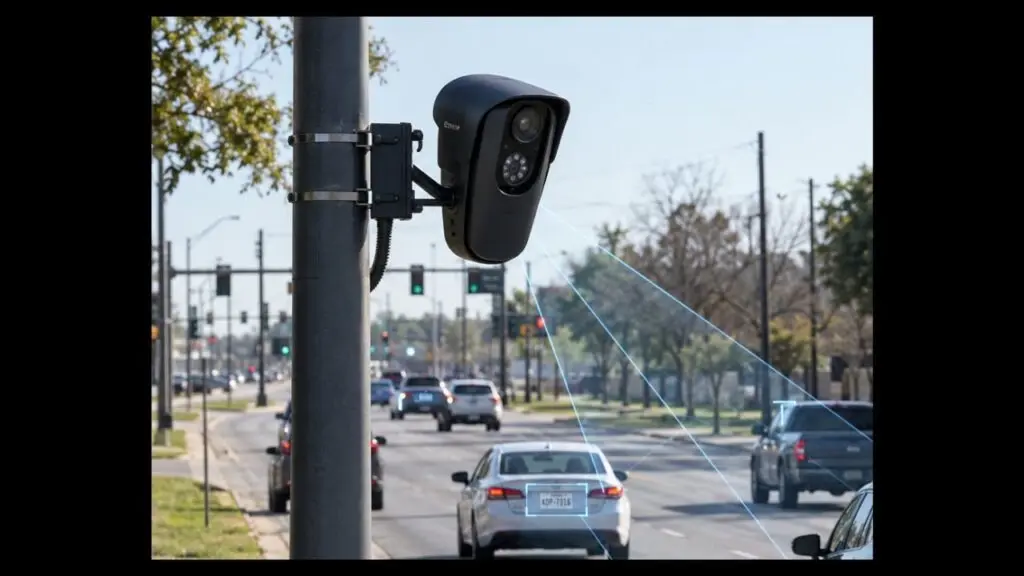
The intersection of modern crime-fighting technology and civil liberties has reached a critical flashpoint in the Sunshine State. On August 31, the Florida Department of Transportation (FDOT) issued a sweeping directive that has sent shockwaves through law enforcement agencies from the Panhandle to the Keys. Citing a mandate to prevent Florida from devolving into a "digital AI surveillance state"—a phrase frequently invoked by Governor Ron DeSantis—the state administration revoked all operating permits for automated license plate readers (ALPRs) situated on state highway rights-of-way.
Local agencies were handed a strict, unforgiving 30-day deadline, with removal finalizations required by September 30. While local municipalities and counties retain the legal authority to maintain these surveillance and investigative cameras on strictly local roads, the state-level prohibition strips these devices from many of Florida’s busiest arterial corridors, major thoroughfares, and state-managed highways.
The immediate fallout has been swift and deeply polarizing. Law enforcement officials, victims’ advocates, and community leaders have stepped forward with staggering statistics, warning that the sudden disappearance of these high-tech traffic sentinels will set criminal investigations back decades. Police chiefs and sheriffs argue that ALPRs are not tools of mass surveillance, but rather precision instruments essential for tracking violent offenders, recovering missing and endangered persons, and solving heinous crimes that would otherwise go cold.
Conversely, privacy advocates and state leadership maintain that unregulated or loosely monitored digital tracking poses an unacceptable risk to constitutional rights. The debate lays bare a fundamental tension in contemporary governance: how to balance the insatiable demand for public safety with the constitutional imperative to protect individual privacy from the creep of state-sponsored digital oversight.
Detailed Chronology of the Statewide Crackdown
The events leading up to the September 30 removal deadline unfolded rapidly over the course of the late summer, marking a sudden shift in Florida’s approach to municipal and county policing technology.
August 31: The FDOT Directive Drops
Without prior public legislative debate or a transitional grace period, the Florida Department of Transportation issued an administrative revocation of permits for all automated license plate readers located on state highway rights-of-way. The order specified a hard 30-day compliance window, giving local law enforcement agencies until September 30 to physically dismantle, disconnect, and remove the cameras from state roadsides. Governor Ron DeSantis’s administration defended the move, echoing sentiments that the proliferation of government-managed cameras along public highways threatens to establish a pervasive digital surveillance network capable of tracking citizens’ daily movements without explicit warrant protections.
The Immediate Aftermath and Compliance
As news of the directive reverberated through police departments and sheriffs’ offices, the operational impact was immediate. In major metropolitan areas and suburban counties alike, command staffs rushed to inventory their camera networks to determine which devices fell under the state right-of-way jurisdiction versus those situated on purely local municipal asphalt.
In some jurisdictions, the logistical hurdles and legal uncertainties prompted sweeping preemptive measures. For instance, Jacksonville Sheriff T.K. Waters made the dramatic decision to shut down the county’s entire ALPR program altogether, citing the impracticality of maintaining a fractured system while acknowledging the immense value the technology had historically provided to his detectives. Across the state, engineering crews scrambled to unbolt cameras from poles along major U.S. highways and state roads, terminating data feeds that had served as the digital eyes and ears of local highway patrols and detective bureaus for years.

Supporting Context & Metrics: The Human and Operational Cost
To understand the friction surrounding the FDOT order, one must examine the empirical footprint left by ALPRs across Florida communities prior to the September teardown. Far from being abstract data-gathering nodes, these cameras have served as vital triage units for local police forces facing limited manpower and rising crime rates.
St. Petersburg: A Race Against Time
Just weeks before the state directive took effect, the indispensable nature of ALPR technology was underscored in St. Petersburg. A 99-year-old local resident slid behind the wheel to drive to his daughter’s house, became disoriented, and vanished. As hours ticked by with no sign of the elderly man, local police entered his vehicle’s tag information into their license plate reader network.
Within moments, an optical sensor mounted along Tyrone Boulevard on U.S. 19 pinged his car. Police units were dispatched to the exact coordinates, reaching the distressed nonagenarian within four minutes of the camera read.
"Without this technology, we would have never found him," St. Petersburg Police Chief Anthony Holloway stated bluntly to local media. Ironically, the very stretch of highway—U.S. 19—that enabled officers to save the elderly man’s life is governed by the state, meaning the camera that spotted him is among those slated for removal under the new FDOT rules.
St. Johns County: Quantifying the Loss
In St. Johns County, Sheriff Rob Hardwick provided a detailed accounting of what his department stands to lose. Approximately half of the county’s 182 cameras are stationed on state-managed rights-of-way and must be taken down. Prior to this truncation, the impact of the system was profound:
- Stolen Property and Fugitives: In a single calendar year, the cameras assisted in recovering 29 stolen vehicles and executing the arrests of 35 wanted felons.
- Missing Persons: The system successfully aided in locating 35 missing or endangered individuals.
- Case Clearance: The technology directly contributed to the successful clearance of 132 felony charges.
Sheriff Hardwick highlighted specific horror stories averted or solved through the tech, including a fatal hit-and-run where detectives matched a tiny headlamp fragment to a white Honda, subsequently using ALPR data to place the suspect vehicle near the crime scene just as it was being loaded onto a tow truck for repairs. In another harrowing instance, the system helped identify a predator accused of sexually assaulting a 12-year-old girl at a bus stop—a suspect who was later linked to similar atrocities against 13 other children in neighboring Flagler County.
Jacksonville and Regional Crime-Fighting
In Jacksonville, the Sheriff’s Office compiled a ledger of high-stakes interventions made possible by their plate reader network since 2024:
- 15 Murders solved or advanced through vehicle tracking data.
- 17 Kidnappings successfully resolved, including the recovery of a teenage girl abducted from her Georgia home and transported to a Jacksonville motel.
- Nearly 100 Shootings investigated with the help of timely vehicle identification.
- 172 Missing-Person Cases aided through automated sightings.
Furthermore, investigators utilized the network to track down and apprehend suspects within 48 hours in the brutal killing of a corrections officer at a truck stop.

Similar breakthroughs were recorded in Orange County, where the technology proved instrumental in breaking a complex Pine Hills serial rape investigation and assisting in the tragic, high-profile murder case of 13-year-old Madeline Soto. Polk County Sheriff Grady Judd did not mince words regarding the directive, characterizing license plate readers to regional outlets as "the single best tool to keep people safe."
Official Statements and Stakeholder Perspectives
The debate over ALPRs has drawn sharp lines between executive state leadership, law enforcement executives, and citizens impacted by violent crime.
Law Enforcement Leadership Push Back
Law enforcement officials argue that the narrative framing ALPRs as unregulated surveillance tools ignores the strict internal protocols already governing their use.
"ALPRs are the greatest investigative tool law enforcement has in their arsenal today," declared Marion County Sheriff Billy Woods. "Law enforcement’s use of ALPRs is not a violation of privacy or a violation of anyone’s constitutional rights, and that is because the law enforcement community has safeguards in place within their policy to help protect those rights. The fact that individuals have been disciplined or arrested for misuse is clear evidence that the safeguards are in place. Removing this tool from law enforcement, without a doubt, will set us back in time by decades on solving crimes, finding lost loved ones and protecting our citizens."
Chief David Currey of the Vero Beach Police Department, speaking in his capacity as president of the Florida Police Chiefs Association (FPCA), echoed these sentiments while acknowledging the validity of public privacy concerns.
"Florida’s police chiefs take privacy seriously, and anyone who abuses this technology should face real consequences," Chief Currey said. "When a tool helps us bring home a missing child or identify the person who pulled the trigger, the answer to misuse is accountability, not removal. The Florida Police Chiefs Association has already begun work on model policy standards and stands ready to work with the Governor, the Legislature and our sheriff partners to build clear statewide standards so every agency in Florida uses this technology the same responsible way."
The Voice of Families Touched by Tragedy
For families who have experienced the devastating loss of a loved one, the theoretical debates over digital privacy pale in comparison to the practical utility of tools that bring closure and justice.
Latasha Hobbs, a Jacksonville mother, knows the agonizing pain of an unsolved crime intimately. Her son, Maurice, was murdered in 2017 just days after his 18th birthday—an era before local police departments had integrated robust ALPR networks into their investigative workflows. His case remains unsolved to this day.

While Hobbs expresses support for strict, punitive measures against any law enforcement officer or agency personnel who abuses surveillance technology, she remains a staunch advocate for keeping the cameras operational. "It’s been proven to help," Hobbs told local reporters. "It helps solve crimes."
A formal statement released by the Jacksonville Sheriff’s Office encapsulates the emotional core of the law enforcement argument: "When someone you love is in danger, you want us to have every responsible tool available to help find them and solve the crime."
Future Outlook: Accountability Versus Removal
As the September 30 removal deadline forces departments to reconfigure their tactical maps, attention is turning toward legislative and policy solutions that might bridge the gap between state-level privacy demands and local public safety needs.
Industry and Agency Self-Regulation
Recognizing that unchecked data retention and unmonitored queries are primary drivers of political pushback, technology vendors and local agencies are moving rapidly to implement rigorous accountability measures:
- Audit Tools: Flock Safety, a major provider of ALPR technology to Florida law enforcement, announced that by January 1, every single one of its law enforcement customers will be mandated to use an advanced audit tool designed to flag unusual or unauthorized search activity.
- Case Number Linking: Officers will no longer be permitted to run speculative searches; every query must be tied directly to an active official case number.
- Data Retention Limits: Standard data retention windows are shrinking dramatically. Flock Safety and several local departments are dropping retention periods from 30 days down to just seven days. For example, St. Johns County has proactively cut its retention period to 30 days and completely severed data-sharing pipelines with outside agencies to insulate itself from privacy criticisms.
A Reasonable Path Forward?
Chief Anthony Holloway of St. Petersburg has suggested a pragmatic framework for the future: rather than enacting a blanket removal order and sorting out the administrative details afterward, state leadership should evaluate the robust safeguards already functioning within professional police agencies and codify them into a unified, statewide standard.
"The state should look at what agencies already have in place and build one plan everyone can follow," Holloway argued. "That’s a reasonable path forward. Removing the cameras first and writing the rules later is not."
Whether the Florida Legislature will heed these calls during the upcoming session remains to be seen. For now, highway commuters traveling along Florida’s vast state road network will notice fewer optical sentinels overhead. Whether that reduction translates to enhanced civil liberties or increased vulnerability to crime will remain the central question of Florida’s ongoing debate over modern policing in the digital age.

0 Comments