

Executive Overview
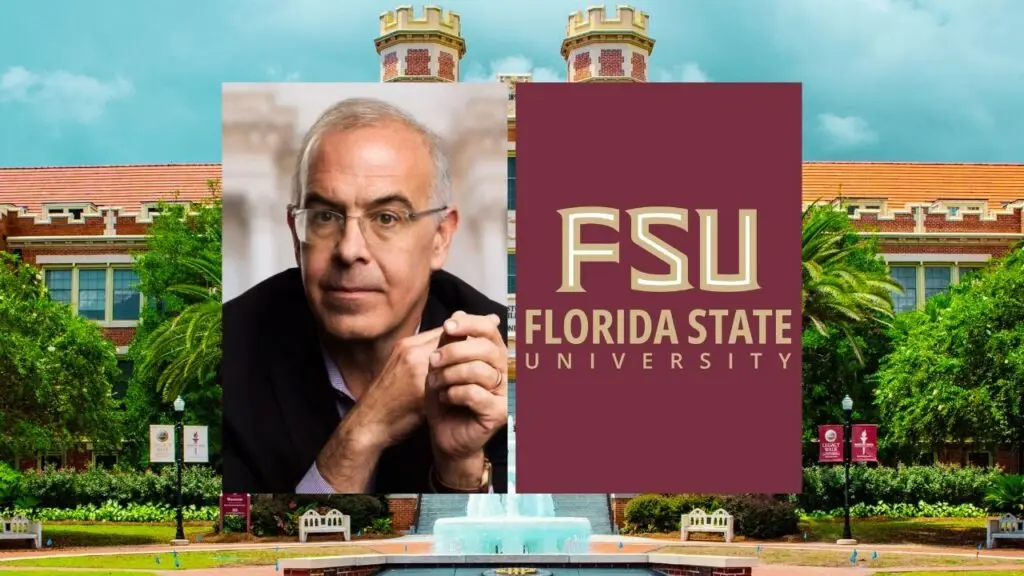
In a significant event highlighting the evolving role of higher education in modern public discourse, Florida State University (FSU) welcomed bestselling author, cultural commentator, and public intellectual David Brooks to its Tallahassee campus for a deeply anticipated conversation with University President Richard McCullough. Hosted by FSU’s Institute for Governance and Civics (IGC) at the historic Ruby Diamond Concert Hall, the Sept. 10 event drew a diverse crowd of students, faculty, and community members eager to engage with pressing questions surrounding moral character, effective leadership, and the art of bridging deep ideological divides.
The dialogue was more than a standard campus lecture; it served as a living manifestation of FSU’s ongoing institutional commitment to fostering a vibrant "free market of ideas." At a time when American universities frequently find themselves navigating polarized cultural landscapes, FSU’s leadership has deliberately positioned the institution as a beacon for open inquiry, intellectual humility, and constructive debate.
For President McCullough, the impetus to bring Brooks to campus stemmed from a personal revelation—an encounter at a national gathering of university presidents where Brooks delivered an incisive critique of the modern educational ecosystem. Struck by Brooks’ balanced, non-partisan evaluation of higher education’s societal responsibilities, McCullough partnered with Provost Jim Clark and IGC Director Ryan Owens to orchestrate a visit designed to model thoughtful disagreement for the next generation of leaders.
This comprehensive report examines the genesis of Brooks’ campus visit, explores his storied career and intellectual trajectory, contextualizes the event within the broader mission of FSU’s Institute for Governance and Civics, and evaluates the long-term implications of cultivating a culture of empathetic discourse in contemporary higher education.
Detailed Chronology: From Presidential Inspiration to Campus Reality
The roadmap to David Brooks’ appearance at Florida State University began months prior, far from the capital of Florida, at a national symposium attended by higher education executives from across the United States.
The Spark: A Presidential Gathering
During the conference, President Richard McCullough found himself captivated by an address delivered by Brooks. Unlike many contemporary commentators who approach higher education through a hyper-partisan lens—either glorifying or condemning universities based on transient political grievances—Brooks offered a measured, macro-level assessment. He spoke expansively about the challenges, structural opportunities, and foundational role of higher education in preserving democratic institutions.
"I was just completely blown away and fascinated by his take on higher education," McCullough reflected ahead of the event. "I thought it was a very fair perspective. It was not political. It wasn’t right or left. It was just, as a public intellectual, his assessment of what we had done."
Beyond systemic critiques of academia, Brooks’ enduring emphasis on character, interpersonal connection, and moral vocabulary resonated deeply with McCullough’s personal philosophy of academic leadership. Recognizing a kindred spirit in the realm of institutional stewardship, McCullough resolved to bring Brooks to FSU to share those insights directly with the student body.
Mobilizing the Administration
Upon returning to Tallahassee, McCullough immediately consulted with Provost and Executive Vice President for Academic Affairs Jim Clark. Clark, already intimately familiar with Brooks’ extensive body of work—including seminal texts such as The Road to Character and How to Know a Person—immediately threw his weight behind the initiative.
Working in tandem with the Institute for Governance and Civics, the administration fast-tracked the logistical and programmatic planning required to secure one of the nation’s most sought-after public intellectuals. The choice of venue, the 1,500-seat Ruby Diamond Concert Hall, underscored the administration’s ambition: this was designed to be a landmark, campus-wide moment rather than an exclusive seminar for a select few.
The Event Unfolds
As the doors to Ruby Diamond Concert Hall opened at 6 p.m., attendees filled the auditorium, creating an electric atmosphere of anticipation. The conversation between McCullough and Brooks ranged across a sweeping array of topics, anchored by the core thesis that effective leadership is fundamentally inseparable from deep self-awareness and emotional intelligence.
Brooks challenged the audience to reconsider how modern society evaluates success, urging individuals to look beyond resume virtues—such as professional titles and material accomplishments—and refocus on eulogy virtues, which encompass the moral qualities that define how a person is remembered by their community. Through anecdotes, sociological insights, and philosophical reflections, Brooks and McCullough modeled the very behavior the event sought to promote: rigorous intellectual engagement tempered by mutual respect and active listening.

Supporting Context & Metrics: The State of Campus Civics
To fully appreciate the significance of David Brooks’ visit to FSU, it is necessary to examine the socio-political climate currently defining American higher education. Across the country, universities are grappling with a paradox: while students express a profound desire for open dialogue, they simultaneously exhibit a measurable hesitation to share their true opinions due to perceived social penalties.
Insights from the Institute for Governance and Civics
This dynamic is precisely what FSU’s Institute for Governance and Civics (IGC) was established to address. Under the leadership of Director Ryan Owens, the IGC has dedicated itself to empirical research and programmatic interventions aimed at understanding and improving the state of civic discourse on campus.
Data gathered by the IGC reveals a complex psychological landscape among contemporary undergraduates. According to institute research, the overwhelming majority of students genuinely desire opportunities to participate in free-flowing, uninhibited discussions spanning a wide spectrum of controversial issues. They recognize that navigating diverse viewpoints is an essential prerequisite for professional and personal growth in a pluralistic society.
However, this enthusiasm is frequently tempered by anxiety. A significant portion of students report harboring underlying fears that their peers will react with hostility, ostracization, or bad-faith interpretations if they articulate positions that deviate from prevailing campus orthodoxies. This chilling effect threatens to turn higher education institutions—traditionally conceptualized as crucibles of intellectual friction and discovery—into echo chambers of conformity.
Countering Polarization Through Modeling
For Owens and his colleagues at the IGC, bringing public intellectuals of Brooks’ caliber to FSU is a direct, evidence-based strategy to counteract this cultural drift.
"I think it’s important for students to see leadership behind efforts like this," Owens observed. "To have two very important, prominent individuals up there talking about that problem and talking about things that we can do to improve on it is an incredibly useful model for students to see, to observe, and to follow."
By witnessing two prominent figures engage in a sophisticated, nuanced dialogue without resorting to personal attacks or reductionist talking points, students receive a masterclass in civic hygiene. The event served as a living laboratory for the "free market of ideas," demonstrating that deep-seated disagreements can be navigated with grace, curiosity, and intellectual rigor.
Official Statements: Perspectives on Leadership and Character
The multifaceted impact of David Brooks’ campus visit was articulated clearly through statements provided by key university leaders, shedding light on the institutional philosophy driving FSU’s civic initiatives.
President Richard McCullough on Public Intellectualism
President McCullough emphasized the rarity and value of encountering a thinker who transcends traditional political tribalism. In an era dominated by polarized media ecosystems, McCullough views Brooks as an essential antidote to intellectual narrowing.
"I’m just fascinated by that sort of intellectual life of leadership," McCullough stated. "I feel like David has such a brilliant perspective on leadership and what it takes to lead with character. I hope the students will not miss the opportunity to be in Ruby Diamond to hear this. I hope that it will be standing room only, because this is a kind of once-in-a-lifetime thing to hear somebody like this speak."
McCullough’s characterization of Brooks as a "master storyteller" speaks to the author’s unique gift for translating complex sociological and psychological research into accessible, deeply human narratives that resonate with young adults standing at the threshold of their careers.
IGC Director Ryan Owens on Cultural Transformation
Director Ryan Owens elaborated on the long-term pedagogical goals of the institute, framing events like the Brooks conversation as vital instruments for cultural remediation within the university system.

"We talk about changing the culture of things so that people believe in a free market of conversation, a free market of ideas, openness, and are willing to discuss and engage with ideas that may or may not be comfortable to you," Owens explained. "That’s all part of the endeavor that we’re trying to do at the IGC and at FSU."
Owens’ comments underscore a core pedagogical philosophy: true intellectual resilience cannot be forged by shielding students from uncomfortable ideas; rather, it is developed by teaching them how to lean into intellectual discomfort, analyze competing arguments objectively, and maintain human connection across ideological chasms.
Biography & Intellectual Trajectory: The Evolution of David Brooks
To understand the weight of David Brooks’ message at FSU, one must examine the intellectual journey that shaped his distinctive voice in American letters. Brooks’ career mirrors the evolution of modern journalism, transitioning from hard-boiled regional reporting to elite cultural commentary and academic leadership.
Early Career and Journalistic Foundations
Brooks began his professional life as a police reporter for the City News Bureau of Chicago, an experience that grounded his writing in the gritty, granular realities of everyday human existence. This foundation in on-the-ground reporting informed his subsequent transition to The Wall Street Journal, where he spent nearly a decade in various high-profile roles, including serving as a foreign correspondent in Brussels and an opinion editor.
During the 1990s, Brooks was instrumental in the intellectual and political journalism scene, helping to launch The Weekly Standard as a senior editor. His television presence grew correspondingly, making him a familiar and trusted analyst for programs like The PBS NewsHour, where his gentle wit, intellectual curiosity, and conversational delivery style earned him a national following.
The New York Times and Recent Institutional Roles
For 22 years, Brooks served as a prominent opinion columnist for The New York Times, using his platform to ruminate on the intersection of politics, culture, psychology, and morality. Over two decades, his columns charted the shifting moral architecture of the United States, frequently lamenting the rise of hyper-individualism and advocating for a return to robust social institutions, civic duty, and relational depth.
In early 2026, Brooks embarked on a new chapter in his storied career, concluding his legendary tenure at The New York Times to join The Atlantic as a staff writer. Simultaneously, he accepted a prestigious appointment as Yale University’s inaugural presidential senior fellow. This five-year position involves lecturing, mentoring, and leading campus-wide conversations exploring the deepest questions of human meaning, community cohesion, and institutional trust.
Key Literary Contributions
Brooks’ intellectual framework is perhaps best encapsulated in his critically acclaimed books:
- The Road to Character (2015): An exploration of the inner life, contrasting "resume virtues" (the skills you bring to the marketplace) with "eulogy virtues" (the deep moral qualities that define your character). Through profiles of historical figures like Dwight D. Eisenhower, George Eliot, and Dorothy Day, Brooks argues that deep character is forged through struggle, humility, and the recognition of human limitation.
- How to Know a Person: The Art of Seeing Others and Being Deeply Seen (2023): A practical and philosophical guide to overcoming our cultural epidemic of invisibility and loneliness. Brooks offers actionable insights into how individuals can become "illuminators"—people who make others feel genuinely valued, understood, and safe—rather than "diminishers" who reduce human beings to political labels or functional utilities.
Future Outlook: Sustaining the Momentum of Civic Engagement
As the echoes of David Brooks’ address fade from Ruby Diamond Concert Hall, Florida State University faces the task of translating a single, high-profile event into a sustained, institution-wide cultural shift. The visit is not intended to be an isolated milestone, but rather a catalyst for ongoing programming spearheaded by the Institute for Governance and Civics.
Expanding IGC Programming
Building on the momentum generated by the Brooks conversation, the IGC plans to roll out an expanded suite of initiatives designed to empower students. These efforts include:
- Cross-Ideological Student Debates and Roundtables: Structured forums where students with divergent political philosophies can debate policy issues under faculty moderation, focusing on evidence-based argumentation and respectful listening.
- Civic Leadership Workshops: Practical training sessions focusing on communication strategies, conflict resolution, and the psychology of polarization, helping students develop the emotional resilience required to engage in difficult conversations.
- Faculty Integration Grants: Incentives for professors across various academic disciplines to incorporate modules on constructive discourse and intellectual diversity into their syllabi, ensuring that the ethos of the IGC permeates the entire undergraduate curriculum.
A Model for National Higher Education
In an academic landscape frequently roiled by ideological skirmishes, FSU’s proactive approach offers a compelling blueprint for universities nationwide. By refusing to retreat into partisan silos—and instead proactively importing some of the country’s finest public intellectuals to model the art of civil disagreement—FSU is demonstrating that academic excellence and robust free expression are mutually reinforcing.
For the students who packed the auditorium, the evening provided a rare window into what intellectual life at its best can achieve: an invitation to think deeper, listen harder, and lead with unwavering moral character. As President McCullough noted, experiences of this caliber are profoundly formative, leaving an indelible imprint on the minds of those poised to shape the future of American society.

0 Comments