
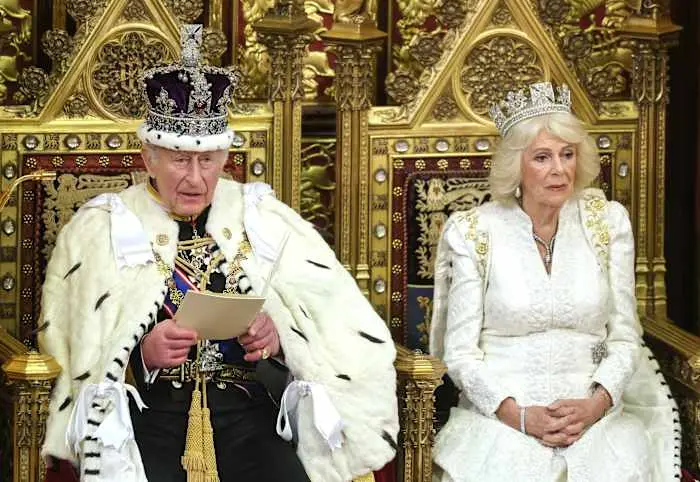

LONDON — In a deeply personal and candid retrospective, Britain’s Queen Camilla has opened up about the immense emotional strain she experienced while guarding the secret of King Charles III’s cancer diagnosis in the days leading up to its public announcement. Speaking in a specially commissioned eight-minute video marking the 30th anniversary of the cancer support charity Maggie’s, the Queen detailed the profound difficulty of visiting a cancer care facility while wrestling with the private knowledge of her husband’s impending health battle.
The revelations, captured in an intimate conversation between Queen Camilla and Maggie’s Chief Executive Laura Lee, offer a rare glimpse into the behind-the-scenes reality of the British royal family during a moment of profound personal crisis. Furthermore, the discussion underscores the broader societal impact of the King’s decision to break with centuries of royal tradition by publicly disclosing his medical condition—a move that healthcare professionals say has fundamentally transformed public health engagement across the United Kingdom.
Executive Overview
The disclosure of King Charles III’s cancer diagnosis on February 5, 2024, marked a watershed moment in modern British history. By choosing to step away from the traditional royal protocol of maintaining strict secrecy over sovereign health matters, the King initiated a national conversation about cancer awareness, early detection, and the psychological burdens carried by patients and their families.
Queen Camilla’s recent remarks add a poignant human dimension to this historic milestone. In the video released by Maggie’s, the Queen confessed that she had known about the diagnosis days before the public announcement. During this window of enforced silence, she carried out official engagements, including the opening of a Maggie’s center at the Royal Free Hospital in London. The juxtaposition of publicly championing cancer support while harboring a deeply personal, undisclosed crisis proved to be one of the most challenging ordeals of her public life.
As the King continues his ongoing medical treatment with positive indicators, the ripple effects of the palace’s transparency are being measured in hard data. Charities report surges in public inquiries and screenings, validating the royal couple’s belief that openness could save lives. This comprehensive report examines the timeline of these events, the psychological weight of royal discretion, the tangible metrics of the "King Charles effect," and the future outlook for the monarchy’s advocacy in global health.
Detailed Chronology: From Private Diagnosis to Public Revelation
To fully understand the gravity of Queen Camilla’s recent statements, it is essential to retrace the timeline of the weeks surrounding the King’s diagnosis and the subsequent shift in royal communications strategy.
January 2024: The Medical Discovery
In early 2024, King Charles underwent a planned medical procedure for a benign enlarged prostate at The London Clinic. During this routine intervention, a separate issue of concern was identified. Subsequent diagnostic tests confirmed the presence of an undisclosed form of cancer.
While the palace initially intended to manage the diagnosis with the traditional degree of privacy that had characterized previous generations of Windsors—such as Queen Elizabeth II’s final months—the King himself reportedly pushed for a different approach. Recognizing his unique platform as head of state, Charles III weighed the potential public health benefits of transparency against personal privacy.
Late January 2024: The Agony of Silence
Approximately one week before the official public announcement, Queen Camilla undertook a high-profile engagement to open a new Maggie’s cancer support center at the Royal Free Hospital in London. As the long-standing president of Maggie’s—a role she has held since 2008—Camilla was surrounded by patients, families, and healthcare professionals intimately familiar with the exact trials she and her husband were facing behind palace walls.
In her anniversary conversation with Laura Lee, Camilla described the acute psychological friction of that visit:
"Nobody could say anything at that time. That was quite difficult. I almost said something but, you know, I felt that it wasn’t the time to say."
The Queen admitted she was "longing" to share the reality of the situation, recognizing the shared bond she suddenly had with every person navigating a cancer diagnosis inside that facility. Yet, bound by protocol and the family’s initial deliberations regarding how and when to break the news, she maintained her composure, hiding the private storm beneath her customary public poise.
February 5, 2024: The Historic Announcement
On the morning of February 5, 2024, Buckingham Palace released a statement that immediately dominated global news cycles. The announcement revealed that the King had begun a schedule of regular treatments, during which time he would be advised by doctors to postpone public-facing duties.
Crucially, the statement noted: "His Majesty has chosen to share his diagnosis to prevent speculation and in the hope it may assist public understanding for all those around the world who are affected by cancer."
This calculated break with precedent was an unprecedented gamble for an institution built on mystique and untouchability. However, the immediate aftermath proved that the gamble had struck a profound chord with the British public.
Supporting Context & Metrics: The "King Charles Effect"
The decision to go public with the diagnosis was not merely a personal choice; it rapidly evolved into a powerful public health intervention. Medical authorities across the United Kingdom quickly noted an extraordinary spike in public engagement regarding cancer symptoms and diagnostic testing—a phenomenon medical historians and journalists have dubbed the "King Charles effect."
Quantifying the Surge in Public Awareness
According to data shared by Maggie’s Chief Executive Laura Lee during her conversation with the Queen, the operational impact on cancer support networks was immediate and sustained:
- 12% Increase in Male Visitors: In the months following the King’s announcement, Maggie’s centers across the U.K. recorded a 12% rise in the number of men seeking information, counseling, and peer support. Historically, men have lagged behind women in proactively seeking medical advice or emotional support for health concerns.
- National Health Service (NHS) Spikes: Within 48 hours of the palace’s announcement, the official NHS website reported a staggering increase in visits to its prostate cancer information pages, with traffic surging by several hundred percent compared to historical daily averages.
- Charitable Engagement: Organizations focused on urological cancers and general oncology reported record-breaking donations, volunteer sign-ups, and requests for home-testing kits.
The Psychological Architecture of Maggie’s Centers
Founded by the late Maggie Keswick Jencks and her husband, architectural historian Charles Jencks, Maggie’s provides a distinct alternative to sterile clinical environments. Designed as warm, domestic spaces situated near major NHS hospitals, these centers offer professional psychological support, stress-management workshops, and community spaces for patients and their families.
Queen Camilla’s long-standing dedication to the charity—spanning nearly two decades—took on an intensely personal hue following her husband’s diagnosis. In the commemorative video, the Queen reflected on how her appreciation for the charity’s work shifted from that of an empathetic patron to someone who intimately understood the psychological toll of the disease:
"Look at my husband, nothing stopped him. He just said, ‘This is my way. I’m going to cope with it.’"
This pragmatic resilience, according to Laura Lee, has served as an inspiring model for thousands of patients who walk through the doors of Maggie’s centers every month, struggling to maintain their normal routines while undergoing grueling medical therapies.
Official Statements and Institutional Perspectives
The intersection of the British monarchy and modern healthcare transparency has redefined how royal health issues are communicated to the public. While past generations—most notably King George VI, whose lung cancer diagnosis was kept largely opaque from the public prior to his death in 1952—endured their illnesses behind heavy velvet curtains, the modern Windsor household has recognized that public stewardship extends to physical vulnerability.
Buckingham Palace Updates on Health and Recovery
Throughout late 2024 and into 2025 and 2026, Buckingham Palace has maintained a steady, measured approach to updating the public on the King’s condition. While details regarding the specific type of cancer have remained private to protect medical confidentiality, official briefings have consistently characterized the King’s response to treatment in positive terms.
In recent months, King Charles has gradually resumed a full schedule of international travel, state engagements, and public walkabouts, demonstrating a tireless commitment to constitutional duties. Observers have noted that the King’s willingness to speak openly about his ongoing outpatient treatments during public appearances has normalized the reality of working while managing a chronic or serious illness.
Reflections from the Front Lines of Care
Laura Lee’s dialogue with Queen Camilla sheds light on the unseen emotional labor required of political and royal spouses during health crises. Lee noted that the Queen’s ability to articulate the difficulty of keeping the diagnosis secret serves to validate the complex emotions felt by millions of caregivers.
"When a family receives a cancer diagnosis, the ripple effect touches everyone in the household," Lee observed during their recorded conversation. "The burden of carrying that secret while performing public duties is immense, and Her Majesty’s willingness to share that vulnerability resonates deeply with the families we support every single day."
Future Outlook: A Legacy of Openness
As Maggie’s celebrates its 30th anniversary, the organization stands at the forefront of cancer care innovation, supported by one of the most visible advocacy partnerships in the world. The involvement of Queen Camilla—fortified by her personal insights into the emotional labyrinth of a family cancer diagnosis—ensures that issues surrounding cancer support, mental health, and early detection will remain central to the royal family’s philanthropic portfolio.
Looking ahead, healthcare analysts predict that the precedent set by King Charles III will permanently alter the public relations strategies of public figures facing health crises. By replacing archaic secrecy with strategic, compassionate transparency, the monarchy has not only humanized the institution but has tangibly contributed to saving lives through increased medical vigilance.
For Queen Camilla, the journey from holding back tears at the Royal Free Hospital to championing national cancer awareness on film marks a profound evolution in her public role. Through her continued leadership at Maggie’s and her steadfast support of the King, she has helped transform a private family trial into a enduring public good.

0 Comments