
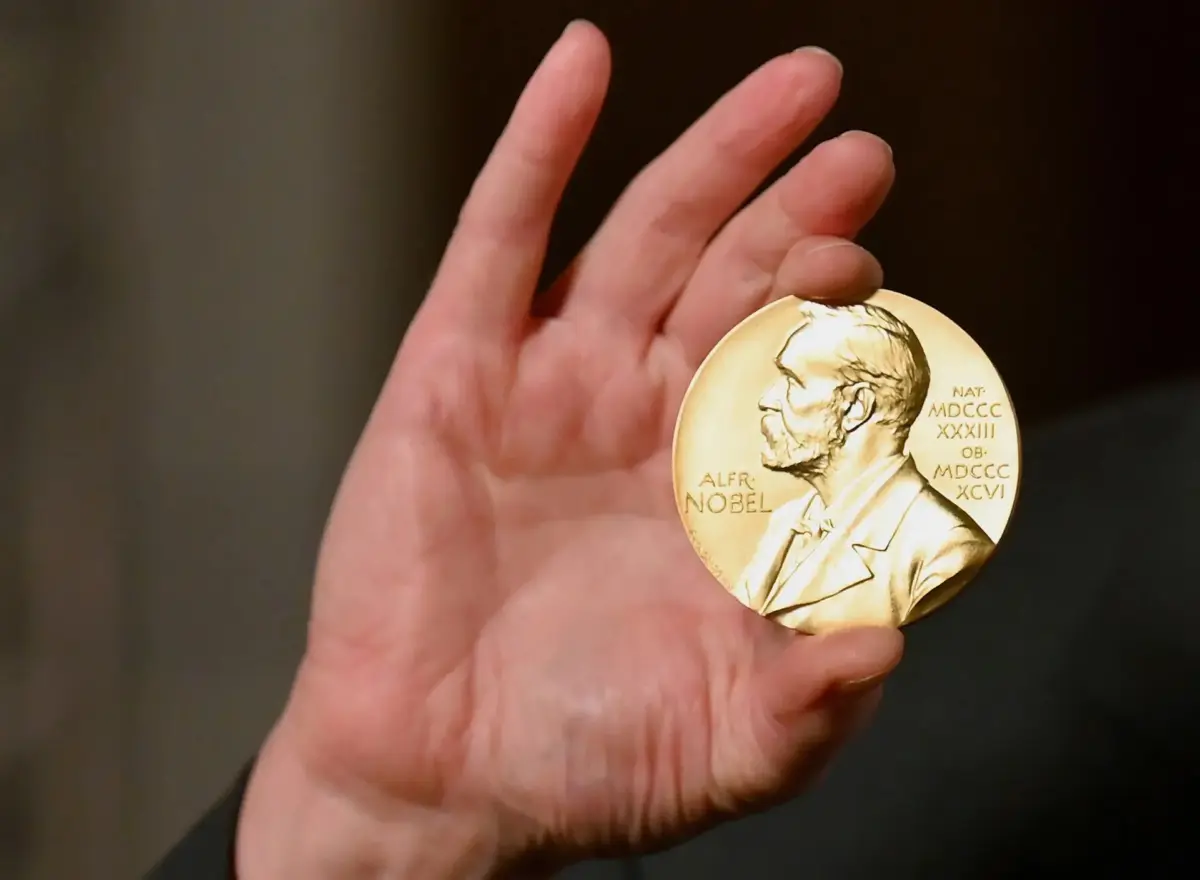

STOCKHOLM — As the crisp October air settles over the Swedish capital, the global academic and financial communities hold their collective breath. On Monday, the Royal Swedish Academy of Sciences will pull back the curtain to reveal the recipient of the Sveriges Riksbank Prize in Economic Sciences in Memory of Alfred Nobel. This announcement marks the final crescendo of the prestigious annual Nobel Prize cycle, bringing months of global anticipation to a close and setting the stage for what is widely considered the highest intellectual honor an economist can achieve.
The spotlight now turns to Stockholm, where speculation is running rampant across academic corridors, central banks, and financial institutions worldwide. While the identity of this year’s laureate—or laureates—remains a tightly guarded secret until the official envelope is opened, the broader conversation centers on the shifting paradigms of modern economics. From the lingering aftershocks of global inflation and labor market transformations to the disruptive rise of artificial intelligence and sustainable finance, the discipline has faced monumental challenges in recent years, making this year’s award particularly significant.
Executive Overview
The Nobel memorial prize in economics stands as the culmination of the 2026 Nobel Prize season, following weeks of celebrated announcements across medicine, physics, chemistry, literature, and peace. Formally established in 1968 by Sweden’s central bank—Sveriges Riksbank—to mark its tercentenary, the prize honors intellectual titans whose empirical research and theoretical frameworks have fundamentally reshaped our understanding of markets, policy, and human behavior.
This year’s announcement arrives at a critical juncture in global economic history. Policymakers and academics alike are grappling with complex, interconnected crises: shifting geopolitical alliances, transitioning energy markets, rapid technological obsolescence, and the long-term economic scars left by global pandemics and inflationary shocks. Consequently, observers are keenly watching to see whether the Academy will reward foundational work in monetary policy, development economics, labor dynamics, or the mathematical modeling of financial risk.
Whichever path the selection committee chooses, the chosen laureate will share a financial reward of 12 million Swedish kronor (approximately $1.2 million USD). This substantial purse, funded by the Nobel Foundation’s optimized asset management, will be awarded whether the honor goes to a solo researcher, a collaborative duo, or a triadic partnership. The formal presentation will take place on December 10, the anniversary of Alfred Nobel’s death, during a grand ceremony in Stockholm presided over by the King of Sweden.
Detailed Chronology: From 19th-Century Innovation to Modern Economic Prestige
To fully appreciate the weight of Monday’s announcement, one must understand the distinct history and evolution of the economic sciences prize, which occupies a unique place within the Nobel pantheon.
The Legacy of Alfred Nobel and the 1968 Innovation
Alfred Nobel, the visionary 19th-century Swedish industrialist, chemist, and engineer who amassed a vast fortune through the invention of dynamite and other high explosives, left behind a revolutionary last will and testament in 1895. In it, he directed that the bulk of his estate be used to establish a fund whose annual interest would be distributed in the form of prizes to those who had "conferred the greatest benefit on mankind" in the fields of physics, chemistry, physiology or medicine, literature, and peace.
Notably absent from Nobel’s original vision was economics. For decades, the social sciences operated outside the purview of the Nobel Foundation. However, the landscape shifted dramatically in 1968. To celebrate its 300th anniversary, Sveriges Riksbank—the world’s oldest central bank—donated a substantial perpetual endowment to the Nobel Foundation to establish a prize dedicated to economic sciences.
While purists within the scientific community have historically noted that the economics prize is technically a "memorial prize" rather than an original Nobel creation, its administration, prestige, and integration into the annual award cycle have made it indistinguishable from the foundational categories in the eyes of the public and the global academic community. It is governed by the same rigorous selection standards, evaluated by the same Swedish academies, and presented during the same high-profile December ceremonies.
Recent Precedents: Honoring Innovation and Growth
The trajectory of the prize over recent decades reflects an ongoing evolution in economic thought, shifting from purely mathematical market models toward behavioral realism, empirical field experiments, and the mechanics of long-term societal progress.
Last year, the prize was awarded to a trio of pioneering researchers whose work explored the intricate relationship between business innovation, creative destruction, and economic growth. Their groundbreaking studies illuminated how novel products and technological breakthroughs propel human welfare forward while simultaneously rendering older, established enterprises obsolete—a modern validation of Joseph Schumpeter’s classic theories.
Looking back further, the committee has honored scholars who revolutionized empirical microeconomics (such as David Card, Joshua Angrist, and Guido Imbens for their work on natural experiments), experts on climate change and macroeconomic integration (William Nordhaus and Paul Romer), and pioneers of behavioral economics (Richard Thaler and Daniel Kahneman). Each milestone reflects the Academy’s commitment to recognizing work that has tangible, real-world implications for billions of lives.
Supporting Context & Metrics: The Anatomy of the Prize
The magnitude of the Nobel Prize in Economic Sciences is defined not only by its intellectual prestige but also by its institutional framework, governance, and financial scale.
The Selection Mechanics
The process of selecting a Nobel laureate in economics is an exhaustive, year-long marathon. It begins in September—more than a year before the announcement—when confidential nomination forms are sent to thousands of select academics, university professors, previous laureates, and members of national academies around the world.
Self-nominations are strictly prohibited. By January 31 of the award year, all nominations must be received by the Economic Sciences Prize Committee, a body operating under the auspices of the Royal Swedish Academy of Sciences.
During the spring and summer, a select group of expert rapporteurs thoroughly evaluates the nominated candidates, reviewing their published papers, tracking citation metrics, and assessing the durability and practical impact of their theories. By early autumn, the committee presents a comprehensive recommendation to the full economic sciences class of the Academy, which conducts a final vote. The results are sealed, secured, and kept under strict embargo until the moment the permanent secretary steps to the podium on Monday morning.
Financial and Demographic Metrics
- Prize Purse: 12 million Swedish kronor (approx. $1.2 million USD), adjustable based on the financial returns of the Nobel Foundation’s capital investments.
- Distribution Flexibility: The award can be shared by up to three individuals or split between an individual and an organization, a rule frequently utilized in economics due to the collaborative nature of modern academic research.
- Historical Representation: Since its inception in 1969, the prize has been awarded predominantly to male researchers based in North American and European institutions, though recent decades have seen a concerted effort to recognize broader geographic and demographic diversity, including the historic 2019 win by Esther Duflo, only the second woman to receive the prize.
Official Statements and Institutional Perspectives
As the countdown to Monday ticks away, representatives from the Royal Swedish Academy of Sciences have emphasized the enduring relevance of rigorous economic analysis in an increasingly fractured global landscape.
Dr. Hans Ellegren, Secretary General of the Royal Swedish Academy of Sciences, noted in a recent symposium on the role of science in society:
"The challenges we face today—from managing systemic financial risks to navigating the socio-economic transformations driven by automation and artificial intelligence—require the highest standard of intellectual rigor. The prize in economic sciences serves not merely as a retrospective look at past achievements, but as a beacon highlighting the methodologies and frameworks that will guide policy for generations to come."
Meanwhile, financial analysts and market observers have pointed out that while the prize does not directly sway day-to-day stock market fluctuations, it heavily influences academic funding, public policy debates, and the ideological currents shaping global governance. Central bankers, fiscal policy advisors, and international development agencies frequently look to the laureates’ foundational texts when designing monetary interventions and structural reform packages.
Future Outlook: Where is the Discipline Headed?
As Monday’s announcement approaches, speculation naturally turns toward the future of economic science itself. The discipline is currently undergoing a profound transformation. Traditional macroeconomic models, long criticized for their assumptions of rational actor behavior and frictionless markets, are being stress-tested by unprecedented global events, including persistent inflationary pressures, supply chain fragilities, and the economic fallout of geopolitical conflicts.
Furthermore, the integration of big data, machine learning, and artificial intelligence into economic forecasting has opened up entirely new frontiers of research. Scholars are now able to analyze vast, granular datasets in real-time, tracking consumer behavior, labor market shifts, and international capital flows with unprecedented precision.
Whether the 2026 prize honors a theorist who has refined our understanding of monetary policy, an empirical researcher who has mapped the nuances of labor economics, or a pioneer exploring the intersection of climate change and financial stability, one truth remains absolute: the work recognized on Monday will profoundly influence how humanity navigates the complex economic realities of the 21st century.
As the international press corps gathers in Stockholm and live streams beam the announcement across every continent, the world waits to see whose name will be etched into history alongside the greatest thinkers of our time.

0 Comments