

Executive Overview
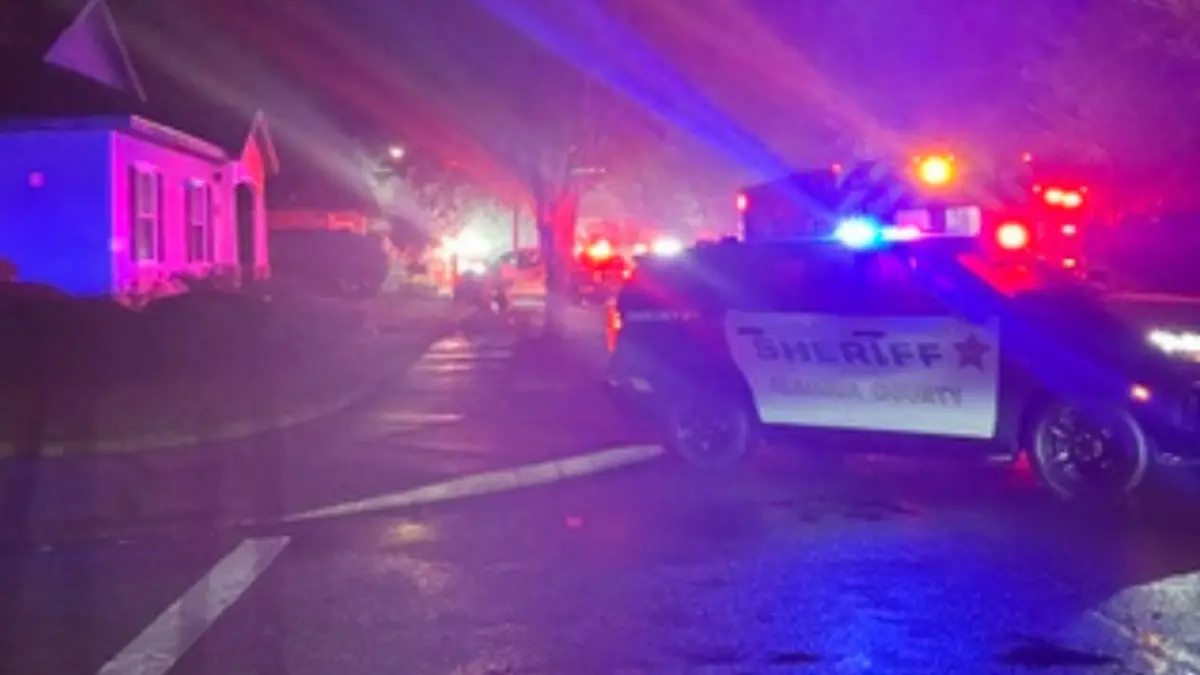
In the late evening hours of Wednesday, August 19, 2026, a severe convective storm system swept through North Central Florida, leaving a trail of structural damage, utility failures, and localized emergencies in its wake. The most acute of these emergencies occurred in southwest Gainesville, within the master-planned Longleaf Community. Just after 9:30 p.m., a residential structure was struck by a high-voltage lightning bolt, igniting a fast-moving fire that quickly breached the home’s attic space and threatened to consume the entire property.
The incident triggered an immediate, high-priority joint response from Alachua County Fire Rescue (ACFR) and Gainesville Fire Rescue (GFR). Upon arrival, first-due suppression crews were met with heavy smoke and active flames venting from the rear of the single-family home. The fire had already established a foothold in the structural void of the attic, presenting a complex challenge typical of modern residential fires.
Through rapid tactical deployment, coordinated offensive attacks, and aggressive search-and-rescue operations, firefighters successfully confined the bulk of the structural damage to the garage and immediate attic area, saving the main living quarters of the home. Remarkably, despite the intensity of the blaze and the rapid spread of toxic gases, the home was unoccupied at the time of the incident, and no injuries were reported among civilians or emergency responders.
This incident highlights the ongoing vulnerability of modern suburban developments to severe weather anomalies. It also underscores the critical importance of inter-agency mutual aid agreements in managing high-risk, low-frequency emergency events in Alachua County.
Detailed Chronology of the Incident
The Ignition and Initial Dispatch
The meteorological conditions on the night of August 19 set the stage for the emergency. A volatile atmospheric boundary layer sparked a series of severe thunderstorms characterized by frequent cloud-to-ground lightning strikes and torrential downpours. At approximately 9:30 p.m., a powerful discharge struck the roof of a single-family residence in the Longleaf Community—a neighborhood known for its neo-traditional architectural layouts and relatively dense residential zoning.
The electrical surge from the lightning strike bypassed standard residential surge protections, finding a path of least resistance through the home’s attic vent system. The intense heat generated by the strike instantly ignited surrounding structural timber and blown-in fiberglass insulation. Within minutes, the fire progressed from an incipient stage to a fully developed attic fire, characterized by heavy, turbulent black smoke venting from the eaves and soffits at the rear of the building.
Neighbors, startled by the concussive force of the lightning strike and the subsequent smell of burning materials, dialled 911. The Alachua County Combined Communications Center dispatched a structured response consisting of multiple engine companies, ladder trucks, rescue units, and battalion chiefs from both Alachua County Fire Rescue and Gainesville Fire Rescue.
[9:30 PM] Lightning Strike -> [9:32 PM] 911 Calls -> [9:34 PM] Dispatch -> [9:39 PM] First Unit ArrivalArrival and On-Scene Size-Up
The first-due engine arrived on the scene within minutes of the dispatch. The commanding officer conducted a rapid 360-degree size-up of the structure, identifying a working fire with heavy smoke and flame visible at the rear of the home, extending vertically into the roofline.
A primary concern for the incident commander was the potential for rapid horizontal fire spread. Due to the construction of modern suburban homes, fires in the attic can travel unimpeded across the entire length of the structure, leading to early roof collapse. Furthermore, the close proximity of adjacent homes in the Longleaf Community necessitated immediate exposure protection to prevent the fire from leaping to neighboring properties.
Tactical Execution and Suppression
The incident command established an offensive strategy, prioritizing search-and-rescue and exposure control simultaneously:
- Water Supply and Fire Attack: Firefighters quickly secured a continuous water supply from a nearby municipal hydrant. Crew members stretched a 1.75-inch pre-connected crosslay hose line to the rear of the home to combat the main body of the fire, while a second line was advanced through the front door to protect the interior hallway and establish a defensive barrier below the attic access points.
- Primary Search: Simultaneously, search crews entered the structure under heavy smoke conditions to perform a primary search. Using Thermal Imaging Cameras (TICs), firefighters systematically cleared the bedrooms, living areas, and bathrooms, confirming that no residents were trapped inside the burning home.
- Breaching the Attic: To combat the fire raging above the ceiling, crews had to pull down sections of drywall and plaster. Using pike poles, firefighters created access holes in the ceiling, allowing them to direct water streams directly into the attic space. This tactic, combined with horizontal ventilation, helped cool the superheated gases and reduced the risk of a flashover.
- Ventilation and Overhaul: Ladder company personnel utilized vertical ventilation techniques, cutting precise holes in the roof to release trapped heat, smoke, and toxic gases. This action improved visibility for the interior attack crews and dramatically lowered the thermal ceiling inside the home.
Within approximately twenty minutes of aggressive firefighting, the forward progress of the fire was halted. The bulk of the active fire was declared extinguished, and crews transitioned to the overhaul phase, meticulously checking for hidden hot spots within the walls and insulation to prevent a rekindle.
Supporting Context & Metrics
The Physics of Lightning-Induced Residential Fires
To understand the severity of the Longleaf Community fire, it is essential to examine the mechanics of lightning strikes on residential structures. A single lightning bolt can carry up to 1 billion volts of electricity and temperatures peaking at 50,000 degrees Fahrenheit—five times hotter than the surface of the sun.
When lightning strikes a residential roof, it typically targets the highest points, such as chimney caps, ridge vents, or plumbing stacks. The electrical current travels through conductive paths, including:
- Electrical Wiring: Vaporizing insulation and causing widespread electrical fires behind drywall.
- Plumbing Pipes: Particularly copper or metal piping, which can conduct the current throughout the home, bursting joints and creating secondary water damage.
- Structural Framing: Igniting wooden trusses, structural oriented strand board (OSB), and combustible insulation materials.
In this incident, the lightning strike targeted the rear roofline, where it found immediate access to the attic space. Attics are notoriously hazardous fire environments because they lack draft stops and fire-rated drywall partitions, allowing oxygen to feed the fire across a large, open area.
| Structural Component | Material Composition | Vulnerability to Lightning Fire |
|---|---|---|
| Roof Trusses | Engineered Gusset-Plate Wood | High (Rapid strength loss under thermal stress) |
| Roof Decking | Oriented Strand Board (OSB) | High (Highly combustible glue and wood binders) |
| Insulation | Blown-in Fiberglass/Cellulose | Moderate (Can smolder undetected for hours) |
| Soffits/Vents | Aluminum / Vinyl | High (Melts quickly, allowing oxygen to rush in) |
Regional Weather Patterns and the August 19 Storm System
The fire in Gainesville was not an isolated event but rather part of a larger, highly destructive storm system that impacted North Central Florida on August 19, 2026. A slow-moving mesoscale convective system (MCS) interacted with the afternoon sea breeze fronts from both the Gulf of Mexico and the Atlantic Ocean, creating an environment ripe for severe downbursts, torrential rain, and intense cloud-to-ground lightning rates.
The severity of this system was felt acutely in neighboring Union County, located just north of Alachua County. In Union County, high-velocity straight-line winds and repeated lightning strikes caused extensive damage:
- Infrastructure Damage: Dozens of canopy trees were uprooted, blocking major transportation arteries and snapping utility poles.
- Commercial and Educational Impact: Several local businesses suffered structural damage from falling trees and wind shear. The extent of the damage to local roadways and power grids forced Union County Public Schools to cancel all classes and administrative operations on Wednesday, August 19, as utility crews worked around the clock to restore basic services.
This regional context underscores the immense strain placed on emergency services across North Central Florida during this weather event, requiring fire departments to maintain high operational readiness and seamless mutual-aid coordination.
Official Statements and Safety Mandates
Following the successful suppression of the Longleaf Community fire, representatives from Alachua County Fire Rescue and Gainesville Fire Rescue released official briefings detailing the incident and offering critical safety guidance to the public.
Statements from Fire Officials
An Alachua County Fire Rescue spokesperson commended the rapid, coordinated action of the responding units:
"The quick containment of this fire is a direct result of the seamless integration between Alachua County Fire Rescue and Gainesville Fire Rescue. When dealing with attic fires, every second counts. The lightweight construction materials used in modern homes are highly efficient, but they fail rapidly under direct fire exposure. Our crews executed an aggressive, textbook attack that saved this family’s home from total destruction."
The spokesperson also confirmed the suspected cause of the blaze:
"Preliminary investigations strongly point to a direct lightning strike as the source of ignition. We observed localized vaporization of electrical conduits and specific burn patterns in the attic consistent with high-voltage atmospheric discharge. We are incredibly thankful that the home was unoccupied at the time and that no firefighters or citizens were injured during this hazardous operation."
Lightning Safety and Mitigation Recommendations
In light of this incident and the broader storm system, local fire marshals have re-emphasized several key safety mandates for homeowners in lightning-prone areas like North Central Florida:
- Installation of Lightning Protection Systems (LPS): Homeowners are encouraged to consider installing certified lightning protection systems. These systems utilize a network of lightning rods (air terminals), copper grounding cables, and grounding plates to safely divert the electrical current of a strike away from the structure and directly into the earth.
- Whole-House Surge Protection: Installing surge protective devices (SPDs) at the main electrical panel can protect sensitive appliances and reduce the risk of secondary electrical fires caused by utility line surges during storms.
- Recognizing the Signs of a Silent Strike: Fire officials warn that not all lightning-induced fires manifest immediately. A strike can cause smoldering combustion within wall cavities or deep attic insulation that may go unnoticed for hours. Residents should call 911 immediately if they experience any of the following after a nearby lightning strike:
- A strong, persistent smell of burning plastic, wood, or sulfur.
- Flickering lights or localized power loss in only a specific section of the home.
- Warm spots on interior drywall or ceilings.
- Discolored or bubbling paint on walls.
Future Outlook and Preventative Recommendations
As climate models project an increase in the frequency and intensity of severe convective storms across the southeastern United States, the vulnerability of expanding suburban communities to lightning strikes is expected to rise. The Longleaf Community fire serves as a poignant case study for urban planners, building code administrators, and homeowners alike.
Adapting Building Codes for Lightning Resilience
While Florida possesses some of the most stringent building codes in the nation regarding wind mitigation and hurricane resistance, standards for lightning mitigation remain largely voluntary for residential structures. Forward-thinking structural engineers suggest that incorporating lightning-resistant design elements into the Florida Building Code could drastically reduce property loss. These recommendations include:
- Mandating Non-Combustible Roof Decking: Utilizing fire-retardant-treated plywood or light-gauge steel framing in high-density residential developments.
- Advanced Attic Compartmentalization: Requiring horizontal draft-stops or fire-rated barriers within residential attics to prevent fires from traveling unchecked from one end of a home to another.
- Enhanced Grounding Requirements: Standardizing enhanced electrical grounding systems during the initial construction phase of all single-family homes.
Community Preparedness and the Role of HOAs
Homeowners’ associations (HOAs) in master-planned communities like Longleaf can play a pivotal role in community-wide fire safety. By partnering with local fire departments, HOAs can conduct annual educational seminars, facilitate group rates for lightning protection system installations, and ensure that neighborhood fire hydrants and emergency access routes remain clear of obstructions.
Ultimately, the successful resolution of the Wednesday night fire in Gainesville is a testament to the high caliber of training, equipment, and strategic cooperation exhibited by Alachua County’s emergency services. As communities continue to grow and nature’s patterns become increasingly unpredictable, the vigilance of local fire rescue agencies remains the definitive line of defense against disaster.

0 Comments