

Executive Overview
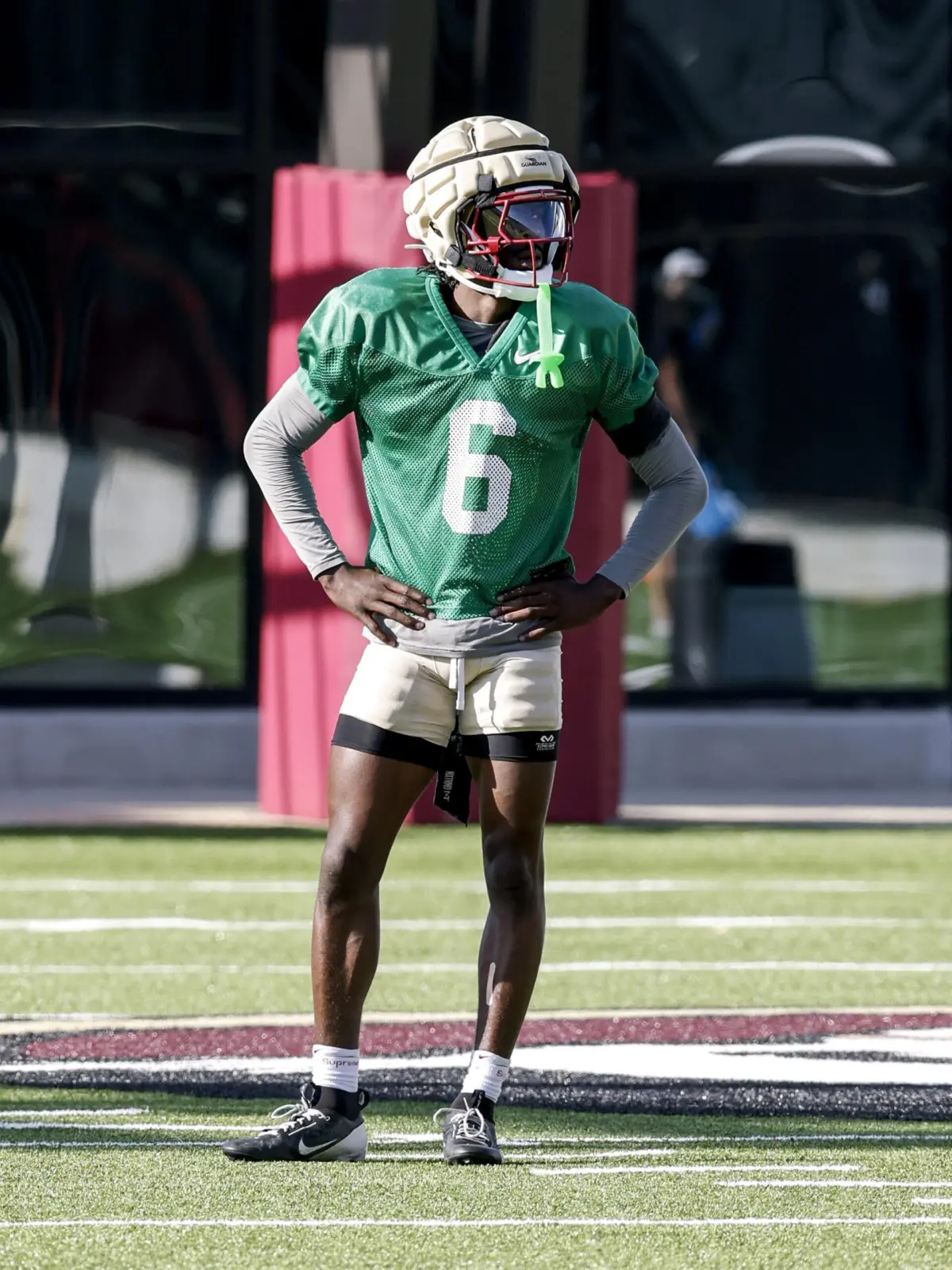
The preseason accolade accumulation for the Florida State Seminoles continues to gather substantial momentum as the college football calendar edges closer to kickoff. On Friday, the national spotlight turned sharply toward the defensive backfield in Tallahassee, where redshirt standout Ja’Bril Rawls was officially named to the prestigious Chuck Bednarik Award watch list. Presented annually by the Maxwell Football Club, the Bednarik Award is widely considered one of the highest individual honors in the sport, recognizing the single most outstanding defensive player in college football.
Rawls’s inclusion on this elite watch list serves as a testament to his undeniable talent, relentless work ethic, and the high ceiling of his on-field impact. It also underscores a remarkable personal narrative of perseverance. Having endured a premature end to his previous campaign due to a severe, season-ending injury, Rawls’s recognition by national voters highlights the profound impression he left during his time on the gridiron. Coaches, analysts, and opposing offenses alike took notice of the dynamic playmaker during his breakout stretches, realizing that a healthy Rawls represents one of the most disruptive secondary pieces in the Atlantic Coast Conference (ACC) and the nation at large.
For Florida State, this preseason nod adds another layer of validation to a defense that is quietly constructing a formidable identity under the watchful eye of the coaching staff. As the Seminoles look to reestablish themselves as national contenders, the leadership, versatility, and playmaking ability of defensive backs like Rawls will prove foundational. This comprehensive report examines the trajectory of Rawls’s career, the significance of the Bednarik Award, the statistical milestones that put him on the national map, and what this vital recognition means for the broader landscape of Florida State football as the team prepares for the upcoming season.
Detailed Chronology: The Making of a Playmaker
To fully understand the weight of Ja’Bril Rawls’s selection to the Bednarik Award watch list, one must trace the meticulous timeline of his development within the Florida State program. Success in major collegiate conferences is rarely accidental; it is forged through years of physical transformation, tactical comprehension, and fierce competition on the practice fields of a storied program.
Early Development and Foundation Building
Upon arriving in Tallahassee, Rawls faced the stiff internal competition typical of a powerhouse program. Like many young defensive backs, his initial tenure was characterized by a heavy focus on mastering the playbook, adjusting to the unprecedented speed of the collegiate game, and honing his technique in coverage. Operating primarily in developmental roles and special teams configurations during his earliest seasons, Rawls absorbed the nuances of the defensive scheme.
During these formative years, his stat line remained modest, but coaches routinely praised his football IQ and relentless pursuit during scout team sessions. The foundation was being laid for a breakthrough. In college football, the transition from a rotational piece to an every-down starter demands physical maturity and mental resilience—traits that Rawls displayed in abundance behind closed doors long before he captured the attention of the broader media landscape.
The 2025 Breakthrough and Defining Moments
The pivotal chapter of Rawls’s career to date unfolded during the 2025 campaign. Elevated into a full-time starting role, Rawls wasted zero time making his presence felt. He immediately seized control of his responsibilities in the secondary, demonstrating the rare ability to diagnose plays pre-snap and execute assignments with ruthless efficiency. Across his shortened campaign, he compiled 40 total tackles, 2.0 tackles for loss, two pass breakups, one interception, and a crucial fumble recovery.
However, numbers alone fail to capture the defining peak of his season. That arrived during a masterclass performance against the University of Virginia. In a game that showcased his complete repertoire as a defensive back, Rawls put on a clinic. He racked up 11 total tackles, including 1.0 tackle for loss, and hauled in a critical interception.
This performance etched his name into the Florida State record books. By registering that specific stat line—at least 11 tackles, a tackle for loss, and an interception—Rawls became the first Seminole defensive back to achieve the feat in a single game since 2005. That historic night against Virginia served as his coming-out party on the national stage, signaling to scouts and analysts that the Florida State secondary housed a legitimate star in the making.
Adversity and the Road to Recovery
Every compelling sports narrative features an obstacle, and for Rawls, heartbreak arrived in the form of a season-ending injury just as he was hitting his absolute stride. The timing could not have been more cruel. Having established himself as the heartbeat of the secondary and a primary weapon in defensive coordinator packages, Rawls was forced to watch the remainder of the season from the sidelines, supporting his teammates in a coaching capacity rather than on the turf.
Yet, true character is revealed in how an athlete responds to adversity. Rather than allowing the injury to derail his trajectory, Rawls channeled his frustrations into his rehabilitation. Working tirelessly with the Florida State training and sports science staffs, he focused on lower-body fortification, flexibility, and mental visualization.
This dedication did not go unnoticed by the national award committees. The Maxwell Football Club, in evaluating candidates for the 2026 Bednarik Award, looked past the truncated nature of his 2025 season and recognized the elite caliber of film Rawls put down before the injury. His resilience has now been rewarded with a spot on one of the most coveted watch lists in American sports.
Supporting Context & Metrics: Analyzing the Numbers
When evaluating defensive standouts for national accolades like the Chuck Bednarik Award, selection committees rely on a blend of traditional statistics, advanced analytics, and situational impact. A deep dive into Rawls’s career metrics reveals a player who punches above his weight class in terms of efficiency, versatility, and big-play potential.
Comprehensive Statistical Breakdown
Over the entirety of his collegiate career to date, Rawls has accumulated:
- Total Tackles: 58
- Tackles for Loss (TFL): 2.0
- Pass Breakups (PBU): 3
- Interceptions: 1
- Fumble Recoveries: 1
While a surface-level glance at these career totals might lead casual observers to question a watch list selection, context is paramount. The vast majority of these statistics were produced during his breakout 2025 campaign as a first-year starter. In modern college football, defensive backs are frequently judged not just by cumulative numbers, but by their coverage metrics, yards allowed per target, missed tackle percentages, and disruption rate.
The Versatility Factor
Rawls’s statistical profile highlights a modern hybrid defensive back. His ability to contribute significantly in the run game—evidenced by his 40 tackles and multiple tackles for loss in 2025—proves he is far more than a traditional, deep-third zone defender. He possesses the physicality required to step up into the box, shed blocks from perimeter receivers or tight ends, and secure open-field tackles against explosive running backs.
Concurrently, his coverage metrics illustrate a player with fluid hips, high-level route recognition, and dependable hands. Pass breakups and interceptions are the currency of elite cornerbacks and safeties; Rawls’s knack for locating the football at its highest point makes him a constant threat to turn defense into offense. The Virginia game stands as the definitive empirical proof of his ceiling: when given the volume of snaps and tactical trust by his coaches, Rawls can single-handedly alter the flow of a game across multiple phases of defense.
Official Statements and Industry Perspective
The announcement of Ja’Bril Rawls’s inclusion on the Bednarik Award watch list generated immediate commentary from coaching circles, analysts, and the university athletic department. This institutional backing emphasizes the profound respect Rawls commands within the program.
Coaching Staff Commentary
While specific preseason quotes often lean toward the diplomatic, the underlying sentiment from the Florida State coaching staff regarding Rawls is one of immense pride and high expectation. Head coach and defensive assistants have repeatedly emphasized Rawls’s leadership qualities during his rehabilitation process.
"When you have a player who suffers a setback like Ja’Bril did, it tests your resolve," noted a member of the Florida State defensive staff. "But the way he attacked his rehab, the way he stayed engaged in every meeting, and the vocal leadership he provided from the sideline showed us everything we needed to know about his maturity. Seeing him named to the Bednarik watch list is a testament to the respect he’s earned—not just from us, but from people who watch the tape across the entire country. He belongs in this conversation."
National Media and Analyst Reaction
Draft analysts and college football columnists have similarly praised the selection, viewing Rawls as one of the primary bounce-back and breakout candidates to watch nationally in the upcoming season. Analysts point out that the Bednarik Award committee historically favors high-impact defenders who exhibit positional flexibility and playmaking instincts.
"Ja’Bril Rawls is a name that casual fans might be learning for the first time, but NFL scouts and conference coordinators have known about him for a while," noted one national college football analyst following the release of the watch list. "If he can pick up right where he left off before the injury in 2025, his ceiling is exceptionally high. He plays with a level of instincts that you simply cannot coach. Putting him on the Bednarik watch list is a smart nod to a player who was tracking toward all-conference status before his season was cut short."
Future Outlook: The Road Ahead for Rawls and the Seminoles
As the college football world transitions from the dog days of summer workouts to fall camp preparations, the narrative surrounding Ja’Bril Rawls shifts from recognition to execution. Being named to a preseason watch list is a significant honor, but it is ultimately a projection based on past performance and future potential. The true challenge lies in translating that preseason hype into on-field dominance when the lights turn on.
Expectations for the Upcoming Campaign
For Rawls, the primary objective is clear: complete a seamless return to full-contact play, reclaim his starting role with authority, and build upon the statistical foundation he established in 2025. If he can recapture the explosive form he displayed against Virginia—while maintaining durability across a full, grueling schedule—he will quickly transition from a "watch list" candidate to a legitimate finalist for the Bednarik Award.
Moreover, his performance will be a critical barometer for the success of the entire Florida State defense. A lockdown secondary eases the burden on the pass rush, allows defensive coordinators to dial up exotic pressure packages, and provides a safety net against explosive offensive attacks. Rawls is positioned to be the anchor of that secondary, a player opposing quarterbacks must locate on every single snap.
Implications for Florida State Football
Beyond individual accolades, Rawls’s recognition reflects positively on the broader trajectory of the Florida State program. Cultivating elite defensive talent has always been a hallmark of the Seminoles’ storied history, and the presence of players like Rawls on major national award watch lists signals that the pipeline of talent in Tallahassee remains robust.
As the season approaches, all eyes will be on Rawls and the Seminole defense. With high expectations, a chip on his shoulder from the previous year’s injury, and national validation in the form of the Bednarik Award watch list selection, Ja’Bril Rawls enters the most important campaign of his athletic career. If his past production is any indicator of his future output, the opposing offenses of the ACC and beyond should prepare for a very difficult autumn.

0 Comments