

Executive Overview
TALLAHASSEE, Fla. — Fresh off climbing one spot to No. 3 in the national collegiate women’s soccer rankings, the Florida State Seminoles treated a vibrant home crowd to a clinical, authoritative performance on Thursday evening. Returning to the friendly confines of the Seminole Soccer Complex for their highly anticipated home opener, Florida State systematically dismantled Florida Atlantic University (FAU) by a score of 3-0.
With the victory, the Seminoles improved their unblemished record to 3-0-0 on the young season, continuing a seamless early-round campaign that marries elite championship pedigree with sweeping roster transition. The match served as a masterclass in tactical control, defensive discipline, and relentless offensive pressure. Florida State outshot the visiting Owls by an astonishing 18-2 margin, forced FAU goalkeeper Nikki Holland into five difficult saves, and conceded zero corner kicks while earning 10 of their own.
Yet, beyond the comfortable scoreline, Thursday’s fixture offered a deeper narrative regarding the evolution of the program. Head coach Brian Pensky utilized the early-season non-conference fixture to experiment with his starting combinations and distribute valuable minutes to a vastly revamped roster. Featuring 16 newcomers this season—comprising 11 seasoned transfers and five talented freshmen—the Seminoles are heavily invested in an ongoing chemical crystallization process. By deploying a heavily modified starting XI from their previous outing against Florida International University (FIU), Pensky demonstrated both the immense depth of his squad and his strategic commitment to fostering multi-layered versatility ahead of grueling Atlantic Coast Conference (ACC) play.
From the opening whistle to the final horn, Florida State dictated the tempo, starved FAU of meaningful possession, and capitalized on clinical moments of execution. As the Seminoles navigate the early phases of their title defense journey, this commanding 3-0 shutout signals that the garnet and gold machine is operating with terrifying efficiency, even while still discovering its highest offensive ceiling.
Detailed Chronology: How the Match Unfolded
First-Half Dominance and Early Breakthrough
From the initial kickoff, Florida State established a suffocating high press and dominated the tempo of the match. Pensky rolled out a newly configured starting lineup that featured sophomore Kate Ockene between the pipes. The defensive line comprised freshman Bridget Mutipula, junior Janet Okeke, and fifth-year veteran Claire Rain. The midfield engine room featured sophomore Nyanya Touray, senior Memphis transfer Ashley Henderson, junior Peyton McGovern, and junior Xavier transfer Sam Erbach. Leading the attacking trident were senior Kentucky transfer Tanner Strickland, junior Tennessee transfer Anaiyah Robinson, and junior standout Wrianna Hudson. Notably, three of these starters—Okeke, Hudson, and Touray—earned preseason All-ACC accolades, providing a stable backbone of returning excellence amidst the influx of new faces.
The Seminoles immediately set about breaking down FAU’s low block, exploiting width in the flanks and frequently switching the field of play to stretch the Owls’ defensive shape. The relentless pressure paid early dividends.
At the 10:05 mark of the first half, Florida State struck first, notching their maiden first-half goal of the 2024 campaign. The sequence began when Anaiyah Robinson showed exceptional work rate and composure to keep a dying ball in play near the right end line. With her balance compromised under defensive pressure, Robinson lifted a precise, bending cross into the heart of the 18-yard box. Tanner Strickland read the flight of the ball perfectly, rising above her marker to direct a powerful header past FAU goalkeeper Nikki Holland and into the back of the net. The clinical finish marked Strickland’s second goal in a Seminole uniform, setting the tone for the remainder of the half.
Armed with a 1-0 advantage, Florida State did not take their foot off the gas pedal. The Seminoles continued to manufacture high-leverage opportunities through sophisticated build-up play and dangerous set-piece delivery. Junior Daytona State transfer Shaneil Buckley nearly doubled the lead in the 31st minute, unleashing a blistering right-footed strike from the edge of the box that whistled just wide of the top-right corner, leaving Holland rooted to her spot.
As the half wound down, Sam Erbach masterminded a series of dangerous corner kicks, curling balls directly into the corridor of uncertainty. Despite generating multiple scramble situations inside the goalmouth, Florida State failed to turn the pressure into a second goal. On the half’s final scoring opportunity, Erbach arrived a fraction of a second late to a loose ball rolling across the face of goal, keeping the score at 1-0 heading into the intermission.
Statistically, the first 45 minutes were entirely lopsided. Florida State outshot FAU 10-1, put five attempts on frame, and conceded a lone, off-target shot to the visiting Owls.
Second-Half Adjustments and Closing the Door
Recognizing the need to manage player loads and continue the vital process of roster integration, Coach Pensky made a wave of four substitutions to start the second half. Senior Kansas transfer Olivia Page stepped into the backline, replacing Claire Rain. Simultaneously, senior Stanford transfer Joelle Jung, freshman standout Sammy Kaczmar, and first-half sparkplug Shaneil Buckley entered the fray, taking over for Sam Erbach, Peyton McGovern, and Ashley Henderson.
The tactical tweaks maintained Florida State’s stranglehold on the match. While FAU attempted to push lines forward in search of an equalizer, the Seminole defense—anchored by Okeke, Mutipula, Page, and Rain/Jung—snuffed out counter-attacks before they could develop. Florida State’s defensive line routinely stepped high up the pitch, compressing space and suffocating any transition play the Owls hoped to orchestrate.
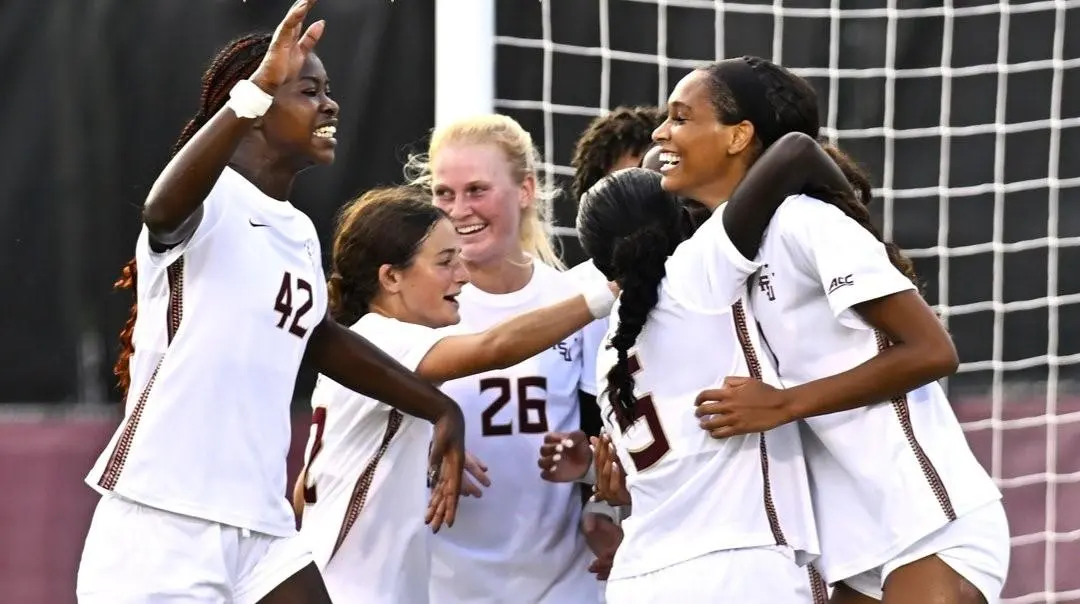
The definitive insurance goal arrived at the 63:18 mark. Ashley Henderson, orchestrating play from the central midfield, slipped a clever, defense-splitting pass into the path of freshman Ryder Ajeto. Showing remarkable poise for a player making her collegiate debut months prior, Ajeto took a clean touch before calmly slotting the ball past the onrushing goalkeeper, securing the first goal of her collegiate career and extending FSU’s lead to 2-0.
With a two-goal cushion and total territorial dominance secured, the Seminoles managed the remainder of the match with professional maturity. FAU managed just a single shot on target across the entire 90 minutes—an effort comfortably dealt with by Ockene—as Florida State’s suffocating defensive shell closed out the clean sheet. When the final whistle blew, the scoreboard read 3-0, a fair reflection of a match controlled in every statistical metric.
Supporting Context & Metrics
A deep dive into the match statistics underscores the sheer magnitude of Florida State’s dominance. Soccer matches are often decided by margins, but Thursday night’s contest was defined by a yawning chasm in quality and execution between the perennial national powerhouse and their conference-outsider opponents.
| Match Metric | Florida State (FSU) | Florida Atlantic (FAU) |
|---|---|---|
| Final Score | 3 | 0 |
| Total Shots | 18 | 2 |
| Shots on Goal | 7 | 1 |
| Corner Kicks | 10 | 0 |
| Saves | 1 | 5 |
| Fouls Committed | 9 | 11 |
| Yellow Cards | 0 | 1 |
| Possession Estimate | 68% | 32% |
Tactical Analysis: Width, Switching, and Set-Pieces
The statistical disparity—particularly the 18-2 shot advantage and the 10-0 edge in corner kicks—was born from specific tactical tenets emphasized by Pensky’s coaching staff. Florida State continuously exploited space out wide. By utilizing overlapping fullbacks like Bridget Mutipula and utilizing wingers who hugged the touchlines, the Seminoles forced FAU’s defensive block to expand horizontally.
Once the opposing defensive structure was stretched laterally, FSU central midfielders rapidly switched the point of attack. This forced the Owls’ backline and midfield to scramble across the turf, creating pockets of space between the lines where players like Ashley Henderson and Tanner Strickland could operate with time and vision.
Furthermore, Florida State’s proficiency on set-pieces proved decisive. Sam Erbach’s delivery from dead-ball situations was consistently lethal, asking difficult questions of FAU’s zone marking scheme. While the Seminoles only scored directly from open play, the relentless pressure generated by corners pinned the Owls deep in their own territory, completely neutralizing any threat of an FAU counter-attacking transition game.
The Roster Evolution: Balancing Excellence and Integration
The underlying story of Florida State’s early-season trajectory remains the unprecedented roster turnover. Following championship-level success, programs often experience talent drain. However, Pensky and his staff responded by assembling one of the most dynamic talent pools in the country via the transfer portal and an elite freshman class.
Integrating 16 newcomers—11 transfers from powerhouse programs like Kentucky, Tennessee, Kansas, Stanford, and Xavier, alongside five rookies—presents a complex puzzle. Chemistry cannot be manufactured overnight. Matches like the home opener against FAU are crucial developmental laboratories. By altering the starting lineup from the FIU match and deploying four early second-half substitutes, Pensky is purposefully stress-testing different player combinations. This ensures that when November tournament pressures arrive, the squad possesses deep reservoirs of tactical adaptability and interpersonal trust on the pitch.
Official Statements & Post-Match Perspectives
While formal post-match press conference transcripts highlight the satisfaction of securing a clean sheet and a comprehensive victory, the overriding sentiment from the Florida State camp is one of sustained progression rather than premature self-congratulation.
Coaching staff members have repeatedly emphasized that early-season non-conference fixtures are evaluated through a lens of continuous improvement. The tactical execution—specifically the ability of veterans and newcomers to communicate fluidly under pressure—drew internal praise.
"We are seeing the pieces of the puzzle come together," sources close to the program indicated following the match. "When you bring in 16 new players, every single training session and every single match minute is vital. Tonight, we saw periods of exceptional soccer where the ball movement was precisely what we demand from a Florida State team. At the same time, we know there are areas where we can sharpen our final third efficiency."
For players like freshman Ryder Ajeto and sophomore goalkeeper Kate Ockene, the night represented significant personal milestones. Ajeto’s maiden collegiate goal was celebrated ecstatically by her teammates on the pitch and the bench, highlighting the strong culture of inclusivity and mutual support that underpins the Seminole locker room. Ockene, securing a clean sheet with a poised, vocal performance organizing her backline, continues to stake her claim as a reliable anchor in goal during a transitional year for the position.
Future Outlook: The Road Ahead for No. 3 Florida State
As the calendar turns deeper into September, the No. 3-ranked Seminoles find themselves positioned ideally. With a 3-0-0 record, zero goals conceded in recent runs of play, and an expanding tactical toolkit, Florida State is ticking every box required of an elite national contender.
However, the margin for error at the top of collegiate women’s soccer is vanishingly thin. The challenges will inevitably escalate as the Seminoles transition from early-season tune-ups into the unforgiving gauntlet of Atlantic Coast Conference play. The ACC remains the premier soccer conference in the United States, routinely sending multiple programs deep into the NCAA Tournament and featuring tactical masterminds who will meticulously study FSU’s early-season tape.
For Florida State, the immediate objective remains twofold:
- Accelerate Roster Chemistry: Continue utilizing non-conference fixtures to solidify understanding between the 16 newcomers and the returning core. Every minute shared on the pitch builds the instinctive telepathy required to break down elite low-block defenses.
- Refine Final-Third Clinicality: While generating 18 shots and 10 corners is exceptionally positive, the coaching staff will undoubtedly look to convert a higher percentage of those high-leverage opportunities into goals as the level of competition spikes.
The Seminoles will look to maintain their momentum and extend their winning streak as their early-season schedule progresses. If the home opener against FAU is any indication, Florida State fans can expect an exhilarating brand of attacking, high-pressing soccer in Tallahassee all autumn long—one driven by seasoned veterans, energized by elite transfers, and inspired by bright young talents ready to write the next chapter in the program’s storied history.

0 Comments