

Executive Overview
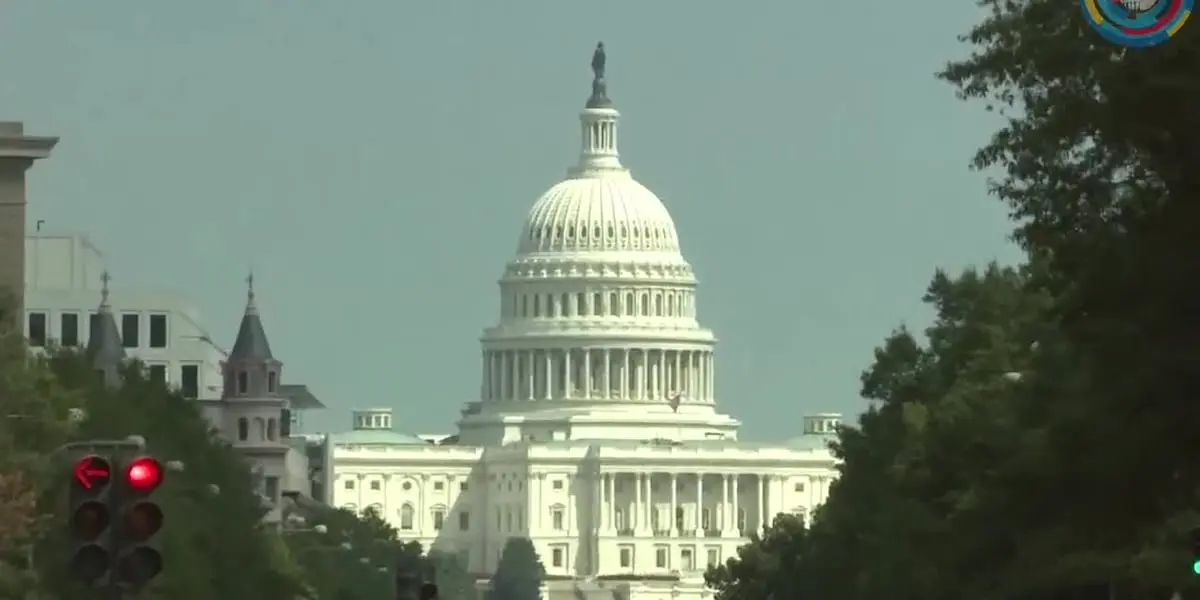
Washington is bracing for a highly volatile legislative and political stretch as the House of Representatives returns from its traditional August recess. With the 2026 midterm elections rapidly approaching, lawmakers face a compressed timeline to resolve deep-seated budget disagreements, secure critical defense funding, and navigate a series of high-profile legal and electoral battles across the country.
The immediate priority for the House is averting a partial government shutdown. Legislators have roughly four weeks to draft, debate, and pass a continuing resolution (CR) before the fiscal year ends on September 30. This task is complicated by intense partisan divisions over a proposed Republican reconciliation package. The GOP-led effort aims to secure long-term funding for ongoing U.S. military operations involving Iran, alongside a suite of conservative domestic policy priorities.
Beyond the halls of Congress, the political battlegrounds are heating up. In Michigan, Vice President JD Vance is scheduled to headline a major campaign event hosted by the super PAC MAGA Inc., highlighting the administration’s efforts to consolidate working-class support in the Rust Belt. Meanwhile, voters in Massachusetts are preparing for pivotal primary elections that will set the stage for crucial November matchups.
Simultaneously, the judiciary will take center stage. In Boston, a federal court will hear arguments regarding controversial executive efforts to restrict mail-in voting—a case that could redefine ballot access ahead of the midterms. In Washington, the legal system will address a highly publicized case of national heritage vandalism, as a suspect faces arraignment for defacing the World War II Memorial.
Detailed Chronology
[Monday] ------------------> [Tuesday] -----------------> [Thursday]
• House Reconvenes           • Massachusetts Primaries   • Boston Court: Voting Rights
• Vance in Michigan (PAC)                                • DC Court: WWII Memorial Case
Monday: The Capitol Reconvenes and the Rust Belt Campaign Begins
The legislative engine restarts on Monday as members of the House of Representatives return to Washington. The atmosphere is expected to be tense, with leadership on both sides of the aisle acknowledging the razor-thin margins for error. The primary objective of the week is establishing a baseline framework for the continuing resolution.
On the campaign trail, Monday also marks a major mobilization effort by the conservative super PAC MAGA Inc. In Sterling Heights, Michigan—a vital suburban battleground in Macomb County—Vice President JD Vance will host a high-profile rally. The event is strategically designed to shore up support among blue-collar voters and independent swing electors. Michigan remains a cornerstone of the administration’s electoral coalition, and Vance’s appearance underscores the urgency of maintaining congressional control in the upcoming midterms.
Tuesday: Massachusetts Primaries and the Democratic Base
On Tuesday, attention shifts to New England as Massachusetts voters head to the polls for their primary elections. While Massachusetts is traditionally a Democratic stronghold, the primaries are serving as an ideological battleground. Progressive challengers are testing the resilience of moderate establishment incumbents, particularly on issues of economic reform, housing affordability, and foreign policy spending. On the Republican side, candidates are vying to present themselves as the most viable challengers capable of breaking the Democratic supermajority in the state’s federal delegation.
Thursday: Legal Flashpoints in Boston and Washington
The latter half of the week will be dominated by critical judicial proceedings. On Thursday, a federal court in Boston will hold a highly anticipated hearing regarding President Trump’s executive initiatives aimed at tightening regulations on mail-in voting. Civil rights organizations and Democratic state attorneys general are challenging the restrictions, arguing they disproportionately disenfranchise rural, elderly, and minority voters. The administration defends the measures as necessary safeguards to ensure electoral integrity.
Concurrently, in Washington, D.C., the federal district court will hold an arraignment for a woman accused of vandalizing the World War II Memorial on the National Mall. The incident, which occurred earlier this summer, sparked national outrage. The defendant faces charges of federal property destruction, a crime that carries significant prison time and financial penalties. The hearing is expected to draw substantial public and media attention, highlighting ongoing debates surrounding public order and the protection of national monuments.
Supporting Context & Metrics
The Fiscal Cliff: September 30 Deadline
The legislative calendar leaves little room for gridlock. To avoid a government shutdown on October 1, the House and Senate must agree on a spending package.
| Legislative Priority | Estimated Funding Target | Key Policy Riders / Flashpoints |
|---|---|---|
| Continuing Resolution (CR) | Discretionary baseline funding | Border security provisions, IRS funding rollbacks |
| GOP Reconciliation Package | $120 Billion (Defense/Foreign Aid) | Funding for military operations in Iran, energy subsidies |
| Domestic Security Initiatives | $15 Billion | Enhanced physical security for polling locations |
The Republican push for a reconciliation package remains the primary obstacle to a clean CR. The package’s inclusion of sustained funding for the conflict in Iran has drawn fierce opposition from progressive Democrats and anti-interventionist libertarians alike. Fiscal hawks are also demanding deep cuts to non-defense discretionary spending as a condition for their votes, raising the specter of a prolonged legislative stalemate.
Electoral Dynamics in Michigan and Massachusetts
The campaign stop by Vice President Vance in Sterling Heights is backed by heavy financial commitments. MAGA Inc. has reportedly allocated over $15 million in advertising buys across the Midwest for the post-Labor Day stretch.
In Massachusetts, historical voter turnout metrics indicate that off-year and midterm primaries often see low participation, sometimes dipping below 20% of registered voters. However, analysts predict a higher-than-average turnout this Tuesday, driven by intense local organizing and high voter anxiety regarding the national political climate.
Official Statements
Congressional Leadership and the Administration
Speaking ahead of the House’s return, the Speaker of the House emphasized the need for fiscal responsibility while prioritizing national security:
"Our immediate duty is to keep the government open, but we will not do so at the expense of our national security or our fiscal sanity. The reconciliation package we are advancing ensures that our armed forces have the resources necessary to confront hostile actions from Iran, while simultaneously reigning in the inflationary spending of the past."
In response, the House Minority Leader criticized the GOP’s legislative strategy, calling it a recipe for chaos:
"Instead of working on a bipartisan basis to pass a clean funding bill, extreme members of the majority are holding the American government hostage to push an unpopular foreign war and slash vital domestic programs. We are ready to vote for a clean continuing resolution today, but we will not be bullied into funding reckless military escalations."
The Campaign Trail
At a press briefing detailing Vice President Vance’s trip to Michigan, a spokesperson for MAGA Inc. highlighted the administration’s economic message:
"Sterling Heights represents the heart of the American workforce. Vice President Vance is going to Michigan to deliver a clear message: this administration stands with the workers, the builders, and the families who keep this country running. We are going to protect their jobs, secure our borders, and ensure a decisive victory for Republicans this November."
Future Outlook
The upcoming week will serve as a bellwether for the remaining months of 2026. If the House fails to establish a clear path toward a continuing resolution by the end of the week, financial markets may begin to react to the growing probability of a government shutdown. A shutdown just weeks before the midterm elections would introduce unpredictable variables into competitive congressional races, potentially alienating moderate swing voters.
The outcome of the Massachusetts primaries will offer immediate data on the electorate’s enthusiasm and ideological leanings. A surge in progressive or populist turnout could signal broader national shifts, forcing party strategists to recalibrate their messaging for the general election.
Finally, the judicial ruling emerging from the Boston federal court hearing on mail-in voting will have profound logistical implications. A ruling upholding the administration’s restrictions would likely lead to immediate changes in how local election boards process mail-in ballots, potentially altering turnout dynamics in key swing states where similar legal challenges are pending. Conversely, an injunction halting the restrictions would represent a major victory for voting rights advocates and establish a crucial legal precedent ahead of November.
Copyright 2026 Gray DC. All rights reserved.

0 Comments