

Executive Overview
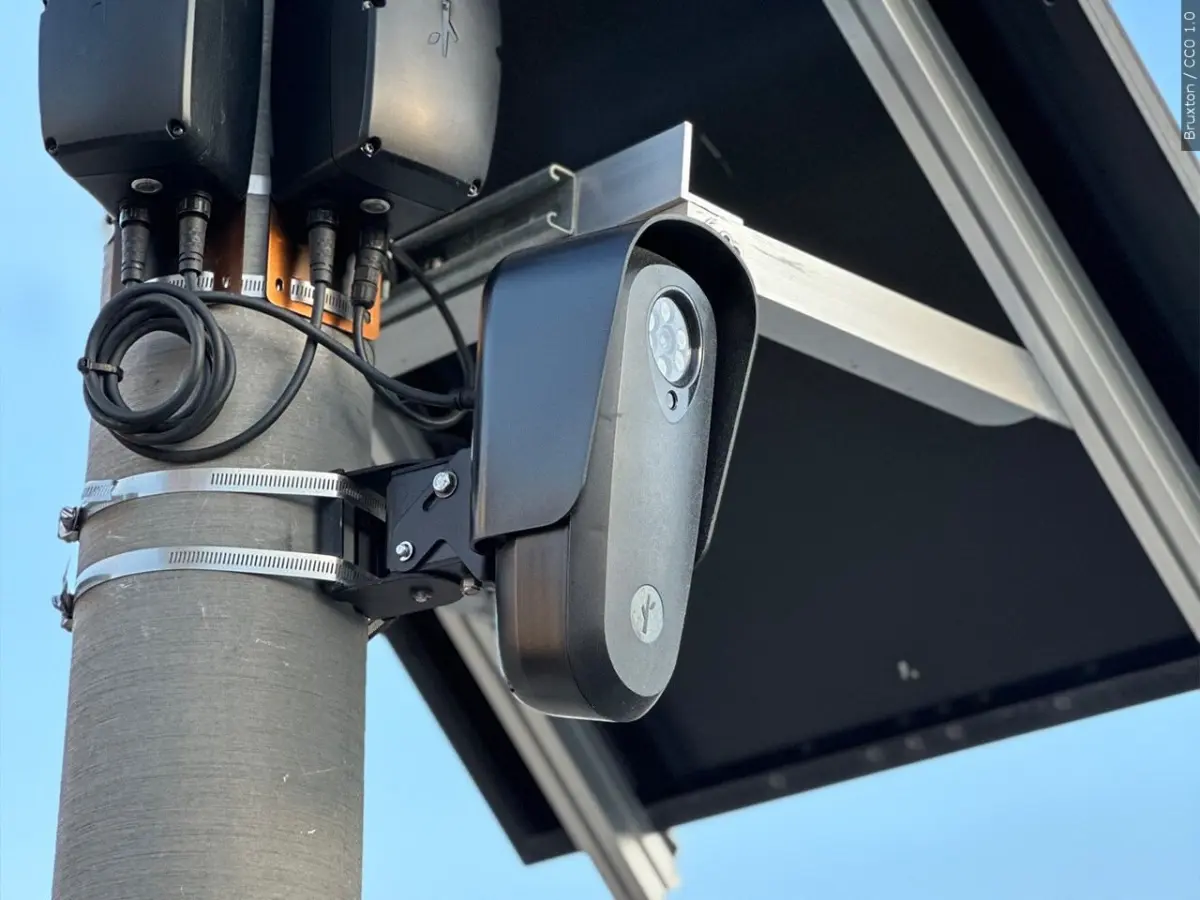
In a decisive administrative maneuver that has sent shockwaves through the Florida law enforcement community, Governor Ron DeSantis has issued a unilateral directive ordering the immediate removal of automated license plate reader (ALPR) cameras—most notably those operated by industry giant Flock Safety—from all state-controlled roadways. The executive mandate, executed through the Florida Department of Transportation (FDOT), establishes a strict 30-day window for compliance, forcing local sheriff’s offices and municipal police departments to dismantle critical pieces of their modern surveillance infrastructure.
The administration’s sudden pivot away from high-tech vehicular tracking is grounded in escalating apprehensions regarding personal privacy, systemic surveillance overreach, and the potential for database misuse. While ALPR systems have fast become a cornerstone of contemporary policing—lauded by law enforcement agencies for their real-time utility in tracking stolen vehicles, locating missing persons, and solving violent crimes—they have simultaneously drawn fierce criticism from civil liberties advocates who warn of an unchecked, panoptic dragnet.
This sweeping state-level intervention has exposed a profound philosophical rift among Florida’s sheriffs. Across North Central Florida, law enforcement leaders find themselves caught in a complex web of compliance, public safety imperatives, and constitutional interpretation. While some agency heads have seized the opportunity to implement a total moratorium on vehicular tracking, others are actively seeking legal and geographical workarounds to preserve a tool they deem indispensable to public safety.
Detailed Chronology
The administrative unraveling of Florida’s state-roadway ALPR network unfolded with remarkable speed, catching many local agencies off guard despite months of simmering national debate over private-public surveillance partnerships.
[Late July 2026] -----------------> [Mid-August 2026] ---------------> [August 31, 2026]
Marion County Sheriff               Gilchrist County Sheriff            FDOT Issues Formal Memo;
praises LPR tech for                quietly preempts state              DeSantis orders 30-day
rescuing missing 13-year-old        by removing all cameras             removal of state-road LPRs
The Prelude to the Mandate
For years, the proliferation of Flock Safety cameras and similar ALPR technologies across Florida occurred with minimal regulatory friction. Local law enforcement agencies routinely entered into private contracts with surveillance firms, mounting the cameras on utility poles, traffic lights, and state-maintained right-of-ways under standard FDOT utility permits.
However, by mid-2026, the political winds had shifted. National civil rights organizations, including the American Civil Liberties Union (ACLU), intensified their lobbying efforts and legal challenges, arguing that the centralized databases maintained by private vendors allowed for the warrantless, retroactive tracking of millions of law-abiding citizens.
The Quiet Preemption
Weeks before the state’s formal announcement, signs of internal friction began to surface. In Gilchrist County, Sheriff’s officials quietly made the decision to remove all of their license plate readers from both local and state roads, anticipating a regulatory shift. Similarly, hours before the FDOT directive was officially published on August 31, 2026, the Putnam County Sheriff’s Office abruptly discontinued its entire ALPR program, signaling that high-level law enforcement administrators had received advance warning of the impending policy shift.
The FDOT Directive
On August 31, 2026, the FDOT issued a formal memorandum citing an escalation in systemic concerns nationwide regarding data security, third-party storage of citizen movement patterns, and the lack of standardized oversight. The memo gave local agencies exactly 30 days to locate, deactivate, and physically remove all ALPR hardware positioned within state-owned right-of-ways.
Because Florida’s major transportation arteries—including state roads, U.S. highways, and interstate off-ramps—fall under FDOT jurisdiction, the order effectively blinded the regional tracking networks that law enforcement had spent years and millions of taxpayer dollars constructing.
Supporting Context & Metrics
To comprehend the scale of the disruption, it is necessary to examine the physical distribution of these surveillance devices. ALPR technology relies on high-speed, machine-learning-enabled cameras that capture the license plates, make, model, color, and unique identifying characteristics of every passing vehicle. This data is instantly cross-referenced against state and federal crime databases (such as the National Crime Information Center) while simultaneously being stored in searchable cloud databases.
Regional Breakdown of Agency Responses
The response of North Central Florida’s sheriff’s offices reveals a deeply fragmented landscape, with agencies adopting wildly divergent strategies to cope with the loss of state-roadway data.
| Sheriff’s Office | Cameras on State Roads | Action Taken on State Roads | Action Taken on Local/County Roads | Vendor Used |
|---|---|---|---|---|
| Alachua County | 27 | Removed / Deactivated | 15 local cameras remain active | Flock Safety / Similar |
| Bradford County | Various | Removed / Deactivated | All local cameras disabled | Flock Safety |
| Columbia County | Undisclosed | Refused to comment | Refused to comment / No records | Undisclosed |
| Dixie County | Various | Removed / Deactivated | All other cameras suspended | Flock Safety |
| Gilchrist County | 0 (Preemptively removed) | Removed weeks prior | All local cameras removed | Flock Safety |
| Levy County | Various | Removed / Deactivated | All local cameras being removed | Non-Flock Vendor |
| Marion County | Various | Removed / Deactivated | All local cameras remain active | Flock Safety |
| Putnam County | Various | Discontinued pre-order | All local cameras disabled | Flock Safety |
| Suwannee County | Various | Removed / Deactivated | All local cameras disabled | Flock Safety |
| Union County | Various | Removed / Deactivated | Local cameras remain active | Flock Safety |
The Local vs. State Jurisdictional Divide
As illustrated above, the FDOT order only has legal teeth on state-maintained roadways. This has created a patchwork of surveillance zones.
In Alachua County, Sheriff Chad Scott opted for a split strategy: while 27 cameras along state routes are being dismantled, 15 cameras positioned on county and municipal roads will remain fully operational.
Conversely, Bradford, Dixie, Gilchrist, Levy, Putnam, and Suwannee counties have chosen to shut down their entire operations. These agencies concluded that a partial network is either logistically unfeasible, financially unjustifiable, or politically unpalatable given the prevailing privacy concerns.
Official Statements
The polarized reactions to Governor DeSantis’s directive reflect a broader national debate over the trade-offs between public safety and personal privacy.
The Civil Libertarian Stance: Sheriff Gordon Smith (Bradford County)
Among the region’s law enforcement leaders, Bradford County Sheriff Gordon Smith emerged as one of the most vocal proponents of the Governor’s privacy-centric rationale. Rather than merely complying with the bare minimum of the FDOT order, Smith took the extraordinary step of shutting down his department’s entire ALPR network.
"I have a responsibility, and I owe it to my constituents to also protect their privacy concerns," Sheriff Smith stated. "And I think we’re addressing that; I think this is just a short-term stop, and somewhere down the road we will make this as right as right can be."
Smith emphasized that while the technology possesses undeniable investigative value, the lack of robust, standardized regulations leaves the door open to constitutional overreach. He expressed hope that the state would eventually draft a comprehensive regulatory framework governing data retention, third-party access, and strict auditing processes before the technology is reintroduced.
The Law-and-Order Pragmatist: Sheriff Billy Woods (Marion County)
At the opposite end of the spectrum is Marion County Sheriff Billy Woods, who has historically been one of the state’s most ardent defenders of ALPR technology. Though his office is complying with the FDOT mandate by removing cameras from state roads, Woods has pointedly kept the county’s remaining local cameras online.
Just weeks prior to the state’s order, in July 2026, Woods praised the technology for its role in resolving a high-stakes Amber Alert involving a missing 13-year-old girl from Marion County. The LPR network flagged the suspect’s vehicle within minutes of the alert being broadcast, allowing deputies to intercept the car and rescue the child unharmed.
"LPRs are an asset to every law enforcement agency in this nation," Sheriff Woods declared in the wake of the rescue. "This girl was rescued because of an LPR and a citizen combined together."
The Search for Middle Ground: Sheriff Chad Scott (Alachua County)
Alachua County Sheriff Chad Scott expressed a desire to strike a balance between these competing philosophies. In a social media address to his constituents, Scott acknowledged the utility of the 27 cameras being removed but affirmed his commitment to maintaining the county’s remaining 15 local devices under strict operational guidelines. Scott stated that his goal is to find a "responsible middle ground" that leverages the investigative power of the technology without infringing upon the reasonable expectation of privacy held by law-abiding citizens.
Public Sentiment: A Divided Electorate
The division among law enforcement is mirrored within the citizenry of North Central Florida. For some, the omnipresence of cameras is a comforting deterrent against rising crime rates. Gainesville resident Charles Miller voiced a sentiment shared by many proponents of surveillance-heavy policing:
"I think that’s why they need to put cameras everywhere, in the city and the country, everywhere they can put them, interstates, wherever they need cameras, they should keep them up and put them there," Miller said.
Conversely, the digital sphere has erupted with support for the Governor’s decision. On local community forums and social media platforms, residents have hailed the removal of the cameras as a victory for the Fourth Amendment. Many questioned the constitutionality of private corporations like Flock Safety maintaining massive, searchable historical databases of citizens’ daily routines—such as trips to the grocery store, doctors’ offices, and places of worship—without judicial warrants.
Future Outlook
The immediate future of traffic surveillance in Florida is shrouded in political and legal uncertainty. Because the removal mandate was issued via executive authority through the FDOT rather than codified through legislative action, its longevity is inherently tied to the occupant of the Governor’s Mansion.
The Looming Gubernatorial Transition
Governor DeSantis’s order is structurally temporary. With Florida’s gubernatorial election cycle concluding in late 2026, a new administration is set to take the oath of office in January 2027. Legal analysts point out that the incoming governor will possess the executive authority to immediately rescind the FDOT directive, potentially paving the way for a rapid re-installation of the Flock camera network on state roadways.
This political horizon has left many sheriff’s offices in a holding pattern. Some agencies are storing their deactivated hardware in warehouses rather than terminating their contracts with vendors, anticipating that a change in state leadership in January could bring a swift reversal of the policy.
The Path Toward Legislative Standardization
Regardless of who occupies the governor’s office in 2027, the current disruption has highlighted the urgent need for uniform legislative standards. Privacy advocates are already drafting proposals for the upcoming legislative session, aiming to codify strict statewide limits on ALPR usage. Potential regulatory measures include:
- Mandatory Data Purges: Requiring that any captured license plate data not tied to an active criminal investigation be permanently deleted within 24 to 48 hours.
- Third-Party Auditing: Subjecting private vendors like Flock Safety to regular, independent security audits to prevent data breaches and unauthorized access.
- Warrant Requirements: Restricting law enforcement’s ability to run historical, pattern-of-life searches on specific vehicles without a judge-signed warrant.
Ultimately, Florida’s 30-day surveillance purge stands as a landmark case study in the modern struggle to balance technological efficacy with constitutional liberty. As the cameras come down along the state’s highways, the debate over who controls the data of our movements is only just beginning.

0 Comments