

Executive Overview
Food insecurity across North Central Florida has increasingly shifted from a temporary crisis to a structural challenge, requiring regional charitable infrastructure to evolve beyond basic non-perishable food drives. In Alachua County, the bottleneck facing emergency food assistance has long centered on cold-chain logistics: while donations of canned goods and dry grains remain steady, the ability to store, preserve, and distribute nutrient-dense perishables—such as fresh produce, dairy, and lean proteins—depends entirely on refrigeration capacity.
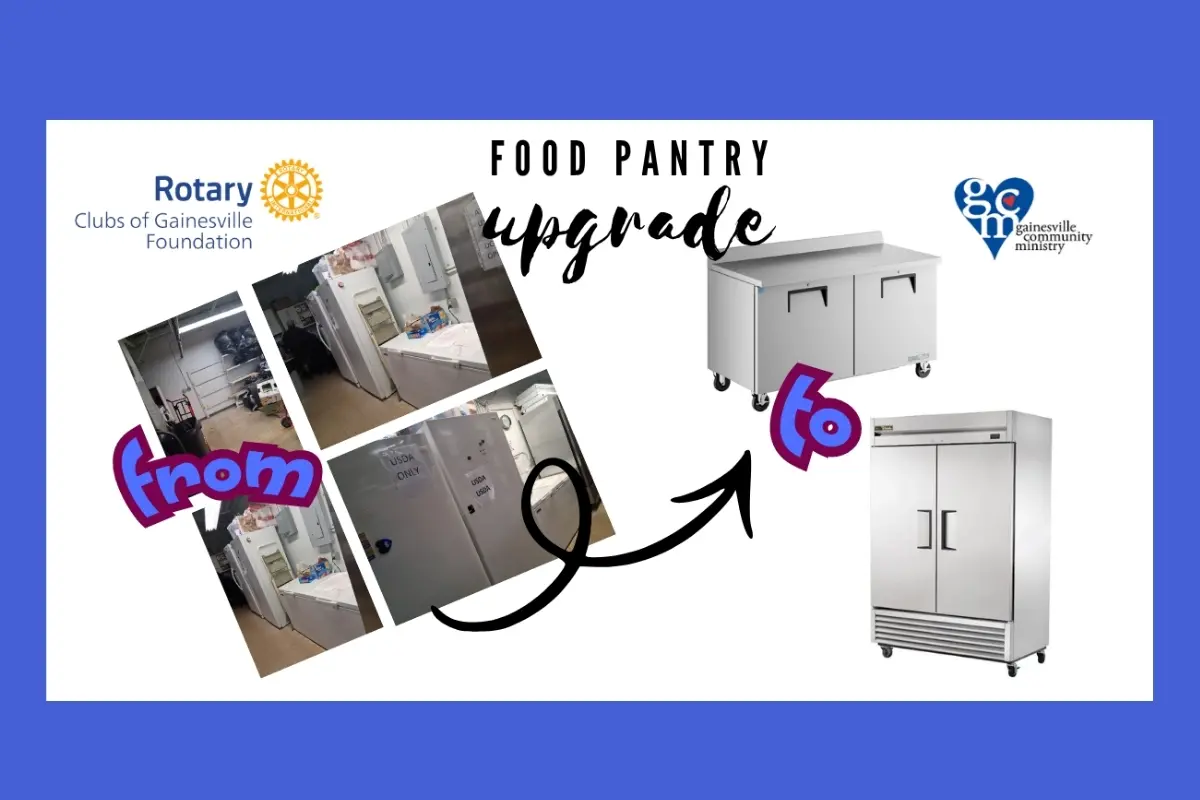
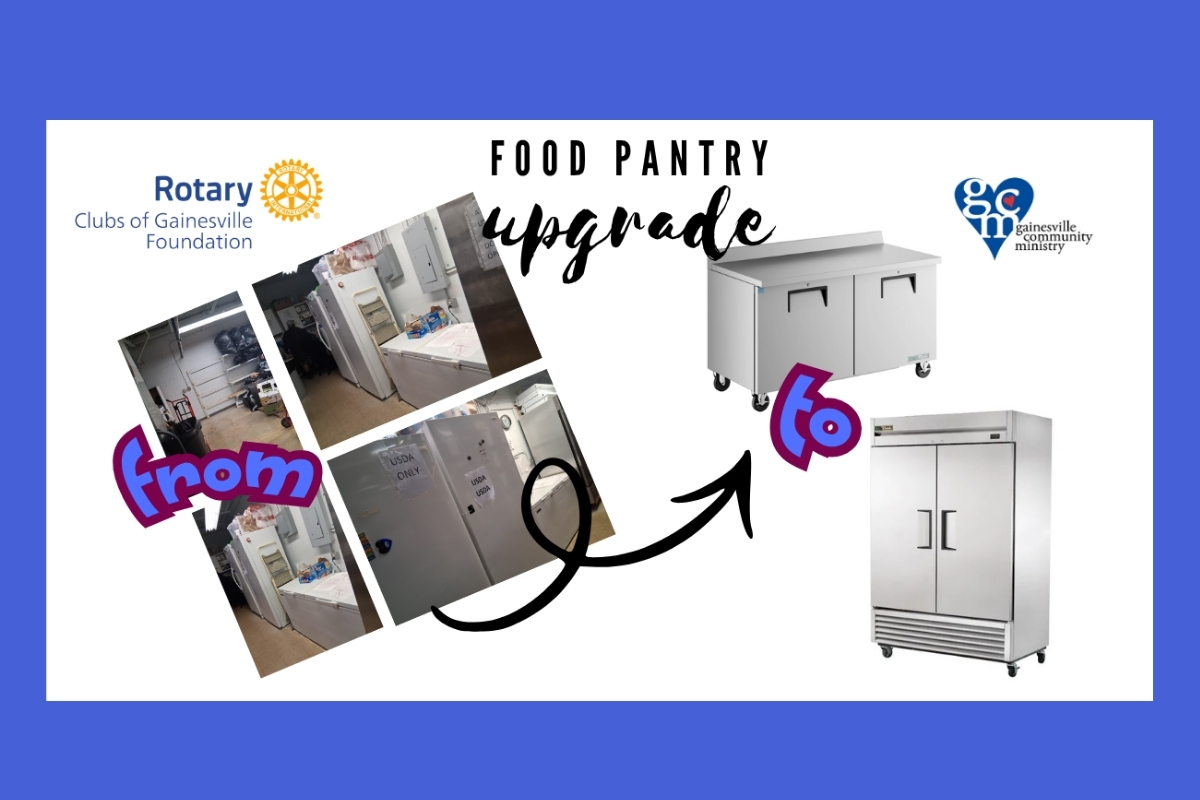
To address this structural deficit, the Rotary Clubs of Gainesville Foundation (RCGF) has finalized a capital investment plan aimed at significantly expanding the cold storage footprint at the Gainesville Community Ministry (GCM) food pantry. By combining local event-driven fundraising with institutional matching funds, the initiative will modernize GCM’s physical infrastructure, allowing the non-profit to scale its intake, inventory hold times, and neighborhood distribution networks.
The project represents a strategic convergence of corporate sponsorship, civic organization leadership, and international philanthropic matching mechanisms. By funding dedicated cold-storage units and associated facility upgrades, the foundation and its partner organizations are removing a major operational constraint for one of the region’s primary distribution sites for federal and local food assistance.
+-------------------------------------------------------------------------+
|                    FINANCIAL LOGISTICS PIPELINE                         |
+-------------------------------------------------------------------------+
|  Local Events:                     Corporate Partners:                  |
|  • Butler Town Center Car Show     • Butler Enterprises                 |
|  • Harley-Davidson Chili Cook-Off  • Gainesville Harley-Davidson       |
+---------------------------------+---------------------------------------+
                                  |
                                  v
+-------------------------------------------------------------------------+
|             Rotary Clubs of Gainesville Foundation (RCGF)               |
+-------------------------------------------------------------------------+
                                  |
                                  v  Matching Funds (1:1 Ratio)
+-------------------------------------------------------------------------+
|                  Rotary District 6970 Designated Funds                  |
+-------------------------------------------------------------------------+
                                  |
                                  v  Direct Investment
+-------------------------------------------------------------------------+
|             Gainesville Community Ministry (GCM) Food Pantry             |
|              (Expanded Refrigeration & Cold Chain Capacity)             |
+-------------------------------------------------------------------------+
Detailed Chronology: From Community Fundraisers to Institutional Matching Grants
The evolution of the cold storage expansion highlights the multi-year planning and fiscal compounding necessary to execute municipal-level infrastructure improvements. The project’s timeline reveals how local grassroots events can be leveraged into substantial capital investments through formal grant frameworks.
       [ Phase 1: Capital Aggregation ]
       Proceeds raised via Butler Town Center Car Show &
       Harley-Davidson Chili Cook-Off events.
                     │
                     ▼
       [ Phase 2: Project Vetting (2025) ]
       Submitted for 2025 Wild Game Feast grant funding.
       Not selected for main grant, but kept on RCGF priority list.
                     │
                     ▼
       [ Phase 3: Financial Scaling ]
       RCGF pairs collected funds with Rotary District 6970
       Matching Grant, effectively doubling the capital pool.
                     │
                     ▼
       [ Phase 4: Implementation ]
       Procurement and installation of commercial cold storage equipment
       at Gainesville Community Ministry facility.
Phase 1: Capital Aggregation Through Local Partnerships
Over the past several fiscal cycles, two prominent commercial events in the Gainesville metropolitan area served as the primary funding engines for RCGF’s community development initiatives:
- The Butler Town Center International Car Show, hosted in partnership with Butler Enterprises.
- The annual Gainesville Harley-Davidson Chili Cook-Off.
Proceeds from these private-sector community gatherings were channeled directly to RCGF, creating a dedicated pool of local charitable capital intended for high-impact regional initiatives.
Phase 2: Strategic Identification and Project Vetting (2025)
The proposal to expand GCM’s cold storage facility was formally presented to the RCGF Board of Directors during the application cycle for the 2025 Wild Game Feast—an established annual fundraising mechanism organized by local Rotary leaders.
Although the GCM cold storage proposal was not among the three primary projects selected for full funding during that specific grant cycle, the board recognized the critical nature of GCM’s operational bottleneck. Rather than discarding the proposal, RCGF leadership earmarked the project for alternative, high-leverage funding pathways, recognizing that expanding cold-chain infrastructure yielded high long-term returns for public health.
Phase 3: Financial Scaling via District Designated Funds
To maximize the impact of the capital accumulated from the Butler Enterprises and Harley-Davidson events, RCGF submitted an application to Rotary District 6970 for a District Grant.
Rotary International structures its grant programs around District Designated Funds (DDF), allowing local districts to match funds raised by individual clubs for qualified humanitarian and infrastructure projects. By securing approval for a dollar-for-dollar matching grant, RCGF effectively doubled the available capital pool. This capital match transformed modest local event proceeds into an institutional-grade investment capable of altering GCM’s physical infrastructure.
Supporting Context & Regional Metrics: Addressing the Infrastructure Deficit
To understand the operational impact of the RCGF investment, it is necessary to examine both the socioeconomic environment of Alachua County and the specific logistics of emergency food supply chains.
+-----------------------------------------------------------------------+
|              GAINESVILLE COMMUNITY MINISTRY (2025 METRICS)            |
+-----------------------------------------------------------------------+
| Total Food Distributed:          | ~10,000 lbs                        |
| Total Families Served:           | 4,872 families                     |
| Total Individuals Impacted:      | 6,455 individuals                  |
| Primary Demographics Targeted:   | Elderly, Disabled, Fixed-Income    |
| Operational Status:              | USDA TEFAP Official Distribution Site|
+-----------------------------------------------------------------------+
The Cold Storage Bottleneck in Food Relief
In emergency food assistance networks, the primary challenge is rarely limited to obtaining caloric volume; it is increasingly defined by nutritional quality. Non-perishable items like canned soups, processed carbohydrates, and sodium-heavy packaged goods have long dominated emergency pantries due to their long shelf lives and minimal storage requirements. However, reliance on shelf-stable goods often compounds diet-related health issues among low-income populations.
Distributing fresh produce, dairy products, eggs, and raw meats requires an uninterrupted cold chain. When a food pantry lacks adequate walk-in freezers and commercial refrigeration units, it is forced to either:
- Turn down bulk donations of fresh food from regional distributors and local farms.
- Immediately distribute perishable inventory within hours of receipt, creating waste and operational bottlenecks.
Expanding walk-in cold storage solves this operational vulnerability. It allows GCM to accept larger shipments, extend product shelf life, and systematically schedule distribution across a wider geographic radius.
Alachua County Need Profile
Gainesville Community Ministry operates as a frontline provider for some of the most vulnerable populations in North Central Florida. GCM’s primary client base includes:
- Low-Income Families: Households navigating wage stagnation and persistent inflation in essential goods.
- Seniors on Fixed Incomes: Elderly residents whose fixed purchasing power is strained by rising housing and medical costs.
- Disabled Persons: Individuals facing mobility constraints and limited earning capacity who require dependable neighborhood-level assistance.
In 2025, GCM’s operational metrics underscored the scale of regional reliance on its services:
$$textTotal Food Volume Distributed approx 10,000 text pounds$$
$$textFamilies Served = 4,872 quad vert quad textTotal Individuals Impacted = 6,455$$
Beyond its independent procurement efforts, GCM serves as an official distribution point for the U.S. Department of Agriculture (USDA) through programs such as The Emergency Food Assistance Program (TEFAP). Under these federal arrangements, GCM receives large-scale bulk shipments of agricultural commodities, which must be received, safely unbundled, repackaged, and distributed in compliance with strict federal food safety standards.
Adequate commercial refrigeration is a regulatory requirement for participating in these federal programs. Upgrading cold storage ensures GCM maintains compliance while increasing its capacity to draw down federal food allocations for Alachua County.
Official Statements and Leadership Perspectives
The project leadership emphasizes that this investment goes beyond basic charity, viewing it as a strategic deployment of capital designed to build long-term community resilience.
Rotary Leadership on Financial Leverage
Lynda Reinhart, speaking in her capacity as the 2027 President of the Rotary Clubs of Gainesville Foundation, highlighted the role of corporate alignment and fiscal strategy in achieving community impact:
"We are grateful to Butler Enterprises and Gainesville Harley-Davidson for choosing the Rotary Clubs of Gainesville Foundation as their charity of choice to receive the proceeds of their events in the past couple of years.
We wanted to make a bigger impact with these funds and decided to apply for a Rotary International District Grant to further stretch those donations — double them, in fact. This funding will help the Gainesville Community Ministry Food Pantry address a critical community need in Alachua County."
Reinhart’s perspective reflects a growing trend in civic philanthropy: shifting away from small, fragmented donations in favor of pooling resources to fund capital projects that yield permanent operational improvements.
Operational Impact at Gainesville Community Ministry
From the operational perspective of the recipient institution, the capital investment dramatically increases daily output and emergency readiness. Michael Wright, Executive Director of Gainesville Community Ministry, detailed the direct operational benefits:
"Expanding and improving our cold storage capacity will allow us to serve more families and provide much-needed support throughout Alachua County. This investment will help us meet growing community needs while increasing access to nutritious food."
Wright’s assessment underscores that storage expansion is not merely an incremental upgrade; it shifts GCM’s operational posture from reactive emergency distribution to proactive, sustained inventory management.
Future Outlook: Operational Scale and Regional Resilience
With funding secured and matching grants finalized, the implementation phase will focus on equipment procurement, facility retrofitting, and scaling logistics.
+--------------------------------------------------------------------------+
|                       LONG-TERM SYSTEMIC IMPACT                          |
+--------------------------------------------------------------------------+
|  Short-Term (0-12 Months)         | Long-Term (1-3 Years)                |
|  • Structural electrical upgrades | • Increased USDA bulk food receipts   |
|  • Walk-in unit installations     | • Regional agricultural partnerships  |
|  • Enhanced cold-chain compliance | • Improved disaster response readiness|
+--------------------------------------------------------------------------+
Technical Infrastructure Upgrades
The physical modification of the GCM facility will involve:
- Structural & Electrical Retrofitting: Installing high-efficiency, commercial-grade refrigeration units requires heavy-duty electrical wiring, upgraded ventilation systems, and specialized flooring to handle standard pallet jacks.
- Cold-Chain Continuity: Upgraded systems will allow GCM to maintain precise temperature zones required for different categories of food, preventing spoilage and keeping the organization in full compliance with USDA and Florida Department of Agriculture guidelines.
Projected Capacity Enhancements
Once fully operational, the expanded cold storage facilities are expected to yield measurable increases in performance across key indicators:
+-------------------------------------------------------------------------+
|                    PROJECTED CAPACITY ENHANCEMENTS                      |
+-------------------------------------------------------------------------+
| Metric                 | Pre-Expansion Baseline | Target Capacity       |
+------------------------+------------------------+-----------------------+
| Perishable Holding Cap.| Limited / Short-Term   | Expanded Bulk Volume  |
| Dist. Frequency        | Weekly Batches         | Daily Continuous      |
| USDA Bulk Allocation   | Standard Threshold     | Maximum Drawdown      |
| Product Mix            | High Shelf-Stable Ratio| Balanced Perishable   |
+------------------------+------------------------+-----------------------+- Increased Intake of Perishable Commodities: GCM will be able to accept multi-pallet donations of produce, dairy, and meat from regional food banks (such as Bread of the Mighty) and retail grocery rescue programs without risking spoilage.
- Enhanced Disaster Preparedness: North Central Florida is vulnerable to extreme weather events, including hurricanes that frequently disrupt power grids and supply chains. Modernized cold storage units—supported by backup power systems—position GCM as a key emergency distribution hub during post-disaster recovery phases.
- Mitigation of Health Disparities: Expanding access to fresh food helps lower reliance on ultra-processed, high-sodium shelf-stable items, addressing diet-related health issues common among low-income households.
A Model for Regional Philanthropy
The partnership between the Rotary Clubs of Gainesville Foundation, Butler Enterprises, Gainesville Harley-Davidson, Rotary District 6970, and Gainesville Community Ministry provides a clear blueprint for mid-sized municipalities. By connecting local fundraising events to institutional matching grants and targeting operational bottlenecks, community organizations can turn modest local donations into lasting structural investments.
As the physical installations at GCM near completion, Alachua County’s emergency assistance network will be better positioned to handle immediate hardship while expanding access to healthy, fresh food for thousands of residents.

0 Comments