

Executive Overview
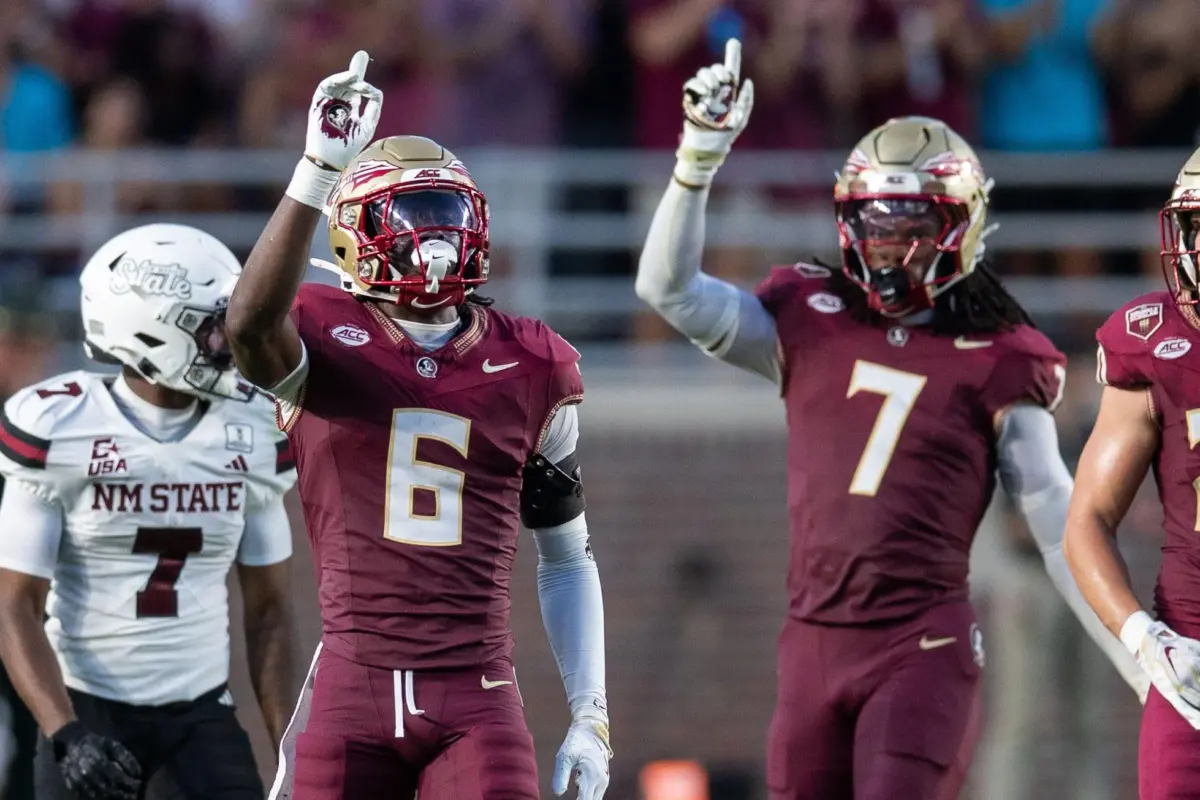
The landscape of college football broadcasting is undergoing a seismic shift, and Florida State University (FSU) is rapidly proving to be one of its most potent economic and viewership catalysts. In what was ostensibly a routine Week 0 matchup against a Conference USA opponent, the Seminoles delivered a landmark television event for The CW network. According to official Nielsen Panel + Big Data metrics released on Wednesday, FSU’s season-opening victory over New Mexico State shattered network precedents, establishing itself as the most-watched sports broadcast in the history of The CW.
Averaging an impressive 1.96 million viewers with a peak audience reaching 2.4 million, the broadcast far exceeded typical expectations for early-season college football outside of the traditional "Power Four" broadcast ecosystem. More crucially for network executives and advertisers, the game captured 718,000 viewers in the coveted Adults 25–54 demographic. This performance translated into the largest sports audience in that key metric in The CW’s history and positioned the broadcast as the second-strongest primetime program of the night across all networks, outperforming competing entertainment and news programming on legacy major broadcast networks ABC, CBS, and NBC.
This milestone is not merely a statistical anomaly for a burgeoning broadcast network; it is a vital data point in the broader, highly contentious narrative surrounding Florida State’s financial valuation, media rights distribution, and ongoing friction with the Atlantic Coast Conference (ACC). FSU’s brand power remains exceptionally potent. Last season, the Seminoles commanded an average of 4 million viewers per game—a figure that ranked second in the ACC and ninth nationally. In an era where television ratings directly dictate athletic department solvency through performance- and viewership-based revenue-sharing models, FSU’s capacity to draw eyeballs across diverse platforms—from traditional sports juggernauts to emerging broadcast networks like The CW—reinforces the university’s argument that its brand equity exceeds current conference revenue distributions.
As the Seminoles pivot toward their upcoming primetime clash against the No. 19 SMU Mustangs, this record-setting broadcast serves as both a celebration of linear television reach and a tactical reminder of FSU’s immense commercial leverage in the modern collegiate athletics marketplace.
Detailed Chronology of the Broadcast and Record-Breaking Metrics
The path to setting a historic viewership benchmark on The CW began long before kickoff, rooted in strategic scheduling, the unique novelty of a Week 0 marquee appearance, and the enduring national fascination with the Florida State football program.
The Buildup and Week 0 Positioning
Week 0 has increasingly transformed from a quiet appetizer into a standalone college football holiday, often monopolizing the sports television landscape due to a severe scarcity of competing marquee matchups. Recognizing this strategic vacuum, The CW secured rights to feature the Seminoles, positioning the program as the crown jewel of its early-season slate. For New Mexico State, the matchup represented a rare, high-exposure platform against a historic brand; for Florida State, it was an opportunity to command the national spotlight and establish early momentum.
As kickoff approached, linear television monitors across the country registered heightened engagement. According to data analytics released by Nielsen utilizing their integrated Panel + Big Data methodology, the audience assembled rapidly.
Minute-by-Minute Viewership Trajectory
- The Opening Quarter: The broadcast immediately signaled strong interest, pulling in numbers that historically eclipse standard alternative programming on upstart networks. Fans tuning in to catch the debut iteration of the 2025 Seminoles established an immediate baseline well above normal CW prime-time averages.
- The Mid-Game Plateau: As the contest progressed through the second and third quarters, the audience held steady. Unlike blowouts that typically suffer severe audience erosion in the second half, viewers remained locked into the broadcast, fascinated by both FSU’s execution and the novelty of seeing a major-brand program on a non-traditional network home.
- The Peak: The broadcast achieved its zenith during the second half, surging to a peak audience of 2.4 million concurrent viewers. This surge coincided with heightened competitive sequences and the crystallization of FSU’s eventual victory.
- Final Average: When the final whistle blew, the game settled at an official average of 1.96 million viewers, anchoring the broadcast firmly in the history books as the most-watched sports telecast in the existence of The CW.
Demographic Dominance: The Adults 25–54 Victory
While total viewership numbers capture media headlines, advertising revenue and network validation are heavily dictated by performance within critical commercial demographics. In this arena, the FSU-New Mexico State broadcast exceeded all expectations.
The game delivered a staggering 718,000 viewers within the Adults 25–54 demographic. To contextualize this achievement, it not only set an internal network record for sports programming but also outperformed every competing primetime broadcast program on ABC, CBS, and NBC for that specific evening within the same demographic. By capturing a younger, highly coveted consumer base that increasingly bypasses traditional television, The CW demonstrated that high-profile college athletics can effectively rival—and occasionally defeat—traditional entertainment and news lineups on legacy networks during the summer twilight of the television calendar.
Supporting Context & Metrics: FSU’s National Brand Value and the ACC Revenue Model
To fully understand the significance of 1.96 million viewers on The CW, one must examine the broader economic ecosystem governing Florida State athletics and its relationship with the Atlantic Coast Conference.
The Brand Power of the Seminoles
Florida State has long maintained status as a national "brand-mover" in college football. The program’s historical success, passionate fan base, and geographic footprint in the talent-rich state of Florida guarantee built-in national appeal.
This status was empirically validated during the previous college football season, where FSU games averaged a remarkable 4 million viewers per contest. Within the context of the ACC, this average placed the Seminoles firmly in the upper echelon, ranking second conference-wide. On a national scale, an average of 4 million viewers per game placed FSU ninth overall among all Football Bowl Subdivision (FBS) programs, keeping elite company alongside perennial playoff contenders from the SEC and Big Ten.
The Evolving ACC Revenue Distribution Model
These viewership metrics are far from academic; they carry immense financial consequences. Historically, collegiate conferences distributed television and media revenue through rigid, equal-share models, ensuring that all member institutions received identical financial payouts regardless of their individual television ratings or market contributions.
However, escalating financial pressures, widening revenue gaps with the SEC and Big Ten, and aggressive legal maneuvers by institutions seeking greater financial parity forced the ACC to pivot. The conference introduced a new revenue distribution model that explicitly factors in viewership metrics and success on the gridiron. Under this performance- and draw-based framework, programs that consistently command larger television audiences capture a disproportionately higher share of media revenue.
Financial Projections and Athletic Department Solvency
The tangible impact of this model is already reverberating through Tallahassee. According to financial figures shared by Florida State Athletic Director Michael Alford this past February, the university is projected to earn approximately $44.9 million under the updated revenue distribution framework.
This substantial revenue stream is critical as athletic departments nationwide navigate mounting operational costs, including the impending implementation of direct revenue-sharing with student-athletes following landmark Name, Image, and Likeness (NIL) settlements and antitrust litigations. Programs that can drive high-volume viewership across diverse media platforms—ranging from legacy sports networks like ESPN to newer broadcast partners like The CW—position themselves to maximize their revenue share, insulating their athletic budgets against inflationary pressures. Consequently, every record-setting broadcast functions as direct evidence supporting FSU’s economic valuation within intercollegiate athletics.
Official Statements and Industry Reactions
The intersection of record-breaking broadcast ratings, multi-platform media strategies, and collegiate athletics governance has generated substantial commentary from network executives, conference administrators, and university leadership.
Network Perspective: Validating The CW’s Sports Strategy
For The CW, which has historically specialized in syndicated entertainment, teen drama, and scripted series, the strategic pivot into live sports broadcasting represents a calculated effort to capture linear advertising dollars and boost subscriber and affiliate engagement. Securing rights to collegiate athletic content has proven to be a cornerstone of this transformation.
While official network statements accompanying the Nielsen release emphasized the historic nature of the broadcast, industry analysts noted that the success of the FSU-New Mexico State game validates The CW’s long-term programming gamble. By offering broad-reach, over-the-air accessibility combined with compelling sports inventory, the network successfully bridged the gap between traditional broadcast television and modern sports consumption habits. Media buyers have responded favorably, noting that the high concentration of viewers in the Adults 25–54 demographic proves that sports fans will readily follow their preferred programs to non-traditional network homes, provided the brand equity of the participating teams is sufficiently robust.
University and Conference Implications
From the perspective of Florida State leadership, the broadcast serves as empirical vindication of their persistent stance regarding the program’s value in the media marketplace. Athletic Director Michael Alford and university administrators have consistently maintained that FSU’s athletic brand generates a disproportionate amount of economic value for its conference partners—an argument that underpins the university’s ongoing legal and administrative challenges concerning conference grant-of-rights agreements and exit fees.
When a standard early-season matchup against a non-Power Four opponent can shatter historical viewership records for an entire television network and outdraw traditional network primetime titans in key demographics, it provides FSU leadership with quantifiable leverage. It underscores the reality that Florida State football functions not merely as a regional collegiate athletic team, but as a Tier-1 national media asset capable of moving needle metrics across any network tier.
Future Outlook: The Road Ahead for Florida State
With the historic Week 0 victory securely in the rearview mirror and its broadcasting accolades duly recorded, the Florida State Seminoles must immediately pivot their focus to the grueling realities of the competitive gridiron.
The Primetime Showdown Against SMU
The stakes rise exponentially as FSU prepares for its next major test: a high-profile matchup against the No. 19 SMU Mustangs. Scheduled for Monday, September 7, with a 7:30 p.m. ET kickoff, the game will be broadcast nationally on ESPN, placing the Seminoles back on the sport’s traditional premier linear home.
This upcoming contest against a ranked opponent serves a dual purpose. Athletically, it provides FSU with an early-season measuring stick against a formidable conference and national foe, carrying immense implications for the College Football Playoff race and ACC standings. Commercially, it offers another massive national television window to build upon the momentum established during the CW broadcast.
Long-Term Trajectory and Media Evolution
As the college football season unfolds, the symbiotic relationship between on-field success, viewership metrics, and institutional revenue will remain under intense scrutiny. For Florida State, maintaining high television ratings is no longer just about national prestige or fan engagement; it is a foundational component of the university’s financial health and strategic positioning in an era of rapid collegiate realignment.
The record-setting numbers on The CW demonstrated that whether appearing on a burgeoning broadcast network or a legacy sports cable giant, the Florida State brand commands unmatched attention. As the Seminoles march toward their clash with SMU and the broader challenges of the 2025 campaign, one reality remains indisputable: when Florida State takes the field, the sports television world is watching.
Comprehensive Statistical Summary
| Metric Category | Recorded Data / Figure | Context / Comparison |
|---|---|---|
| Average Viewership | 1.96 Million | Highest sports broadcast in the history of The CW network. |
| Peak Viewership | 2.4 Million | Reached during second-half competitive sequences. |
| Adults 25–54 Demo | 718,000 Viewers | Network record; surpassed all primetime shows on ABC, CBS, and NBC that evening. |
| Previous Season FSU Average | 4.0 Million Viewers/Game | Ranked 2nd in the ACC and 9th nationally in 2024. |
| Projected FSU Revenue Share | $44.9 Million | Estimated under the ACC’s new viewership-weighted distribution model. |
| Upcoming Fixture | vs. No. 19 SMU Mustangs | Monday, September 7 (7:30 p.m. ET, ESPN). |

0 Comments