


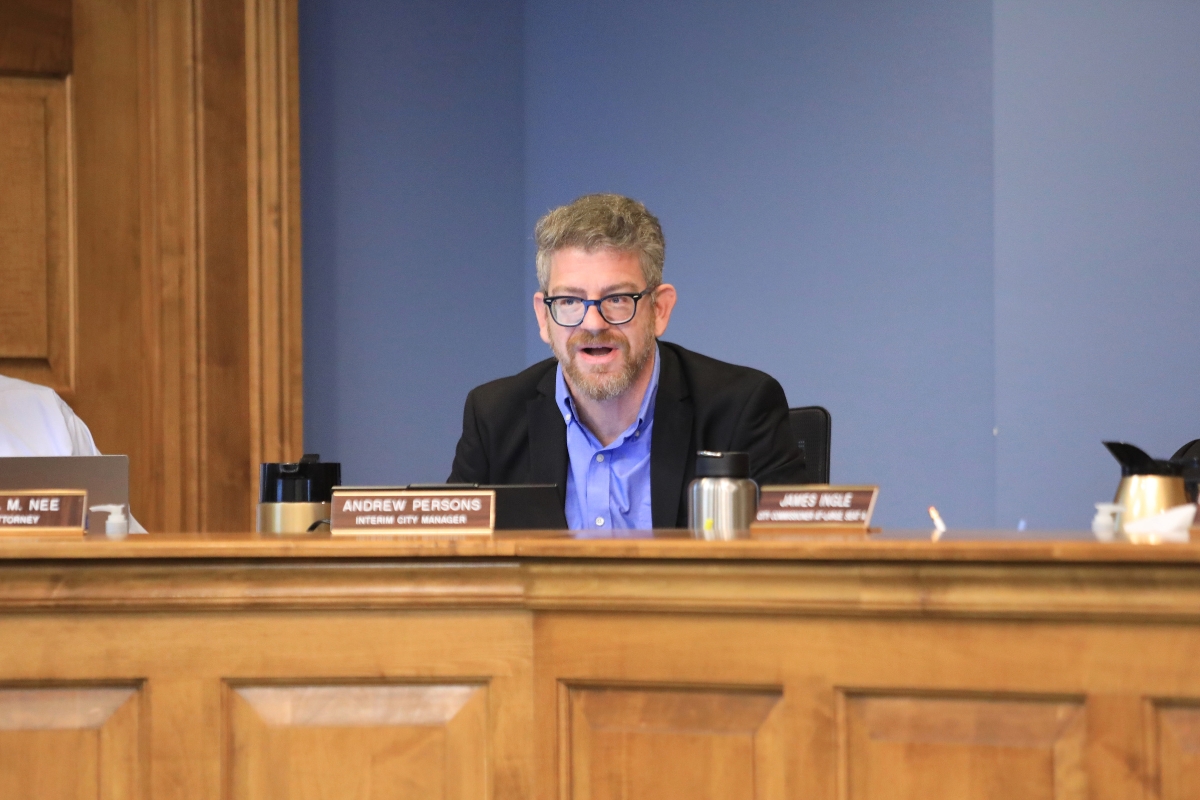
In a watershed moment for urban development and municipal policy in North Central Florida, the City of Gainesville has been awarded a landmark $25 million Choice Neighborhoods Implementation Grant from the U.S. Department of Housing and Urban Development (HUD). The surprise announcement, delivered directly to the Gainesville City Commission during a regular meeting by Interim City Manager Andrew Persons, marks the culmination of a multi-year effort to secure federal funding for the comprehensive revitalization of East Gainesville’s historically underinvested corridors.
The grant will serve as the financial foundation for a multi-faceted redevelopment strategy focused primarily on the Lake Terrace and Pine Meadows residential communities along the East University Avenue corridor. Housing a combined total of 180 housing units, these neighborhoods have long experienced systemic infrastructure deficits, commercial disinvestment, and severe transit safety vulnerabilities. The federal award is structured to transform the high-poverty residential sector into a vibrant, mixed-income urban ecosystem while expanding essential commercial services, improving pedestrian safety, and reinforcing structural ties to the nearby downtown municipal center.
The news triggered an uncharacteristically emotional celebration inside City Hall. Mayor Harvey Ward explicitly suspended formal chamber decorum to allow commissioners and attendees to applaud the municipal victory. Beyond the immediate celebratory optics, urban planning experts and local administration officials view the $25 million capital infusion as a transformative catalyst—one capable of leveraging additional private and philanthropic investments to bridge the long-standing economic divide between Gainesville’s booming western corridors and its historically marginalized eastern district.
Detailed Chronology: From Planning Seed to Multimillion-Dollar Award
The Catalyst and Initial Planning Phase (2021–2023)
The trajectory toward securing HUD’s highly competitive Choice Neighborhoods grant was forged through a combination of grassroots urgency and strategic intergovernmental policy. For years, residents of East Gainesville, particularly within Lake Terrace and Pine Meadows, urged municipal leaders to address deteriorating public housing stock, the lack of commercial amenities, and dangerous pedestrian conditions along East University Avenue.
A tragic turning point occurred in 2021, when four-year-old Pine Meadows resident Dylan Roberts was struck and killed while attempting to cross East University Avenue directly in front of his neighborhood. The tragedy catalyzed community mobilization and forced local transit authorities, urban planners, and elected officials to confront systemic infrastructure failures in the area. The incident accelerated municipal resolve to overhaul the corridor through comprehensive federal funding mechanisms rather than piecemeal local repairs.
In early 2023, the City of Gainesville took its first formal step toward federal redevelopment by applying for a HUD Choice Neighborhoods Planning Grant. Gainesville emerged victorious as one of only 13 municipalities nationwide selected to receive the competitive planning award. This initial grant funded a comprehensive, year-long study designed to empower residents to co-create a master redevelopment roadmap for their communities.
Grassroots Mobilization and the Transformation Plan (2023–2024)
Armed with federal planning resources, the city launched a massive community engagement initiative. Over a twelve-month period, municipal staff and urban planning consultants hosted dozens of public workshops, stakeholder forums, and neighborhood listening sessions throughout Lake Terrace and Pine Meadows. To capture broader demographic feedback, planners conducted door-to-door outreach, ultimately gathering hundreds of detailed survey responses from local residents, small business operators, and community advocacy groups.
This extensive engagement yielded the Choice Neighborhoods Transformation Plan, a detailed document outlining specific strategies to rebuild public housing, attract private investment, expand public transit, and install traffic safety hardware along East University Avenue. The finalized master plan was submitted to HUD in late 2023 for consideration in the highly contested Choice Neighborhoods Implementation Grant cycle, putting Gainesville in direct competition with major metropolitan centers across the United States.
The Announcement (Thursday Meeting)
The culmination of this multi-year effort occurred without advance warning during a routine Thursday session of the Gainesville City Commission. Interim City Manager Andrew Persons interrupted scheduled agenda items to report that official correspondence had been received from HUD leadership: Gainesville’s application had been formally approved for the maximum $25 million implementation grant.
The news shattered the formal demeanor of the commission chamber. Elected officials, staff, and community members responded with sustained applause and cheers. Recognizing the historic importance of the moment, Mayor Harvey Ward officially permitted the audience to breach commission rules against audible celebrations, underscoring the deep civic impact of the federal award.
Supporting Context & Metrics: Housing, Economy, and Infrastructure
Housing Demographics and Structural Redevelopment
The focal point of the HUD-funded project encompasses 180 housing units spanning the adjacent residential clusters of Lake Terrace and Pine Meadows. These developments frame the ELITE Force Training Center, a local community asset located within Pine Meadows that offers workforce development, career training, and vocational pathways for area youth and adults.
Under HUD’s Choice Neighborhoods framework, the $25 million grant mandates a one-for-one replacement of existing deeply subsidized public housing units while enabling the construction of additional mixed-income housing options. The ultimate redevelopment plan aims to dismantle socio-economic isolation by integrating market-rate units, workforce housing, and deeply affordable apartments into a unified, modern architectural footprint. Urban planners anticipate that this model will revitalize property values, improve residential retention, and attract private commercial development.
Commercial Deserts and Resident Survey Priorities
A primary objective of the Choice Neighborhoods program is bridging commercial and service gaps in persistent poverty zones. Data compiled from the city’s community surveys revealed stark disparities in commercial access within East Gainesville, which has operated as a food and service desert for decades.
| Resident Priority Rank | Desired Commercial Service / Infrastructure | Identified Community Need |
|---|---|---|
| 1 | Financial Institutions (Banks / Credit Unions) | Elimination of predatory lending; access to capital |
| 2 | Bakery / Café / Community Eateries | Neighborhood gathering spaces and local dining options |
| 3 | Full-Service Grocery Stores | Mitigation of food deserts; access to fresh produce |
| 4 | Personal Care (Barbershops / Salons) | Local entrepreneurship; accessible neighborhood services |
| Top Safety Priority | Safer Pedestrian Crossings | Traffic calming and crosswalk enhancements along University Ave |
The survey data showed that local residents ranked the establishment of a brick-and-mortar financial institution—such as a commercial bank or credit union—as their highest commercial priority. The absence of traditional banking services in East Gainesville has historically forced residents to rely on high-fee check-cashing services and payday lenders. The second highest priority was the establishment of local food services, specifically a neighborhood bakery or café, followed by a full-service grocery store and personal care services, including barbershops and beauty salons.
Pedestrian Safety and Mobility Corridor Integration
Infrastructure security along East University Avenue remains the central catalyst behind the project’s public safety component. The corridor’s high-speed traffic, combined with minimal lighting and insufficient pedestrian crossings, has created hazardous conditions for non-motorized commuters and local youth.
The memory of Dylan Roberts’ fatal accident in 2021 underlines the urgency of the planned engineering interventions. The transformation project allocates substantial funding toward complete-street redesigns, including engineered signalized crosswalks, dedicated transit lanes, traffic-calming measures, and improved street lighting along East University Avenue. Planners emphasize that these upgrades will ensure safer access to critical adjacent civic assets, including Fred Cone Park and the nearby Eastside Regional Park facilities, while creating a safe multi-modal corridor connecting East Gainesville straight into the city’s urban core and downtown commercial zone.
Official Statements and Civic Reaction
The official reaction from municipal leadership highlighted both relief and ambition following the announcement of the federal award. Delivering the news to the commission, Interim City Manager Andrew Persons contextualized the award within the broader historical scope of Gainesville’s urban planning goals.
“This is a monumental achievement for the City of Gainesville,” Persons declared. “It validates years of hard work by our planning staff, our community partners, and most importantly, the residents of Lake Terrace and Pine Meadows who sat in countless meetings to design a vision for their neighborhoods. This $25 million grant gives us the financial engine to turn those plans into concrete reality.”
Mayor Harvey Ward emphasized the rare nature of the federal funding and its potential to correct historical inequities in municipal resource allocation.
“We are witnessing a truly transformative moment for East Gainesville,” Mayor Ward stated following the celebratory interruption. “There are moments when standard commission rules must yield to pure civic joy. Securing a competitive grant of this magnitude from HUD proves that federal agencies believe in Gainesville’s vision. For far too long, the families living along East University Avenue have waited for meaningful investment. Today, we deliver on that promise.”
Community advocates and neighborhood leaders echoed the administration’s sentiment, noting that the inclusion of residents in the initial planning phase was critical to ensuring that the resulting projects reflect genuine local needs rather than top-down gentrification.
Future Outlook: Implementation, Phasing, and Long-Term Transformation
While the $25 million HUD grant represents a significant financial victory, municipal officials stress that the announcement marks the beginning of a complex, multi-year implementation pipeline. The transformation process will follow strict federal compliance parameters overseen by HUD’s Office of Public and Indian Housing.
Implementation Timeline and Phasing
- Phase 1: Developer Selection and Final Architecture (Months 1–12): The city and local housing authorities will finalize private development partnerships, complete engineering designs for public space improvements, and finalize site plans for the residential phases.
- Phase 2: Infrastructure and Safety Engineering (Months 12–24): Initial capital deployment will focus on civil infrastructure along East University Avenue, including pedestrian safety crosswalks, traffic-calming hardware, and initial site clearing near Fred Cone Park.
- Phase 3: Residential Redevelopment and Commercial Build-out (Months 24–60): Phased construction of the 180-unit replacement housing will begin. To prevent temporary displacement, redevelopment will utilize a multi-stage construction strategy, allowing existing residents to remain near their community during construction. Commercial spaces designated for credit unions, local grocers, and small businesses will be built concurrently.
Leveraging Public Funds for Greater Economic Growth
Historically, HUD Choice Neighborhoods Implementation Grants generate a significant multiplier effect. Municipal officials project that Gainesville’s $25 million federal award will leverage an additional $100 million to $150 million in private equity, state tax credits, municipal bonds, and philanthropic funding over the next decade.
By pairing resilient public housing with new economic infrastructure, safety enhancements, and community spaces near Fred Cone Park, the City of Gainesville aims to create a sustainable blueprint for equitable urban renewal. For the residents of Lake Terrace and Pine Meadows, the $25 million award is more than an urban development metric—it represents a long-awaited investment in safety, dignity, and economic opportunity along East University Avenue.

0 Comments