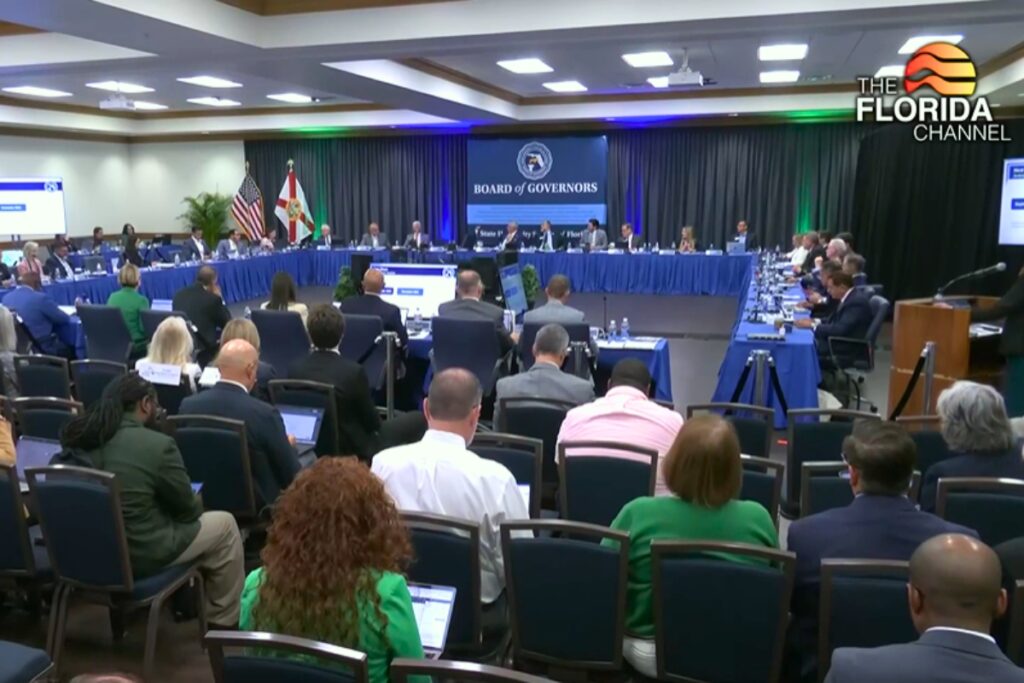
In a decision-making summit held at Florida Gulf Coast University, the Florida Board of Governors (BOG) executed a strategic realignment of the state’s public university system. The two-day proceeding focused on two major policy tracks: establishing systematic campus safety and security regulations under new state law, and codifying strict prohibitions on the initial enrollment of undocumented students at selective state universities.
The board’s deliberations focused on Operationalizing House Bill 757 (School Safety)—a landmark piece of legislation signed into law by Governor Ron DeSantis—by drafting Board Regulation 3.0015. This proposed regulation extends Florida’s armed "Guardian Program" from K-12 environments into higher education institutions, mandates annual system-wide risk assessments, creates standardized behavioral threat management teams, and formalizes K-12 to higher education data-sharing protocols.
Concurrently, the board voted unanimously—and without public debate—to amend Regulation 6.001 (General Admissions). Effective starting in the 2027–2028 academic year, the rule bars individuals unlawfully present in the United States from initially enrolling in any state university that maintains competitive admissions standards. The decision drew criticism from faculty unions and public education advocates, who argue the policy disenfranchises students raised in Florida and weakens the state’s economic long-term outlook.
Together, these measures represent a significant structural transformation across the State University System of Florida (SUS), signaling heightened state oversight in both institutional security and student population demographics.
Detailed Chronology of Policy Decisions
+---------------------------------------------------------------------------------------------------+
|                                  FLORIDA BOARD OF GOVERNORS MEETINGS                              |
+---------------------------------------------------------------------------------------------------+
|                                                                                                   |
|  DAY 1: Campus Safety & Student Success Committee                                                |
|  • Presentation of Proposed Regulation 3.0015 (Campus Safety & Security) under HB 757            |
|  • Integration of the Guardian Program into higher education institutions                         |
|  • Unveiling of the ARMOR Act: Behavioral threat management & threat assessment teams             |
|  • Review of mandatory annual campus-wide risk assessment frameworks                              |
|                                                                                                   |
|  DAY 2: Full Board General Meeting                                                                |
|  • Unanimous vote to amend Regulation 6.001 (General Admissions)                                  |
|  • Codified ban on initial enrollment for undocumented students at selective institutions         |
|  • Timeline established: Policy implementation designated for the 2027–2028 academic year        |
|  • Immediate public pushback from higher education labor organizations (UFF & FEA)               |
|                                                                                                   |
+---------------------------------------------------------------------------------------------------+
Day One: Campus Safety and Security Framework
The meeting opened with a session of the BOG’s Campus Safety and Student Success Committee. Emily Sikes, Vice Chancellor for Academic and Student Affairs for the State University System of Florida, presented the regulatory roadmap designed to implement House Bill 757.
Sikes detailed how board staff collaborated over the summer with the Florida Department of Education (FLDOE) and campus administrators to operationalize HB 757. The legislation expands the Coach Aaron Feis, Chris Hixon, and Coach Scott Beigel Guardian Program to include public postsecondary institutions.
While the Guardian Program remains optional for individual universities, Sikes explained that Regulation 3.0015 establishes standard operating protocols for participating institutions, requiring them to partner directly with local sheriffs’ offices for specialized tactical and firearms training. Beyond armed guardians, the proposed regulation introduces mandates for institutional risk modeling, staff mental health training, and cross-institutional threat management data sharing.
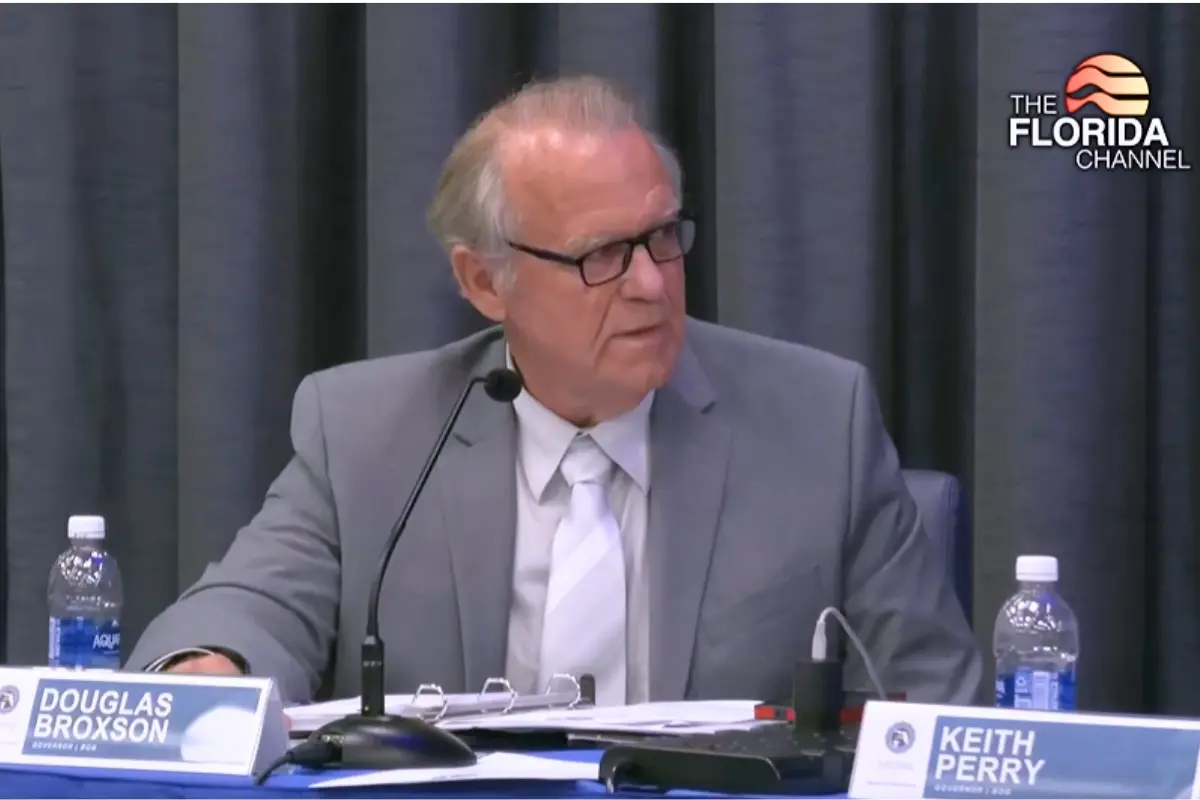
Committee discussions highlighted the unique physical and operational realities of university campuses. Board member Douglas Broxson noted the operational distinctions between K-12 environments and state universities, cautioning that policy models must accommodate the sprawling, open-access nature of higher education infrastructure.
Day Two: Admission Bans and Board Votes
The following day, the full Board of Governors convened for its general business session. Taking up amendments to Regulation 6.001 (General Admissions), the board considered language restricting postsecondary access for non-citizen residents lacking lawful immigration status.
The board voted unanimously to adopt the amended admissions rule without floor debate. Under the revised text, any state university that has denied admission to academically qualified applicants due to capacity constraints over the preceding two academic years will be prohibited from enrolling undocumented students. The rule contains an explicit operational delay, taking effect in the 2027–2028 academic year.
The vote prompted swift responses from labor representatives, including the United Faculty of Florida (UFF) and the Florida Education Association (FEA), who issued joint statements condemning the procedural vote and the policy’s long-term implications.
Supporting Context & Legislative Mechanics
The Evolution of Campus Safety Frameworks (HB 757 & ARMOR Act)
The legislative lineage of HB 757 traces back to the Marjory Stoneman Douglas High School Public Safety Act, enacted following the 2018 mass shooting in Parkland, Florida. The original law created the Guardian Program, allowing designated school personnel or dedicated staff to undergo sheriff-led training to carry concealed firearms on K-12 campuses. HB 757 expands this model to include state universities and Florida College System (FCS) institutions.
Policy Pillar
K-12 Baseline (2018 MSD Act)
Higher Ed Expansion (HB 757 / Reg 3.0015)
Armed Guardian Authority
Optional; trained by county sheriff
Optional; operationalized through county sheriffs
Campus Perimeter Model
Closed access points; fenced facilities
Open-architecture campuses; unrestricted access
Threat Management
District Threat Assessment Teams
ARMOR Act: Multi-disciplinary university BTMTs
Data Continuity
Intra-district student records
Mandatory K-12 to postsecondary record transfers
Risk Auditing
FDOE Safe Schools Auditing
Annual university-wide risk assessment tools
A key component of HB 757 is the Active Response and Mitigation of On-Campus Risks (ARMOR) Act. Codified into Florida Statutes, the ARMOR Act mandates that every state university establish Behavioral Threat Management Teams (BTMTs). These multi-disciplinary units—comprising law enforcement personnel, mental health professionals, academic administrators, and student affairs staff—are charged with identifying, assessing, and mitigating behavioral threats posed by individuals on campus.
Furthermore, the state is addressing a long-standing information gap: tracking threat histories as students transition from the K-12 system into higher education. Under the emerging regulation, public school districts will be required to transmit formal threat assessment records directly to state colleges and universities upon a student’s enrollment, ensuring continuity in behavioral monitoring.
Institutional Challenges in Open-Campus Security
Implementing uniform safety mandates across higher education environments presents unique physical challenges. K-12 campuses operate within hardened, controlled perimeters. In contrast, major universities resemble small cities, featuring public transit access, multi-point entries, open green spaces, and high daily foot traffic comprising non-student visitors.
To address these vulnerabilities, Regulation 3.0015 mandates that universities:
Conduct comprehensive annual risk assessments using a BOG-standardized auditing tool.
Deploy public safety reporting applications and mobile suspicious activity reporting software integrated with campus police dispatch systems.
Conduct annual mental health awareness training for faculty and staff.
Draft localized mass notification plans that mandate real-time coordination with surrounding municipal emergency management agencies, adjacent school districts, and regional medical centers.
Restrictive Admissions Policy and Educational Access
The amendment to Regulation 6.001 significantly alters Florida’s public postsecondary admissions landscape. The legal language specifically target institutions that operate under selective admissions standards:
"Beginning with the 2027-2028 academic year, a person who is present in the United States unlawfully shall not be eligible for initial enrollment in any state university which, for the two most recent academic years, did not admit all academically qualified applicants, except for cases in which applicants were rejected for non-academic reasons."
Because premier public institutions—such as the University of Florida (UF), Florida State University (FSU), and the University of Central Florida (UCF)—reject thousands of academically qualified applicants each cycle due to limited seat capacity, this threshold effectively bars undocumented students from enrolling at the state’s top-tier research universities.
The policy change intersects with broader state legislative trends regarding non-citizen residents, fundamentally altering how high school graduates without legal immigration status transition into Florida’s higher education system.
Official Statements and Stakeholder Reaction
State System Leadership
Vice Chancellor Emily Sikes underscored the administrative effort required to align university operations with state law:
"This is a very comprehensive piece of legislation. We talked about this overview in June and since that time, staff has been working with Florida Department of Education staff, with staff in our universities, to kind of lay out some options, collect information, get feedback on existing processes across the system, so that we can come forward with a comprehensive regulation that covers all aspects of the provisions in the law."
Sikes addressed the necessity of establishing emergency communication protocols across campus boundaries:
"Having a plan in place for communications so that if some incident does occur on campus, the university knows how to respond, knows how to communicate things to its students, parents, community, and other entities nearby, like other K-12 schools, other universities nearby, other colleges nearby, and to coordinate with local law enforcement."
Board Member Douglas Broxson urged the committee to recognize the unique operational demands of higher education:
"There is a significant difference between K-12 and the university system. One, you have a closed environment, and the other, you have an open campus. I believe that the legislature will look very carefully at what we do and allow each university to probably create their own program."
Committee Chair Ashley Bell Barnett questioned state officials regarding current uptake of the armed guardian model across campuses:
"How many universities are currently utilizing the Guardian Program?"
Sikes responded:
"To my knowledge, I don’t know that anyone has done the training process yet. I know some are in initial conversations on how to do that, but to my knowledge, I don’t know that anybody has done the training piece yet."
Faculty and Education Union Leadership
The unanimous vote to amend Regulation 6.001 triggered immediate pushback from state faculty and education labor organizations.
Robert Cassanello, President of the United Faculty of Florida (UFF), issued a sharp rebuke of the board’s vote:
"The Board of Governors has lost sight of its responsibility to safeguard higher education for the common good."
Andrew Spar, President of the Florida Education Association (FEA), emphasized the economic and societal investments lost through educational exclusion:
"Florida has already invested in the future of these students, many of whom were brought here as children through no fault of their own. Forfeiting that investment is not only wasteful, but it also harms our communities and Florida’s economic future."
"Every student deserves the opportunity to attend Florida’s top-ranked universities and colleges, and our state is better off when every child can learn and achieve their full potential."
Future Outlook and Implementation Roadmap
As the Florida Board of Governors moves forward with these policy initiatives, university administrators face a clear set of compliance deadlines leading into 2027.
+-----------------------------------------------------------------------------------+
|                        REGULATORY & IMPLEMENTATION TIMELINE                      |
+-----------------------------------------------------------------------------------+
|                                                                                   |
|  NOVEMBER 2026                                                                    |
|  • BOG review and formal approval of the standardized Risk Assessment Tool        |
|  • Formal adoption of ARMOR Act threat framework & severity levels                |
|                                                                                   |
|  JANUARY 2027                                                                     |
|  • Final board vote and formal promulgation of Regulation 3.0015 (Campus Safety)  |
|                                                                                   |
|  SPRING – SUMMER 2027                                                             |
|  • Integration of K-12 threat record transfer systems with postsecondary IT      |
|  • System-wide deployment of campus BTMTs under ARMOR Act mandates               |
|  • Operational alignment for universities opting into the Guardian Program        |
|                                                                                   |
|  2027–2028 ACADEMIC YEAR                                                          |
|  • Regulation 6.001 takes full effect                                             |
|  • Selective state universities enforce initial enrollment bans on undocumented   |
|    applicants                                                                     |
|                                                                                   |
+-----------------------------------------------------------------------------------+
Safety and Security Milestones
November 2026 Board Meeting: System staff will present a standardized campus risk assessment tool for formal adoption. The board is also scheduled to vote on the threat assessment levels and multi-disciplinary frameworks mandated under the ARMOR Act.
January 2027 Board Meeting: The BOG is slated to grant final regulatory approval to Regulation 3.0015. Following this vote, state universities will be required to formally submit their localized safety frameworks, mental health training curricula, and multi-agency emergency communications plans.
Operational Execution: Over the course of 2027, individual institutions will decide whether to formally opt into the Guardian Program, establish contracts with county sheriffs for personnel training, and fully integrate K-12 threat assessment data streams into their registrar and public safety software platforms.
Admissions and Institutional Impacts
2027–2028 Academic Year Launch: The amended Regulation 6.001 will apply to incoming undergraduate and graduate applicants. Selective public universities must audit their historical admissions data for the preceding two years to determine whether they meet the threshold criteria requiring them to block the enrollment of undocumented students.
Administrative and Legal Preparation: University admissions offices will need to modify applicant tracking systems and residency verification protocols to ensure compliance with the new standard. Concurrently, legal scholars and immigrant advocacy organizations are closely reviewing the amendment, setting the stage for potential constitutional and statutory legal challenges regarding state authority over federal immigration status and equal access to public postsecondary education.
Through these structural changes, the Florida Board of Governors is advancing a centralized, policy-driven vision for public higher education—one defined by tightened campus physical security and stricter parameters around state-funded educational access.



0 Comments