

Executive Overview
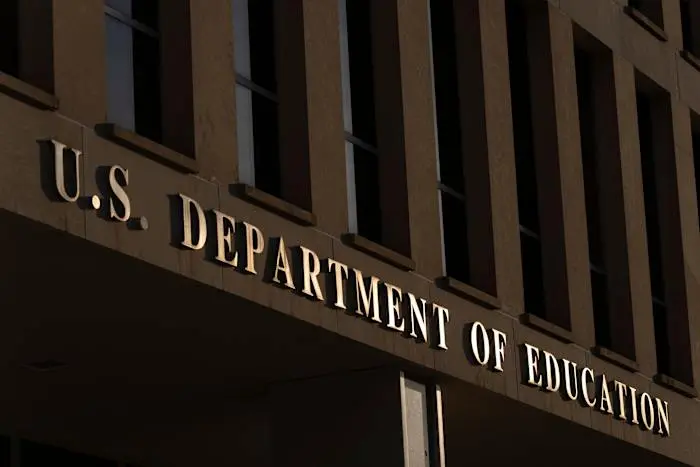
In a quiet administrative move that has alarmed civil rights advocates, education researchers, and policy analysts, the Trump administration has stripped all data regarding nonbinary students and gender-identity-based harassment from the nation’s premier educational equity database.
The omissions were discovered following the quiet release of the U.S. Department of Education’s Civil Rights Data Collection (CRDC) survey for the 2023–2024 school year. The CRDC is a mandatory federal survey of virtually every public school in the United States, historically used by researchers, litigators, and federal officials to identify systemic inequities, track discrimination, and enforce civil rights laws.
An analysis of the newly published dataset reveals that every metric intended to track the experiences of nonbinary and transgender students has been systematically redacted. In place of student counts, bullying statistics, and local policy indicators, the Department of Education inserted a bureaucratic placeholder: "Suppressed in Compliance with Executive Order."
The executive order in question was signed by President Donald Trump on his inauguration day. The directive instructs all federal agencies to define "sex" strictly as a biological binary of male or female, effectively outlawing the administrative recognition of nonbinary and transgender identities across federal data systems.
By suppressing this information, the federal government has not only obscured the prevalence of anti-LGBTQ+ bullying in American schools but has also dismantled a vital tool used by the Office for Civil Rights (OCR) to hold school districts accountable. The quiet release of this redacted dataset marks a significant escalation in the administration’s broader efforts to roll back protections for LGBTQ+ youth and restrict gender-inclusive policies in public education.
Detailed Chronology
The administrative journey of the 2023–2024 CRDC highlights the stark policy shift between two presidential administrations and underscores how federal data collection has become a primary battleground for civil rights.
+-------------------------------------------------------------------+
|                            TIMELINE                               |
+-------------------------------------------------------------------+
| Late 2024: Biden Administration designs and distributes the       |
| 2023-2024 CRDC survey, including "nonbinary" as a gender category. |
+-------------------------------------------------------------------+
                                 |
                                 v
+-------------------------------------------------------------------+
| Jan 2025: President Trump is inaugurated; signs Day 1 Executive   |
| Order restricting the definition of sex to biological binary.     |
+-------------------------------------------------------------------+
                                 |
                                 v
+-------------------------------------------------------------------+
| Mid-2025: School districts submit collected data; federal database|
| undergoes processing under the new administration's guidelines.   |
+-------------------------------------------------------------------+
                                 |
                                 v
+-------------------------------------------------------------------+
| Late 2025 / Early 2026: Department of Education quietly uploads   |
| the 2023-2024 dataset, completely redacting all nonbinary metrics.|
+-------------------------------------------------------------------+
Phase 1: The Biden-Era Initiative
Preparations for the 2023–2024 data collection began under the administration of President Joe Biden. In an effort to address long-standing data gaps regarding vulnerable student populations, the Biden Department of Education expanded the CRDC’s scope. For the first time, the survey officially included "nonbinary" as a gender option alongside male and female. This expansion aimed to provide a clear, empirical look at the enrollment, disciplinary actions, athletic participation, and harassment experienced by nonbinary and transgender youth. The survey was finalized and distributed to school districts across the country in late 2024, just one month before the presidential transition.
Phase 2: The Transition and the Executive Order
Upon taking office, President Trump immediately signed an executive order establishing a strict, binary definition of sex for all federal administrative purposes. The order declared that federal programs and data collections must recognize sex only as biological male or female, as determined at birth. While the administration had previously signaled its intent to eliminate gender-identity questions from future federal surveys, it remained unclear how the Department of Education would handle the 2023–2024 data, which school districts had already spent months collecting under the previous administration’s guidelines.
Phase 3: The Redaction and "Ghost" Release
Rather than discarding the entire survey or re-surveying thousands of districts—a logistically impossible task—the Trump administration chose to suppress the existing data. When the 2023–2024 CRDC database was quietly uploaded to the Department of Education’s website, all columns designed to hold gender-identity metrics were systematically overwritten.
The release occurred with zero public announcement. Unlike previous updates, which were accompanied by detailed analytical reports, press briefings, and public summaries highlighting national educational trends, this update was executed without a press release. The only indication of the new data’s availability was a single row added to the Department’s list of downloadable data tables. The homepage of the CRDC website remained unchanged, continuing to display the outdated 2021–2022 dataset under its "What’s New?" banner.
Supporting Context & Metrics
The suppression of the 2023–2024 CRDC metrics is not an isolated bureaucratic adjustment. Rather, it represents a coordinated effort to reshape the federal government’s relationship with empirical research and civil rights enforcement.
The Scope of the Suppressed Data
The Civil Rights Data Collection is historically unique because it is a universal census, not a sample survey. It gathers data from virtually every public school district in the United States—covering more than 13,000 districts and over 50 million students.
For the 2023–2024 cycle, only districts that already maintained local records on nonbinary and transgender students were required to report those figures to the federal government. According to education policy experts:
- Out of the more than 13,000 public school districts nationwide, approximately 1,800 districts proactively tracked and submitted data on nonbinary and transgender students.
- This subset represents a diverse array of school systems, primarily in states and municipalities with robust local nonbinary protections.
- The suppression of this data means that the federal government has effectively erased the documented school experiences of hundreds of thousands of students who attend these 1,800 districts.
What Was Scrubbed?
The Associated Press analysis and subsequent reviews by educational advocacy groups revealed that the suppression extended far beyond basic enrollment counts. The redacted categories include:
- Student Demographics: The total count of students identifying as nonbinary within reporting districts.
- Harassment and Bullying Allegations: The number of documented allegations of bullying, harassment, or intimidation based on gender identity.
- District Anti-Harassment Policies: Data indicating whether school districts maintained written policies prohibiting harassment based on gender identity.
- Policy Accessibility: Direct links to local district policies concerning student gender identity and protective measures.
A Pattern of Administrative Erasure
This data purge is part of a broader, systemic effort by the Trump administration to remove gender identity and sexual orientation metrics from federal oversight. Research conducted by the Williams Institute, an LGBTQ+ law and policy think tank at the UCLA School of Law, has documented a widespread pattern of federal data suppression.
| Federal Department / Agency | Affected Data Collection / Survey | Impact of Suppression |
|---|---|---|
| Department of Education | Civil Rights Data Collection (CRDC) | Erased student counts, bullying reports, and anti-harassment policies. |
| Department of Health & Human Services | Medicare & Medicaid Patient Experience Surveys | Removed questions tracking discrimination in clinical and healthcare settings. |
| Administration for Children & Families | National Youth in Transition Database | Eliminated metrics tracking LGBTQ+ representation and outcomes among homeless youth. |
| Department of Justice | Bureau of Justice Statistics Surveys | Suppressed data points regarding the experiences of transgender individuals in correctional facilities. |
According to the Williams Institute, the administration has executed approximately 360 distinct instances of removing or suppressing sexual orientation and gender identity data across federal agencies.
Official Statements & Stakeholder Reactions
The silent release of the redacted database has drawn sharp criticism from civil rights attorneys, educational equity advocates, and researchers who rely on federal data to protect vulnerable student populations.
Warnings from Legal and Policy Experts
Seth Galanter, a senior fellow at the Edley Center on Law and Democracy and a former senior attorney with the Education Department’s Office for Civil Rights under both the Obama and Biden administrations, emphasized the profound loss of visibility for vulnerable students:
"We’re losing the granular experience of those kids. They exist in the world, their schools acknowledge their existence, but we now no longer have any way to have any kind of local, state, or national picture about these kids and what their school experience is like."
Galanter noted that the suppression severely compromises the ability of civil rights advocates to identify school districts where systemic harassment is occurring, making federal intervention much more difficult.
Impact on Civil Rights Enforcement
Lauren Bouton, an analyst and researcher at the Williams Institute, highlighted how the suppression directly undermines the enforcement capabilities of the Office for Civil Rights:
"The Office for Civil Rights could have used this data to identify schools that have a systemic problem with the bullying of nonbinary students and then require those schools to follow an action plan to improve. By refusing to collect or publish this data, the administration is disabling the very tools designed to protect these students from hostile learning environments."
Criticisms of Institutional Integrity
Ivy Morgan, the director of research and data at EdTrust—a Washington, D.C.-based think tank advocating for educational equity—expressed deep concern over the erosion of public trust in federal data systems:
"The way this data was released is part of a long-standing pattern that we have observed. This administration just does not care about data, doesn’t care about research, doesn’t care about evidence. And it particularly doesn’t care about that information when it is helping us understand the experiences of students and people who are marginalized in our society."
Departmental Silence and Broader Actions
The Department of Education did not respond to multiple requests for comment regarding the redaction of the 2023–2024 CRDC or the lack of an official announcement accompanying the release.
The silence from the Department of Education coincides with active hostility from the broader administration toward gender-inclusive school policies. Just days prior to the data’s quiet release, the Department of Justice announced a federal lawsuit against the school system in Kansas City, Kansas. The lawsuit targets the district’s policies regarding transgender student accommodations, including pronoun usage and facility access, signaling a coordinated legal and administrative push to dismantle local protections for transgender and nonbinary students nationwide.
Future Outlook
The suppression of the 2023–2024 CRDC data is likely to have long-lasting repercussions for educational policy, civil rights litigation, and the safety of LGBTQ+ youth.
The "Data Dark Age" in Education
Without reliable, centralized federal data, researchers and advocates warn that the United States is entering a "data dark age" regarding vulnerable student populations. The absence of empirical data makes it exceedingly difficult to:
- Quantify the national dropout, suspension, and expulsion rates for nonbinary students.
- Measure the effectiveness of local anti-bullying programs.
- Identify geographic areas or specific school districts experiencing spikes in identity-based violence or harassment.
Legal Challenges and FOIA Requests
Civil rights organizations are already preparing legal strategies to challenge the administration’s data suppression. Litigators are expected to leverage the Freedom of Information Act (FOIA) to demand the release of the unredacted datasets submitted by the 1,800 school districts that originally reported nonbinary metrics.
Additionally, advocacy groups may file lawsuits arguing that the suppression violates federal laws governing data quality and transparency, or that it represents an arbitrary and capricious use of administrative authority.
State-Level and Independent Data Collections
As federal data resources become increasingly politicized and restricted, the responsibility for tracking educational equity is shifting to state governments, academic institutions, and independent non-profit organizations.
Progressive states with robust civil rights protections are expected to expand their own state-level education databases to fill the vacuum left by the federal government. However, experts warn that a fragmented, state-by-state approach cannot replicate the comprehensive, standardized nationwide baseline that the CRDC has provided for more than half a century.
Ultimately, the administrative suppression of nonbinary student data represents a fundamental shift in how the federal government views its role in public education. By choosing to overwrite documented student experiences with a compliance code, the administration has signaled that ideological alignment will take precedence over empirical evidence in the ongoing battle over civil rights in America’s schools.

0 Comments