

Executive Overview
As the United States hurtles toward consequential midterm elections where control of both chambers of Congress hangs in the balance, a high-stakes legal battle over ballot access has reached a critical juncture. On Friday, U.S. District Judge Indira Talwani issued a preliminary injunction extending her prohibition against the U.S. Postal Service (USPS) implementing President Donald Trump’s executive order designed to restrict mail-in voting.
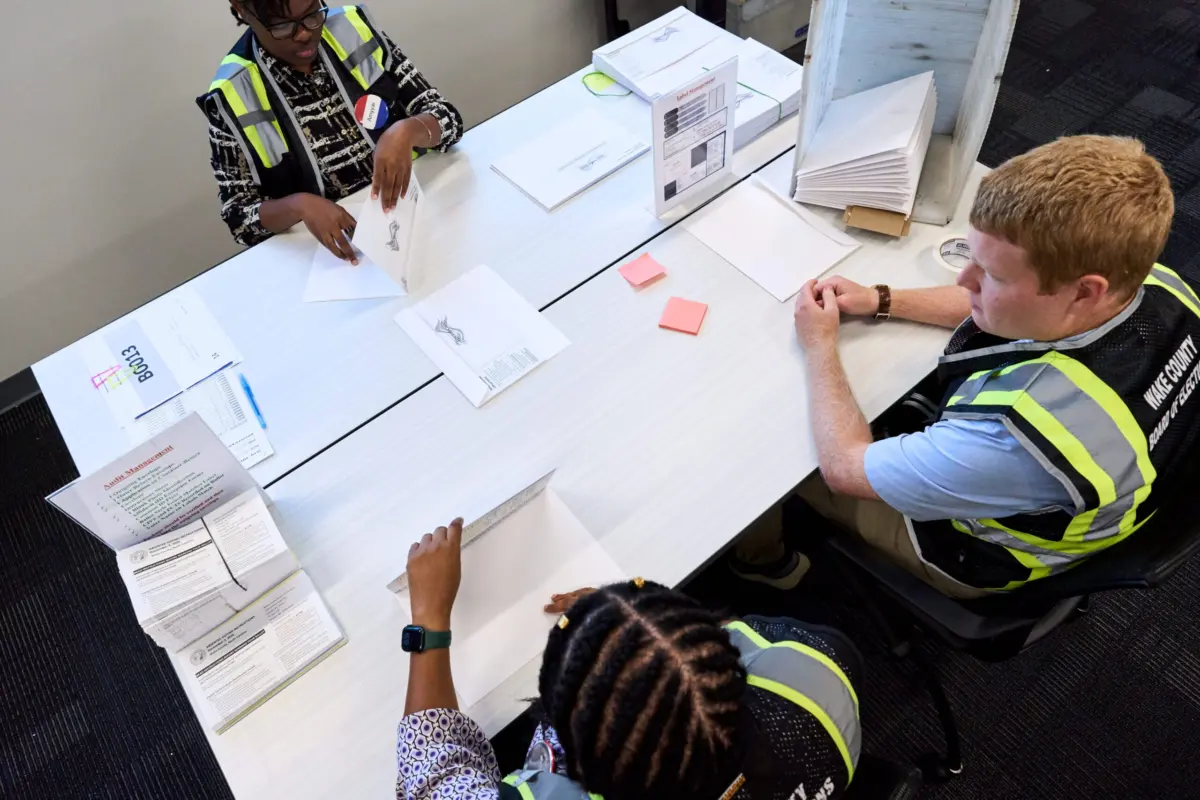
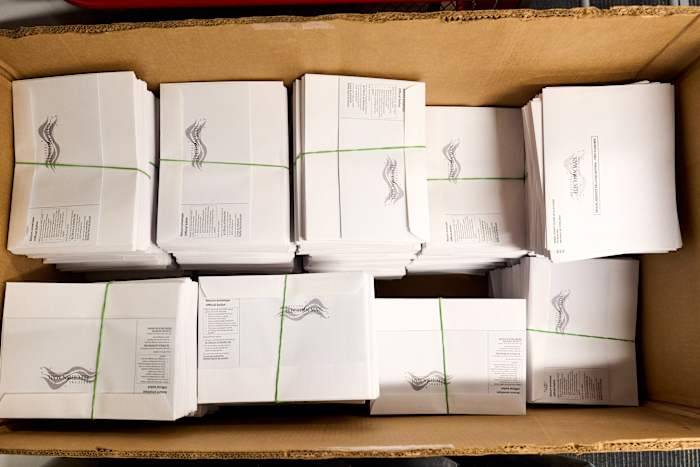
The ruling serves as a major roadblock for the Trump administration, arriving precisely as the first wave of absentee and mail-in ballots is dispatched to voters. North Carolina officially commenced the distribution of its mail ballots on Friday, with numerous other states poised to follow suit in the coming days. With time running critically short for election administrators to overhaul long-standing procedures, Judge Talwani’s decision prevents what local officials and voting rights advocates warn could be widespread voter disenfranchisement.
The legal skirmish represents the latest chapter in an ongoing federal power struggle regarding the constitutional authority to regulate elections. While the White House continues to pursue emergency relief through the appellate courts—including an ongoing appeal before the U.S. Supreme Court—election officials across the country are left navigating a chaotic and rapidly shifting regulatory landscape. With nearly one-third of the American electorate relying on mail-in ballots, the outcome of this dispute threatens to alter the fundamental mechanics of the upcoming midterms.
Detailed Chronology: The Road to the Injunction
To fully understand the gravity of Judge Talwani’s latest ruling, it is necessary to examine the rapid sequence of events, executive actions, and judicial interventions that have defined the legal war over mail-in voting over the past year.
Phase 1: The Initial Executive Orders
The current controversy traces back to last year, when President Trump issued an initial executive order aimed at overhauling federal election rules. Among its most contentious provisions was a mandate requiring individuals to provide documentary proof of citizenship in order to register to vote. That order was swiftly challenged in federal courts, where judges ultimately ruled that the U.S. Constitution explicitly delegates the power to set voting procedures to individual states and, where applicable, Congress—not the executive branch.
Undeterred by those early judicial setbacks, the administration shifted its focus toward the logistical infrastructure of elections, specifically targeting the postal service. In March, President Trump issued a subsequent executive order explicitly aimed at restricting mail-in voting methodologies ahead of the midterms.
Phase 2: The First Wave of Litigation and Talwani’s June Hold
Following the March executive order, a coalition of Democratic-led states, civil rights organizations, and voting rights groups flooded the federal courts with lawsuits. Two of these primary challenges landed on the docket of U.S. District Judge Indira Talwani, an appointee of President Barack Obama, sitting in Massachusetts.
Recognizing the immense administrative hurdles posed by the executive directive, Judge Talwani placed an initial hold on the order in June. Her temporary injunction prohibited the USPS from implementing the administration’s restrictions until the conclusion of the November midterms, shielding state election boards from abrupt operational changes mid-cycle.
Phase 3: The Supreme Court Intervenes
The legal equilibrium was temporarily upended late last month when the U.S. Supreme Court overturned Judge Talwani’s initial injunction. The high court’s conservative majority did not explicitly rule on the underlying legality of President Trump’s executive order. Instead, the justices based their decision on a procedural technicality, noting that the plaintiffs had filed their lawsuits prematurely before the U.S. Postal Service had officially promulgated its formal rule regarding how the order would be executed.
Crucially, the Supreme Court’s decision coincided with the release of the official USPS implementation rules. Recognizing this procedural shift, the plaintiffs swiftly re-filed their lawsuits, placing the issue squarely back before Judge Talwani.
Phase 4: The Preliminary Injunction and Current Status
On Friday, responding to the newly minted USPS rules and the rapidly closing window for election administration, Judge Talwani replaced her temporary order with a robust preliminary injunction. The ruling bars the Postal Service from enforcing the administration’s restrictive directives.
While the Trump administration has already signaled its intention to appeal the latest ruling—having previously asked the Supreme Court to intervene in the earlier phase of the dispute—time is rapidly running out. With North Carolina having already mailed out its initial batches of ballots on Friday and other states initiating their distribution processes imminently, the legal mechanisms are colliding directly with the immovable realities of election day logistics.
Supporting Context & Metrics: The Logistics of Mail-In Voting
The conflict over mail-in voting is not merely theoretical; it carries profound practical implications for the tens of millions of Americans who depend on absentee and postal voting systems to make their voices heard.
The Scale of Mail-In Voting in Modern U.S. Elections
Over the past decade, voting by mail has transformed from a niche alternative used primarily by overseas military personnel and elderly residents into a mainstream cornerstone of American democracy. Data from recent election cycles indicates that nearly one-third of all voters in the United States now cast their ballots via mail or through secure drop boxes.
This dramatic shift was accelerated during the 2020 election cycle due to the COVID-19 pandemic, but the practice has remained persistently popular. Millions of working-class families, rural voters with limited access to traditional polling places, individuals with disabilities, and busy professionals rely heavily on the convenience and security of mail-in ballots.
The Administrative Impossibility of Last-Minute Pivots
At the heart of Judge Talwani’s preliminary injunction is the stark reality of election administration. Organizing a statewide election requires months, if not years, of meticulous planning, printing, programming, and staff training. Local election boards—often underfunded and understaffed—operate under strict, legally mandated calendars.
In her ruling, Judge Talwani highlighted this exact vulnerability, writing:
"Plaintiff States are required under state law to mail millions of ballots to voters on a prescribed timeframe. As detailed below, they are unable to pivot this late in the election cycle, nearly guaranteeing significant disenfranchisement for eligible voters."
Election officials nationwide have repeatedly echoed this sentiment, arguing that forcing the Postal Service to adopt new, restrictive sorting, handling, or delivery protocols mere weeks before ballots hit mailboxes would create catastrophic processing bottlenecks. Such disruptions could result in millions of validly cast ballots arriving past statutory deadlines, effectively silencing voters through bureaucratic paralysis.
The Voluntary Nature of the USPS System
Under the current legal framework, the order issued by Judge Talwani does not entirely outlaw the new postal procedures; rather, it blocks them from being federally mandated. The order technically allows individual states to voluntarily opt into the new Postal Service system if they so choose.

However, as of Friday, not a single state—red or blue—has announced any intention to adopt the Trump administration’s postal system for the upcoming midterms. State election directors across the political spectrum have overwhelmingly prioritized stability and predictability over experimental regulatory changes during an active voting cycle.
Official Statements and Political Fallout
The legal battle has sharply divided the political landscape, drawing intense reactions from the White House, congressional leaders, civil rights organizations, and election administration bodies.
The Administration’s Stance and Past Rhetoric
President Trump has maintained a relentless campaign against mail-in voting for years, frequently characterizing the practice as inherently vulnerable to widespread fraud. Despite offering no empirical evidence to substantiate these claims—and notwithstanding the well-documented fact that Trump himself has frequently utilized mail-in ballots to cast his own vote—the administration has continued to press for stringent federal guardrails.
Critics argue that the administration’s efforts are a transparent attempt to suppress voter turnout among demographics that historically favor mail-in options. The White House did not immediately respond to requests for comment following Judge Talwani’s Friday ruling, though administration attorneys are actively preparing their appellate strategy.
Voting Rights Groups and Democratic Response
Democratic lawmakers and major civil rights organizations have hailed Judge Talwani’s preliminary injunction as a crucial victory for the democratic process. In statements released following the ruling, advocacy groups emphasized that the judiciary is rightly pushing back against executive overreach into state-administered elections.
"The courts have once again recognized that a president cannot unilaterally rewrite election laws and disrupt postal operations weeks before an election," said a spokesperson for a prominent national voting rights coalition. "Millions of Americans depend on the mail to exercise their constitutional right to vote. This ruling ensures that arbitrary administrative hurdles will not be weaponized to disenfranchise eligible citizens."
Future Outlook: What Lies Ahead for the Midterms
As the legal teams prepare their briefs and the appellate courts weigh their next moves, the immediate focus shifts back to the front lines of election administration.
- The Supreme Court Factor: Given that the Trump administration has already demonstrated a willingness to emergency-appeal lower court rulings to the Supreme Court, legal analysts expect a swift petition to the high court. However, the justices will have to weigh whether intervening at this hyper-accelerated stage of ballot distribution is practically feasible or advisable.
- State-Level Execution: With North Carolina leading the charge and other states rapidly following suit, the administrative machinery of the midterms is now fully in motion. Barring a dramatic and unexpected intervention from the Supreme Court, the rules governing mail-in voting for this election cycle appear secure from federal interference.
- Control of Congress at Stake: With the balance of power in the U.S. Senate and House of Representatives resting on razor-thin margins in numerous battleground districts, every single vote carries outsized importance. The success or failure of mail-in voting infrastructure could very well determine the legislative majority for the remainder of the presidential term.
Ultimately, Judge Talwani’s ruling preserves the status quo for millions of voters, ensuring that the traditional methods they have relied upon for years remain intact as they head to their mailboxes this autumn. Yet, as the legal appeals grind forward, the overarching debate over the future of American voting procedures remains far from resolved.

0 Comments