

Executive Overview
Downtown Gainesville has officially crossed a transformative threshold in its long-term urban revitalization strategy with the soft opening of The Streatery, a dedicated pedestrian-only thoroughfare spanning SW First Avenue from S. Main Street to SW Second Street. What began six years ago as a temporary emergency measure to grant downtown restaurants expanded outdoor seating capacity has evolved into a permanent, multi-million-dollar civil infrastructure achievement.
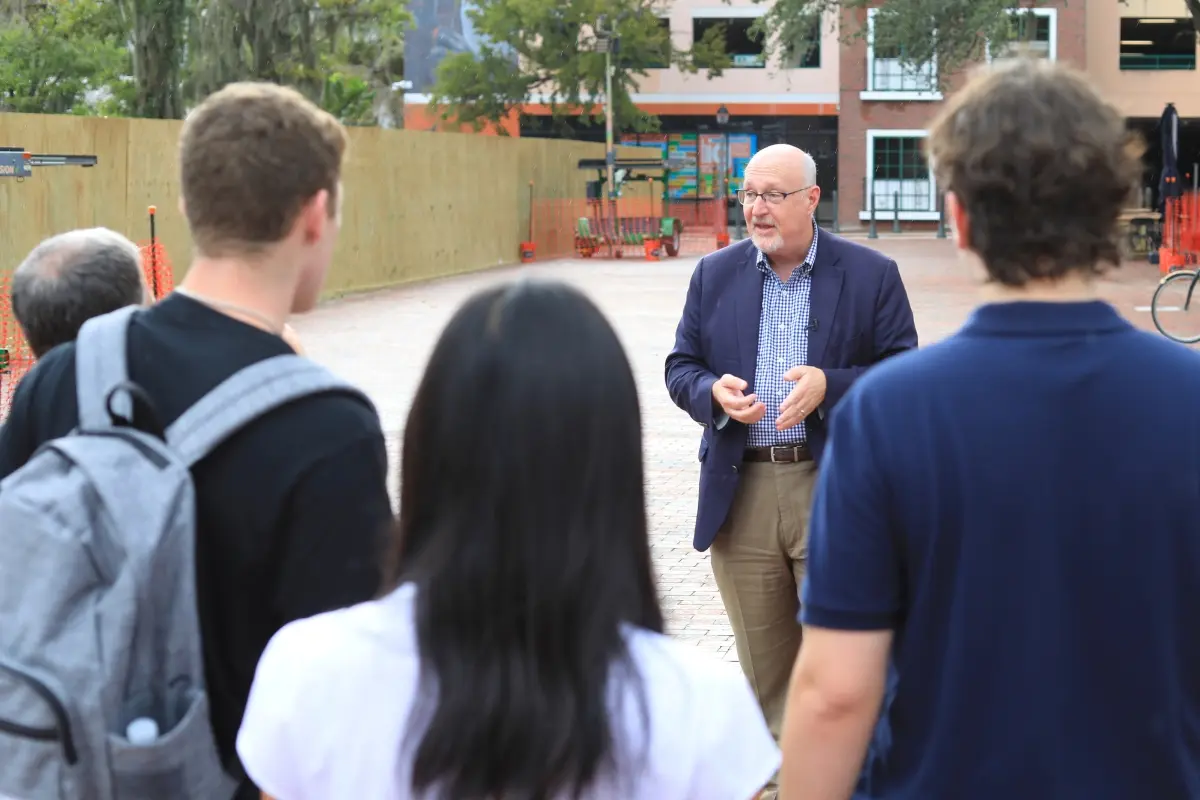
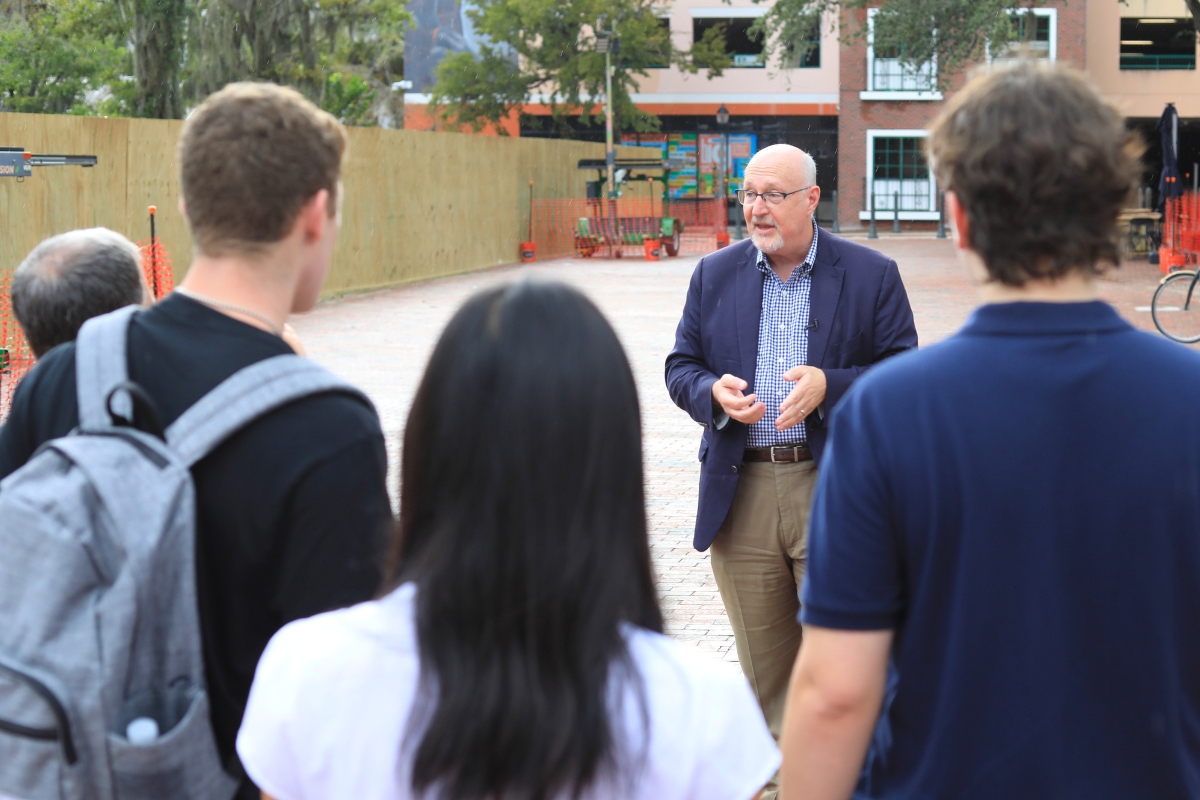
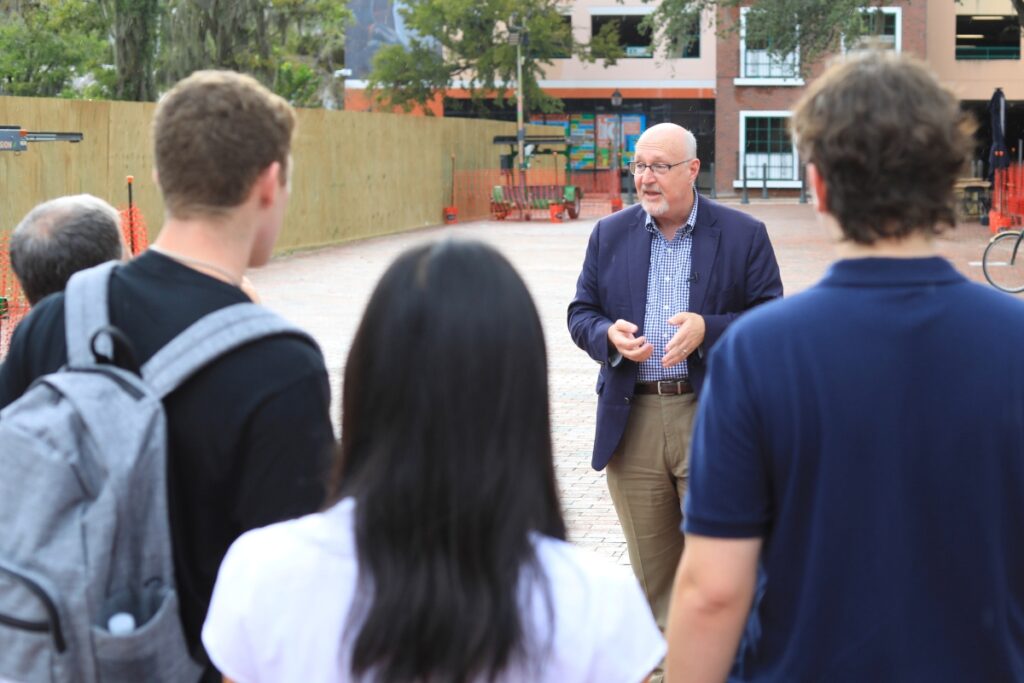
On Friday, Gainesville Mayor Harvey Ward led a media availability walk-through along the newly paved corridor, signaling that the street is open for public foot traffic and commercial activation. Although minor finishing touches remain—evidenced by orange safety fencing marking sites designated for new lighting installations—local merchants immediately capitalized on the space, deploying outdoor tables, chairs, and custom awnings along the corridor.
The $4.5 million redevelopment project, which broke ground in April, concluded its structural phase a full month ahead of schedule. Far beyond a cosmetic surface upgrade, the capital improvement project entailed a total overhaul of subterranean utilities, addressing decades-old drainage and infrastructure deficiencies beneath SW First Avenue.
The timing of the soft opening aligns with a high-traffic seasonal window for the municipality. The Streatery is set to accommodate influxes of visitors during University of Florida (UF) home football game weekends, neighborhood commercial activities, and October’s internationally recognized "The Fest" music festival, prior to an official civic ribbon-cutting ceremony planned for November. Crucially, municipality figures confirm that commercial density along the corridor has actually increased over the course of construction, defying typical downturns associated with urban utility work and underscoring strong private-sector confidence in Gainesville’s pedestrianized future.
Detailed Chronology: From Tactical Intervention to Permanent Infrastructure
                      THE STREATERY TIMELINE
┌────────────────────────────────────────────────────────────────────────┐
│                                                                        │
│  [6 Years Ago] ──► SW 1st Ave closed for temporary outdoor seating    │
│                         │                                              │
│                         ▼                                              │
│  [Policy Shift] ──► City Commission votes for permanent street closure │
│                         │                                              │
│                         ▼                                              │
│  [Interim Phase]──► Design, board feedback, coordination with Lot 10   │
│                         │                                              │
│                         ▼                                              │
│  [April 2026]   ──► $4.5M construction breaks ground                   │
│                         │                                              │
│                         ▼                                              │
│  [Present Day]  ──► Soft opening completed 1 month ahead of schedule   │
│                         │                                              │
│                         ▼                                              │
│  [Oct - Nov]    ──► Activation (UF Games, The Fest) & Nov Ribbon Cut   │
│                                                                        │
└────────────────────────────────────────────────────────────────────────┘
The Initial Closure and Policy Pivot
The origin of The Streatery dates back six years, when the Gainesville City Commission approved the temporary closure of SW First Avenue to vehicular traffic. Designed initially as a tactical urbanism initiative to assist local dining establishments by expanding outdoor seating capacity, the experimental closure quickly demonstrated the latent demand for high-quality public pedestrian spaces in the downtown core.
Observing sustained foot traffic and enthusiastic community adoption, city commissioners subsequently voted to convert the temporary street closure into a permanent fixture of downtown municipal planning. This policy decision aligned Gainesville with a broader global movement toward urban pedestrianization, seeking to reallocate public right-of-way from motor vehicles to human-centered civic activity.
Navigating Advisory Resistance and Inter-Development Delays
The trajectory from policy approval to physical construction was neither linear nor without municipal friction. Over its multi-year gestation, the project faced critique and scrutiny, including pushback from the city’s own Downtown Advisory Board regarding design parameters, traffic circulation, and execution timelines.
Additionally, the timeline was significantly impacted by complex coordination requirements involving adjacent real estate developments—most notably the high-density Lot 10 multi-story residential construction project. Municipal planners postponed major streetscape installations to ensure heavy structural equipment from neighboring private developments would not compromise newly laid pavement and subterranean utility lines.
Construction Execution: The $4.5 Million Overhaul
Full-scale construction commenced in April, backed by a $4.5 million municipal investment. The project scope required deep-tier civil engineering, stripping away decades of legacy asphalt to reconstruct the roadbed, install high-grade paving materials, upgrade storm sewer networks, and prepare electrical conduits for modern illumination.
Despite the inherent complexity of deep subterranean utility work within a historic urban core, primary contractors delivered the completed thoroughfare a month ahead of schedule, enabling the municipality to host its soft opening phase in early autumn.
Supporting Context and Economic Metrics
Subsurface Modernization and Infrastructure Resiliency
While surface-level enhancements like decorative pavers, seating zones, and open sightlines dominate public perception, the engineering core of The Streatery project lies below ground. For decades, SW First Avenue operated on legacy storm run-off systems and utility infrastructure that struggled to accommodate severe weather events and growing commercial demands.
By completely opening the right-of-way, municipal utility crews successfully replaced aging subsurface piping and upgraded stormwater drainage networks. This deep-level overhaul drastically mitigates flood risks for adjacent brick-and-mortar structures while ensuring reliable utility delivery for high-volume commercial tenants long into the future.
       PROJECT METRICS AT A GLANCE
┌──────────────────────────────┬──────────────────────────────┐
│ Metric                       │ Detail                       │
├──────────────────────────────┼──────────────────────────────┤
│ Total Capital Expenditure    │ $4.5 Million                 │
│ Geographical Scope           │ SW 1st Ave (S. Main to SW 2nd)│
│ Construction Start           │ April                        │
│ Timeline Performance         │ Completed 1 Month Early      │
│ Primary Milestones           │ Soft Opening (Now)           │
│                              │ The Fest (October)           │
│                              │ Official Ribbon-Cutting (Nov)│
└──────────────────────────────┴──────────────────────────────┘
Private Capital Realignment and Commercial Density
A major indicator of the project’s success is the resilience of the local commercial ecosystem during heavy construction. Traditionally, major municipal roadway redevelopments risk depressing foot traffic and forcing tenant vacancies. In contrast, the corridor along SW First Avenue emerged from the construction phase with a higher volume of active businesses than existed prior to groundbreaking.
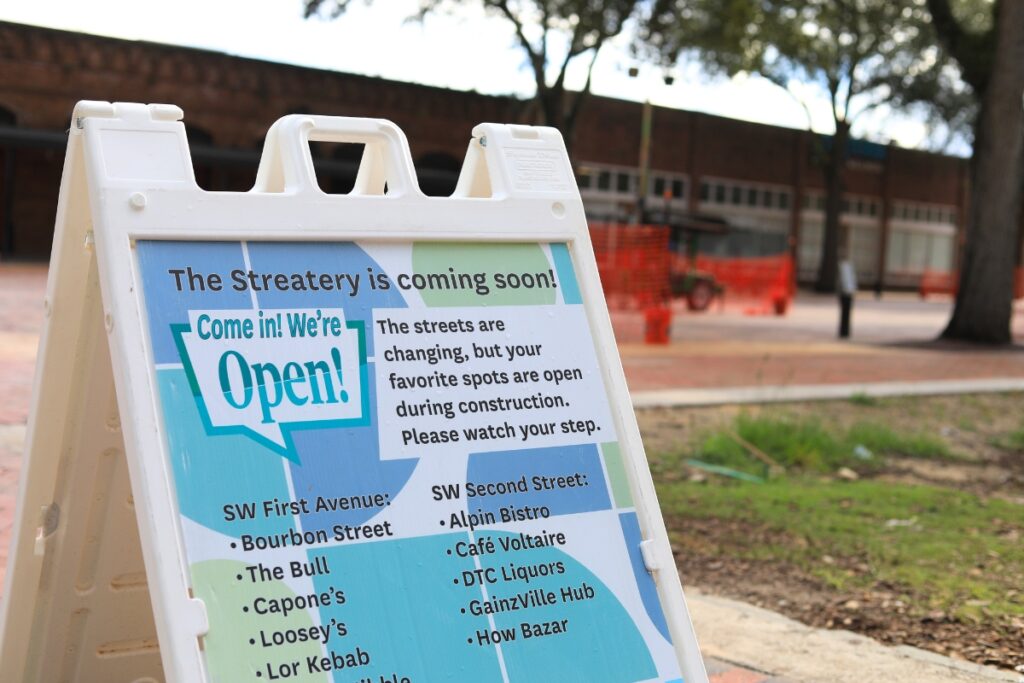
Existing establishments immediately expanded their operational footprints onto the newly completed promenade, placing private capital into branded outdoor furniture, ambient lighting, and weather-resistant awnings. Simultaneously, new commercial ventures are moving into formerly vacant storefronts along the strip. Signage and storefront build-outs are already visible for upcoming concepts such as:
- Nest + Nibble (Boutique retail/dining)
- Brewing Thoughts Coffee (Specialty beverage/cafe)
This influx of private investment underscores commercial tenant confidence in the pedestrian corridor’s ability to drive sustained foot traffic and elevated customer dwell times.
Tactical Pedestrianization in a College-Town Ecosystem
Gainesville’s socio-economic geography is uniquely anchored by the University of Florida, creating intense structural shifts in downtown foot traffic linked to the academic calendar and home athletic fixtures. Pedestrian plazas function as critical relief valves and gathering hubs during peak collegiate events.
By removing vehicular hazards from SW First Avenue, the city has created a contiguous, walkable entertainment zone connecting S. Main Street to SW Second Street. This spatial layout allows large public gatherings to disperse safely, provides restaurants with flexible service footprints during peak hours, and creates an adaptable venue space for large-scale cultural events.
Official Statements and Civic Leadership Insights
During Friday’s media walk-through, Mayor Harvey Ward emphasized the dual achievements of subterranean civil engineering and economic revitalization, noting that the project represents a significant return on public investment.
┌────────────────────────────────────────────────────────────────────────┐
│                                                                        │
│  "Not only did we do an enormous amount of work to make this           │
│   remain a vibrant part of downtown through the construction process,  │
│   but we have more businesses on The Streatery open today than we     │
│   did when we started the construction process. So that speaks to      │
│   how well received this is likely to be by the greater community."    │
│                                                                        │
│   — Mayor Harvey Ward, City of Gainesville                             │
│                                                                        │
└────────────────────────────────────────────────────────────────────────┘
Mayor Ward pointed to the economic performance of the street during active construction as validation of the municipality’s execution strategy:
"Not only did we do an enormous amount of work to make this remain a vibrant part of downtown through the construction process, but we have more businesses on The Streatery open today than we did when we started the construction process. So that speaks to how well received this is likely to be by the greater community."
Addressing the technical infrastructure improvements beneath the promenade, Ward highlighted that replacing obsolete municipal systems was as crucial to the city’s long-term health as the visible streetscape enhancements above:
"That in itself is a win, and I’m very pleased with that, and I’m excited to be able to welcome folks to The Streatery this weekend," Ward stated, referencing the subterranean utility and drainage replacements.
Future Outlook and Activation Horizon
                        ACTIVATION HORIZON
┌─────────────────────────────────────────────────────────────────┐
│                                                                 │
│  SOFT OPENING          AUTUMN ACTIVATION       OFFICIAL LAUNCH  │
│  [Current Phase] ────► [October Events] ────► [November 2026]   │
│  • Public access       • UF Game Days          • Formal Ribbon- │
│  • Patio setup         • "The Fest" Concerts     Cutting        │
│  • Lighting finish     • New Shop Openings     • City Ceremony  │
│                                                                 │
└─────────────────────────────────────────────────────────────────┘
Immediate Event Horizons: Game Days, ‘The Fest,’ and Official Ceremonies
The soft opening strategy allows the municipality and local storefronts to test operational workflows, crowd management, and outdoor seating arrangements during high-density autumn events.
Key upcoming activation milestones include:
- University of Florida Football Weekends: The Streatery will serve as a central downtown staging area for thousands of visiting fans, alumni, and residents seeking pre-game and post-game dining options.
- The Fest (October): Gainesville’s annual independent music festival will utilize the contiguous pedestrian zone to host concert-goers, street performers, and merchandise activations, benefiting from the vehicle-free environment.
- Final Overhead Lighting Installation: Municipal crews will complete the remaining overhead fixture mountings currently delineated by orange safety barriers, finalizing the corridor’s night-time lighting aesthetic.
- Formal Ribbon-Cutting Ceremony (November): City officials, business owners, and community stakeholders will gather for an official dedication ceremony, marking the formal completion of the project.
Long-Term Urban Policy Implications for Downtown Gainesville
The successful early delivery of The Streatery provides a template for future capital improvement projects throughout Gainesville’s urban core. By proving that tactical street closures can be scaled into permanent, high-value civic infrastructure without shuttering adjacent retail, the city has established a model for public-private alignment.
As nearby developments—such as the multi-story residential complex at Lot 10—reach completion, The Streatery is positioned to absorb higher residential densities, fostering a modern, multi-use urban environment where dining, culture, and retail thrive on human-scale mobility.

0 Comments