

Executive Overview
In a bizarre intersection of audacity, poor judgment, and surveillance technology, a South Carolina man has finally been apprehended more than a year after allegedly pulling off one of the more unusual petty crimes in recent regional memory. Antonio Levon Ricardo Stewart stands accused of turning a routine employment opportunity into a criminal enterprise by allegedly pocketing an entire pack of lottery scratch-off tickets while sitting through a job interview.
The incident, which unfolded on May 6, 2025, at a Murphy USA gas station located in Florence, South Carolina, within the broader Horry County reporting jurisdiction, highlights the unintended vulnerabilities businesses face when welcoming strangers behind the counter for prospective employment. According to law enforcement records compiled by the South Carolina Law Enforcement Division (SLED) and local affiliates, Stewart did not merely walk away with the unactivated paper stock; he embarked on a multi-store redemption campaign across the Florence area. This endeavor yielded a grand total of one successful payout worth a meager $5, but ultimately generated a cascade of felony-level legal consequences.
While the crime itself was captured in high definition on the store’s internal security systems—providing investigators with immediate, irrefutable evidence—Stewart managed to evade law enforcement custody for over a year before finally being tracked down and booked into the Florence County Detention Center. He now faces three distinct felony counts of intent to defraud involving counterfeit or illegally obtained game tickets.
This comprehensive report examines the anatomy of the crime, the timeline of the investigation, the broader security challenges facing modern convenience stores and retail fuel stations during the hiring process, and what legal experts anticipate as the case moves toward trial.
Detailed Chronology: From Candidate to Suspect
May 6, 2025: The Interview
The events that culminated in Stewart’s eventual arrest began on a spring afternoon that initially promised a step toward gainful employment. Stewart arrived at the Murphy USA station in Florence for a scheduled job interview. In the competitive landscape of retail and convenience store employment, managers frequently evaluate candidates based on their demeanor, situational awareness, and professional presentation. However, investigators say Stewart’s focus lay elsewhere.
According to surveillance footage recovered by law enforcement, at some point during the interview process—while the hiring manager was momentarily distracted or transitioning between phases of the meeting—Stewart allegedly targeted the establishment’s inventory of South Carolina Education Lottery products. Surveillance cameras reportedly captured him reaching past the counter space or capitalizing on accessible display areas to swipe an entire pack of scratch-off tickets.
For a convenience store, a stolen pack of lottery tickets represents more than just a minor inventory discrepancy. Unlike standard retail merchandise, lottery tickets are carefully tracked serial assets linked directly to state regulatory systems. Unactivated packs hold no inherent cash value to a thief on their own, because state lotteries require activation codes processed through point-of-sale terminals to become valid. However, opportunistic thieves frequently operate under the dangerous misconception that they can bypass these security measures or dupe unsuspecting cashiers at competing locations.
The Multi-Store Redemption Tour
Armed with the pilfered stack of scratch-off tickets, Stewart wasted little time attempting to monetize his ill-gotten gains. Rather than testing his luck at the very location where he had just applied for work—a step too brazen even for this scenario—Stewart launched a localized tour of three different convenience stores and retail outlets across the Florence area.
Investigators note that attempting to cash in stolen, unactivated tickets usually triggers immediate red flags in modern computerized lottery terminals. When a clerk scans a stolen ticket, the central lottery database often flags the barcode as inactive, stolen, or unregistered, prompting the system to lock out the transaction and alert management.
Despite these safeguards, Stewart managed to present the tickets at multiple establishments. Through persistence or perhaps by exploiting a momentary lapse in clerk vigilance at one of the locations, he achieved his singular "victory" of the enterprise: successfully redeeming one of the stolen tickets for a modest $5 cash prize. The remaining attempts at the other two locations were met with failure, as the automated systems and observant cashiers recognized the irregularities. Unfortunately for Stewart, every single attempt at redemption left a digital and video footprint, further cementing the case against him.
The Investigation and Warrant Issuance
By the end of May 2025—weeks after the initial incident—local authorities had pieced together the evidence. Backed by crystal-clear surveillance footage from the Murphy USA interview site, transaction logs from the state lottery terminal network, and witness testimony from the various stores Stewart visited, investigators had established probable cause.
Warrants for Stewart’s arrest were officially issued before the close of May 2025. Yet, despite the clear-cut nature of the evidence and the rapid issuance of the warrants, Stewart managed to slip beneath the radar of local law enforcement for an extended period. In cases involving non-violent property crimes and lower-level fraud, suspects frequently transition into transient lifestyles, change residences, or avoid routine interactions with police, making immediate apprehension difficult for municipal and county agencies juggling heavy caseloads.
The Breakthrough: August 2026 Arrest
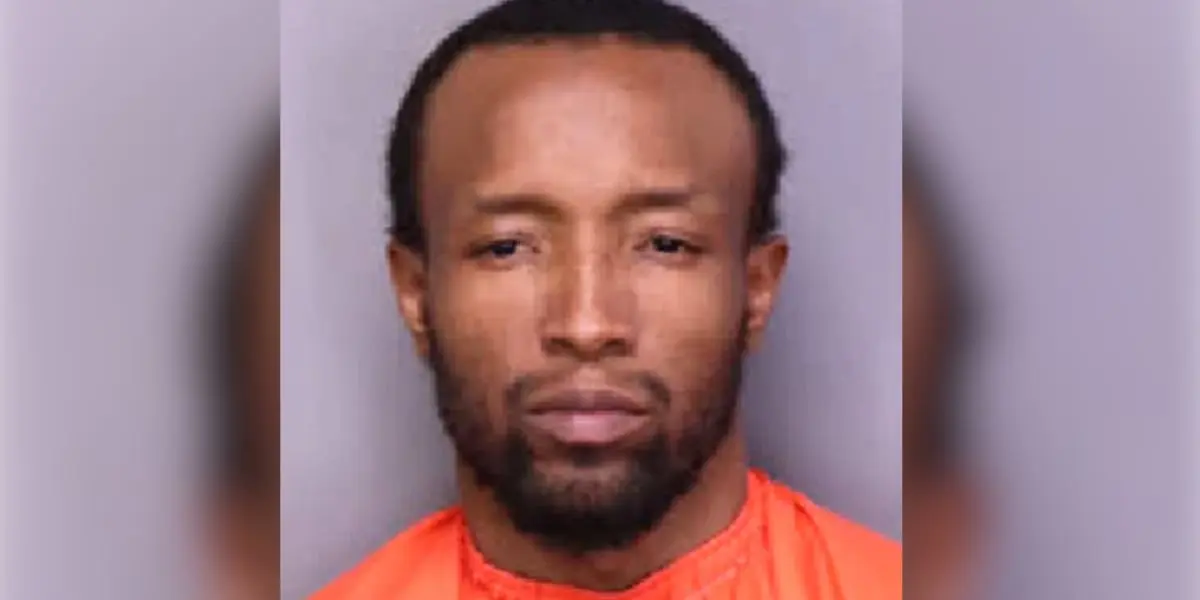
The pursuit finally concluded in late August 2026. Following coordinated efforts by state and local law enforcement agencies, including SLED, authorities located Stewart and took him into custody. He was subsequently transported to the Florence County Detention Center, where booking photos captured a stern-looking suspect facing the reality of a multi-count indictment.
Stewart has been formally charged with three counts of intent to defraud involving counterfeit game tickets—a charge tailored to address the deliberate manipulation and illegal cashing methods applied to state-regulated gaming instruments.
Supporting Context & Metrics: The Mechanics of Lottery Fraud
To fully understand the gravity of Stewart’s charges, it is necessary to examine how state lottery security systems operate and why stealing scratch-off packs is rarely a viable criminal strategy.
The Lifecycle of a Scratch-Off Ticket
The South Carolina Education Lottery, like state lotteries across the United States, maintains stringent controls over ticket distribution.
- Distribution: Packs of tickets are shipped securely to licensed retailers. Each pack contains a specific barcode and sequential serial numbers registered to that specific store location.
- Activation: Crucially, a scratch-off ticket is essentially a piece of worthless cardboard until the retailer officially activates the pack through their secure terminal. This activation links the financial liability and prize payout tracking to that specific business.
- The Vulnerability: When a thief steals an unactivated pack, the tickets are useless at the store from which they were stolen because the manager knows they are missing and can flag them. If the thief takes them to another store, the lottery terminal at the second store will scan the barcode, recognize that the pack was never legally purchased or activated by that specific retailer, and reject the payout.
Stewart’s ability to cash a $5 ticket suggests that either a procedural error occurred at one of the redemption sites, a clerk failed to follow proper scanning protocols, or a specific loophole in how multi-store terminal cross-checks were processed at that exact moment was exploited. However, the temporary gain of a single cup of coffee’s worth of cash now stands in stark contrast to the legal penalties he faces.
The Financial and Legal Impact of Retail Fraud
Retail crime, internal theft, and applicant fraud cost American businesses billions of dollars annually. When a crime occurs during a job interview, it strikes at the core of the employer-employee trust contract.
- The Breach of Trust: Inviting an individual into a back office or behind the counter requires a baseline assumption of professional boundaries. Violating that trust immediately escalates the perception of the crime from a random act of shoplifting to a calculated breach of security.
- The Legal Escalation: While stealing a $5 or $10 item might traditionally land a suspect a misdemeanor citation, the systematic targeting of state-regulated lottery materials, combined with multiple counts of attempted fraud across different jurisdictions, elevates the legal jeopardy. Fraud involving state-regulated gaming instruments often carries specialized statutory penalties designed to protect the integrity of public revenue streams.
Official Statements and Law Enforcement Perspective
While extensive public press conferences were not immediately called due to the localized nature of the property crime, statements released by regional news affiliates and law enforcement bodies emphasize the thoroughness of the investigation.
Agencies such as the South Carolina Law Enforcement Division (SLED) and the Florence County Sheriff’s Office frequently coordinate with municipal departments to ensure that retail crimes—which often plague small businesses already operating on tight profit margins—are met with systematic accountability.
Security analysts who review retail crime trends point out that this case serves as an educational cautionary tale for both employers and job seekers:
- For Employers: The incident underscores the critical need for background screening, secure storage of high-value inventory (such as lottery stock, tobacco, and alcohol) even during operational hours, and the limitation of unsupervised access for unvetted visitors.
- For Job Seekers: The case highlights the absolute inevitability of modern surveillance. With high-definition security cameras integrated into almost every retail square foot, coupled with digital transaction tracking, attempting to commit a crime during a formal job interview is an exceptionally self-defeating endeavor.
Future Outlook: Legal Proceedings and Next Steps
As of late August 2026, Antonio Levon Ricardo Stewart remains ensnared in the judicial system following his booking at the Florence County Detention Center.
Anticipated Legal Challenges
Stewart’s defense counsel will likely review several technical aspects of the case:
- The Surveillance Evidence: Given that the entire initial theft was allegedly caught on camera, mounting a factual defense denying presence at the scene will prove nearly impossible. Defense strategies may instead focus on negotiating plea terms, examining the exact valuation of the defrauded goods, or questioning the specific statutory definitions applied to "counterfeit game tickets" versus stolen genuine tickets.
- The Delay in Execution: The fact that more than a year elapsed between the issuance of the warrant in May 2025 and the actual arrest in August 2026 could open avenues for defense inquiries regarding speedy trial rights or procedural handling by law enforcement, though routine delays in locating transient suspects rarely result in complete dismissal of felony charges.
Broader Implications for Florence and Horry County Retailers
For the local business community in Florence and Horry County, Stewart’s arrest brings a sense of closure to a baffling case of workplace audacity. Store managers across the region are expected to use this incident as a training case study on vetting applicants, safeguarding counter inventory, and maintaining vigilance.
Ultimately, Stewart’s gamble—trading a potential career path for a stolen pack of scratch-offs and a single $5 payout—serves as a stark reminder that in an era of ubiquitous digital tracking and high-definition surveillance, crime is not only easily documented, but justice, however delayed, eventually catches up.

0 Comments