

QUITO — In an aggressive intensification of Washington’s ongoing counter-narcotics campaign across Latin America, the U.S. Southern Command (SOUTHCOM) confirmed the destruction of another alleged Ecuadorian drug-smuggling vessel in the Eastern Pacific. The strike marks a rapidly accelerating pattern of maritime interdictions and kinetic operations targeting maritime logistics networks purportedly tied to Los Choneros, a powerful and violent transnational criminal organization designated by the United States as a foreign terrorist organization.
The latest military action highlights a controversial and increasingly lethal shift in U.S. foreign policy. Utilizing a combination of elite naval special operations forces, overhead aerial surveillance, and precision-guided munitions, the United States is bypassing traditional law enforcement capture protocols in international waters. Instead, American military assets are systematically dismantling, boarding, and sinking vessels suspected of operating as floating logistical hubs, mobile refueling stations, and trafficking conduits for illicit narcotics bound for North America.
While the Pentagon defends these high-seas operations as essential, precise, and professional efforts to sever the financial and operational lifelines of narcotics cartels, the campaign has triggered mounting alarm. Human rights advocates, international legal scholars, and the desperate families of regional mariners are raising urgent questions regarding transparency, due process, proportionality, and the overarching legality of lethal kinetic strikes against civilian-configured vessels far from active warzones.
Executive Overview
The escalation in the Eastern Pacific underscores a hardening U.S. security posture under the current administration, which has increasingly blurred the lines between traditional law enforcement, counter-terrorism, and military engagement in the Western Hemisphere. According to official briefings from SOUTHCOM, the targeted vessels function as critical nodes in transnational drug networks, providing fuel, provisions, and logistical support to speed-boats and semi-submersibles ferrying multi-tonne shipments of cocaine northward.

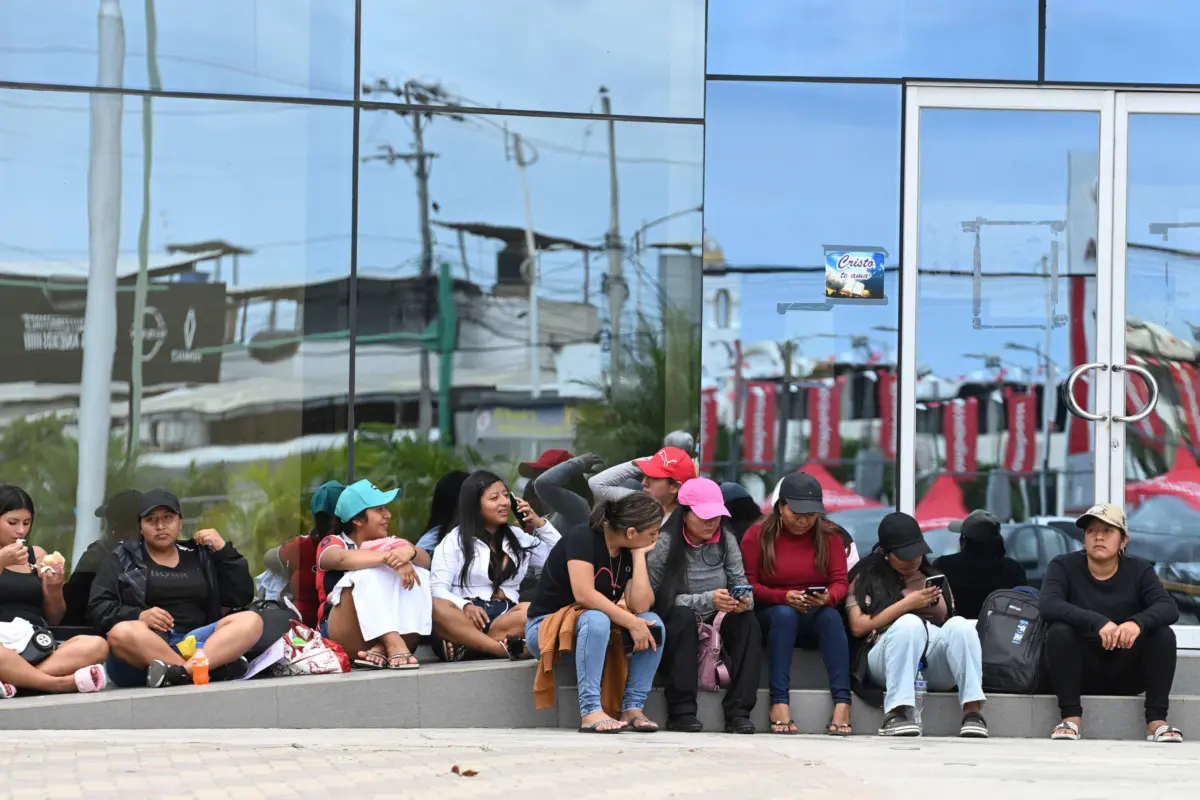
However, the human toll and diplomatic friction generated by these operations are becoming increasingly difficult to ignore. In Ecuador—a nation already reeling from a domestic security crisis driven by violent cartel infighting—the sinking and seizure of regional fishing boats have sparked profound anxiety. Families of local mariners, many of whom claim their loved ones were simple fishermen swept up in the dragnet or coerced into illicit supply chains, have taken to ports and police stations in coastal cities like Manta to demand answers, safe returns, and transparency from both local and foreign authorities.
The geopolitical footprint of these operations extends far beyond the maritime domain. Parallel to the strikes in the Pacific and Caribbean, the U.S. administration is aggressively pursuing bilateral security agreements with allied nations across Latin America to expand counter-cartel military operations onto mainland territory. Defense Secretary Pete Hegseth’s recent diplomatic tour through Central and South America illustrates a broader strategy aimed at institutionalizing joint cross-border military strikes. Yet, this aggressive diplomatic push is already meeting regional resistance, public skepticism, and diplomatic denials, highlighting the fragile coalition supporting Washington’s muscular approach to the war on drugs.
Detailed Chronology of Maritime Operations
The destruction of the unnamed Ecuadorian vessel on Monday is the latest in a rapid sequence of kinetic engagements that have rattled regional maritime communities over the past fortnight. The incident follows a pattern that has become increasingly familiar to observers of U.S. counter-narcotics operations in the Eastern Pacific and the Caribbean.
According to video footage released by SOUTHCOM following Monday’s operation, U.S. military personnel executed a boarding maneuver on the target vessel. Once the occupants were safely removed—with SOUTHCOM stating they would be transferred to Ecuadorian custody—an overhead military aircraft monitored the scene before a precision projectile struck the ship, sending it to the ocean floor. The vessel was formally identified by U.S. officials as a floating refueling station designed to sustain illicit drug trafficking operations at sea.

This latest engagement brings the total number of vessels targeted and sunk by U.S. forces in less than two weeks to five. The campaign has systematically targeted a variety of craft operating in traditional fishing and shipping corridors:
- The María Candelaria: Intercepted and struck last week in the Pacific during a coordinated operation between U.S. Southern Command and Ecuadorian authorities. The vessel’s 26 crew members were eventually located by the Ecuadorian navy, arriving Sunday at the vital port city of Manta, where anxious relatives had gathered outside police facilities demanding information.
- The Conquista II: Another targeted vessel whose eight-man crew of local fishermen has become the center of frantic searches and protests by mainland families demanding accountability regarding their whereabouts and legal status.
- The OM2 and Los Tres Hermanos: Two additional craft explicitly identified by SOUTHCOM via social media platform X as "floating refueling stations for multiple vessels engaged in illicit drug trafficking operations." Crew members from these vessels have come forward detailing harrowing accounts of their interception and subsequent sinking.
These recent incidents compound an already troubled ledger from earlier in the year. Regional authorities and family advocacy groups have documented at least three other vessels intercepted by U.S. forces throughout the year. The fate of these crews has varied wildly and often lacks transparency: while some mariners were eventually repatriated to Ecuador following processing in third countries like El Salvador, others have vanished entirely. Notably, eight Ecuadorian fishermen aboard the vessel Fiorella have been reported missing since January, with their families receiving little to no official closure from either Washington or Quito.
Supporting Context & Metrics: The Human and Operational Cost
The kinetic maritime campaign represents an unprecedented numerical and strategic escalation in modern hemispheric drug interdiction. Comprehensive tracking of the initiative reveals staggering metrics:
- Casualties: At least 227 individuals have been killed across 68 separate U.S. government strikes targeting boats in the Caribbean Sea and the Eastern Pacific over the past year.
- Geographic Scope: What began primarily as a Caribbean-focused interdiction strategy has systematically expanded into the Pacific approaches of South America, turning traditional fishing waters into active conflict zones.
- Collateral and Legal Gray Areas: The blurring lines between armed combatants and commercial mariners have exposed deep fissures in the legal architecture governing the high seas. Critics point out that many intercepted vessels are standard, wooden-hulled artisanal fishing boats structurally incapable of surviving direct military ordnance, raising questions about whether proportional force is being applied.
The humanitarian impact is acutely felt in coastal Ecuadorian provinces, where artisanal fishing serves as the economic lifeblood for thousands of families. Communities in Manta, Guayaquil, and surrounding coastal enclaves report that local fishermen are increasingly vulnerable. Some are allegedly coerced, extorted, or press-ganged by heavily armed factions of Los Choneros into providing logistical cover, fuel caches, and scouting reports for high-speed drug runs. When U.S. military forces strike these vessels, local families argue that ordinary working-class citizens are paying the ultimate price for crimes orchestrated by cartel kingpins safely entrenched on land.

Furthermore, investigative reports and statements from regional governments have occasionally undermined the blanket criminality assumed by Washington’s targeting matrix. In a previous high-profile case, Ecuadorian officials openly stated they possessed no concrete evidence indicating that a survivor of a U.S. maritime strike had participated in any illegal drug trafficking activities, highlighting the immense risk of erroneous intelligence and tragic collateral damage in high-speed military engagements.
Official Statements and Geopolitical Fallout
The official posture from Washington remains resolute. The Pentagon and the White House frame the maritime campaign as an existential defense of American national security against violent transnational cartels flooding the U.S. domestic market with narcotics, particularly synthetic opioids and cocaine. Defense officials emphasize that operations are conducted with maximum technical precision and in coordination—wherever possible—with regional partners to dismantle the logistical infrastructure that enables maritime crime.
Yet, the diplomatic reality on the ground is considerably more fractured. While the government of Ecuador has previously entered into cooperative security frameworks with the United States—launching joint domestic security operations in March—Quito’s official reaction to the recent wave of sinkings has been notably muted. Ecuadorian ministries did not immediately issue formal statements regarding Monday’s strike, reflecting a delicate domestic balancing act. President Daniel Noboa’s administration faces intense political pressure to project sovereignty and protect its citizens abroad, even as it relies heavily on U.S. intelligence, financial assistance, and military hardware to combat powerful internal gangs like Los Choneros and Los Lobos.
The friction is not isolated to Ecuador. The Trump administration’s broader diplomatic offensive aims to secure sweeping bilateral agreements allowing U.S. military forces to execute direct, cross-border kinetic strikes against cartels on mainland soil across Latin America.

During a high-profile diplomatic visit to Panama earlier this month, U.S. Defense Secretary Pete Hegseth asserted that regional partners—specifically naming Colombia, Guatemala, and Honduras—had agreed in principle to permit U.S. forces to conduct joint military operations against criminal syndicates within their borders. However, this assertion quickly ran into diplomatic turbulence when the government of Guatemala publicly and flatly denied reaching any such agreement, underscoring the deep political sensitivities, historical distrust of foreign military interventions, and sovereignty concerns that continue to complicate Washington’s regional ambitions.
Future Outlook: A Precarious Crossroad for Hemispheric Security
As the U.S. Southern Command maintains its aggressive operational tempo in the Eastern Pacific, the campaign against alleged Los Choneros logistics networks stands at a dangerous crossroads.
For Washington, the strategy is viewed as a necessary evolution of the war on drugs—shifting from reactive coastal interdiction to proactive, kinetic neutralization of cartel supply chains at sea. Proponents argue that sinking floating refueling stations drastically degrades the operational range and efficiency of drug syndicates, forcing them into higher-cost, riskier alternatives.
However, the long-term sustainability and strategic wisdom of this approach face severe headwinds. Legal experts warn that expanding unvarnished military strikes against civilian-flagged vessels in international waters opens the door to profound violations of international maritime law and human rights standards. Without transparent, verifiable judicial review and independent oversight, the risk of killing innocent mariners, alienating local populations, and destabilizing coastal economies far outweighs short-term tactical disruptions.

For regional governments in Ecuador and across Central and South America, the challenge lies in reconciling the immense domestic threat posed by heavily armed narco-syndicates with the preservation of national sovereignty and the protection of vulnerable civilian populations. Unless Washington and its regional allies can establish a transparent, accountable framework that distinguishes clearly between cartel operatives and coerced artisanal mariners, the current maritime campaign risks fueling deeper anti-interventionist sentiment, deepening humanitarian crises in coastal communities, and undermining the very diplomatic partnerships required to defeat transnational organized crime.

0 Comments