

Executive Overview
NEW YORK — When four-time Grand Slam champion Naomi Osaka stepped onto the hard courts of the U.S. Open for the final major tournament of the 2026 season, she carried far more than her tennis racquets. Tasked with commanding the spotlight at Flushing Meadows, the 28-year-old superstar turned the tournament grounds into an avant-garde runway. Though her championship run ultimately came to a lopsided end in the fourth round against Kazakhstan’s Elena Rybakina on Monday, Sept. 7, 2026, Osaka’s departure was marked by an unforgettable explosion of color, swagger, and cultural commentary.
Partnering with celebrity stylist Law Roach—widely recognized for his work with trendsetting icons like Zendaya—Osaka elevated tennis walk-on fashion to an unprecedented art form. Across four rounds of fierce competition, Osaka and Roach unveiled a meticulously curated, basketball-themed sartorial journey. Honoring the New York Knicks’ historic championship victory through a partnership with Nike, each ensemble blended street culture, high-end tailoring, and homage to basketball royalty.
While a lingering leg injury hampered her mobility during Monday’s straight-sets defeat, Osaka left Arthur Ashe Stadium completely at peace with her career trajectory. Rejecting the narrative of a tragic exit, the former world number one reflected with profound maturity, expressing zero regrets about her time on the tour. As the curtains close on her 2026 New York campaign, Osaka’s legacy transcends trophies; she remains the undisputed fashion queen of professional tennis and a cultural force redefining what it means to be an athlete in the modern era.
Detailed Chronology: A Fortnight of High Fashion and Fierce Competition
The blueprint for Osaka’s U.S. Open fashion retrospective was executed with military precision, with each round unveiling a distinct thematic look that captured the essence of New York City basketball and street-level haute couture.
Round 1: Channeling Allen Iverson and Streetwear Heritage
On Monday, Aug. 31, 2026, Osaka opened her tournament campaign against Russia’s Anastasia Zakharova by paying homage to one of the NBA’s ultimate cultural icons: Allen Iverson. Designed by the New York-based streetwear label Who Decides War, Osaka floated onto the court wearing a sweeping, long white tulle skirt paired with a dramatic gray hooded robe.
When she dropped the hood, the crowd caught sight of her hair braided in classic cornrows beneath a custom headband—a direct visual throwback to Iverson’s iconic look when he secured the NBA MVP award with the Philadelphia 76ers. The look established a high-water mark for the tournament, signaling that Osaka’s walk-ons were no longer mere entrances, but headline-grabbing cultural events.
Round 2: Thom Browne Tailoring and Basketball Net Motifs
Moving into the second round on Thursday, Sept. 3, 2026, against the Czech Republic’s Katerina Siniakova, Osaka shifted gears toward structured tailoring. She arrived in an exquisite ensemble crafted by visionary designer Thom Browne.
The outfit featured a flowing white jacket exquisitely embroidered with crossed tennis rackets, merging traditional country-club aesthetics with urban edge. Hidden in plain sight was a clever nod to the hardwood: the mesh fabric of her pleated tennis skirt was meticulously textured to mimic the netting of a basketball hoop.
Round 3: The Business-Sport Hybrid by Monse
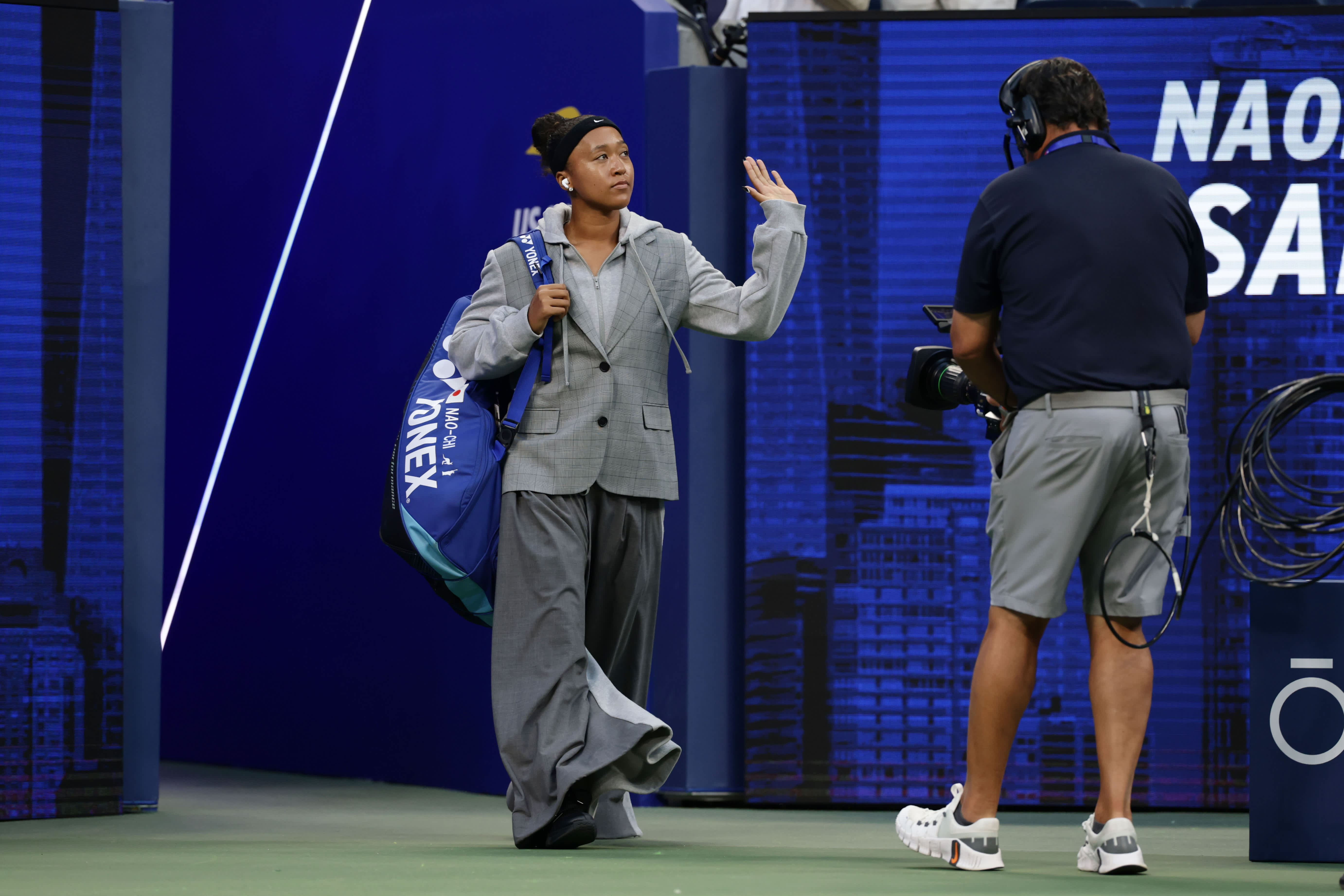
By Saturday, Sept. 5, 2026, as Osaka faced Belgium’s Elise Mertens, the physical toll of a grueling Grand Slam fortnight began to set in, but her style remained completely uncompromising. Working with the label Monse, Osaka debuted an oversized, avant-garde hybrid garment.
The look fused a classic gray business suit jacket with a cozy hooded sweatshirt, paired effortlessly with flowing gray fleece athletic pants. The outfit served as a visual metaphor for the modern multi-hyphenate athlete: someone who seamlessly traverses corporate boardrooms, fashion capitals, and competitive arenas.

Round 4: The KidSuper Grand Finale
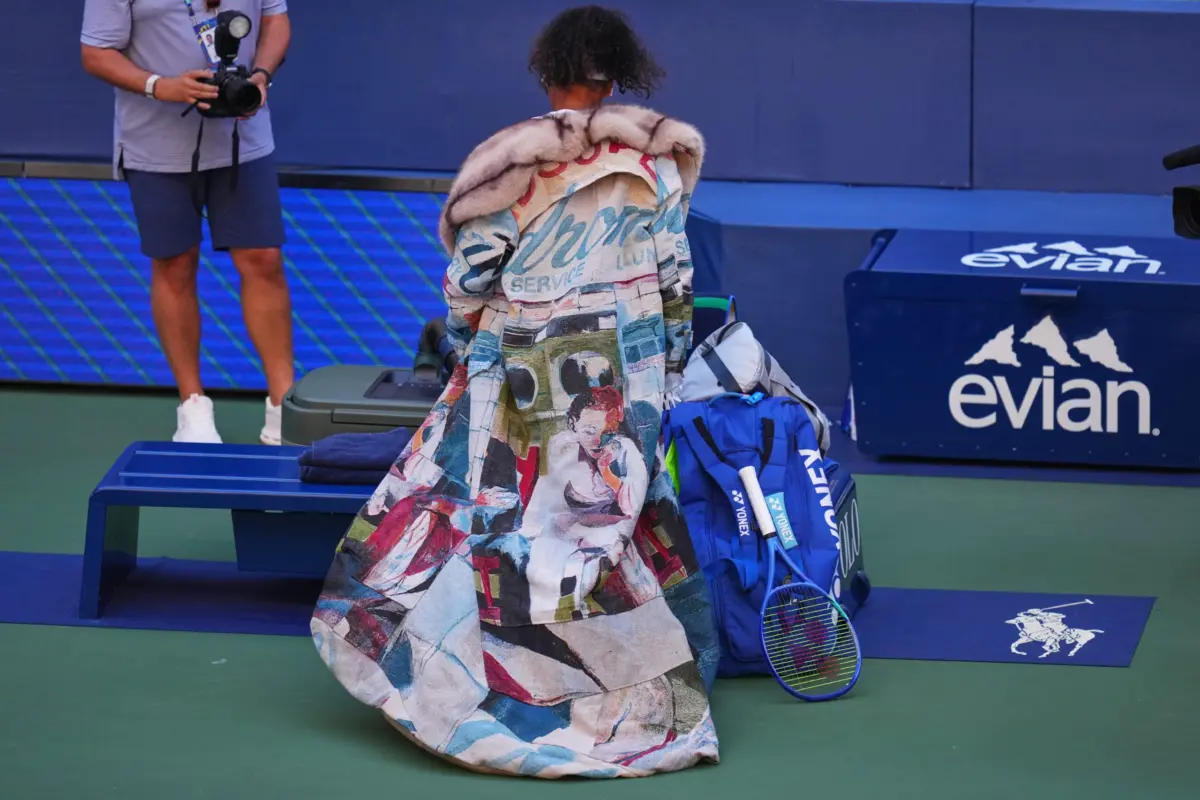
Osaka’s final act of the fortnight occurred on Monday, Sept. 7, 2026, during her fourth-round clash against Elena Rybakina. Walking onto the court under the bright New York lights, Osaka wore a vibrant, multicolored, fur-trimmed cloak designed by Brooklyn-based label KidSuper, spearheaded by designer Colm Dillane.
“I felt really swaggy when I put it on,” Osaka remarked with a smile during her post-match press conference. “I feel like it embodied New York a lot.”
The eclectic ensemble included a custom headband that cleverly reinterpreted the iconic blue, red, and white NBA logo. Instead of a silhouetted basketball player dribbling down the court, the logo featured a fiercely focused tennis player wielding a racket. It was a fitting, if bittersweet, finale for an athlete who views fashion as a vital outlet for personal expression and joy.
Supporting Context & Metrics: The Intersection of Sport, Style, and Business
Osaka’s sartorial crusade at the 2026 U.S. Open is part of a broader, ongoing revolution within professional sports, where athletes are increasingly leveraging fashion to build multi-dimensional brand identities.
The Law Roach Collaboration
The partnership between Naomi Osaka and stylist Law Roach represents a watershed moment for tennis fashion. Historically, tennis has enforced strict sartorial guidelines—most notably Wimbledon’s mandatory all-white dress code—which historically stifled individual expression. While tournaments like the U.S. Open offer more flexibility, few players have systematically weaponized the walk-on entrance the way Osaka has.

Roach, renowned for his ability to transform celebrities into global fashion icons, worked closely with Osaka to ensure that every fabric, silhouette, and design choice told a cohesive story. By anchoring the collection in a basketball theme to honor the New York Knicks’ recent championship run, the collaboration bridged the gap between uptown basketball culture and Flushing Meadows tennis royalty.
The Business of Athlete-Led Fashion
From a commercial perspective, Osaka’s alignment with Nike and high-end independent labels (KidSuper, Who Decides War, Thom Browne, and Monse) underscores the immense market value of athlete-driven aesthetics. According to sports marketing analysts, high-profile walk-ons routinely generate millions of impressions across social media platforms like TikTok, Instagram, and X (formerly Twitter).
For brands partnering with Osaka, the U.S. Open serves as a global runway that reaches demographics far beyond traditional sports enthusiasts. The synergy between streetwear culture and elite tennis has unlocked lucrative crossover markets, proving that athletic dominance and high-fashion credibility can coexist symbiotically.
Official Statements & Post-Match Reflections
While the physical demands of a Grand Slam eventually caught up with her—Osaka admitted to battling persistent leg pain during her straight-sets loss to Rybakina—her post-match demeanor was remarkably serene. Rather than lamenting a missed opportunity to showcase her remaining wardrobe options, the four-time Grand Slam champion offered profound insights into her current mindset and career trajectory.
When asked by reporters if she felt disappointed about cutting her fashion showcase short, Osaka offered a pragmatic perspective:
"I mean, I think there’s always something, you know? I feel like that’s a way that I can have fun and sort of just excite myself, also."
Reflecting on her legacy, her physical struggles, and the evolution of her competitive drive at age 28, Osaka adopted a philosophical tone that resonated deeply with the press corps:
"Maybe I’m just getting older, but I don’t feel sad. I think, also, if I reflect on my career and the things that I’ve been able to do, there’s nothing that I regret or there’s nothing that I’m sad about… If I win another Grand Slam, it’s not going to change my life."
These candid remarks highlight a mature evolution in Osaka’s relationship with the sport. Having already secured four major titles and cemented her status as a global cultural icon, she no longer measures her self-worth solely by the accumulation of silverware. Instead, she evaluates her career through the lens of holistic fulfillment, artistic expression, and mental well-being.
Future Outlook: What Lies Ahead for Naomi Osaka?
As the tennis circuit looks beyond the 2026 U.S. Open toward the tail end of the season and preparations for the 2027 Australian swing, fundamental questions linger regarding Naomi Osaka’s competitive future.

Managing Physical Longevity
At 28 years old, Osaka is navigating the delicate balance between peak athletic performance and physical preservation. The lingering leg pain that hampered her movement against Rybakina serves as a reminder of the relentless physical toll exacted by modern hard-court tennis. For Osaka to contend for future majors, her scheduling and training regimes will likely require strategic adjustments to prioritize longevity over sheer volume of tournaments.
Expanding Cultural and Entrepreneurial Horizons
Off the court, Osaka’s trajectory points toward an increasingly influential role at the intersection of fashion, design, and media. Her successful collaboration with Law Roach and various elite designers at this year’s U.S. Open suggests that a permanent footprint in the fashion industry—potentially through capsule collections, creative directorships, or independent label collaborations—is a natural next step.
The Ongoing Legacy
Whether Osaka adds to her tally of four Grand Slam titles remains to be seen. However, her impact on the sport is already indelible. By openly prioritizing mental health, redefining pre-match fashion standards, and remaining fiercely authentic in the glaring spotlight of global media, Naomi Osaka has permanently altered the blueprint for modern athletic stardom.
As she exits Flushing Meadows, leaving behind a trail of vibrant colors, customized sneakers, and unforgettable walk-on moments, Osaka proves that an athlete’s true victory lies in their ability to dictate their own narrative—on the court, on the runway, and on their own terms.

0 Comments