

ALACHUA COUNTY, Fla. — A quiet dread has settled over the moss-draped shores of Lochloosa Lake. For generations, this historic 5,700-acre waterbody in southeastern Alachua County has been celebrated as a premier destination for anglers, naturalists, and those seeking the untamed beauty of old Florida. Today, however, it has become the focal point of an escalating environmental controversy.
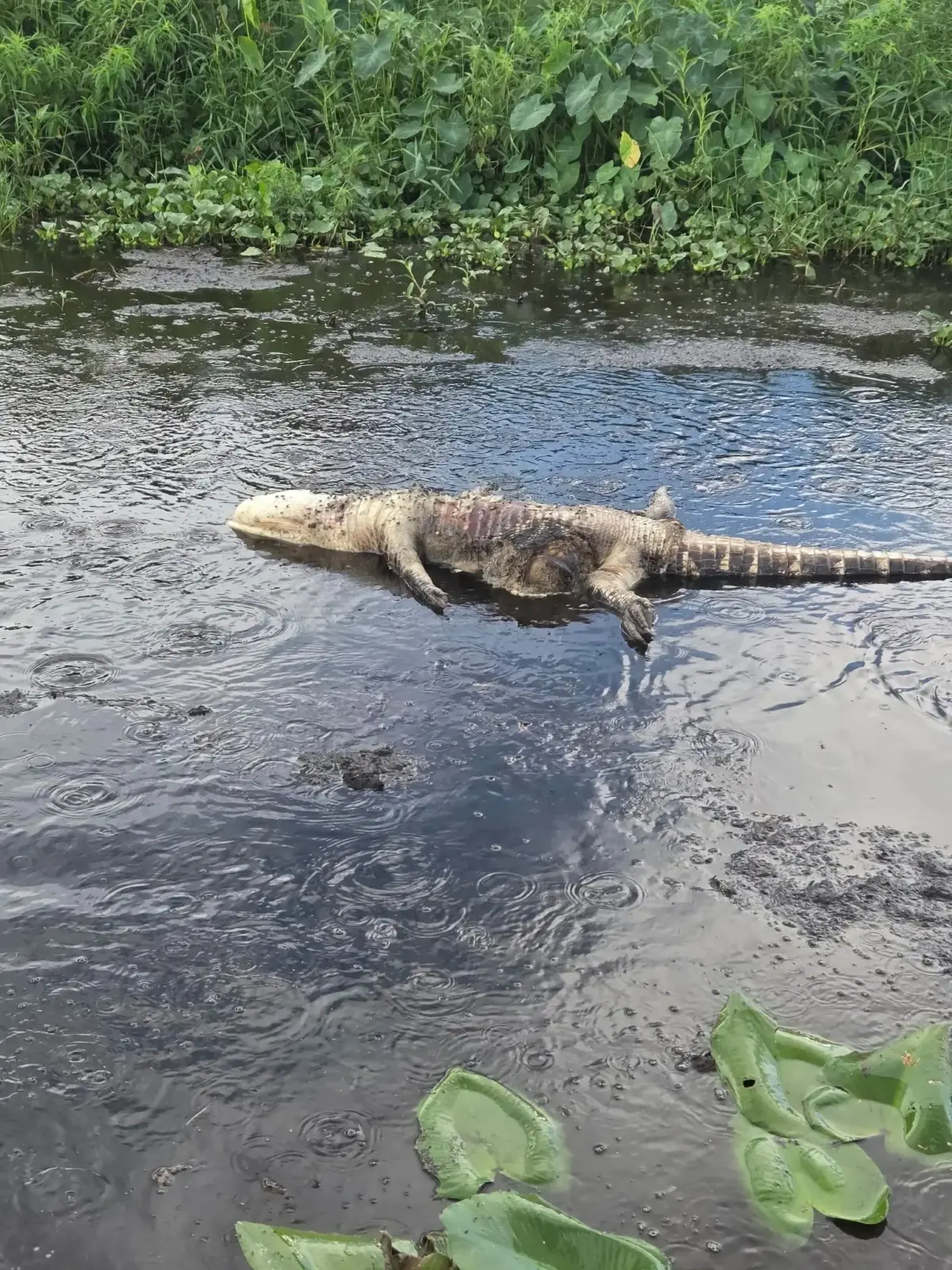
The latest spark in this growing crisis is the discovery of a deceased, emaciated alligator, documented and shared online by Cassels Mobile Bait Shop. The image of the apex predator, lifeless and withered, has rapidly circulated across social media platforms, transforming local anxiety into widespread public outcry. For residents and business owners along the lake, the alligator’s death is not an isolated tragedy; rather, it is a grim symbol of a systemic ecological collapse characterized by massive fish kills, vanishing aquatic vegetation, and persistent toxic algae blooms.
As state wildlife officials scramble to investigate the cause of death, local communities are demanding transparency. They point to a suspected culprit: the intensive use of chemical herbicides by state agencies to manage invasive aquatic weeds—a practice they argue is poisoning the food web, depleting dissolved oxygen levels, and threatening the safety of their drinking water.
Executive Overview
Lochloosa Lake is currently experiencing a profound ecological transition that threatens both its biodiversity and the livelihoods of those who depend on it. Historically characterized by clear waters, healthy stands of native bald cypress, and abundant game fish, the lake has recently shown severe signs of environmental distress.
The crisis gained public attention in late July 2026, when residents reported massive fish die-offs and thick, foul-smelling algae blooms. Shortly thereafter, the discovery of the dead alligator intensified fears that the ecological damage had climbed the trophic ladder, affecting the ecosystem’s apex predators.
Local business owners, led by Eric Cassels of Cassels Mobile Bait Shop, argue that a relentless regimen of chemical herbicide spraying has decimated the lake’s native flora. This sudden loss of habitat has allegedly triggered a cascading failure: baitfish lose their spawning grounds and die; larger sportfish starve or suffocate due to oxygen depletion; and top-tier predators, such as the American alligator, are left starved, immunocompromised, and vulnerable to systemic disease.
Beyond the immediate loss of wildlife, the crisis has assumed a public health dimension. Because the regional hydrology links the lake directly to the underlying Floridan Aquifer, lakeside residents are growing increasingly fearful that chemical runoff and cyanotoxins are leaching into their private drinking wells, prompting some to install advanced home filtration systems out of survival instinct.
Detailed Chronology
The decline of Lochloosa Lake has not occurred overnight, but rather through a series of escalating ecological insults over the spring and summer of 2026.
[Spring 2026] -----------------> [July 31, 2026] --------------> [August 2026]
Aggressive chemical              Widespread fish kills and        Emaciated alligator found;
herbicide applications           toxic algae blooms reported      public outcry over water safety
Spring 2026: The Chemical Campaigns
Throughout the early months of the year, state-contracted crews conducted extensive herbicide spraying targeting invasive plant species, primarily hydrilla (Hydrilla verticillata) and water hyacinth (Eichhornia crassipes). While these management efforts aimed to keep navigation channels open, residents noted that the applications appeared indiscriminate, killing off vast swaths of beneficial native vegetation, including eelgrass and spatterdock.
July 31, 2026: The First Wave of Mortality
By late July, the biological consequences of the rapid vegetative decay became impossible to ignore. Thick mats of decomposing organic matter settled to the lake bottom, fueling massive bacterial growth.
On July 31, local news outlets documented widespread fish die-offs. Dead bluegill, crappie, and largemouth bass lined the shorelines, accompanied by a bright green, paint-like sheen of blue-green algae (cyanobacteria) blooming across the lake’s surface.
August 2026: The Fall of the Apex Predator
In the weeks following the fish kills, the ecological crisis ascended the food chain. Eric Cassels discovered and photographed a dead alligator near the shoreline. Unlike healthy specimens, which are robust and muscular, this individual was visibly wasted and emaciated.
The image, posted online by Cassels Mobile Bait Shop, triggered a surge of community engagement, transforming localized grumbling into organized advocacy. Residents began documenting other signs of wildlife distress, including lethargic turtles and wading birds abandoning traditional nesting sites.
Supporting Context & Metrics
To understand the severity of the situation at Lochloosa Lake, it is necessary to examine the delicate ecological and chemical balances that govern shallow freshwater systems in Florida.
The Physics of Shallow Lakes and Dissolved Oxygen
Lochloosa Lake is a shallow, macrophyte-dominated system, with an average depth of only seven feet. Such lakes are highly sensitive to temperature fluctuations and organic loading.
When large volumes of aquatic plants are killed rapidly by chemical herbicides, they do not simply vanish; they sink to the bottom and rot. This decomposition process is highly aerobic. Bacteria consuming the dead plant material deplete the water’s Dissolved Oxygen (DO).
| Dissolved Oxygen Level (mg/L) | Ecological Impact |
|---|---|
| 6.0 – 8.0 | Healthy, optimal range for most freshwater fish and aquatic life. |
| 4.0 – 5.0 | Mild stress; fish become less active and may migrate to shallower water. |
| 2.0 – 3.0 | Hypoxia; severe distress, fish piping at the surface for air, lethargy. |
| Below 2.0 | Anoxia; rapid, widespread mortality (fish kills), starting with sensitive species. |
During the peak of summer, warm water naturally holds less oxygen. When chemical spraying is superimposed on high water temperatures, DO levels can crash below critical thresholds overnight, suffocating entire populations of aquatic organisms.
The Herbicide Controversy: Chemical Profiles
The state of Florida relies heavily on several EPA-approved herbicides to manage aquatic weeds. However, local conservationists argue that "EPA-approved" does not mean "hazard-free" in a fragile, enclosed lake ecosystem.
- Diquat Dibromide: A fast-acting contact herbicide. While effective at burning down floating vegetation, it binds rapidly to suspended sediment and can be toxic to aquatic invertebrates, which form the base of the fish food web.
- Fluridone: A systemic herbicide applied over large areas. While slow-acting, its long-term presence in the water column can inhibit the growth of non-target native plants, leaving the lake bottom bare and susceptible to erosion and nutrient release.
- Glyphosate & 2,4-D: Frequently used for shoreline maintenance. Studies have suggested that chronic exposure to these compounds, particularly in combination with surfactants, can disrupt the endocrine and immune systems of aquatic vertebrates, including amphibians and reptiles.
Trophic Cascade and Starvation
Eric Cassels’ observation that "all of these animals are starving" aligns with the ecological concept of a trophic cascade. When herbicides eliminate native vegetation, they destroy the nursery habitat for micro-crustaceans and baitfish.
Without this foundational biomass, larger predatory fish starve or die from oxygen depletion. Alligators, which rely on fish, turtles, and wading birds for sustenance, are suddenly deprived of their primary food sources. Over time, this nutritional deficit leads to muscle wasting, immune suppression, and death from opportunistic infections that a healthy alligator would easily fend off.
Official Statements and Community Perspectives
The crisis at Lochloosa Lake has exposed a deep rift between grassroots observers and state regulatory bodies.
The Resident Voice: Eric Cassels
For Eric Cassels, the degradation of the lake is both a professional tragedy and a personal threat.
"All of these animals are starving," Cassels told TV20. "All these animals are going through a sickness, and if you look at these chemicals, they are known to weaken the immune system of animals, including the fish."
Cassels’ concerns have transcended the boundaries of his bait shop and entered his home. Like many who live along the lake, his household relies on groundwater wells that draw from the shallow aquifer directly recharged by Lochloosa Lake.
"I live on this lake. We drink this water," Cassels explained, gesturing to his home. "I recently got a water filter for my house, for my drinking water, because I’m scared of it."
Other local anglers and residents echo Cassels’ sentiments, describing a lake that has felt "chemically dead" in the wake of heavy spraying campaigns, with the natural hum of insects and frogs replaced by an eerie, quiet stillness.
State and Scientific Agencies
While the Florida Fish and Wildlife Conservation Commission (FWC) and the Florida Department of Environmental Protection (DEP) have acknowledged the reports of fish kills and the dead alligator, they urge caution before drawing definitive conclusions.
At the time of reporting, wildlife pathologists have not confirmed the exact cause of the alligator’s death. State biologists frequently attribute summer fish kills to natural, weather-related phenomena, such as high water temperatures, low wind mixing, and naturally occurring algae blooms that deplete oxygen levels without chemical intervention.
Agency representatives maintain that herbicide applications are carefully calculated, targeted, and necessary. Without chemical management, they argue, invasive species like hydrilla would completely choke the lake, making navigation impossible, crowding out native species, and causing even more severe ecological blockages.
Future Outlook
The unfolding situation at Lochloosa Lake serves as a microcosm of a broader, statewide debate over aquatic resource management in Florida. As the community demands action, several potential pathways forward have emerged.
Shifting to Mechanical Harvesting
A primary demand from local environmental advocates is a transition away from chemical herbicides toward mechanical harvesting.
Unlike chemical spraying, which leaves dead plants to rot and consume oxygen at the bottom of the lake, mechanical harvesters physically cut and remove the invasive biomass from the water. This process removes excess nutrients (nitrogen and phosphorus) from the ecosystem, preventing future algae blooms. However, mechanical harvesting is significantly more expensive and labor-intensive than chemical spraying, presenting a major budgetary hurdle for state agencies.
[Chemical Spraying] ----> Plants Rot in Lake ----> Oxygen Depleted ----> Fish Kill
[Mechanical Harvest] ---> Plants Removed --------> Nutrients Reduced ---> Lake Recovers
Community-Led Water Monitoring
Frustrated by what they perceive as slow regulatory responses, Alachua County residents are discussing the establishment of an independent, community-led water quality monitoring program. By regularly testing for dissolved oxygen, herbicide residues, and cyanotoxins, residents hope to build a robust, legally defensible dataset that can hold managing agencies accountable.
Balancing Ecology and Utility
The future of Lochloosa Lake depends on finding a sustainable compromise between recreational utility and ecological preservation. If state agencies continue to rely on heavy chemical interventions to maintain pristine boating channels at the expense of biological health, the lake risks falling into a permanent state of eutrophication—a dead zone where neither fish, alligators, nor local businesses can survive.
For now, the community remains vigilant, watching the water with a mixture of grief and resolve. The dead alligator of Lochloosa Lake has become a silent sentinel, warning of a fragile ecosystem pushed to its absolute limit.

0 Comments