

Executive Overview
The American Rocky Mountain region is currently grappling with an unprecedented ecological and public safety crisis. Driven by severe, climate-induced drought conditions and a historic deficit in winter snowpack, the natural food supplies of the region’s black bear population have been decimated. Oak brush, chokecherries, native berries, and essential mast crops have largely failed across vast swaths of public lands and protected wilderness areas.
As a direct consequence, hungry and disoriented bears are abandoning their traditional foothill and mountain habitats, migrating deep into human-populated suburbs, urban centers, and agricultural plains. Wildlife management agencies across Colorado, Utah, and New Mexico are reporting record-breaking surges in bear-human conflicts, property destruction, and lethal interventions.
What began as localized sightings of wildlife wandering into mountain towns has escalated into a widespread regional phenomenon. Bears are regularly breaching suburban perimeters, picking apart vehicles, dismantling unsecured trash infrastructure, and occasionally coming into direct physical contact with residents. While some encounters end safely through successful animal relocations or minor property remediation, the overarching trend spells danger for both human communities and vulnerable wildlife populations.
State wildlife authorities and conservationists are urgently warning residents to secure attractants, emphasizing that human negligence—particularly regarding improperly managed waste and accessible food sources—is a primary catalyst for the crisis. As climate change continues to alter regional weather patterns and intensify seasonal dryness, wildlife biologists warn that the events of this summer may serve as a harbinger of increasingly complex and frequent wildlife conflicts in the years to come.
Detailed Chronology: The Summer of the Suburban Bear
The intensification of bear-human conflicts during this year’s seasonal cycle manifested in a rapid series of escalating events, transforming quiet mountain towns and suburban outskirts into active zones of wildlife management.
The 3 a.m. Incident in Gold Hill, Colorado
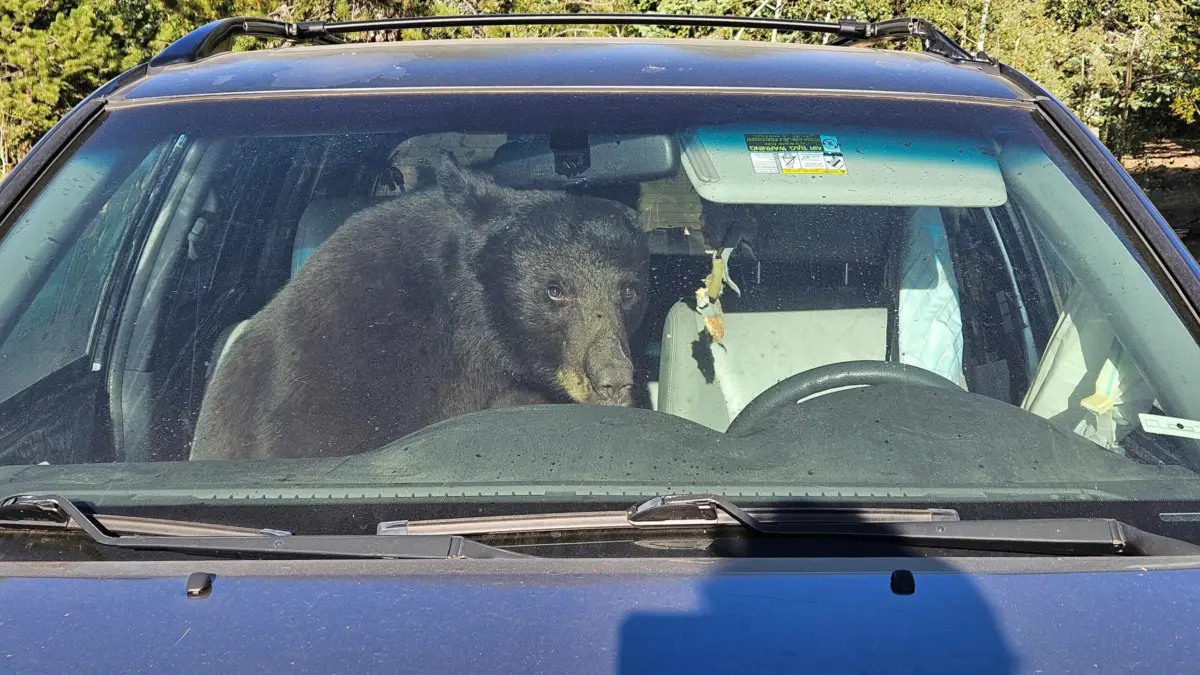
In the quiet mountain enclave of Gold Hill, northwest of Denver, the reality of the crisis struck home for resident Patrick Sullivan at 3 a.m. one morning in late July. Awakened by the relentless blaring of a car horn, Sullivan initially suspected a nocturnal disturbance caused by a "crazy neighbor." Upon investigating, however, Sullivan discovered a black bear trapped inside his Toyota SUV.
The animal had managed to open the vehicle’s door in search of food, only to become hopelessly locked inside. In its escalating panic, the bear repeatedly slammed its weight against the steering wheel, triggering a continuous, echoing honk while tearing the vehicle’s interior to shreds. "It’s totaled. It’s unfit to drive," Sullivan recounted of the extensive damage.
The ordeal ended only when Sullivan’s resourceful brother-in-law intervened, utilizing a securely tied rope to pull the car door open from a safe distance. The terrified animal bolted immediately into the surrounding timberlands, leaving behind a ruined vehicle and a stark reminder of the close quarters shared by local residents and displaced wildlife.
Escalating Encounters Across the Region
The Gold Hill incident was far from an isolated anomaly; it mirrored hundreds of similar calls flooding emergency dispatchers and wildlife offices throughout the region:
- Colorado Springs and Denver Metro: Incidents multiplied as bears pushed past traditional foothill boundaries. In central Denver, a black bear scaling a residential tree required an emergency wildlife intervention, ending safely with a tranquilizer dart and subsequent relocation. Conversely, other encounters proved fatal; a bear trapped inside a sealed vehicle in Colorado Springs perished from extreme interior heat before authorities could intervene.
- University Campuses and Suburban Orchards: At Colorado State University in Fort Collins, the chaotic move-in semester was interrupted by a visiting bear that had to be captured and relocated. Further west in Moab, Utah, wildlife authorities were forced to remove multiple bears that had taken up residence in local fruit orchards, treating the town’s agricultural bounty as an easy food source.
- Direct Human Confrontations: As bears grew bolder in their pursuit of sustenance, the threshold for aggression plummeted. In June, a hiker in Golden, Colorado, was stalked, attacked, and scratched by a black bear. On August 17, near an apartment complex close to Vail, a man leaving a laundry facility was scratched by a foraging bear. Just five days later, a fisherman in the mountains southwest of Denver was tackled and bitten. Wildlife officers swiftly tracked down and euthanized the young bear involved in the latter attack.
Supporting Context & Metrics: Drought, Snowpack, and Habitat Collapse
The root cause of this unprecedented wave of suburban foraging lies deep within the meteorology and environmental pressures facing the Upper Colorado River Basin, which spans Wyoming, Colorado, Utah, and New Mexico.
Historical Snowpack Deficits and Climate Drivers
Climatological data confirms that the region experienced one of its worst winter snowpack seasons on record. Low winter precipitation, combined with elevated spring temperatures, resulted in a rapid, premature snowmelt. This left watersheds severely depleted and soils intensely parched by the time summer arrived.
Scientific consensus links these worsening hydrological deficits directly to human-caused global warming. Rising global temperatures amplify evaporation rates and disrupt traditional precipitation cycles, leaving the American West in a state of chronic megadrought.
The Ecological Impact on Bear Foraging
The cascade effects of severe drought on regional ecology are profound. Black bears are opportunistic omnivores whose diets depend heavily on natural mast crops—including acorns, berries, chokecherries, and succulent vegetation—to build up the fat reserves necessary for winter hibernation.
When drought and heatwaves strike, these vital vegetative resources wither before they can mature. Deprived of their natural food sources in the high country, bears are forced to extend their home ranges exponentially.
In some instances, bears have pushed more than an hour’s drive east of Colorado Springs out onto the open plains. In these flat, arid landscapes, natural foraging opportunities are virtually nonexistent, driving the animals inexorably toward human habitations where the scent of garbage, pet food, and barbecue grease offers a powerful siren song.
Grim Mortality Statistics
The inability of bears to find natural sustenance has resulted in a staggering death toll across state lines:
- Utah: State wildlife officials report that over three dozen bears have been killed this year—a mortality figure exceeding the totals of the past three years combined.
- New Mexico: The New Mexico Department of Game and Fish reports that property owners and wildlife managers have already euthanized or removed 187 problem bears, marking the highest mortality rate since 2011.
- Colorado: Wildlife managers have documented double the historical average of human-bear conflicts, forcing difficult decisions regarding the neutralization of habituated animals that pose direct risks to public safety.
Official Statements and Wildlife Management Perspectives
As agencies struggle to manage the influx of distressed wildlife, state wildlife officials and conservation experts are working overtime to educate the public while managing public safety risks.
The Mantra: "A Fed Bear Is a Dead Bear"
Colorado Parks and Wildlife (CPW) and neighboring agencies operate under a strict, unyielding policy regarding wildlife interactions. While initial visits by bears to urban areas often result in a non-lethal response—such as darting, tagging, and relocating the animal to remote public lands—subsequent infractions dramatically alter the outcome.
Once a bear successfully links human habitations with reliable food sources, its natural wariness of humans diminishes permanently. These "habituated" animals routinely return to neighborhoods, transforming from harmless foragers into potential public safety hazards that must be euthanized.
"A fed bear is a dead bear," remains the central educational mantra for wildlife officers across the West. Authorities stress that securing anthropogenic food sources is the single most effective way to protect both human communities and local bear populations. Recommended preventative measures include:
- Retrofitting residential waste receptacles with certified bear-resistant locking mechanisms.
- Removing or securing outdoor pet food dishes and livestock feed.
- Bringing in bird feeders during peak foraging seasons.
- Cleaning grease traps and food residue from outdoor barbecue grills.
Insights from Wildlife Specialists
Travis Sauder, a state wildlife officer in southeastern Colorado, emphasizes that the animals’ underlying psychology has not fundamentally shifted; rather, environmental pressures have altered their behavior patterns.
"Bears aren’t necessarily behaving any differently, but they are definitely increasing their activity in the places that they’re looking for food," Sauder explained. "When they get that far east [onto the plains], there’s just zero natural food sources that they would be looking for, like oaks or chokecherries."
Reflecting on the unpredictable nature of field operations, Sauder noted the physical demands placed on wildlife personnel:
"We’ve got to rescue a lot of bear cubs out of trees, including standing on some pretty shaky ladders to pull a bear cub that’s sleeping in a tree."
Samantha Miller, senior carnivore campaigner at the Center for Biological Diversity, highlighted the broader, long-term implications of these environmental stressors:
"Human-animal conflicts in the context of climate change haven’t really been fully researched yet. And we’re still starting to kind of tease out what this means for us and what this means for all the species that we share the ecosystem with."
Despite the pervasive challenges, local residents often find moments of levity and unexpected empathy during these tense encounters. Andy Kerrigan, a construction worker in Steamboat Springs, Colorado, recalled discovering a bear cub that had squeezed through an open truck window. Though Kerrigan initially banged on the vehicle to scare the animal away, his efforts stalled when the cub discovered his lunch on the passenger seat.
"It was like, ‘I’m not going anywhere,’" Kerrigan said, noting that he ultimately had to use a piece of wood trim to encourage the stubborn animal to vacate the cab.
Similarly, Patrick Sullivan reflected on his surreal 3 a.m. encounter in Gold Hill with a philosophy of quiet coexistence, despite the total loss of his family vehicle. "It was just sitting there waiting for someone to help him, basically," Sullivan said. "So I’m glad we could have done that for him."
Future Outlook: Coexisting in a Warming Climate
The intersection of expanding suburban developments into traditional wilderness zones and the intensifying pressures of anthropogenic climate change points toward a challenging future for human-wildlife coexistence in the American West.
As dry winters and prolonged summer heatwaves become the regional norm rather than the exception, the ecological baseline for wildlife habitat is shifting. Mountain ecosystems will likely continue to experience periodic mast failures and severe wildfire seasons, both of which severely degrade natural foraging capacity and drive displaced carnivores downward into human population centers.
Addressing this ongoing crisis will require a multi-faceted approach from state governments, municipal planners, and private citizens:
- Mandatory Waste Management Ordinances: Mountain and foothill municipalities will need to enforce strict ordinances requiring bear-proof sanitation infrastructure, minimizing the primary attractant drawing bears into residential neighborhoods.
- Enhanced Urban Planning: Developers and local zoning boards must carefully evaluate wildlife corridors when approving new housing projects in the wildland-urban interface, reducing the physical overlap between human infrastructure and critical wildlife habitat.
- Public Education and Proactive Defense: Continued outreach by wildlife agencies will remain vital in dismantling the misconception that casual feeding or lax garbage disposal is harmless.
Ultimately, the plight of the Rocky Mountain black bear serves as a visible, urgent indicator of wider environmental stress. As communities across Colorado, Utah, New Mexico, and the broader West adapt to changing climatic realities, the margin for error in managing human-wildlife dynamics narrows considerably. Protecting both human safety and the region’s iconic native fauna will demand unprecedented levels of community vigilance, scientific research, and environmental stewardship in the decades ahead.

0 Comments