
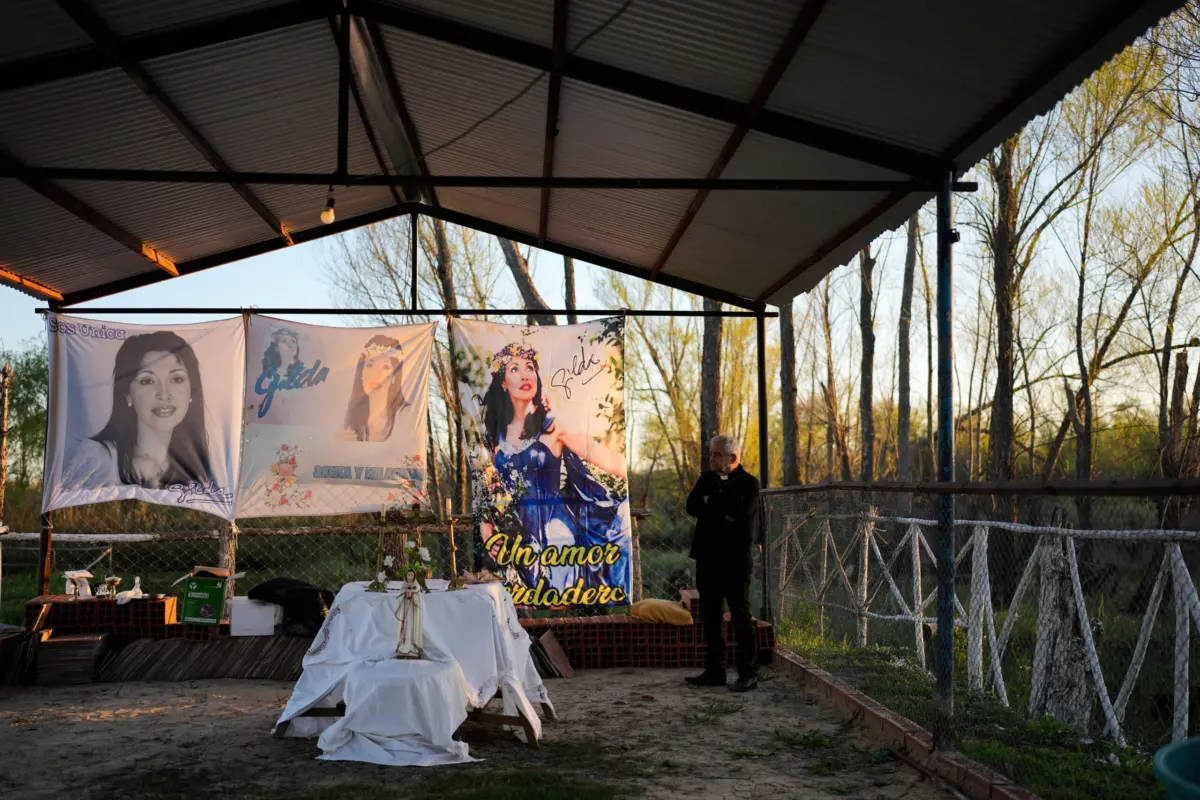

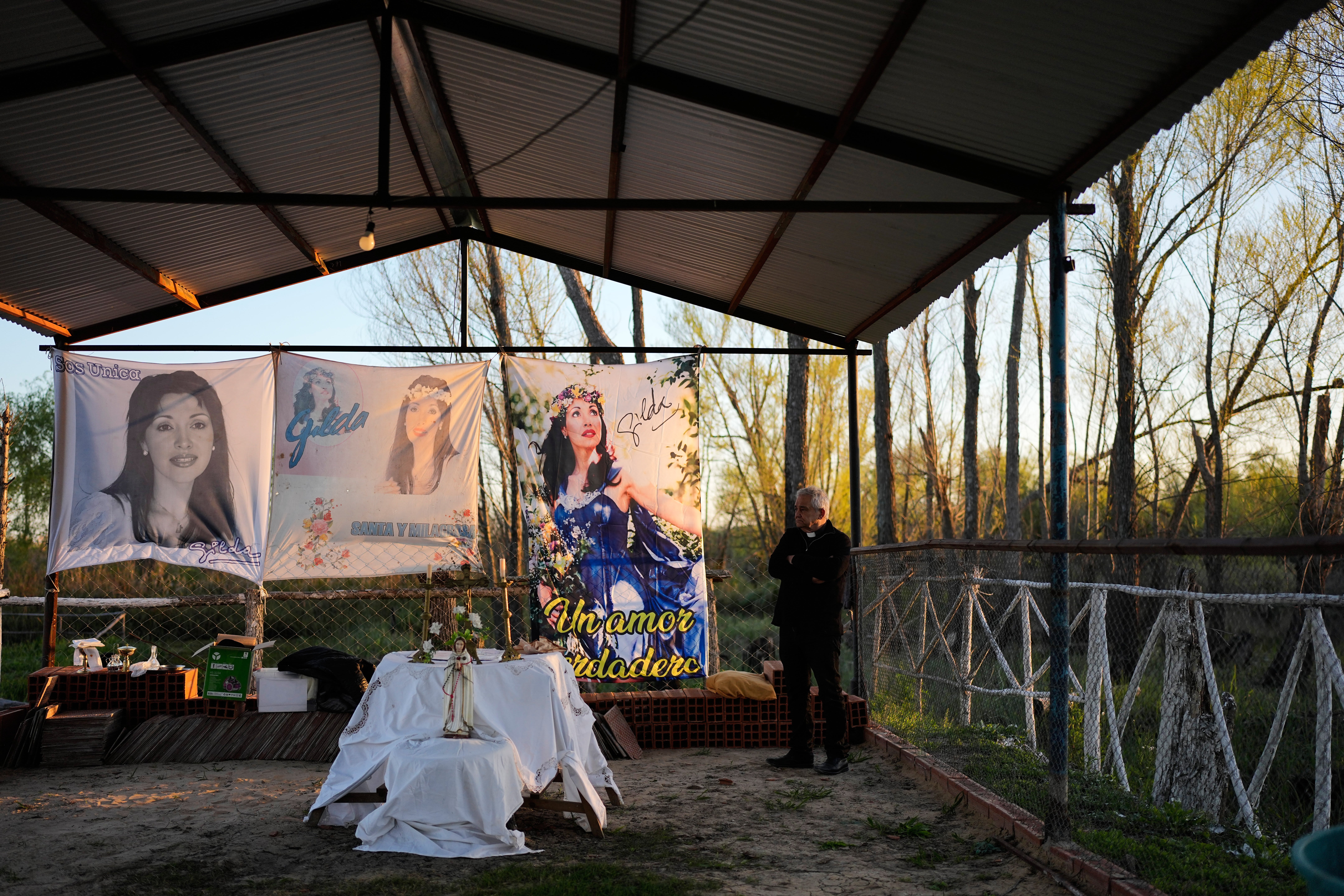
CEIBAS, Argentina — On a wind-swept stretch of highway in the northern grasslands of Entre Ríos, the sound of accordions and heavy cumbia beats blends seamlessly with the solemn murmur of Catholic prayers. Thirty years after the tragic highway collision that claimed her life, Miriam Alejandra Bianchi—known to millions of devoted fans across Latin America simply as Gilda—remains far more than a nostalgic icon of 1990s tropical music. To the thousands who made the pilgrimage to her roadside shrine on Monday, September 7, 2026, she is a living channel of the divine: a "folk saint" who heals the sick, mends broken hearts, and intercedes where the institutional church cannot.
The 30th anniversary of her death comes at a crucial historical moment for Latin American spirituality. As the Vatican prepares for Pope Leo XIV’s highly anticipated South American tour in November 2026, the vibrant, unsanctioned devotion surrounding Gilda highlights a growing challenge for the Roman Catholic Church: the steady erosion of traditional ecclesiastical authority and the rise of decentralized, localized folk religions.
Executive Overview
On September 7, 1996, a devastating head-on collision between a tour bus and a cargo truck at kilometer 129 of National Route 12 in Entre Ríos silenced one of Argentina’s most promising musical voices. Gilda was only 34 years old, at the absolute zenith of her career. Yet, what began as a tragedy of the Argentine music scene rapidly evolved into a profound socio-religious phenomenon.
In the three decades since, Gilda’s posthumous legacy has split into two distinct, yet deeply intertwined, cultural currents:
- The Musical Phenomenon: Her songs—characterized by infectious cumbia rhythms and themes of female empowerment, heartbreak, and resilience—have become national anthems. Her posthumous albums achieved double-platinum status, and her music is played everywhere from working-class dance halls to high-society weddings and political rallies.
- The Spiritual Apotheosis: For a growing demographic of Argentines, Gilda has transcended her mortal celebrity to become Santa Gilda (Saint Gilda). At her roadside sanctuary in Ceibas, devotees seek miracles, physical healing, and financial relief, bypassing official Catholic channels to pray directly to her.
This localized mysticism is not an isolated anomaly. It represents a broader, systemic shift across South America, where traditional Catholic adherence is declining, and syncretic, vernacular practices are stepping into the vacuum. As Pope Leo XIV prepares to visit Argentina, Uruguay, and Peru later this year, the enduring devotion to Gilda and other unofficial saints illustrates the complex spiritual landscape the modern Church must navigate.
                   THE APOTHEOSIS OF MIRIAM BIANCHI (GILDA)

   [1961] Born Miriam Alejandra Bianchi (Buenos Aires)
     │
   [1992] Abandons career as kindergarten teacher; adopts stage name "Gilda"
     │
   [1992-1996] Rises to fame in the male-dominated Argentine cumbia scene
     │
   [Sept 7, 1996] Tragic bus collision at Km 129, National Route 12 (Entre Ríos)
     │
   [Late 1990s] Posthumous album "Entre el cielo y la tierra" goes double-platinum
     │
   [2000s-Present] Ceibas crash site transforms into a major pilgrimage sanctuary
     │
   [Sept 7, 2026] 30th Anniversary Pilgrimage; Pope Leo XIV schedules Nov 2026 tour
Detailed Chronology: From Pop Star to Folk Saint
The Rise of a Cumbia Rebel (1961–1996)
Before she was Gilda, she was Miriam Alejandra Bianchi, a middle-class young woman from Buenos Aires who worked as a physical education teacher and ran a municipal kindergarten. In the early 1990s, she made the radical decision to abandon her stable, socially conservative career to pursue her passion for cumbia—a genre of Latin dance music that was highly popular among Argentina’s working class but deeply marginalized by the cultural elite.
Adopting the stage name "Gilda" in homage to Rita Hayworth’s iconic femme fatale, she defied the industry’s expectations. In a scene dominated by hyper-masculinity and overtly sexualized performances, Gilda stood out for her understated elegance, her sweet, clear vocals, and her deeply personal songwriting. Hits like "No me arrepiento de este amor" (I Don’t Regret This Love) and "Corazón valiente" (Brave Heart) became anthems of emotional survival, particularly for women and marginalized communities.
       "In the end, sainthood isn’t always decided by the church.
        Sometimes, the people recognize it first."
        — Julia Domínguez, 63, Gilda devotee and singer
The Fateful Crash of September 7, 1996
Gilda’s physical journey ended abruptly on a rainy Saturday evening in 1996. While traveling to a concert in Chajarí, her tour bus was struck head-on by a Russian cargo truck on National Route 12. The crash claimed seven lives, including Gilda, her mother Isabel Scioli, her eldest daughter Mariela, and three of her band musicians.
The shock of her sudden death sent waves of grief through Argentina’s working-class neighborhoods. Almost immediately, the site of the crash began to attract mourners, who left flowers and candles near the highway.
The Birth of a Legend
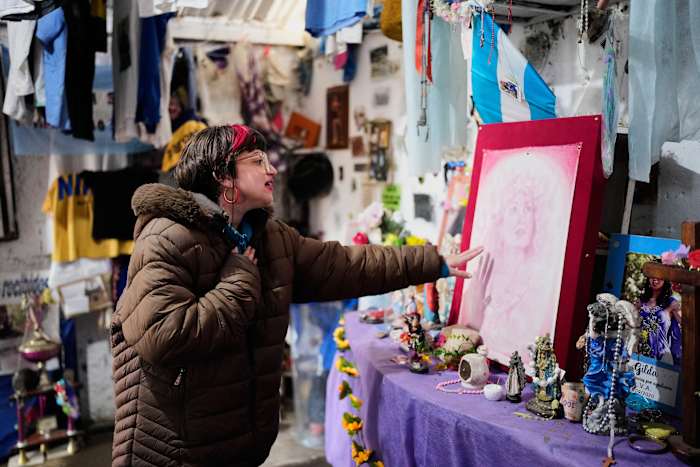
The transition from tragic pop star to miracle worker occurred organically. Rumors began to circulate that Gilda possessed healing powers during her lifetime—stories of fans claiming her music had cured physical ailments, or that her touch had eased chronic pain.

With her death, these narratives solidified. The rusted, hollowed-out chassis of the tour bus was dragged off the road and preserved as the centerpiece of a makeshift sanctuary. Over the next thirty years, this site evolved into a sprawling pilgrimage complex. Today, the bus is encased in protective structures, overflowing with thousands of offerings:
- Discarded Crutches: Left by individuals who claim to have regained the ability to walk after praying to Gilda.
- Wedding Gowns: Offered by women who credit Gilda with answering their prayers for marriage.
- Athletic Trophies & Jerseys: Left by local athletes and champions seeking her favor.
- Police Uniforms & Badges: Dedicated by officers who attributed their promotions or survival in the line of duty to her intercession.
Supporting Context & Critical Metrics
The Gilda phenomenon is part of a broader cultural and religious shift in Argentina and the wider Southern Cone. Sociologists of religion point to the decline of traditional Catholic hegemony as a primary driver of the rise of "popular piety" and alternative belief systems.
The Changing Religious Landscape
According to longitudinal data from regional polling agencies and the Pew Research Center, the percentage of Latin Americans identifying as Roman Catholic has dropped significantly over the past half-century.
Latin American Religious Identification (Estimated Regional Average)
──────────────────────────────────────────────────────────────────────────
1970:  ████████████████████████████████████████████████████████████ 92% (Catholic)
2026:  ████████████████████████████████████ 56% (Catholic)
──────────────────────────────────────────────────────────────────────────
*Note: The remaining demographic in 2026 is largely composed of Evangelical/Pentecostal Christians (26%),
the religiously unaffiliated (14%), and practitioners of folk/syncretic religions (4%).
In Argentina, while the majority of the population still identifies culturally as Catholic, active participation in parish life has waned. In its place, millions have embraced a decentralized "Folk Catholicism" that operates entirely independent of the Vatican’s hierarchy.
The Pantheon of Argentine Folk Saints
Gilda is one of several unofficial figures who command deep devotion across Argentina. These figures often share a common narrative: they lived ordinary, often marginalized lives, suffered tragic or violent deaths, and demonstrated a profound connection to the poor.

| Folk Saint | Historical Background | Primary Devotional Symbolism |
|---|---|---|
| Gauchito Gil | A 19th-century gaucho outlaw who stole from the rich to give to the poor before being executed by authorities. | Red flags, altars along highways; patron of travelers, the poor, and those seeking justice. |
| Difunta Correa | A 19th-century woman who died of thirst in the desert while searching for her conscripted husband; her infant son was found alive, miraculously nursing from her breast. | Plastic water bottles left at roadside shrines; patron of mothers, truck drivers, and travelers. |
| Gilda | A 20th-century cumbia singer who died in a highway collision at the peak of her musical career. | Shimmering blue dresses, flower crowns, musical instruments; patron of artists, physical healing, and the marginalized. |
| Diego Maradona | Legendary soccer star whose athletic genius and flawed personal life elevated him to quasi-divine status. | Soccer jerseys, murals, the "Maradonian Church"; symbol of Argentine national pride and resilience. |
"One of the most common things devotees tell us is that these saints accompany them every day of their lives," explains Cleopatra Barrios, a scholar of popular religion at Conicet, Argentina’s national scientific research body. "Miracles aren’t understood as they are from the institutional Catholic point of view, as something extraordinary. Here, they’re things that happen every day—a sick child recovering, a job offer arriving, a family reconciliation."
Official Statements & Theological Perspectives
The Roman Catholic Church has long maintained a complex, often ambivalent relationship with folk saints. While the Vatican does not officially recognize Gilda, Gauchito Gil, or Difunta Correa, the local clergy have generally avoided outright condemnation, choosing instead a strategy of pastoral accommodation.
The Local Church: Guidance, Not Condemnation
On Monday, September 7, 2026, two Catholic priests, including Priest Carlos Baigorria, traveled to the Ceibas sanctuary to celebrate Mass for the assembled pilgrims. The priests did not explicitly acknowledge Gilda’s status as a saint, nor did they reference her alleged miracles. Instead, they focused their homilies on the mercy of God, using the gathering as an opportunity to administer sacraments to a population that rarely enters traditional parish churches.
"Our role is to accompany the people in their faith, not to turn them away," said one local priest, speaking on condition of anonymity. "Many of these people feel forgotten by society and, sometimes, by the institutional church. If they come here to find comfort, we must be here to point them toward Christ. Gilda can be a bridge, but God must remain the destination."
           "Miracles aren’t understood as they are from the
            institutional Catholic point of view... Here,
            they’re things that happen every day."
            — Cleopatra Barrios, Scholar of Popular Religion, Conicet
Devotee Voices: A Unified Faith
For the pilgrims, there is no theological contradiction between their devotion to Gilda and their Roman Catholic faith.

Julia Domínguez, 63, traveled hours to attend the 30th-anniversary service. Nearly twenty years ago, she was diagnosed with severe growths on her vocal cords, which threatened to permanently end her ability to speak and sing. Fearing a high-risk surgery, she made a pilgrimage to Ceibas and prayed for Gilda’s intercession.
"That was a miracle," Domínguez said, her voice clear and emotional. "Today, I sing thanks to her. For me, it’s about faith—putting everything in God’s hands and asking Gilda to intercede, just like any other saint. The Church has its rules, but the people have their hearts."
Another devotee, 46-year-old Paola Martini, organizes bus tours from across the country to the Ceibas shrine. "With everything that happens in our country—the economic struggles, the uncertainty—I always ask her, ‘Accompany me,’" Martini said. "Then, like magic, I feel her presence. She gives us the strength to keep going."
Future Outlook: The Vatican’s Pastoral Challenge
The enduring popularity of folk saints like Gilda poses a fascinating challenge for Pope Leo XIV as he prepares for his landmark apostolic journey to South America in November 2026.
Pope Leo XIV’s Augustinian Approach
A member of the Augustinian order, Pope Leo XIV has made community service, pastoral humility, and outreach to the marginalized the hallmarks of his early pontificate. According to Argentine church officials, his upcoming itinerary includes visits to a high-security prison in Buenos Aires and a rehabilitation center for individuals with disabilities.
The Pope’s strategy closely mirrors that of his predecessor, Pope Francis, who advocated for the "theology of the people" (teología del pueblo). Rather than dismissing popular piety as superstition, the Church under this pastoral model seeks to respect the cultural expressions of faith found among the poor, attempting to gently guide them into the orthodox fold.
                        POPE LEO XIV'S NOVEMBER 2026 ITINERARY

        ┌─────────────────────────────────────────────────────────┐
        │  ARGENTINA: Buenos Aires, Cordoba (Focus: Prisons/Poor) │
        └────────────────────────────┬────────────────────────────┘
                                     ▼
        ┌─────────────────────────────────────────────────────────┐
        │  URUGUAY: Montevideo (Focus: Secularism/Youth Outreach) │
        └────────────────────────────┬────────────────────────────┘
                                     ▼
        ┌─────────────────────────────────────────────────────────┐
        │  PERU: Lima, Cusco (Focus: Indigenous Syncretism)       │
        └─────────────────────────────────────────────────────────┘
The Persistence of Folk Devotion
Whether the Vatican’s outreach can stem the tide of secularization and religious fragmentation remains to be seen. In times of profound socio-economic distress—marked by high inflation, poverty, and social instability in Argentina—the immediate, unbureaucratic comfort offered by a folk saint like Gilda remains highly attractive.
Unlike canonized saints, who can feel distant, historical, and bound by rigid dogma, Gilda is relatable. She was a modern woman who wore popular clothing, sang the music of the working class, and struggled with the same everyday challenges as her followers.
As night fell over the Entre Ríos grasslands on Monday, the candles around Gilda’s memorial burned bright, casting flickering shadows over the rusted tour bus. For the thousands of pilgrims returning to their homes, the music of Gilda would continue to play in their cars, their kitchens, and their prayers—a soundtrack of hope, survival, and a faith that refuses to be bound by the walls of any church.

0 Comments