
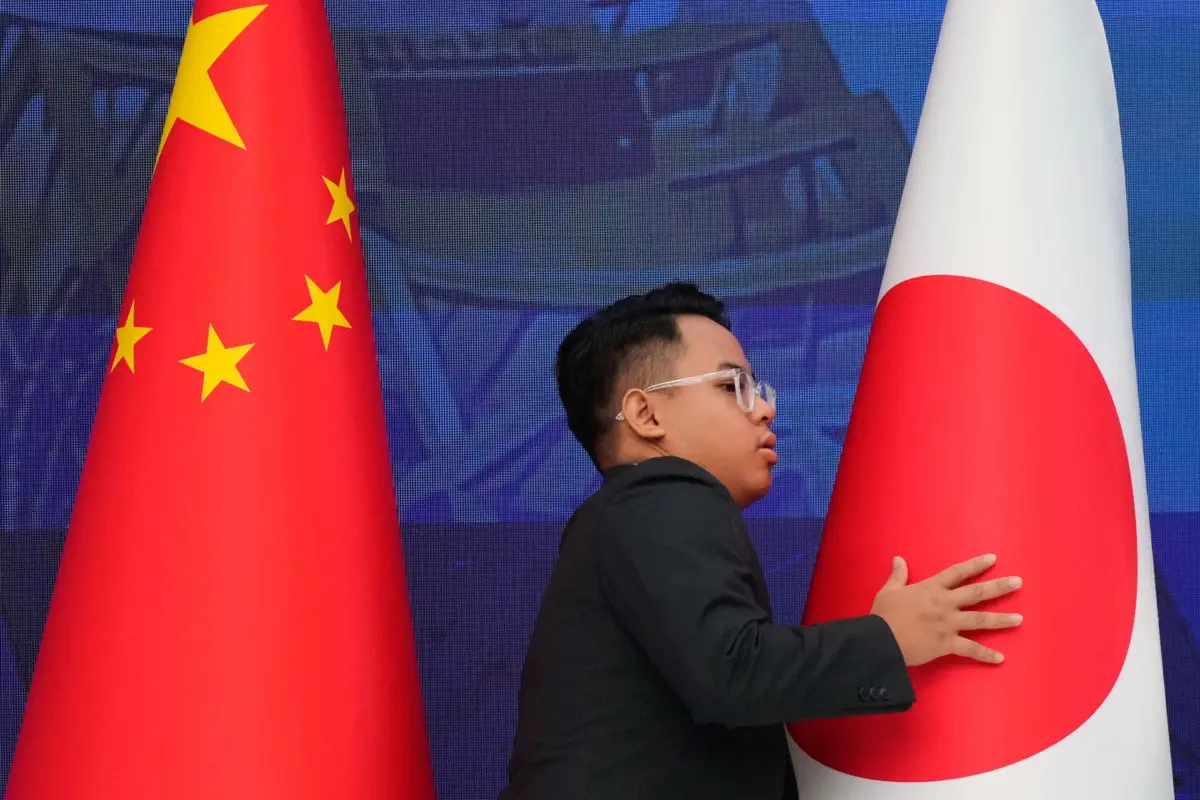

BANGKOK — Trade and geopolitical tensions between Asia’s two largest economic powerhouses have taken a sharp turn for the worse as Beijing implements restrictive import controls on a crucial chemical compound used in the fabrication of advanced semiconductors. The move, officially framed by Chinese authorities as a provisional anti-dumping measure, has triggered an immediate diplomatic protest from Tokyo and cast a shadow of uncertainty over the fragile, interconnected global supply chains powering the modern electronics industry.
The targeted chemical, dichlorosilane—more commonly known in the semiconductor sector as DCS—is an indispensable material in the complex manufacturing process of computer logic and memory chips. Under the newly enacted restrictions, companies importing DCS originating from Japan are now mandated to furnish substantial cash deposits to Chinese customs authorities at punitive rates reaching as high as 99.2%.
This sudden escalation not only threatens to severely disrupt the bottom lines of prominent Japanese chemical exporters, but it also highlights the increasing weaponization of trade policy amid ongoing territorial and diplomatic disputes in East Asia. As governments and industry stakeholders scramble to assess the fallout, the dispute underscores the precarious vulnerability of global technology manufacturing to geopolitical friction.
Executive Overview
The imposition of provisional anti-dumping duties on Japanese DCS imports represents a significant escalation in the commercial friction between Beijing and Tokyo. While framed by China’s Ministry of Commerce as a routine regulatory enforcement action designed to protect domestic industries from unfair pricing practices, international observers widely view the move through a geopolitical lens.
The timing of the trade restrictions—coming on the heels of heightened diplomatic animosity sparked by remarks from Japanese leadership regarding Taiwan—suggests that economic leverage is increasingly being utilized to signal displeasure over foreign policy stances.
At the core of the issue is dichlorosilane, a specialty chemical where Japan holds a dominant market position, particularly in the production of the ultra-pure grades required for advanced semiconductor fabrication. By imposing steep cash deposits on major Japanese producers such as Shin-Etsu Chemical and Denal Silane, Beijing has effectively erected a major barrier to market entry, raising compliance and operational costs for downstream manufacturers within its borders while putting direct pressure on Japan’s export-driven economy.
Detailed Chronology of the Dispute
To understand the current crisis, one must trace the convergence of escalating geopolitical rhetoric and trade enforcement actions over recent months:
- Late 2025 (November): Diplomatic relations between China and Japan enter a deep freeze following remarks by Japanese Prime Minister Sanae Takaichi. In a parliamentary address, Takaichi suggested that Japan’s Self-Defense Forces could potentially provide logistical or military intervention in the event of a Chinese military escalation against Taiwan—a self-ruled democratic island claimed by Beijing as a breakaway province. The remarks drew furious rebukes from Beijing, which views the Taiwan question as its most sensitive "red line."
- Late 2025 / Early 2026: In tandem with the cooling of diplomatic channels, China’s trade bureaucracy begins ramping up regulatory scrutiny on Japanese imports. The Ministry of Commerce launches an anti-dumping investigation into Japanese shipments of DCS, alleging that foreign suppliers are dumping the semiconductor precursor into the Chinese market at artificially deflated prices, thereby causing material injury to domestic producers.
- October 2025 (ASEAN Summit): Multilateral engagements, such as the 28th ASEAN Plus Three Summit in Kuala Lumpur, Malaysia, serve as a backdrop for tense bilateral dialogues, though substantive breakthroughs remain elusive as mutual distrust deepens.
- Present Day: Beijing formalizes its preliminary findings, implementing mandatory cash deposit requirements of up to 99.2% for importers of Japanese DCS. In response, Tokyo issues a formal diplomatic protest, vowing to monitor corporate impacts closely and respond through appropriate multilateral and bilateral channels.
Supporting Context & Metrics: The Critical Role of DCS in Semiconductor Manufacturing
To appreciate the gravity of China’s move, one must examine the specific role that dichlorosilane plays in the semiconductor ecosystem.
Semiconductors are the foundational building blocks of the digital economy, powering everything from consumer smartphones and personal computers to automotive electronic control units, aerospace systems, and advanced artificial intelligence (AI) infrastructure. The manufacturing process for these microchips is one of the most complex, precise, and capital-intensive endeavors in human history, relying on hundreds of tightly controlled chemical and physical steps.
What is Dichlorosilane (DCS)?
Dichlorosilane ($textSiH_2textCl_2$) is a specialized chemical compound primarily utilized in chemical vapor deposition (CVD) processes. During the fabrication of silicon wafers, DCS is deployed to deposit thin, highly uniform layers of silicon, silicon dioxide, or silicon nitride onto the semiconductor substrate. These thin films act as vital insulating, protective, or structural layers within complex multi-layered microchip architectures, including both memory (such as DRAM and NAND flash) and advanced logic processors.
The Global Supply Chain Landscape
While various chemical producers worldwide manufacture silicon precursors, Japan has established an unassailable reputation as the premier global supplier of ultrapure DCS. Purity is paramount in semiconductor manufacturing; even microscopic trace impurities can cause structural defects in microchips, ruining multi-million-dollar production batches and lowering overall manufacturing yields.
Japanese chemical giants—most notably Shin-Etsu Chemical, a titan in the global semiconductor materials market—have spent decades perfecting the distillation and purification techniques required to meet these exacting specifications. Consequently, many semiconductor fabrication plants (fabs) operating globally, including major facilities located within mainland China, have historically relied heavily on Japanese DCS to maintain high-yield production lines.
The Economics of Anti-Dumping Measures
An anti-dumping duty is a protectionist tariff that a government imposes on foreign imports when it believes that the goods are being priced below fair market value, injuring local competitors. However, when applied to specialized, high-tech inputs where domestic substitutes are scarce or inferior, such measures often backfire on the importing country.
By forcing importers to post cash deposits of up to 99.2%—a financial burden that effectively doubles the upfront cost of acquiring the material—Beijing is introducing significant cost inflation into its own domestic electronics supply chain. While the measure aims to nurture domestic Chinese chemical manufacturers, the immediate consequence is an acute cost squeeze for Chinese semiconductor foundries that depend on Japanese quality to remain globally competitive.
Official Statements and Diplomatic Fallout
The formal announcement out of Beijing has elicited swift and measured pushback from Tokyo, reflecting a growing determination within the Japanese government to push back against what it perceives as economic coercion disguised as trade enforcement.
In Tokyo, Chief Cabinet Secretary Minoru Kihara addressed the media during a routine press briefing, expressing profound regret over Beijing’s actions. Kihara stated unequivocally that the Japanese government has lodged a formal diplomatic protest with Chinese authorities.
"We are currently conducting a comprehensive assessment to determine the precise impact these provisional measures will have on Japanese enterprises operating within the affected sectors," Kihara stated. "Japan remains committed to upholding free and fair trade principles under international frameworks. We will respond appropriately and robustly to ensure that Japanese companies do not suffer unfair or discriminatory treatment."
On the other side of the East China Sea, the Chinese Ministry of Commerce defended the legality and procedural integrity of the investigation. Beijing insists that its preliminary determinations are rooted strictly in objective economic data compiled pursuant to World Trade Organization (WTO) guidelines and domestic anti-dumping regulations. Chinese trade officials argue that surging volumes of lower-priced Japanese DCS imports have severely undercut domestic producers, necessitating provisional relief while the formal investigation proceeds toward a final ruling.
Beyond DCS, this dispute is part of a broader regulatory campaign by Beijing targeting Japanese commercial interests. Over the past several months, China has also enacted stringent export controls on various "dual-use" items—technologies and raw materials possessing both commercial and military applications—further restricting trade exchanges between the two nations and forcing multinational corporations to reassess their operational footprints in the region.
Future Outlook: Navigating the Tech-Trade Cold War
As the investigation into Japanese DCS proceeds toward a final ruling, the broader implications for the global technology sector are profound. Several key trends and potential scenarios emerge from this unfolding trade dispute:
1. Acceleration of Supply Chain Decoupling and "Friend-Shoring"
For years, multinational corporations have discussed the necessity of diversifying supply chains to mitigate geopolitical risk. Incidents like the current DCS dispute provide a powerful catalyst for action. Japanese chemical exporters, facing unpredictable regulatory hurdles in China, are likely to accelerate efforts to redirect their high-value exports toward allied markets, such as the United States, South Korea, Taiwan, and European nations. Conversely, global chipmakers operating manufacturing hubs inside China will face mounting pressure to qualify alternative domestic suppliers to avoid future supply disruptions.
2. The Risk of Retaliation and Counter-Measures
While Tokyo has thus far pursued diplomatic channels and international trade dispute mechanisms, prolonged economic damage to key Japanese industrial players could prompt the Japanese government to consider retaliatory measures. Japan possesses significant leverage of its own in critical segments of the semiconductor supply chain, including advanced photolithography equipment, specialized silicon wafers, and core chemical photoresists. Any escalation into a tit-for-tat export control war would send shockwaves through the global tech industry, driving up production costs and slowing down innovation cycles worldwide.
3. Implications for the Global Semiconductor Market
Ultimately, the consumer bears the final cost of trade friction. Microchips are the lifeblood of modern economic productivity. Artificially restricting the flow of high-grade fabrication chemicals threatens to introduce friction into an already fragile semiconductor recovery cycle. If Chinese foundries struggle to secure adequate supplies of ultrapure DCS—or if they are forced to absorb exorbitant cost increases—the competitiveness of China’s domestic tech sector could be undermined, while global chip prices experience upward pressure.
As Tokyo and Beijing remain locked in a tense diplomatic standoff over territorial sovereignty and regional security, the battlefield has clearly expanded to encompass the microscopic components powering the digital age. The resolution of the DCS dispute will serve as a critical bellwether for how economic interdependence and geopolitical rivalry will intersect in the years to come.

0 Comments