

Executive Overview
TALLAHASSEE, Fla. — In the high-stakes, unforgiving theater of modern collegiate football, games are rarely lost in a single vacuum. Instead, they are usually the cumulative result of missed assignments, squandered opportunities, and structural inconsistencies. Such was the stark reality for the Florida State Seminoles on a sobering Monday night at Doak Campbell Stadium. Coming off a hard-fought and emotional week of preparation, head coach Mike Norvell and his squad walked off their home turf facing a bitter 27-24 defeat at the hands of a surging, No. 19-ranked SMU Mustangs program.
The loss drops the Seminoles to an uncharacteristic 1-1 overall record and an early 0-1 hole in Atlantic Coast Conference (ACC) play, injecting an immediate sense of urgency into a season that is still in its infancy. For a program accustomed to national prominence and high-octane offensive explosions, the metrics from Monday night paint a troubling picture of a team struggling to find an identity in the passing game, plagued by third-down inefficiencies, and unable to capitalize on crucial defensive momentum.
Despite forcing four turnovers—a defensive feat that traditionally tilts the win-probability scale heavily in favor of the opportunistic team—Florida State managed to convert those extra possessions into a meager seven points. Compounding the frustration was a glaring statistical disparity: the Seminoles were outgained 585 to 324 in total yardage, suffocated by an SMU offense that moved the chains at will, while the FSU offense limped to a dismal 2-of-15 conversion rate on third down.
In the immediate aftermath of the contest, head coach Mike Norvell and quarterback Ashton Daniels faced the local media corps to dissect a performance that left the locker room devastated. From the podium, the tone was one of collective accountability, stark realism, and an urgent mandate for introspection. As Florida State looks ahead to an upcoming bye week before a high-profile, hostile road trip to face Alabama on September 19, the coaching staff and players alike understand that the margin for error has evaporated. This comprehensive post-game report examines the layers of Monday night’s defeat, breaking down the tactical failures, the pivotal metrics, the post-game commentary, and the steep uphill climb facing the Seminoles as they attempt to salvage their championship aspirations.
Detailed Chronology: How the Game Unfolded
Under the bright lights of Doak Campbell Stadium, the atmosphere crackled with anticipation as Florida State sought to defend its turf against a ranked SMU opponent known for its offensive dynamism. From the opening whistle, however, the contest established a rhythm that favored the visitors from Dallas, while the Seminoles were forced into a desperate battle of attrition.
The First Half: Trading Blows and Defensive Resistance
The opening quarter served as a feeling-out process, marked by aggressive defensive play and early punts. SMU’s high-powered attack tested the Florida State secondary immediately, probing for deep vulnerabilities while establishing a balanced rushing attack. The Seminoles’ defense, though bending under the sheer volume of plays, displayed early resilience. FSU was able to generate timely takeaways, stripping the ball and intercepting passes to halt promising SMU drives.
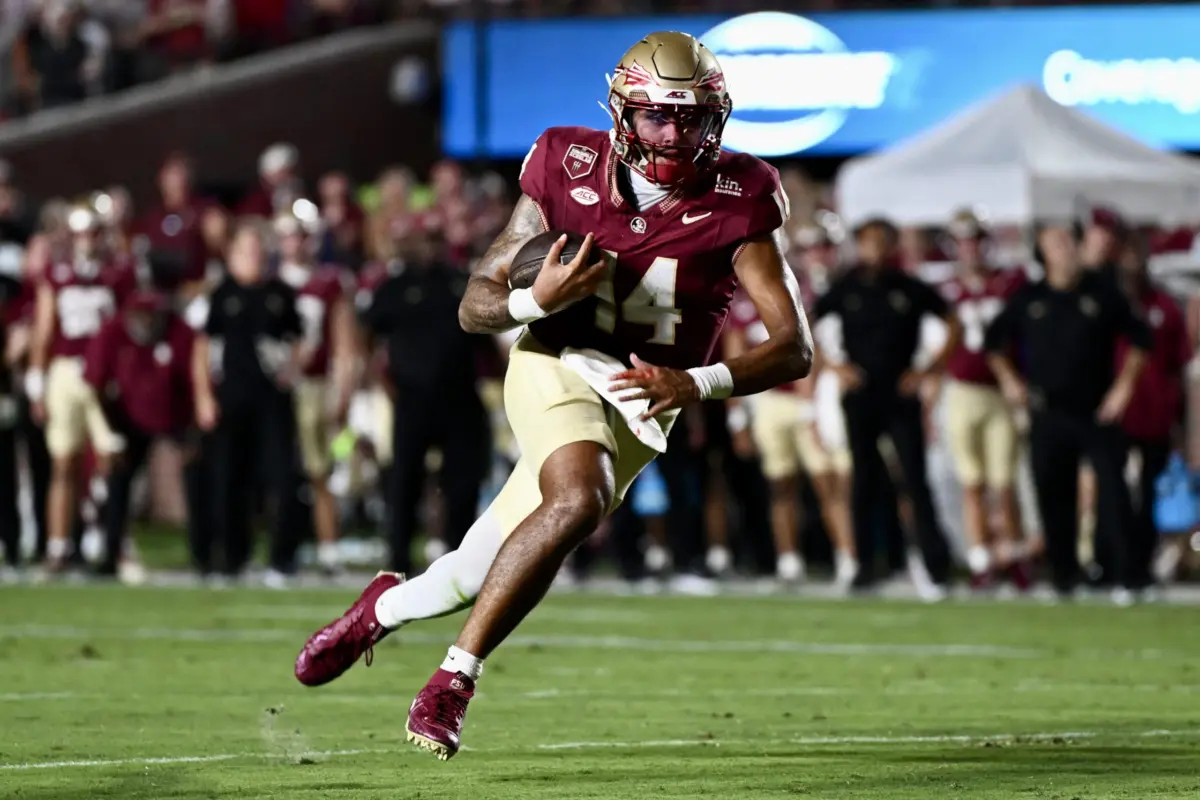
However, the tone of the game’s missed opportunities was set early. While the defense delivered on the mandate to create turnovers, the Florida State offense proved incapable of turning those defensive gifts into points. Stifled by pressure, miscommunications, and a lack of rhythm in the passing game, the Seminoles repeatedly stalled. Quarterback Ashton Daniels flashed his dynamic athletic ability with productive scrambles, but the passing attack failed to stretch the field, allowing SMU’s defense to compress and choke off running lanes.
The Turning Point: Third-Down Despair and the Third-Quarter Surge
As the game wore on into the third quarter, the cumulative effect of FSU’s offensive stagnation began to weigh heavily on the team. Yet, amidst the offensive struggles, Florida State found a spark. Trailing by a margin that felt increasingly precarious given their offensive output, the Seminoles engineered a gritty sequence in the third quarter, culminating in a touchdown drive that leveled the score at 24-24. Doak Campbell Stadium erupted, seemingly breathing new life into a flat Seminole sideline.
Alas, the momentum proved fleeting. The defining flaw of FSU’s night—their inability to sustain drives on third down—came back to haunt them with venomous consistency. Finishing the game a dreadful 2-of-15 on third down, the Seminoles continually handed the ball back to an SMU offense that was accumulating yardage in chunks.
The Mustangs, methodical and relentless, chipped away at the FSU defense, eventually outgaining the hosts 585 to 324. A late defensive lapse surrendered a crucial explosive play, allowing SMU to maneuver into comfortable field goal range. When the clock expired, the scoreboard read 27-24, leaving Florida State agonizingly short—a single field goal away from overtime, and a handful of executed plays away from victory.
Supporting Context & Metrics: By the Numbers
To truly understand why a team that forced four turnovers still managed to lose, one must dive deep into the cold, unforgiving analytics of the box score. The numbers from Monday night’s matchup tell a story of stark statistical disparity balanced against baffling situational inefficiency.
The Turnover Conversion Paradox
In football lore, winning the turnover battle by a margin of plus-four is practically a guaranteed victory. Florida State accomplished this feat against No. 19 SMU, stripping and intercepting the ball with impressive predatory instincts. Head coach Mike Norvell acknowledged the defensive achievement post-game, but immediately pointed to the glaring failure that accompanied it.
"We were able to create takeaways. It’s something that we knew going into the game was going to be a big factor," Norvell noted. "Unfortunately, we only had seven points off takeaways, which when you get four turnovers, you need to be able to put points on the board in those situations. We did not do a good enough job of putting points on the board after turnovers."
Converting four turnovers into a mere seven points is an offensive indictment. It highlights a recurring theme for the Seminoles on Monday: whenever they were handed a short field or sudden-change momentum, the offense locked up, failing to execute the fundamental details required to cross the goal line.
Third-Down Woes and Total Yardage Disparity
Perhaps no statistic loomed larger over the Doak Campbell Stadium turf than Florida State’s abysmal third-down conversion rate: 2-of-15.
In modern football, sustaining drives is the lifeblood of offensive success. It dictates time of possession, keeps defenses rested, and demoralizes opposing units. By failing to convert 13 out of 15 third-down attempts, FSU essentially invited SMU’s offense back onto the field with relentless frequency.
This directly fueled the staggering total yardage discrepancy:
- SMU Total Offense: 585 yards
- Florida State Total Offense: 324 yards
SMU outgained the Seminoles by an eye-popping 261 yards. The Mustangs utilized a balanced, explosive scheme that gashed FSU’s defense for chunk plays, particularly in the passing game and through intermediate seam routes. Conversely, Florida State struggled to find any rhythmic continuity in the passing attack, finishing with just 125 yards through the air.
Ashton Daniels: Dual-Threat Production Amid Passing Struggles
Under center, quarterback Ashton Daniels put forth a gritty, multi-faceted effort that encapsulated both the brilliance and the limitations of the FSU offense on the night.
- Passing: 12-of-23, 125 yards, 1 touchdown
- Rushing: 71 yards, 1 touchdown
While Daniels orchestrated the running game with authority—chipping in 71 hard-earned yards and a score—his efficiency and protection in the passing game left much to be desired. Sacked and pressured behind an inconsistent offensive line, Daniels and the receiving corps failed to connect on crucial downfield opportunities, resulting in stalled possessions and an inability to string together first downs.
Official Statements & Post-Game Analysis
The post-game press conference room was heavy with the weight of missed potential. Both head coach Mike Norvell and quarterback Ashton Daniels addressed the media with solemn candor, refusing to point fingers while accepting the collective responsibility of a program searching for immediate corrective measures.
Mike Norvell on Execution, Inconsistencies, and the Passing Game
Taking the podium, Norvell did not mince words regarding the narrow margins of defeat and the pervasive execution errors that derailed his offense.
"Tonight, coming off of it, just another close game, a lot of one plays," Norvell reflected. "You think back through it, some of the explosive plays that we gave up defensively, some of missed opportunities there offensively. Never really got in rhythm throwing the ball, but had some good runs."
Norvell specifically targeted the breakdown in the aerial attack and the pass-protection issues that hindered Daniels throughout the evening:
"Ashton as a runner did some good things. We also got to go and be able to make plays in the passing game when opportunities present themselves. Didn’t do a great job in protecting with that. There’s some inconsistencies there that we got to clean up. It didn’t all come together in the passing game and ultimately that’s on us. We’ve got to get that corrected… It’s a shame to come up a field goal short."
When pressed on the pervasive third-down failures and whether the struggles stemmed from schematic confusion or player execution, Norvell pointed to a breakdown in fundamental alignment:
"It still comes down to overall execution of the things that are called. Have there been different issues? Yes… Guys trying to do a little too much or just being inconsistent in certain aspects of alignment. That comes down to it’s player, it’s coach, it’s all of us. If we’re calling it, we got to be able to go out there and execute it."
Addressing the logistical hurdle of playing without helmet-to-helmet communication following a notable stadium delay, Norvell refused to use technology as an excuse, maintaining that adversity hit both benches equally.
"As long as it was going to be balanced and equal on each side, then that’s adjustments to be made. Does it affect things? Yes. But it affects things on both sides."
Crucially, when asked whether the coaching staff had considered benching Daniels in favor of an alternative option under center, Norvell firmly reiterated his support for his starting quarterback while emphasizing a holistic, team-wide evaluation process:
"We all take ownership in it. There’s a couple of really good throws that we got to finish on. He did some good things in the running game. He did put the ball in some good places. At the end of the day, we evaluate all things, and I believe that Ashton’s a guy that has capability… It takes more than just one player to be able to execute at a high level in the passing game. I fully expect for him to grow from the experiences that we’ve had. We evaluate all things and so we’ll get a chance to watch the film."
Ashton Daniels on Locker Room Devastation and Moving the Chains
Speaking to reporters with the raw emotion of a competitor who had laid everything on the line, Ashton Daniels laid bare the psychological state of the Florida State locker room.
"We’re devastated in the locker room," Daniels confessed. "We know that’s a game that we should have won, and we have many, many opportunities to win, and that hurts."
Echoing his head coach’s assessment of the offensive anemia, Daniels underscored the fundamental mathematical reality of football: without first downs, points remain an impossibility.
"You’re not gonna score points if you can’t string first downs together. We have to go out there and convert on those third downs."
Despite the sting of the defeat, Daniels expressed confidence in his own growth trajectory and the collective resolve of the roster, noting that the upcoming film review would serve as a vital, albeit painful, teaching tool.
Future Outlook: The Road Ahead for the Seminoles
As the dust settles on Monday night’s 27-24 heartbreak, Florida State finds itself at a critical crossroads. With a 1-1 record and a 0-1 mark in ACC play, the narrative surrounding the 2025 campaign has shifted rapidly from national championship aspirations to immediate, foundational stabilization.
The Upcoming Bye Week: A Crucial Window for Correction
Fortunately for the Seminoles, the calendar affords them a temporary reprieve. Florida State enters a much-needed bye week, providing the coaching staff with vital days to conduct deep-dive film evaluations, restructure blocking schemes, simplify third-down play-calling, and restore confidence in a shaken passing game.
The primary objectives for Norvell and his staff during this evaluation window are clear:
- Offensive Line Protection & Pass-Game Timing: Finding ways to keep Ashton Daniels upright while designing quicker, higher-percentage rhythm throws to get the receiving corps involved.
- Third-Down Efficiency: Re-engineering situational play-calling to eradicate the catastrophic 2-of-15 conversion rate that plagued them against SMU.
- Red-Zone Capitalization: Ensuring that defensive takeaways are systematically translated into touchdowns rather than settling for field goals or empty possessions.
The Looming Shadow of Tuscaloosa
While the bye week offers a moment to catch their breath, the horizon bears down with terrifying speed. Following the week off, Florida State will pack its bags for one of the most hostile environments in American sports: a high-stakes road trip to face the Alabama Crimson Tide on September 19.
To stand a fighting chance against a powerhouse of Alabama’s caliber, the Seminoles cannot afford a repeat of the structural disorganization and execution lapses that doomed them against SMU. The defense must build upon its takeaway-generating instincts while plugging the explosive-play leaks that allowed the Mustangs to rack up 585 yards of total offense. Meanwhile, the offense must discover an identity that marries Daniels’ dynamic running ability with a reliable, multi-dimensional passing threat.
Monday night’s loss to SMU was a bitter pill to swallow—a game defined by microscopic margins, squandered turnovers, and a field goal of separation. Yet, in the unforgiving world of major college football, mourning offers no salvation. For Mike Norvell, Ashton Daniels, and the rest of the Florida State Seminoles, the time for moral victories has passed. The fortnight ahead represents a defining crucible; how they respond in Tuscaloosa will ultimately dictate the trajectory of their season.

0 Comments