

SEOUL, SANAA, JERUSALEM, and WASHINGTON — A dangerous convergence of military escalations, diplomatic breakdowns, and maritime warfare has pushed the Middle East to the brink of an all-out regional conflict.
Over a tumultuous 48-hour period, a series of high-stakes confrontations have unfolded: US and Iranian forces engaged in direct naval combat in the Persian Gulf; a fragile four-year truce in Yemen collapsed under a wave of Houthi drone strikes and Saudi-backed retaliatory bombing; Israel initiated the closure of the British Consulate in Jerusalem; and domestic protests erupted in South Korea over U.S. pressure to deploy troops to the volatile Strait of Hormuz.
Executive Overview
The geopolitical architecture of the Middle East is undergoing its most severe stress test in decades. The current crisis is characterized by three distinct but deeply interconnected fronts:
- The Maritime Front (Strait of Hormuz & Gulf of Oman): Following a U.S. military operation that destroyed five Iranian crude oil tankers, Tehran launched a massive retaliatory wave. Iranian state media claims to have struck eight merchant tankers and two U.S. naval vessels. The United Kingdom Maritime Trade Operations (UKMTO) has confirmed reports of "disabling fire" targeting multiple merchant ships, threatening to choke off the Strait of Hormuz—the artery for one-fifth of the world’s petroleum supply.
- The Yemeni-Saudi Front: The fragile, four-year-old truce in Yemen’s civil war has shattered. Following devastating Houthi drone and missile attacks on Saudi energy infrastructure that wounded 73 people, Saudi-backed coalition forces launched at least 32 overnight airstrikes across four Yemeni provinces.
- The Diplomatic Front (Israel-UK Rupture & South Korean Dilemma): In response to the United Kingdom’s decision to ban trade with Israeli settlements in the occupied West Bank, the Israeli government announced the imminent closure of the historic British Consulate in Jerusalem. Meanwhile, in East Asia, the government of South Korean President Lee Jae Myung is caught between intense pressure from U.S. President Donald Trump to deploy military assets to the Persian Gulf and fierce domestic opposition, alongside warnings of "serious consequences" from Tehran.
Detailed Chronology of the Escalation
[Day 1: Morning] ---> US CENTCOM destroys 5 Iranian oil tankers after missile attacks on US warship.
[Day 1: Afternoon] -> Houthis launch drone/missile strikes on Saudi oil facilities, wounding 73.
[Day 1: Evening] ---> Israel announces closure of British Consulate in Jerusalem within 30 days.
[Day 2: Overnight] -> Saudi-backed coalition launches 32 retaliatory airstrikes across 4 Yemeni provinces.
[Day 2: Morning] ---> Iranian forces strike 8 tankers & 2 US vessels in the Strait of Hormuz (per IRIB).
[Day 2: Midday] ----> Mass protests erupt in Seoul, South Korea against troop deployment to the Gulf.
The Spark: Tanker Warfare in the Persian Gulf
The maritime escalation began when the United States Central Command (CENTCOM) confirmed it had targeted and destroyed five Iranian crude oil tankers. According to Pentagon officials, this kinetic action was taken after Iranian forces fired anti-ship missiles at a U.S. warship twice over a 48-hour period.
In swift retaliation, Iran’s state broadcaster, IRIB, reported that Islamic Revolutionary Guard Corps (IRGC) naval forces struck eight oil tankers and two U.S. vessels. Tehran also claimed to have targeted an additional ten ships attempting to transit the Strait of Hormuz.
The UKMTO partially corroborated these reports, issuing an alert that several merchant vessels in the northern Persian Gulf and the Gulf of Oman had been subjected to "disabling fire" amidst ongoing military hostilities. The status of the crews and the extent of the environmental damage remain unconfirmed.
The Shattering of the Yemen Truce
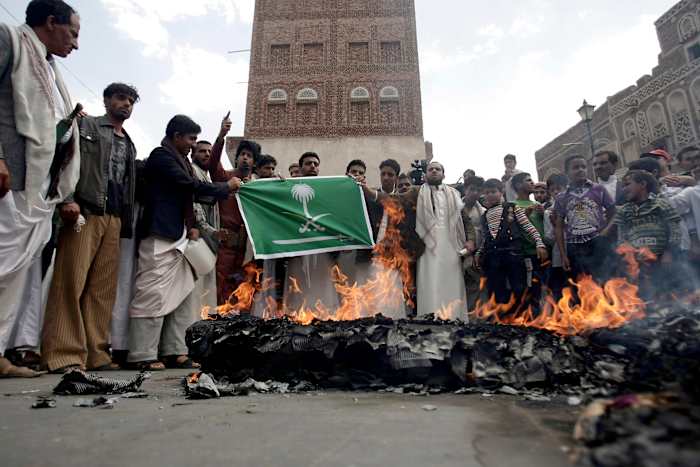
Simultaneously, the relative peace that Yemen had enjoyed for four years evaporated. Houthi rebels launched a coordinated barrage of drones and ballistic missiles deep into Saudi territory, targeting critical oil facilities and public utilities. The strikes left 73 people wounded and ignited major fires at several energy hubs.
Within hours, Saudi-backed government forces launched a massive counter-offensive. Nasruddin Amer, a spokesperson for the Houthi movement, stated on social media that coalition warplanes conducted at least 32 overnight airstrikes. The bombardment targeted strategic assets across four key provinces:
- Hodeida: The vital Red Sea port city.
- Taiz: The heavily contested southwestern highlands.
- Marib and Jawf: Energy-rich northern provinces.
While the Houthis have not yet released casualty figures from these airstrikes, the renewed fighting threatens to shut down shipping through the Bab el-Mandeb strait, compounding the global shipping crisis caused by the blockade of the Strait of Hormuz.
Supporting Context & Metrics
The Economic Chokepoints
The dual threat to the Strait of Hormuz and the Bab el-Mandeb strait represents a worst-case scenario for global energy markets and supply chains.
| Maritime Chokepoint | Daily Oil Transit (Pre-Conflict) | Strategic Significance | Major Threat Actor |
|---|---|---|---|
| Strait of Hormuz | ~20.5 Million Barrels/Day | Connects Persian Gulf to global markets; vital for Middle Eastern crude. | Iran (IRGC Navy) |
| Bab el-Mandeb | ~8.8 Million Barrels/Day | Gateway to the Red Sea and Suez Canal; critical for Europe-Asia trade. | Houthi Rebels |
The Trilateral Defense Pact
The Houthi strikes on Saudi Arabia have triggered a diplomatic and military mechanism established just last month. Turkey, Saudi Arabia, and Pakistan signed a historic trilateral defense agreement containing a mutual defense clause: an attack on one is treated as an attack on all.
Turkey’s Foreign Ministry strongly condemned the Houthi aggression, reiterating its unwavering support for Saudi sovereignty. This mutual defense pact could potentially draw Turkish and Pakistani military assets directly into the Yemeni theater, internationalizing the civil war to an unprecedented degree.
Official Statements and Global Reactions
The United States
The Trump administration has maintained a hardline, dual economic and military posture. The U.S. Embassy in Yemen released a strongly worded statement defending the actions of the Saudi-led coalition and the internationally recognized Yemeni government:
"The legitimate government of Yemen has the right to defend its people and end the Houthis’ ability to inflict terror. Saudi Arabia similarly possesses the inherent right to self-defense. The Houthis started this conflict and must bear the consequences of their aggression."
The United Nations
UN Special Envoy for Yemen, Hans Grundberg, expressed grave concern over the sudden collapse of diplomatic efforts:
"The missile and drone attacks by Yemen’s Houthi rebels on Saudi Arabia threaten to widen the conflict, put civilians at grave risk, and undermine years of delicate progress toward a political solution."
The Anglo-Israeli Diplomatic Rift
While military clashes dominated the Persian Gulf, a severe diplomatic crisis erupted in the Levant. Israel confirmed it will officially shutter the British Consulate in Jerusalem within 30 days.
This drastic measure is a direct retaliation against the British government’s recent decision to ban all trade with Israeli settlements in the occupied West Bank. The closure marks one of the lowest points in UK-Israel bilateral relations in modern history, effectively ending direct British consular outreach to Palestinians in East Jerusalem and the West Bank.
UK Bans Trade with West Bank Settlements
       │
       ▼ (Retaliation)
Israel Orders Closure of British Consulate in Jerusalem within 30 Days
South Korea’s Domestic Firestorm
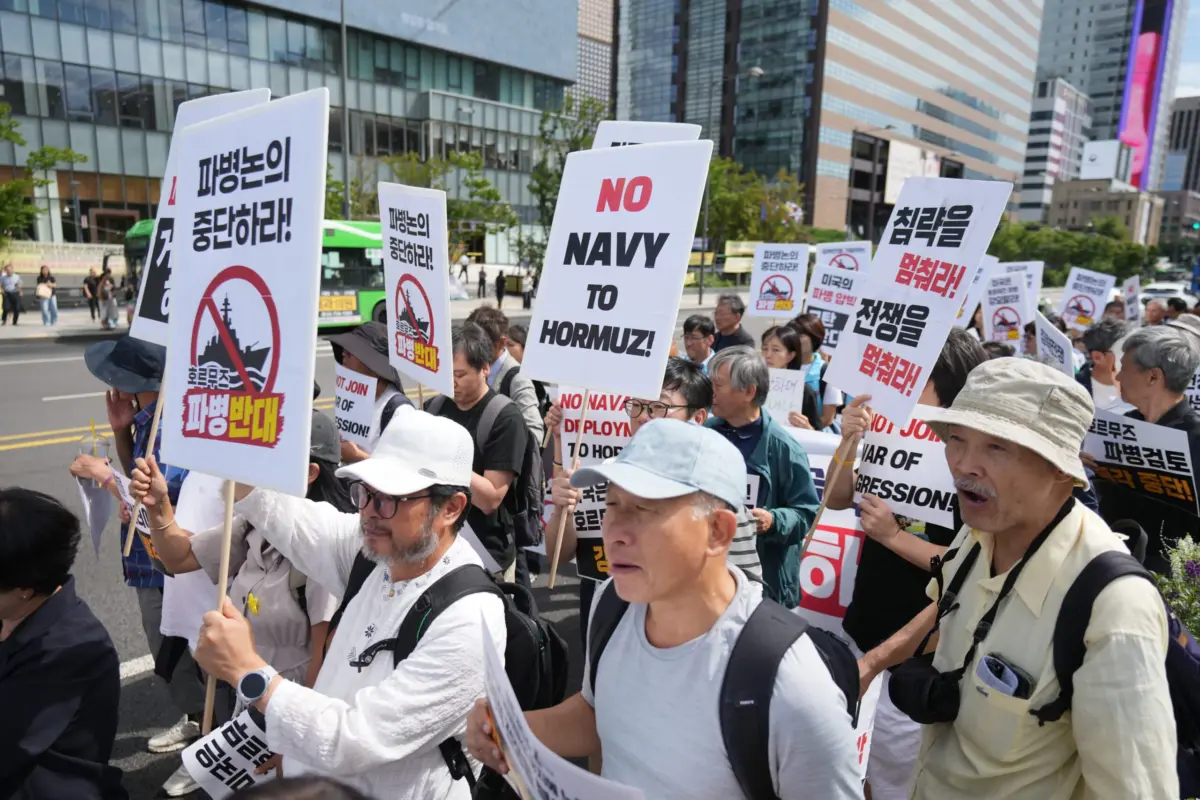
In Seoul, the geopolitical fallout of the U.S.-Iran conflict has sparked intense domestic political turmoil. Dozens of civic groups and protesters gathered near the U.S. Embassy, holding signs reading "Oppose troop deployment" and "Do not join a war of aggression."
U.S. President Donald Trump has publicly criticized South Korea for its reluctance to contribute militarily to the protection of the Strait of Hormuz, despite relying on the waterway for its energy security. President Lee Jae Myung’s administration has dispatched a military fact-finding team to the region but continues to delay a formal deployment decision.
Tehran has amplified the pressure on Seoul, warning of "serious consequences" to bilateral trade and diplomatic ties should South Korean warships join the U.S.-led coalition.
Future Outlook
The Middle East is navigating a highly volatile escalatory spiral with no obvious off-ramps.
In the short term, global oil prices are expected to surge as maritime insurance rates for transiting the Persian Gulf skyrocket. If the disabling fire on merchant ships continues, shipping conglomerates may be forced to bypass the region entirely, routing vessels around the Cape of Good Hope, which would add weeks to transit times and spike global inflation.
Diplomatically, the UN’s leverage has severely deteriorated. The collapse of the Yemeni truce, combined with the marginalization of traditional European mediators—exemplified by Israel’s expulsion of the British Consulate—leaves the region without a reliable diplomatic backchannel.
With the United States fully committed to a policy of maximum military deterrence and Iran demonstrating a willingness to engage in direct, symmetrical naval retaliation, the risk of a miscalculation leading to a wider, multi-state war has reached its highest level in years.

0 Comments