

Executive Overview
College football is a sport built on precision, routine, and high-stakes timing. For athletes, coaches, and broadcasters alike, the minutes leading up to a prime-time kickoff are the culmination of a week’s worth of physical preparation and strategic visualization. However, on a fateful Monday night in Tallahassee, the infrastructure supporting one of college football’s most storied programs literally short-circuited.
Florida State University’s crucial Atlantic Coast Conference (ACC) opener against the 19th-ranked Southern Methodist University (SMU) was thrown into chaos when a major electrical failure plunged large sections of Doak Campbell Stadium into darkness. Originally scheduled for a 7:30 p.m. ET kickoff on ESPN, the marquee matchup faced an initial delay before ultimately being pushed back nearly two hours, finally getting underway at 9:15 p.m. ET.
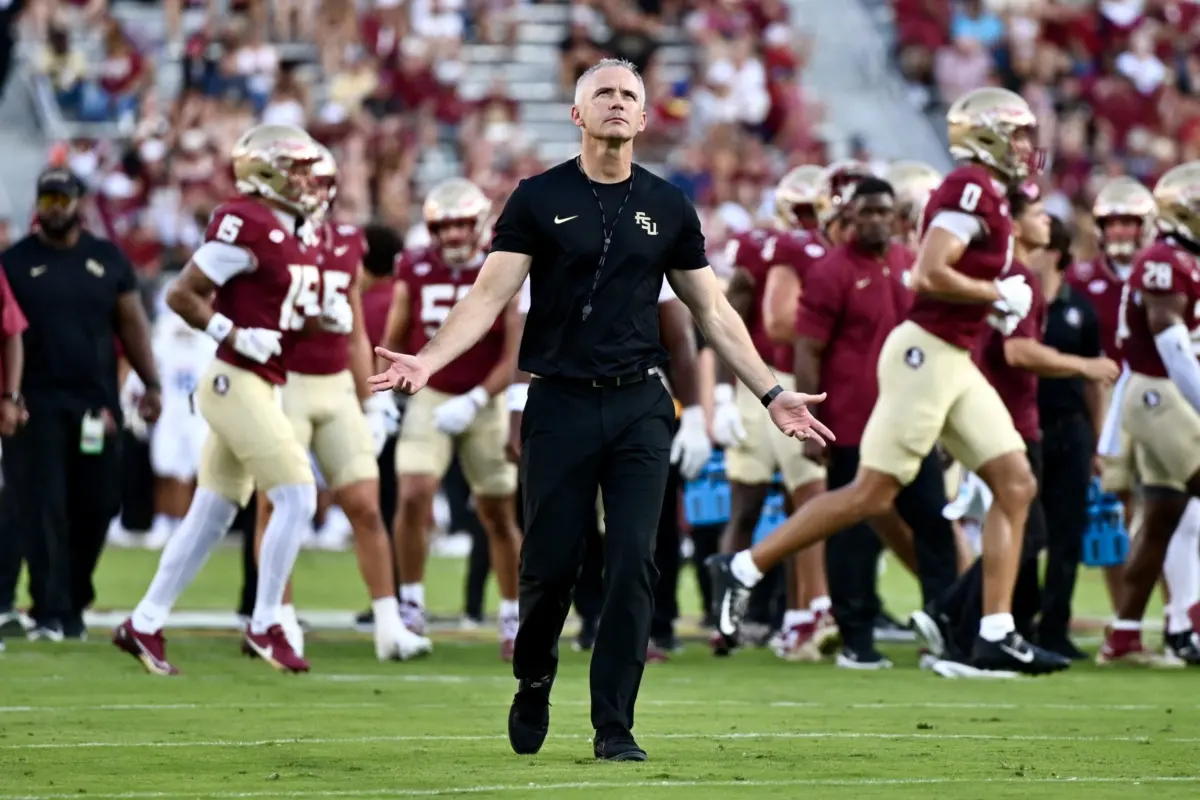
The culprit was a blown transformer located on the west side of the historic venue. The catastrophic surge not only killed the primary stadium lights necessary for broadcast-quality visibility, but it also knocked out power to the venue’s press box, critical game-day technology, and standard operational facilities. Both the Seminoles and the Mustangs had already completed their pre-game warmups, emerged from the tunnel, and stood waiting on the sidelines when the stadium operations team was forced to reverse course, sending both squads back to the locker rooms as emergency crews scrambled for a fix.
What followed was a tense, agonizingly slow process of troubleshooting, bureaucratic coordination, and technological triage. While the game was ultimately salvaged—with officials determining there was sufficient ambient and emergency lighting to proceed safely—the contest resumed under deeply unconventional, almost archaic conditions. Both teams played without the technological luxuries that define modern NCAA football: coach-to-player communication headsets were dead, sideline tablets used for instant tactical analysis were rendered useless, the stadium’s Public Address (PA) system fell silent, and the main scoreboards stood dark.
This unexpected crisis transformed a standard conference game into a surreal, back-to-basics athletic exhibition, raising urgent questions about aging stadium infrastructure, broadcast obligations in the modern era, and the resilience of student-athletes facing unprecedented disruptions.
Detailed Chronology of the Incident
To fully understand the gravity of the disruption, it is necessary to examine the timeline of events that unfolded on Monday evening at Doak Campbell Stadium. The crisis did not happen over hours of deteriorating conditions; rather, it struck with cinematic abruptness just as the eyes of the college football world turned toward Tallahassee.
T-Minus 30 Minutes: The Calm Before the Surge
As 7:00 p.m. ET approached, the atmosphere inside Doak Campbell Stadium was electric. The stadium lights blazed against the Florida evening sky, the ESPN broadcast truck was locked onto its primary feeds, and tens of thousands of fans were packed into the stands. Both Florida State and SMU had completed their traditional pre-game routines. The players had retreated to the locker rooms before making their dramatic entrance through the smoke and pyrotechnics, taking their places on the sidelines as the national anthem concluded and the final pre-game countdown ticked away.
7:25 p.m. ET: The Blackout
With kick-off just minutes away, a sharp, concussive electrical sound echoed near the west side of the stadium, accompanied by a sudden flash. Instantly, the massive banks of stadium lights on that side of the venue flickered and died. Simultaneously, total darkness consumed the press box, cutting off internet feeds, stat-crews, and the primary broadcast integration centers.
On the field, the sudden loss of illumination was jarring. Players and coaching staffs looked up in disbelief as the towering light standards went black. The immediate reaction from stadium control was to treat the issue as a temporary glitch—a momentary power dip that would automatically correct itself within a matter of minutes.
7:45 p.m. ET: Transition to Protocol
As minutes ticked past with no restoration of power, it became clear that this was no ordinary flicker. On-field officials conferred with athletic directors and stadium engineers. The decision was made to pull both teams off the field and back into the safety and relative comfort of their respective locker rooms. The initial estimation provided to the broadcast booth and the fans was a brief, manageable delay of 15 to 30 minutes.
Behind the scenes, however, emergency maintenance crews rushed to the west-side transformer site. They discovered that the equipment had suffered a catastrophic failure, causing a localized power surge that tripped safety breakers across multiple sectors of the facility.
8:30 p.m. ET: The Waiting Game
By the one-hour mark, frustration was palpable. ESPN’s broadcast crew, operating on auxiliary generator power for their mobile units but cut off from the stadium’s hardwired infrastructure, scrambled to fill the dead air with impromptu analysis and sideline reports. Fans in the stands turned on the flashlights of their mobile phones, creating a sprawling, starry canopy in the seating bowl.
Stadium officials evaluated multiple workarounds. While auxiliary generators were successfully routed to power critical life-safety systems and emergency lighting, getting the high-voltage circuits required for the main stadium lights and press box technology back online proved to be an arduous, step-by-step engineering challenge.
9:00 p.m. ET: The Green Light in the Gloom
At approximately 9:00 p.m., engineers confirmed that enough primary and auxiliary power circuits had been stabilized to guarantee safe playing conditions. While the western lights were still operating at a reduced capacity, the overall illumination of the playing surface met the minimum regulatory standards required to contest an NCAA Division I football game.
However, a harsh reality set in: while the lights were on, the peripheral systems were not. The power surge had fried or disabled several secondary electrical subsystems. Officials, head coaches Mike Norvell (FSU) and Rhett Lashlee (SMU), and conference representatives held an emergency meeting on the field. The consensus was unanimous: despite the lack of amenities, the game had to be played to satisfy national broadcast windows and conference scheduling constraints.
9:15 p.m. ET: Kickoff Under the Stars
With players returning to the field for a brief, abbreviated warm-up period, the ball was finally kicked off at 9:15 p.m. ET—nearly two hours after its intended start time. The stadium was eerily quiet, lacking the thunderous roar of the PA system and the visual anchor of the scoreboard, turning a modern television spectacle into something resembling a high school scrimmage played under twilight conditions.
Supporting Context & Metrics: The Anatomy of a Stadium Failure
To appreciate why a blown transformer could halt a multi-million-dollar athletic production, one must examine the complex electrical ecosystem of a modern major-college football stadium. Doak Campbell Stadium is not merely an athletic field surrounded by concrete bleachers; it is a sprawling, energy-intensive municipal entity capable of holding over 79,000 people.
The Power Demands of Modern Venues
A typical Football Bowl Subdivision (FBS) stadium requires a staggering amount of electrical capacity on game days. The primary power loads are divided into distinct categories:
- Field Illumination: Modern LED and metal-halide stadium light banks require immense voltage to achieve the uniform, shadowless brightness demanded by high-definition television cameras. These lights often operate on dedicated high-voltage lines.
- Broadcast Operations: ESPN and other national networks draw massive amounts of shore power to run their mobile production trucks, satellite uplinks, camera platforms, and studio setups.
- Safety and Concourse Systems: Lighting for concourses, restrooms, stairwells, and emergency exit routes must meet strict building codes.
- Game-Day Technology: The press box alone is a localized tech hub housing coaches’ booth communications, statistical tracking networks, instant replay review monitors, and media workspace computers.
When a transformer blows, it creates a cascading failure. A transformer steps down high-voltage electricity from the utility grid to usable voltages for the facility. When the west-side transformer failed, the resulting surge tripped downstream protective relays, isolating the power supply to protect the stadium’s sensitive internal wiring from catching fire. This safety feature is precisely why the blackout was total and recovery was slow—every circuit had to be manually inspected, cleared, and reset before power could be safely reintroduced.
The Technological Handicaps
The most fascinating aspect of the delayed FSU-SMU game was not the darkness of the initial blackout, but the light under which the game was ultimately played. Operating without standard technological safety blankets fundamentally altered the strategic landscape for both coaching staffs:
- No Coach-to-Player Communication: NCAA rules permit quarterbacks and designated defensive play-callers to wear helmet radios linked directly to the coaching staff upstairs. With the press box power knocked out and internal stadium communication wiring severed, these systems were completely disabled. Coaches were forced to rely on traditional sideline methods: hand signals, poster boards, and frantic runners relaying plays from the sideline.
- No Sideline Tablets: In recent years, the NCAA approved the use of sideline viewing tablets (such as Microsoft Surface devices) to allow coaches and players to review recent plays via secure local network feeds. Without power and data connectivity in the bench areas, these high-tech analytical tools were rendered useless, forcing coaches to rely on black-and-white polaroid-style printouts (delivered via manual runners from temporary photo labs) or sheer memory.
- No PA System or Scoreboard: The absence of a functioning Public Address system meant that referees had to rely on portable megaphones to announce penalties to the crowd—a throwback to the mid-20th century. Furthermore, players, coaches, and fans had no visual reference for the game clock, play clock, down, or distance other than the on-field officials’ manual signals and the stadium’s backup analog clocks (where visible). Field marshals had to keep physical time on handheld stopwatches and signal to the referees when time was expiring.
Official Statements and Institutional Responses
In the immediate aftermath of the incident, Florida State University athletics administration, ACC conference officials, and coaching staffs faced intense media scrutiny. The handling of the crisis required immediate transparency and coordinated damage control.
Florida State Athletics Department Statement
FSU athletic administration released an official update via social media and stadium announcements as the crisis unfolded, expressing gratitude to the stadium operations and engineering teams:
"We are aware of the power disruption on the west side of Doak Campbell Stadium resulting from a blown transformer prior to tonight’s scheduled kickoff against SMU. Our stadium operations and electrical engineering teams worked tirelessly alongside local utility providers to safely restore primary lighting and necessary functional capacity. We appreciate the patience of our fans, the cooperation of SMU’s athletic administration, and the flexibility of our broadcast partners at ESPN as we worked through this unprecedented emergency."
Coaches’ Perspectives: Navigating the Chaos
Speaking to reporters after the dust had settled, both head coaches reflected on the surreal nature of the evening.
Florida State head coach Mike Norvell emphasized his team’s mental resilience: "You can’t control when a transformer blows, just like you can’t control weather delays. Our job as a football team is to respond to adversity. We had players sitting in the locker room for nearly two hours, stretching twice, trying to stay loose and mentally locked in. When you walk out there and realize you don’t have headsets or tablets, football becomes pure. It comes down to execution, toughness, and listening to the guy next to you."
SMU head coach Rhett Lashlee echoed similar sentiments regarding the logistical nightmare of preparing for a high-stakes conference game under makeshift conditions: "It was certainly one of the strangest pre-game environments I’ve ever been a part of. You spend all week scripting the first fifteen plays based on data analysis you expect to review on tablets between series. Suddenly, you’re back to drawing plays on a whiteboard and yelling across the sideline. Credit to our kids—they handled the distraction professionally and went out to compete."
ESPN broadcast personnel also faced a unique professional challenge. Play-by-play announcers and color commentators had to rely on manual spotter charts, binocular verification of player numbers, and analog timing to call a nationally televised game without the benefit of live statistical monitors or direct feed overlays.
Future Outlook: Infrastructure Upgrades and Conference Implications
As the dust settles on one of the most bizarre evening operations in modern college football history, the incident at Doak Campbell Stadium serves as a cautionary tale for athletic departments across the nation. It highlights critical vulnerabilities in aging campus infrastructure and prompts urgent discussions regarding redundancy, emergency preparedness, and broadcast compliance.
The Imperative for Infrastructure Modernization
Doak Campbell Stadium, while a historic and revered cathedral of college football, has undergone numerous expansions and renovations over the decades. However, as stadiums incorporate more high-tech amenities—from massive LED video boards and high-density Wi-Fi networks to complex broadcast integration hubs—the electrical load placed on legacy grid connections increases exponentially.
In the wake of this incident, FSU’s facilities management and university engineers face mounting pressure to conduct a comprehensive audit of the stadium’s electrical grid. Key areas of future investment will likely include:
- Redundant Transformer Feeder Lines: Installing dual-feed electrical pathways to ensure that if one transformer fails, an automated transfer switch can instantly reroute power without dropping stadium lights or press box operations.
- Upgraded Emergency Generation: Expanding the capacity of auxiliary diesel generators to instantly pick up the load for not just life-safety systems, but also coach communications, data networks, and scoreboard operations.
- Hardened Digital Infrastructure: Implementing surge-protection matrices designed to prevent localized power spikes from frying delicate technological equipment in coaching booths and media areas.
Impact on the ACC Race
Beyond the logistical and engineering takeaways, the game itself carried significant weight within the Atlantic Coast Conference. Entering the matchup as an important early-season test, the contest between the Seminoles and the Mustangs took place under a literal and figurative cloud of uncertainty.
The physical toll of an elongated, two-hour pre-game delay cannot be understated. Athletes who had spent weeks tapering their physical energy for a 7:30 p.m. explosion were forced into a prolonged state of physical limbo, cycling through multiple warm-up phases and risking muscle tightness and mental fatigue before the ball was ever kicked. For sports science departments, this incident provides valuable empirical data on how modern athletes respond to acute, extended pre-game disruptions.
Furthermore, the game tested the conference’s operational resilience. The ACC office in Charlotte maintained continuous communication with both schools, ensuring that competitive equity was maintained despite the absence of standard technological aids. Because both teams played under the exact same technological handicaps—neither side had access to headsets, tablets, or the PA system—the playing field remained level, preserving the competitive integrity of the contest.
Conclusion
When the lights finally stabilized over Doak Campbell Stadium at 9:15 p.m. ET, it marked the end of a logistical emergency and the beginning of a memorable chapter in ACC football history. The blown transformer on the west side of the stadium did more than just cut power; it stripped away the high-tech varnish of modern athletics, exposing the raw, foundational elements of the game.
While Florida State and SMU will undoubtedly advocate for robust infrastructure checks to ensure such a spectacle is never repeated, the night proved that when the screens go blank, the scoreboards go dark, and the headsets die, the game of football endures on the strength, grit, and adaptability of the athletes on the field.

0 Comments