

Executive Overview
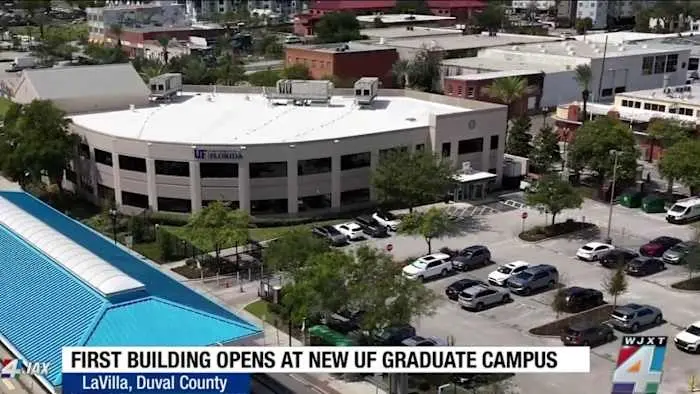
In a decisive move to address the widening talent gap in Northeast Florida’s high-tech and corporate sectors, the University of Florida (UF) has officially inaugurated its state-of-the-art graduate campus in the heart of downtown Jacksonville. Situated at 801 West Bay Street, the newly opened facility represents a calculated, multi-million-dollar convergence of academic rigor, municipal ambition, and private-sector demand. By offering specialized, graduate-level programs in artificial intelligence (AI), cybersecurity, computer science, engineering management, and health sciences, the campus aims to serve as an intellectual engine for a region experiencing unprecedented economic and demographic growth.
The establishment of the UF Jacksonville campus is not merely an academic expansion; it is a structural intervention in the regional economy. For years, Northeast Florida—specifically the Jacksonville metropolitan area—has grappled with the challenge of retaining top-tier technical talent. While the city has successfully attracted major financial technology (fintech), logistics, and healthcare enterprises, the local labor supply has struggled to keep pace with the sophisticated digital demands of these industries. By embedding a top-five public research university directly into the urban core, stakeholders expect to catalyze a self-sustaining ecosystem of innovation, venture capital, and high-wage employment.
The architectural and operational design of the new campus reflects this collaborative ethos. Featuring highly adaptable, modern classrooms, collaborative workspaces, and advanced technological laboratories, the facility is engineered to blur the lines between corporate research and academic instruction. As traditional industries undergo rapid digital transformations, the UF Jacksonville campus stands as a physical manifestation of a broader regional strategy: to future-proof the workforce by ensuring that every graduate possesses a functional mastery of data analytics, machine learning, and secure computing.
Detailed Chronology: From Blueprint to Reality
The realization of the UF Jacksonville graduate campus is the culmination of years of strategic planning, political negotiation, and public-private coordination. Understanding the trajectory of this project requires analyzing a timeline marked by civic advocacy, legislative appropriations, and rapid infrastructural execution.
[2021–2022: Conceptualization & Advocacy]
   │
   ▼
[Early 2023: Legislative & Municipal Funding Commitments]
   │
   ▼
[Late 2023: Site Selection (801 West Bay Street)]
   │
   ▼
[2024–2025: Construction, Design, & Curriculum Alignment]
   │
   ▼
[2026: Ribbon-Cutting & Operational Launch]
Phase 1: Conceptualization and Advocacy (2021–2022)
The genesis of the downtown campus can be traced back to high-level discussions between the University of Florida’s leadership, the City of Jacksonville, and regional business coalitions, notably the JAXUSA Partnership. Recognizing that Jacksonville was one of the largest metropolitan areas in the country without a major, localized public research university graduate center in its downtown core, advocates began drafting a proposal for a satellite campus that would focus exclusively on high-growth, high-tech sectors. Initial feasibility studies highlighted a critical vulnerability: local businesses were frequently forced to recruit out-of-state talent for senior roles in data science, systems engineering, and cybersecurity.
Phase 2: Funding Commitments and Legislative Alignment (Early 2023)
The project transitioned from a conceptual framework to a funded mandate in early 2023. The City of Jacksonville committed a landmark $50 million in municipal funding to anchor the project, signaling strong bipartisan support for downtown revitalization and economic diversification. This local commitment was subsequently matched by a $75 million appropriation from the Florida State Legislature, alongside substantial private philanthropic contributions from local business leaders and corporate partners. This blended funding model established the financial foundation necessary to secure a premier downtown location and design a world-class educational facility.
Phase 3: Site Selection and Infrastructure Design (Late 2023)
Following the acquisition of funding, the university selected 801 West Bay Street as the permanent home for the initial phase of the campus. This location was chosen for its strategic proximity to Jacksonville’s central business district, the medical complexes of UF Health and Baptist Health, and major corporate headquarters. Throughout late 2023 and 2024, the building underwent extensive renovations to transform it from a conventional commercial space into a high-tech academic hub, prioritizing flexible learning spaces over traditional lecture halls to encourage collaborative, project-based learning.
Phase 4: Ribbon-Cutting and Operational Launch (2026)
The culmination of these efforts occurred with the official ribbon-cutting ceremony. Attended by university administrators, municipal leaders, state policymakers, and corporate executives, the opening marked the formal commencement of academic operations. The event served as a public validation of a multi-year effort to reshape the educational landscape of Northeast Florida, positioning the new facility as the anchor institution of a burgeoning downtown innovation district.
Supporting Context & Metrics: Northeast Florida’s Workforce Imperative
To fully appreciate the strategic necessity of the UF Jacksonville campus, one must examine the macroeconomic realities of the Northeast Florida region. Jacksonville has quietly emerged as one of the Southeast’s primary economic engines, yet this growth has exposed critical structural vulnerabilities in the local labor market.
The Regional Tech and Financial Boom
Over the past decade, Jacksonville has earned a reputation as the "Wall Street of the South," driven by the expansion of major financial institutions, insurance giants, and fintech innovators, including Fidelity National Information Services (FIS), Dun & Bradstreet, and Deutsche Bank. Concurrently, the region’s healthcare sector—anchored by the Mayo Clinic, Baptist Health, and UF Health—has undergone an unprecedented expansion.
These industries share a common denominator: an insatiable demand for advanced computational talent. According to regional labor market analytics:
- Fintech & Cybersecurity: Demand for specialized cybersecurity analysts and financial data engineers in Northeast Florida has outpaced the national average by over 18% annually.
- Artificial Intelligence Integration: Approximately 65% of mid-to-large-scale enterprises in the region report actively integrating AI or machine learning protocols into their operational workflows, yet less than 25% of their current IT staff possess formal graduate training in these disciplines.
- The Brain Drain Phenomenon: Historically, high-performing undergraduates from Northeast Florida universities frequently migrated to tech hubs like Atlanta, Austin, or Silicon Valley to pursue graduate studies and high-paying tech careers, resulting in a persistent net loss of highly skilled intellectual capital.
Deconstructing the Curriculum: A Tech-Infused Pedagogical Model
The graduate programs offered at 801 West Bay Street have been specifically engineered to counteract these labor deficits. Rather than offering isolated, theoretical degrees, UF has implemented a curriculum where data analytics, AI, and cybersecurity are structurally integrated into every discipline.
| Graduate Degree Program | Core Technological Integration | Target Regional Industry |
|---|---|---|
| Master of Business Administration (MBA) | Predictive Analytics, AI-Driven Decision Making, FinTech Security | Financial Services, Corporate Headquarters, Logistics |
| M.S. in Management and AI | Machine Learning Models, Natural Language Processing, Algorithmic Strategy | Retail, Tech Startups, Corporate Operations |
| Computer Science & Engineering | Advanced Software Engineering, Cloud Computing, Cryptography | IT Services, Defense Contracting, Telecom |
| Engineering Management | Systems Engineering, Supply Chain Logistics Analytics, Operations Research | Port Authorities (JAXPORT), Advanced Manufacturing, Aerospace |
| Health Sciences (Graduate Modules) | Bioinformatics, Clinical Data Analytics, Telehealth Infrastructure | Healthcare Networks, Biomedical Research Institutes |
By requiring business and management students to master the fundamentals of AI and data science, the university is producing a new class of bilingual professionals—individuals who understand both the balance sheet and the underlying algorithms driving modern business intelligence.
Official Statements: A Unified Vision for Regional Transformation
The launch of the UF Jacksonville campus has drawn widespread praise from academic, civic, and business leaders, all of whom emphasize the synergistic relationship between the university’s academic resources and the city’s economic ambitions.
Alexis Curry, the Marketing and Communications Specialist for UF Jacksonville, articulated the forward-looking philosophy underpinning the campus’s curriculum:
"We have programs like our MBA as well as our Master of Science in Management and AI, and we have a couple of computer science degrees as well and engineering management. All of these degrees have some sort of data analytics or AI, cybersecurity business aspect to them where they can plan for the future and create future innovations and really plan for what future careers will look like for them as we kind of move into this more data-focused idea."
Curry’s comments highlight a fundamental shift in graduate education: the recognition that traditional business and technical silos are rapidly dissolving. In the modern corporate ecosystem, a manager who cannot interpret machine learning models is at a distinct disadvantage, just as an engineer who cannot navigate corporate strategy is limited in their upward mobility.
Municipal leaders have echoed these sentiments, framing the campus as a cornerstone of downtown Jacksonville’s revitalization. Civic leaders note that the presence of graduate students, faculty, and researchers will inject a steady stream of intellectual energy and economic activity into the West Bay Street corridor. The campus is designed to operate not as an insular enclave, but as an open, collaborative partner with local businesses, offering customized executive education, hosting industry conferences, and facilitating direct recruitment pipelines.
Furthermore, state policymakers view this project as a template for future public higher education initiatives in Florida. By aligning state university resources directly with the localized needs of metropolitan economies, the state maximizes the return on its educational investments, driving job creation, attracting corporate relocations, and fostering localized innovation.
Future Outlook: Building 1A and the Evolution of Downtown Jacksonville
The ribbon-cutting at 801 West Bay Street represents the opening chapter of a much larger, multi-phase developmental master plan. University and city leaders have made it clear that the current facility is merely the beachhead for a sprawling downtown academic and innovation district.
The Expansion of the Physical Footprint: Building 1A
Plans are already well underway for the next phase of physical expansion. The university is actively designing a second, larger facility—temporarily designated as "Building 1A"—to be located immediately to the west of the current West Bay Street site. This planned expansion is projected to house:
- Advanced Research Laboratories: Dedicated spaces for deep-learning computing clusters, robotics testing, and secure cybersecurity simulation environments.
- Corporate Incubators: Co-working spaces and incubator offices where venture-backed startups and established corporate R&D teams can work alongside UF faculty and graduate students.
- Expanded Health Sciences Facilities: Specialized clinical simulation labs designed to support advanced research in medical informatics, public health, and biotechnology.
[Current Campus: 801 W. Bay St.] ──► [Proposed Expansion: Building 1A] ──► [Downtown Innovation District]
     (Graduate Programs, AI,              (Advanced Labs, Startups,            (Long-Term Economic Anchor,
     Cybersecurity, MBA Labs)               Bioinformatics Center)              Regional Research Hub)
Long-Term Economic and Urban Impact
As the campus grows, its economic ripple effects are expected to reshape the urban landscape of downtown Jacksonville. Independent economic impact assessments suggest that over the next decade, the UF Jacksonville campus will generate hundreds of millions of dollars in economic activity, driven by:
- Venture Capital Attraction: By establishing a concentrated hub of AI and cybersecurity research, the campus will naturally attract early-stage venture capital firms seeking to fund university spinoffs and local tech startups.
- Corporate Relocation Incentives: The guaranteed, localized supply of highly skilled graduate talent will serve as a powerful incentive for mid-sized and large enterprises considering relocating their headquarters or regional offices to Northeast Florida.
- Urban Revitalization: The influx of graduate students and young professionals will stimulate demand for downtown housing, retail, dining, and hospitality services, accelerating the transition of Jacksonville’s urban core into a vibrant, 24/7 metropolitan neighborhood.
As Alexis Curry succinctly noted during the opening ceremonies, "This is the beginning of our era." For Jacksonville, that era is defined by a bold commitment to technological integration, academic excellence, and a shared vision of economic prosperity that will resonate across the state of Florida for generations to come.

0 Comments