For decades, the standard narrative of retirement has been painted with idyllic brushstrokes. We are conditioned to envision a golden era free from the relentless tyranny of alarm clocks, morning commutes, and corporate politics. In this idealized future, our days unfold organically, filled with long-overdue creative pursuits, extensive travel, and the leisurely mastery of skills we never had time to explore while trapped on the career treadmill. Most adults carry mental wish lists—or formal bucket lists—packed with destinations to visit, languages to learn, and passion projects to finally bring to life.
Yet, beneath the comforting illusion of the "retirement Renaissance" lies a sobering psychological and statistical truth: very few of these grand ambitions will ever materialize.
The primary barrier to a fulfilling retirement is not financial, nor is it a lack of time. Rather, it is our deep-seated resistance to personal change. Human beings are creatures of habit, shaped by decades of conditioned routines. When we transition out of the workforce, we rarely transform our daily existence; instead, we simply expand our existing habits to fill the vast vacuum left by employment. According to labor statistics and behavioral insights, retirement often serves as an amplifier of our pre-existing lifestyles rather than a blank canvas for reinvention. Without deliberate, intentional habit formation, the dream retirement remains perpetually out of reach, leaving many retirees anchored to the couch rather than soaring toward their ambitions.
Detailed Chronology: The Anatomy of Unfulfilled Retirement Intentions
To understand why retirement aspirations so frequently dissolve into routine, one must examine the timeline of how habits are formed, maintained, and ultimately neglected across a lifetime.
Phase 1: The Decades of Conditioning (The Working Years)
Throughout our adult lives, our daily existence is heavily structured by external forces. For the average corporate employee or professional, the rhythm of life is dictated by project deadlines, email inboxes, meeting schedules, and familial obligations. Over thirty to forty years, these external frameworks forge deeply ingrained neural pathways. We learn how to react, how to procrastinate, how to manage limited free time, and—crucially—how to accumulate items and obligations without purging them.
During this phase, hobbies are treated as weekend escapes, and grand projects are routinely deferred with the classic rationalization: "I’ll do that when I retire." This deferral creates a psychological safety valve, allowing individuals to endure unfulfilling daily grinds by projecting their hopes onto a distant, idealized future.
Phase 2: The Proclamation vs. Reality Disconnect (The Threshold of Retirement)
As retirement approaches, anticipation peaks. Individuals frequently make bold declarations about how they will overhaul their lives. A common example is the intention to declutter. Many prospective retirees pledge to systematically purge decades of accumulated possessions—going through dusty attics, overflowing garages, and packed closets to embrace a minimalist lifestyle.
However, psychological inertia rarely vanishes the moment a person leaves the workforce. Take, for instance, the common dilemma of holding onto redundant items: half-full paint cans from home renovations a decade prior, old textbooks, redundant kitchen appliances, and clothes that no longer fit. Without an immediate, forced catalyst—such as an impending cross-country move—the default habit of keeping things prevails over the aspiration of downsizing. Years slip by, and the basement remains just as crowded as it was on the final day of employment.
Phase 3: The Creative Ambition Stalled by Routine
The gap between aspiration and execution is similarly visible in creative pursuits. Consider the aspiring writer who envisions penning a series of novels in retirement. They possess the storylines, the imagination, and the time. Yet, the daily discipline required to write—committing a non-negotiable block of 60 to 120 minutes every single day—clashes violently with a lifetime of reactive behavior.
Because the individual has spent a career responding to external demands rather than self-directing their hours, they flounder in unstructured time. Routine chores, casual web browsing, and digital distractions easily hijack the day. Without a pre-established habit of deep, self-directed focus, the blank page remains blank. The ambition to write a novel becomes just another nagging item on an ever-expanding guilt list.
Supporting Context & Metrics: What the Data Reveals About Post-Work Life
While personal anecdotes illustrate the struggle of individual habit change, hard macroeconomic and sociological data confirm that this is a systemic societal trend. The United States Bureau of Labor Statistics (BLS) regularly conducts comprehensive American Time Use Surveys (ATUS), offering a stark, empirical window into how older adults actually allocate their time once they exit the workforce.
The Bureau of Labor Statistics Findings
When researchers analyze the daily schedules of employed individuals versus those who are retired or not employed, the results challenge romanticized notions of post-work productivity.
The Expansion Effect: When work is removed from the equation, people do not suddenly flood their newfound hours with high-effort, transformative activities like art classes, intensive volunteering, or athletic training. Instead, the activities that already occupied their marginal free time simply expand to consume the newly available hours.
The Dominance of Television: According to BLS data, the single largest recipient of newfound time in retirement is television viewing. While broad charts categorize post-work time under "Leisure and Sports," a deeper drill-down reveals that well over half of this allocated leisure time is spent consuming passive entertainment in front of a screen.
The Micro-Percentage of Physical and Creative Pursuits: Rigorous physical activity, creative hobbies, and structured skill-building constitute a minuscule fraction of a retiree’s average day—often hovering around 5% of total leisure time. Statistically speaking, there is no evidence to suggest that the average retiree embarks on a wave of ambitious, self-actualizing projects.
Why do these statistical realities persist? Psychologists point to the comfort zone as a primary culprit. Human beings naturally gravitate toward cognitive ease. Changing habits—such as learning a completely new language, navigating public transportation in a foreign country after a relocation, or adopting strict financial frugality—requires immense cognitive load.
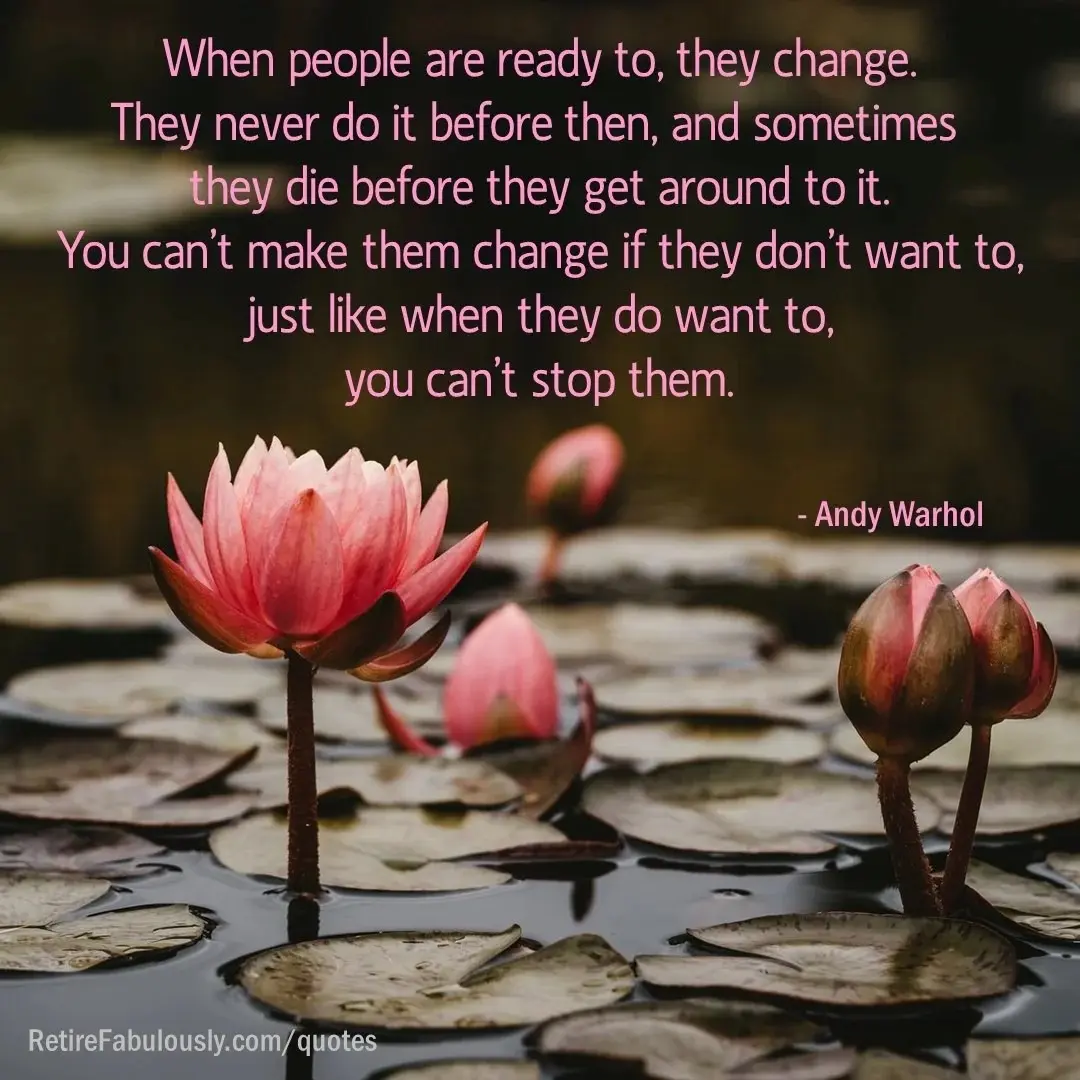
Furthermore, social structures play a massive role. For decades, the workplace acts as a primary engine for socialization, identity, and structured purpose. When that engine is turned off, many individuals fail to take the proactive social initiative required to build new networks. They default to isolation or insular routines, proving Andy Warhol’s famous observation:
"When people are ready to, they change. They never do it before then, and sometimes they die before they get around to it. You can’t make them change if they don’t want to, just like when they do want to, you can’t stop them."
Expert Insights and Strategic Perspectives
Retirement lifestyle planners and behavioral experts emphasize that a successful, satisfying post-work life is not something that simply happens to you; it is something you must meticulously architect.
Industry thought leaders argue that retirees must consciously dismantle their former identities to build new ones. Transitioning from a corporate title like "Vice President of Marketing" or "Senior Accountant" to an empowered individual defined by personal passions requires a deliberate mental shift.
Key strategic imperatives recommended by lifestyle design specialists include:
Micro-Habit Stacking: Instead of attempting to overhaul an entire lifestyle overnight—such as vowing to write four hours a day or clear out an entire multi-story house in a weekend—experts advocate for micro-habits. Committing to just 15 minutes of writing daily or sorting through a single kitchen drawer per day builds psychological momentum without triggering the brain’s panic response to radical change.
Intentional Environmental Design: If the goal is to travel more, downsize possessions, or engage in community service, the physical and digital environment must reflect those priorities. Removing friction from desired behaviors—such as placing a journal and pen on the kitchen table every night—drastically increases the likelihood of execution.
Redefining Productivity: Many retirees suffer from a hidden malaise born of a culturally ingrained work ethic that equates human worth solely with economic output. Overcoming this requires reframing "leisure" not as idleness, but as intentional engagement in deeply meaningful personal projects.
Future Outlook: Navigating Your Personal Retirement Renaissance
As global demographics shift and life expectancies extend well into our eighties and nineties, the modern retirement can span three decades or more. Viewing this multi-decade chapter as an extended vacation is a recipe for stagnation, boredom, and unfulfilled potential.
The future belongs to those who approach retirement not as an end to striving, but as a transition to self-directed purpose. Achieving your ideal retirement lifestyle demands an unflinching, honest self-assessment. It requires asking the hard questions:
What habits am I clinging to simply out of comfort and familiarity?
What am I willing to sacrifice—whether it is accumulated clutter, passive screen time, or old routines—to make space for my true passions?
Am I waiting for a catalyst to force my hand, or am I willing to exercise the intentional discipline required to change today?
Ultimately, the definition of insanity is doing the same things and expecting a different result. If your retirement vision involves vibrant adventures, artistic creation, deep relationships, and personal growth, you cannot rely on the passive momentum of past habits. Change is neither accidental nor instantaneous; it is an active, daily commitment. By recognizing the retirement reality gap and intentionally reshaping your daily routines, you can turn your bucket list from a dusty sheet of paper into your lived reality, ensuring your post-work years truly live up to their golden promise.



0 Comments