For decades, the modern workforce operates under a standardized framework: alarm clocks ring, commutes are navigated, desks are occupied, and quarterly metrics are chased. Workers are conditioned to view success through the lens of productivity, deadlines, and professional achievement. When retirement finally arrives—heralded by gold watches, retirement parties, and the relinquishment of corporate badges—many expect an immediate, effortless transition into an endless horizon of leisure, relaxation, and tranquility.
Yet, a fascinating and often unspoken psychological phenomenon frequently occurs a year or two into this new chapter. Once the initial novelty of sleeping in and tackling long-neglected household chores wears off, retirees often find themselves trapped in a new kind of treadmill. Their calendars become crammed with errands, club meetings, yard work, social get-togethers, and streaming marathons. They are, by all accounts, as busy as they have ever been.
Beneath this frantic whirlwind of activity, however, a subtle and persistent discontentment often takes root. Individuals begin to question whether this bustling schedule is truly what they spent decades working toward. While busyness certainly beats debilitating boredom, it frequently masks a deeper, more profound deficit: a lack of true fulfillment.
This investigative report examines the psychological paradigm shift required in modern retirement. Moving beyond simple time management, we explore why constant activity does not equate to a meaningful existence, how decades of productivity conditioning distort our self-worth, and how retirees can successfully curate a life anchored in personal passion and authentic purpose.
Detailed Chronology: The Evolution of the Retirement Transition
To understand the modern crisis of post-career discontentment, it is essential to trace the psychological arc that retirees typically experience over the first thirty-six months of leaving the workforce.
Phase 1: The Honeymoon Period (Months 1–6)
Marked by immediate relief from the pressures of daily commuting, performance reviews, and corporate politics, the initial phase of retirement feels liberating. The newly retired individual experiences a profound sense of temporal sovereignty. Mornings belong to them. Days are spent catching up on sleep, embarking on spontaneous trips, and checking off the easiest items on long-overdue "honey-do" lists. During this honeymoon phase, simply not working feels like a full-time occupation, and the absence of professional stress acts as a powerful restorative.
Phase 2: The Substitution Trap (Months 6–18)
As the novelty of pure relaxation fades, human nature—which abhors a vacuum—kicks in. Without the structured demands of a career, individuals naturally begin to fill their days with lower-stakes obligations. Errands expand to fill hours; volunteering commitments multiply; social clubs, neighborhood associations, and family requests step into the void. Before long, calendars are once again color-coded and packed from morning until night. The individual congratulates themselves on how active and engaged they remain, boasting to friends that they are "busier now than when I was working."
Phase 3: The Awakening of Discontent (Months 18–36)
Eventually, the veneer of busyness begins to crack. As routine sets in, a quiet realization surfaces: being busy is not the same as being fulfilled. Individuals look at their daily schedules—filled with grocery runs, dry cleaning pickups, and committee meetings—and wonder if this administrative maintenance of life is the culmination of a lifetime of labor. A subtle anxiety emerges. They realize they have merely replaced professional busywork with domestic busywork, leaving their deeper emotional, creative, and intellectual needs starved for genuine nourishment.
Supporting Context & Metrics: The Psychology of Busyness vs. Fulfillment
The struggle to find meaning in retirement is supported by a growing body of psychological research surrounding aging, identity, and post-career mental health. For most of adult life, societal validation is inextricably linked to economic productivity. When an individual introduces themselves at a social gathering, the ubiquitous question is almost always, "What do you do?"
When that professional identity is stripped away, a void forms. Psychologists note that many retirees panic unconsciously at this loss of status and default to hyper-activity simply to prove to themselves—and the world—that they are still useful, capable, and productive.
Psychological State
Core Driver
Primary Symptom
Outcome
Pure Pleasure
Sensory enjoyment, rest, entertainment
Temporary gratification
Short-term relief; eventually breeds stagnation
Compulsive Busyness
Habitual need for productivity, guilt-avoidance
Packed schedules, exhaustion without purpose
Low-grade anxiety, existential emptiness
Authentic Fulfillment
Internal alignment, self-expression, contribution
Flow states, deep satisfaction, vitality
Long-term psychological resilience and joy
As the table above illustrates, pleasure and compulsive busyness are frequently mistaken for the ultimate goals of retirement. However, human neurology is not wired to sustain long-term well-being on leisure and administrative tasks alone.
Furthermore, breaking free from the cultural conditioning of productivity is often the hardest hurdle. Decades of answering to bosses, clients, and shareholders create an internal taskmaster who demands that every waking hour be "productive." Learning to embrace activities simply because they "make your heart sing"—whether that involves painting, birdwatching, reading poetry, or sitting quietly in nature without an agenda—requires a radical, deliberate rewiring of the post-career mindset.
Expert Perspectives and Philosophical Insights
Retirement experts, psychologists, and authors who study the aging transition emphasize that retirement should not be viewed as an extended weekend, but rather as an entirely new developmental stage of life.
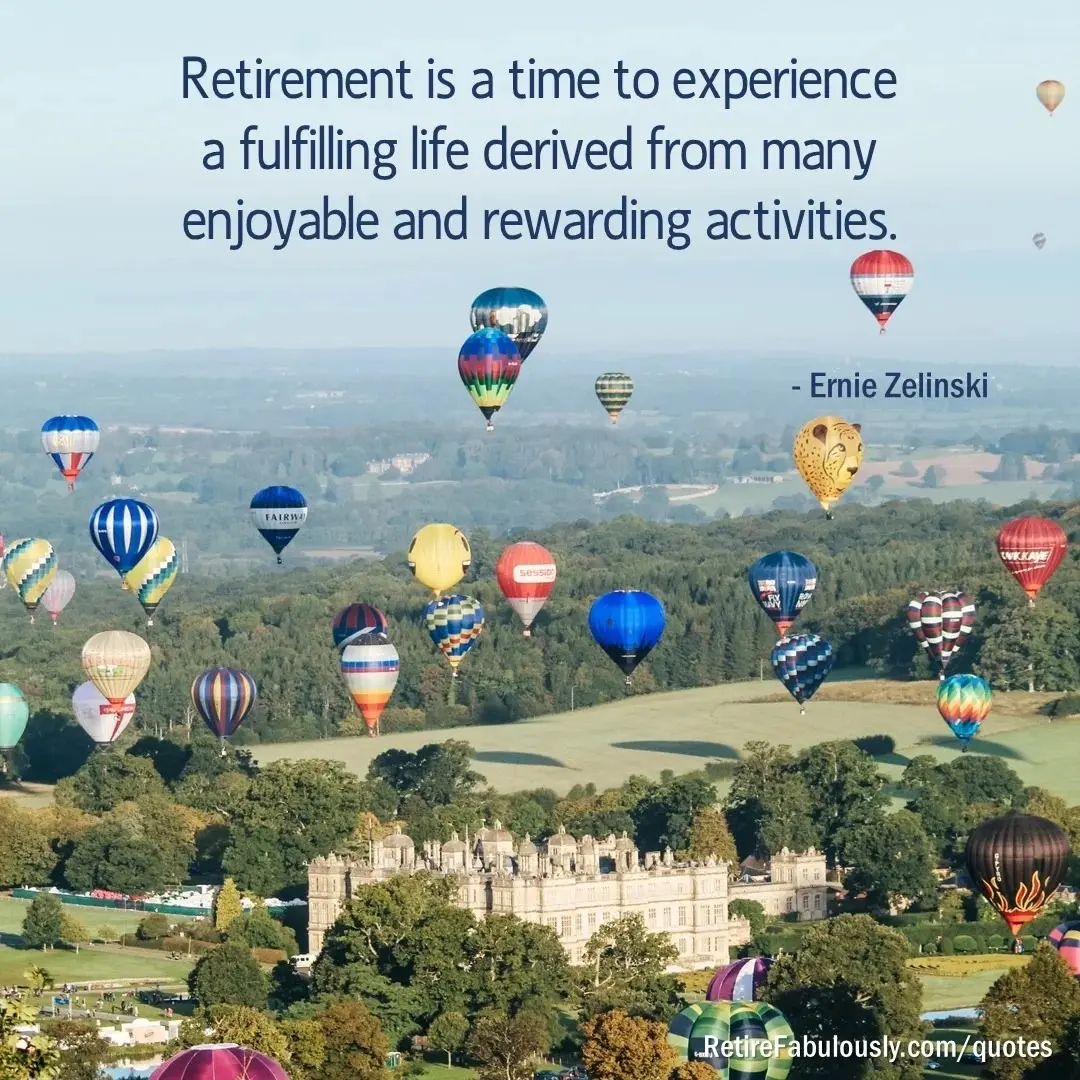
Renowned retirement lifestyle authorities, such as author and speaker Ernie Zelinski, have long championed the philosophy that true retirement is an opportunity to experience a fulfilling life derived from enjoyable and rewarding activities rather than mandatory labor. Zelinski and other thought leaders argue that while career fulfillment was bound strictly to economic viability—getting paid for your output—retirement unlocks the ultimate freedom: the ability to pursue what matters purely for its intrinsic value.
"Retirement is a time to experience a fulfilling life derived from many enjoyable and rewarding activities." — Ernie Zelinski
Mental health professionals reinforce this perspective, noting that fulfillment is deeply individualized. For one retiree, fulfillment might be found in mentoring inner-city youth; for another, it may emerge through mastering a musical instrument, traveling off the beaten path, or cultivating an elaborate garden. The common denominator is not economic utility, but emotional resonance—entering that elusive state of psychological "flow" where time dissolves and the individual feels entirely complete and alive.
Moreover, experts stress the importance of shedding the burden of other people’s expectations. Parents who spent decades sacrificing for their children, or professionals who dedicated their lives to serving clients, often struggle to pivot toward self-care in retirement. Experts maintain that after a lifetime of hard work, prioritizing one’s own passions is not an act of selfishness, but a fundamental prerequisite for mental health and longevity.
Future Outlook: Curating Your Dream Retirement
As life expectancies rise and active retirement spans multiple decades—often lasting twenty to thirty years or more—the traditional model of drifting aimlessly through retirement is no longer viable. Individuals must become active curators of their time, energy, and happiness.
Transitioning from a busy retirement to a fulfilling retirement requires deliberate introspection and strategic planning. Experts recommend undertaking a structured self-audit to recalibrate daily life. This can be effectively achieved through a simple yet powerful exercise: setting aside distractions in a quiet space and constructing three distinct lists:
Stop Doing: Identify the energy-draining obligations, trivial errands, and social commitments maintained purely out of habit, guilt, or a misguided sense of obligation.
Keep Doing: Catalog the daily routines, social connections, and wellness practices that currently add genuine value, joy, and health to your life.
Start Doing: Brainstorm activities that feed your soul, tap into long-forgotten passions, or explore new horizons—incorporating pursuits that bring you back to what makes your heart sing.
By systematically shifting away from compulsive busyness and toward intentional fulfillment, retirees can reclaim the true promise of their golden years. The ultimate gift of retirement is not simply the absence of work; it is the absolute freedom to design a life of profound purpose, authenticity, and personal joy on your own terms.



0 Comments