

Executive Overview
In the modern corporate landscape, sudden workforce reduction announcements have become a recurring reality. Recently, a major household-name corporation announced a sweeping 15% workforce reduction, deploying generous early retirement packages as a primary mechanism to meet its downsizing goals. This scenario triggers an immediate dilemma for thousands of workers: take the guaranteed payout and step away years ahead of schedule, or hold the line and risk future restructuring uncertainty.
Data confirms that this is hardly an isolated phenomenon. According to a comprehensive 2023 Retirement Confidence Survey published by the Employee Benefits Research Institute (EBRI), a staggering 70% of individuals find themselves retiring earlier than originally planned—exiting the workforce, on average, three full years ahead of schedule. Whether driven by corporate layoffs, enticing buyout offers, or unexpected personal circumstances, early retirement is frequently thrust upon employees rather than meticulously orchestrated at age 65.
While financial preparedness forms the foundational bedrock of any exit strategy, a critical element is frequently overlooked: the psychological and emotional transition. Stepping away from a decades-long career is not merely a financial transaction; it is a profound identity shift. Without a deliberate plan for daily life, mental stimulation, physical health, and personal fulfillment, the sudden acquisition of 40-plus weekly hours can transform from a long-awaited gift into an existential vacuum.
Detailed Chronology: The Anatomy of an Early Exit
The journey from a structured corporate career to an unscripted retirement is rarely linear. Examining the timeline of those who have successfully navigated this transition reveals distinct phases of decision-making, adaptation, and eventual reinvention.

Phase 1: The Catalyst and the Calculus
The process typically begins with an external shock—a corporate restructuring announcement, a buyout offer, or shifting industry dynamics. Employees who had mentally mapped out another three to five years in the workforce are suddenly forced to run the numbers overnight.
Consider the parallel of a 56-year-old corporate veteran who originally planned to work until age 60. Confronted with a lucrative early retirement package, the immediate impulse is fear of lost terminal earnings. However, bridging the financial gap through supplemental income streams—such as consulting, seasonal work, or transitioning to part-time specialized roles—can buy crucial time until baseline entitlements like Social Security kick in at age 62. The calculus extends beyond raw mathematics; it weighs the tangible value of reclaimed time against the diminishing returns of remaining in a stagnating corporate environment.
Phase 2: The Decompression Period
Upon taking the leap, the immediate aftermath is characterized by sweet relief. The absence of alarm clocks, unending email chains, and quarterly performance reviews provides a profound sense of liberation. Experts recommend allowing a dedicated window of several weeks simply to decompress, address lingering household chores, and rest. Yet, this honeymoon phase inevitably wanes. Left unchecked, unstructured leisure rapidly curdles into lethargy.
Phase 3: Active Reinvention
The third phase involves intentional lifestyle design. Successful early retirees recognize that retirement is not a permanent, passive vacation; rather, it is akin to living in a perpetual "seven-day weekend." Constructing a sustainable, satisfying weekly framework requires replacing the lost structure of employment with self-selected pursuits that honor four core pillars: physical activity, mental stimulation, socialization, and personal fulfillment.

Supporting Context & Metrics: The Reality of Early Departure
To contextualize the surge in early departures, one must examine the broader economic and demographic shifts shaping the modern workforce.
- The 70% Rule: As highlighted by the EBRI 2023 Retirement Confidence Survey, 70% of retirees leave the workforce earlier than expected. The leading drivers include corporate downsizings, health issues, or family caregiving responsibilities, proving that proactive retirement planning must always account for the unexpected.
- The Longevity Dividend: With average life expectancies extending well into the 80s and beyond, an early retirement at age 56 or 58 could easily span three decades. Funding and occupying a 30-year retirement requires a fundamentally different psychological approach than previous generations experienced.
- The Social Security Bridge: For those who exit corporate life in their mid-fifties, bridging the financial and insurance gap prior to Medicare eligibility (at 65) and optimized Social Security claiming ages requires immense discipline, flexible side-hustles, or creative part-time ventures.
Official Insights: Perspectives on the Non-Financial Transition
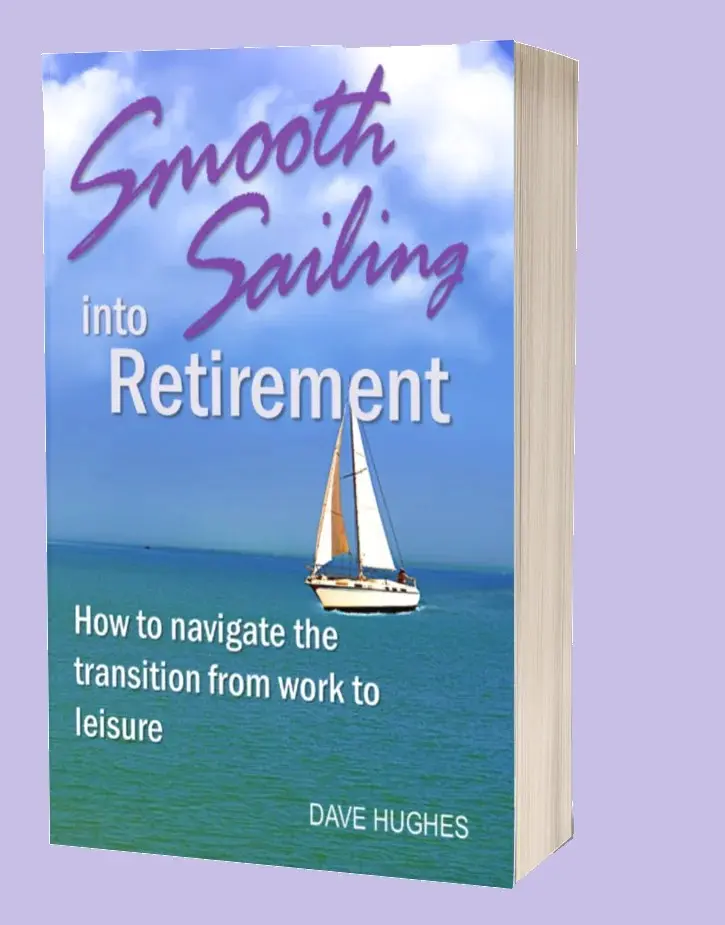
While financial planners dominate the pre-retirement conversation, behavioral experts and specialized authors emphasize that money is only half the equation. Dave Hughes, author of Smooth Sailing Into Retirement, notes that the non-financial adjustments often catch newly retired professionals entirely off guard.
"We all love vacations and weekends because they give us a nice break from our work days. I hate to be the bearer of bad news, but retirement is not a permanent vacation. I think it’s more accurate to view retirement as each week being a 7-day weekend. Your ‘job’ now is to be happy living the life you want to live. That may require a significant mindset shift from how you have lived for most of your life."
This mindset shift necessitates letting go of corporate validation. For career-focused individuals, a job title functions as a primary source of identity, prestige, and societal status. When that title is stripped away, retirees face the challenge of self-definition. As Hughes notes, transitioning from a software engineer or corporate manager to a writer, musician, or community volunteer re-centers purpose around intrinsic joy rather than external performance metrics.

To build a resilient daily routine during early retirement, lifestyle architects recommend curating a balanced schedule across four essential categories:
1. Physical Activity
Sedentary habits pose a major hazard to early retirees who trade a mobile office environment for a living room couch. Intentional movement—whether through recreational sports like pickleball, tennis, and golf, or a simple daily 30-minute walk—is vital. Small adjustments, such as taking the stairs or parking further away, accumulate into significant long-term health benefits.
2. Mental Stimulation
The human brain thrives on continuous challenge. While the workplace provides built-in cognitive demands, retirement requires independent intellectual pursuit. Enrolling in non-degree courses at local community colleges, auditing university lectures, or participating in library-led discussion groups keeps the mind sharp and exposes retirees to fresh perspectives.
3. Socialization
During working years, socialization is effortless, built on an infrastructure of daily meetings, watercooler chats, and collaborative projects. Once retired, professional acquaintances tend to fade rapidly. Early retirees must proactively initiate contact, join clubs, play in community bands, or participate in choral groups to cultivate a robust support network that protects against isolation.

4. Personal Fulfillment
Fulfillment defies a single corporate definition. It encompasses activities that make an individual feel alive, completely absorbed in the present moment, and creatively expressed—whether through visual arts, writing, volunteering, or deepening connections with family and the natural world.
Future Outlook: Embracing the Next Chapter
As corporations continue to flatten structures, automate processes, and downsize legacy workforces, early retirement packages will remain a standard tool for economic restructuring. For the modern professional, the ability to pivot successfully when faced with an unexpected early exit will separate those who flounder from those who thrive.
Ultimately, early retirement should be viewed not as a forced exile from the workforce, but as an extraordinary gift of time. By shedding the rigid constraints of a corporate job title and intentionally designing a life rich in physical health, mental curiosity, social connection, and personal joy, individuals can transform an unsettling corporate mandate into the most rewarding chapter of their lives.

0 Comments