

Executive Overview
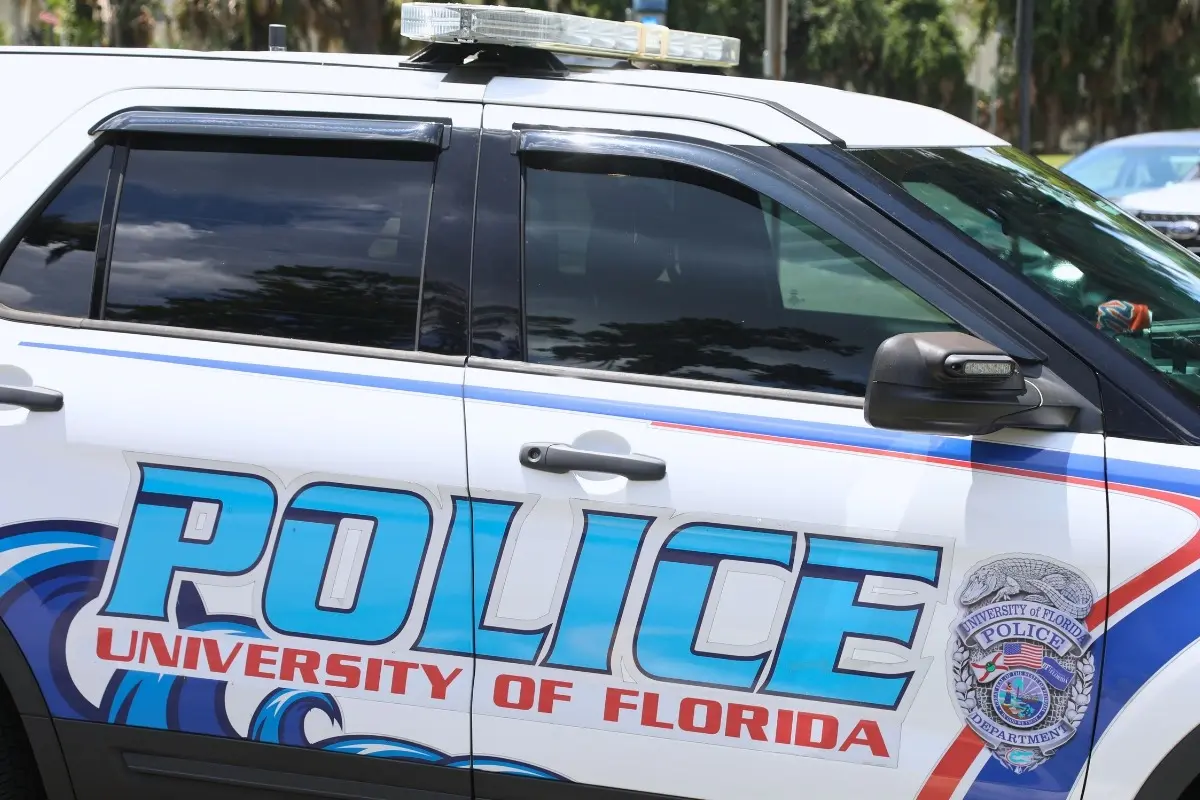
A heightened state of alert briefly swept through the University of Florida (UF) campus in Gainesville on Wednesday afternoon following reports of two individuals walking along the institutional boundary carrying what appeared to be long-barrel rifles. The University of Florida Police Department (UFPD) responded rapidly to community notifications, initiating immediate visual assessment and field monitoring of the subjects as they traversed public rights-of-way adjacent to the university grounds.
Subsequent investigations and real-time monitoring by law enforcement personnel confirmed that the two individuals remained strictly on public municipal sidewalks, refraining from stepping onto university property or breaching campus territorial boundaries. Because the subjects were operating within public easements and did not cross onto property owned or governed by the university, UFPD officials determined that no immediate statutory violation or active trespass had occurred under current state law.
In a formal advisory issued to students, faculty, and administrative staff, UFPD addressed the inherent tension between public anxiety and constitutional rights. The police department explicitly noted that while open displays of long guns near educational environments can induce significant public distress, Florida statutes do not broadly criminalize the open carrying of long rifles in public spaces under non-threatening circumstances, provided the individuals do not enter designated gun-free zones such as educational institutions.
This incident highlights the ongoing challenges faced by campus law enforcement agencies operating within municipal environments, where public sidewalks directly abut open academic land. It underscores the complex intersection of state firearm statutes, public safety protocols, and the critical role of community surveillance in maintaining situational awareness across higher education campuses.
Detailed Chronology of the Incident
Initial Emergency Reports and Immediate Response
The event began at precisely 12:25 p.m. on Wednesday, when the University of Florida Police Department Dispatch Center began receiving urgent telephone reports from members of the public and campus community. Callers reported observing two unidentified individuals walking along the public sidewalk adjacent to the university’s outer perimeter, both visibly equipped with what appeared to be standard shoulder-fired rifles.
Upon receipt of the initial emergency calls, UFPD communications personnel initiated standard active-threat response protocols, dispatching field units to the reported location to assess the nature of the situation. Patrol officers, backed by field supervisors, responded within minutes to establish visual contact with the subjects and evaluate potential tactical threats to the surrounding academic infrastructure.
Monitoring and Perimeter Containment
Upon arrival at the perimeter zone, law enforcement officers observed the two individuals proceeding along the municipal sidewalk. Field officers established a protective monitoring posture, tracking the movements of both subjects to ensure they did not cross the physical or legal threshold separating public rights-of-way from university property.
During the observation period, officers confirmed the following physical and operational parameters:
- Jurisdictional Boundary Maintenance: The subjects maintained their trajectory entirely on public municipal sidewalks running adjacent to the university campus.
- Absence of Intrusion: At no point during the observed event did either individual set foot upon land owned, leased, or operated by the University of Florida Board of Trustees.
- Behavioral Assessment: The individuals did not brandish the weapons in an aggressively overt, menacing, or directly threatening manner toward passersby, nor did they verbalize direct threats against institutional personnel or students, which would have triggered immediate criminal intervention under assault or brandishing statutes.
Issue of Public Communication
Recognizing the potential for widespread panic—particularly given the highly visible nature of armed individuals operating in close proximity to a major research university—UFPD issued a targeted community alert message. The communication aimed to clarify the legal parameters of the incident, inform the university populace of the police presence, and explain why law enforcement had not taken the individuals into custody.
By providing clear situational updates, UFPD sought to prevent misinformation from proliferating across social media platforms, while simultaneously outlining the legal constraints under which law enforcement officers were required to operate.
Supporting Context & Metrics
Florida Firearm Legislation and the Legal Landscape of Open Carry
To fully understand the legal dynamics of the incident, it is necessary to examine Florida’s statutory framework governing firearms, public display, and educational property.
Florida law maintains strict and distinct regulations regarding the open carrying of weapons, codified primarily under Chapter 790 of the Florida Statutes:
+-----------------------------------------------------------------------------------+
|                         FLORIDA STATUTORY FRAMEWORK METRICS                       |
+--------------------------+--------------------------------------------------------+
| Statute                  | Core Legal Application & Provisions                    |
+--------------------------+--------------------------------------------------------+
| F.S. § 790.053           | Open Carrying of Weapons: Prohibits open carry of      |
|                          | handguns, with statutory nuances regarding long guns   |
|                          | depending on intent, location, and specific activities.|
+--------------------------+--------------------------------------------------------+
| F.S. § 790.115           | Possessing Firearms on School/University Property:     |
|                          | Strict felony prohibition against carrying firearms    |
|                          | within any administrative or academic grounds.        |
+--------------------------+--------------------------------------------------------+
| HB 543 (2023 Amendment)  | Permitless Concealed Carry: Authorizes concealed carry  |
|                          | without a permit for eligible individuals, but DOES    |
|                          | NOT grant open carry rights for handguns in general.   |
+--------------------------+--------------------------------------------------------+
While Florida law strictly prohibits the general open carrying of handguns under Florida Statute § 790.053 (with limited exceptions such as hunting, fishing, camping, or target shooting), the open carrying of long guns (rifles and shotguns) occupies a distinct legal space. In public rights-of-way that are not designated as prohibited zones, simply carrying a long rifle without committing a secondary offense—such as improper exhibition of a firearm under F.S. § 790.10 or aggravated assault—does not automatically constitute an arrestable criminal act under state law.
Crucially, Florida Statute § 790.115 strictly mandates that no person shall possess a firearm on any property belonging to a public school, college, or university campus, subject to minor statutory exceptions for campus police and authorized personnel. Because the two individuals stayed on public municipal sidewalks outside university property lines, they did not cross into the jurisdiction governed by F.S. § 790.115.
Campus Jurisdictional Boundaries and Spatial Realities
The physical layout of the University of Florida presents unique operational security challenges. Unlike isolated corporate or residential campuses, UF is integrated directly into the municipal grid of the City of Gainesville. Major thoroughfares—such as University Avenue and Southwest 13th Street—feature public sidewalks directly touching university lawns, historic administrative buildings, and student transit hubs.
                    [ MUNICIPAL PUBLIC SIDEWALK ]
                  (Covered by Standard State Law)
                                |
                     [ JURISDICTIONAL BOUNDARY ]
                                |
    [ UNIVERSITY OF FLORIDA CAMPUS - STRICT GUN-FREE ZONE ]
                  (Governed by F.S. § 790.115)
This spatial configuration means that a individual standing on a municipal sidewalk is subject to public right-of-way regulations, while an individual stepping two feet onto the grass of the university campus enters a strictly regulated, gun-free institutional environment where carrying a firearm is a felony offense.
Security Infrastructure and Community Vigilance Metrics
The rapid resolution and tracking of Wednesday’s incident relied heavily on UFPD’s multi-layered security framework, which integrates technological infrastructure with community involvement:
- Dispatch & Surveillance Efficiency: UFPD operates an extensive network of campus security cameras integrated with automated alert systems, enabling dispatchers to visually monitor public edges in real time.
- UF Alert Notification System: The emergency alert system reaches over 50,000 active students and thousands of staff members within minutes of activation via SMS, email, and mobile push notifications.
- Community Reporting Volume: In active public boundary situations, UFPD receives dozens of public calls within minutes of an unusual event, demonstrating high institutional vigilance.
Official Statements and Institutional Communications
In the wake of the incident, the University of Florida Police Department released official communications intended to inform the community while reaffirming public safety principles.
In its official safety advisory, UFPD explicitly detailed the legal realities governing the incident:
“While the demonstration may be alarming, Florida law does not prohibit individuals from openly carrying rifles in public spaces.”
The department’s statement directly addressed the anxiety expressed by students and staff who observed armed individuals near university facilities, acknowledging that while such displays cause significant concern, law enforcement officers must operate strictly within state law and constitutional guidelines.
UFPD went on to express gratitude to the members of the university community who promptly reported the sightings to law enforcement, emphasizing that proactive community reporting remains the cornerstone of campus defense:
“UFPD thanks members of the community who reported the incident and encouraged continued vigilance. A safe campus is a vigilant one.”
The official response highlighted the delicate balance law enforcement officers must maintain between upholding civil liberties protected under state law and executing protective measures to preserve public safety.
Future Outlook
Policy Implications and Edge-Management Strategies
The event highlights an ongoing operational challenge for public higher education institutions in Florida: managing campus security along open, urban boundaries. Because municipal sidewalks cannot be legally retrofitted into gun-free zones without state legislative amendments, university administration and campus police must rely on continuous edge monitoring and rapid field deployment strategies.
Safety experts suggest several proactive measures moving forward:
- Enhanced Edge Surveillance: Increasing fixed high-definition camera arrays along the outer perimeters of campus where municipal rights-of-way directly touch academic grounds.
- Joint Municipal-University Protocols: Strengthening coordinated operational responses between UFPD and the Gainesville Police Department (GPD) for incidents occurring on municipal rights-of-way surrounding the university.
- Public Legal Education: Conducting educational campaigns to inform the student body and university staff about legal boundaries, law enforcement mandates, and the specific statutory realities of open carry laws in Florida.
Legislative and Community Context
As Florida’s legal landscape surrounding firearms continues to evolve, public displays of long guns near public institutions will likely remain a topic of civic debate. Lawmakers and public policy analysts continue to monitor how open carry statutes interact with public safety, particularly around high-density areas such as university perimeters, mass transit hubs, and civic centers.
For the University of Florida community, the incident serves as a practical demonstration of institutional emergency protocols. While the event concluded without property damage, injuries, or legal violations, UFPD’s guidance remains clear: community reporting and situational awareness remain vital to maintaining security across the university’s broad campus environment.

0 Comments