

Executive Overview
The festive atmosphere of the Labor Day holiday weekend ended in unspeakable tragedy for an Arizona family, leaving an entire community reeling from a devastating loss. On Monday afternoon, September 2026, a joyful journey home from a family visit to New Mexico turned into a catastrophe when a horrific head-on collision claimed the lives of all four members of a young Laveen family.
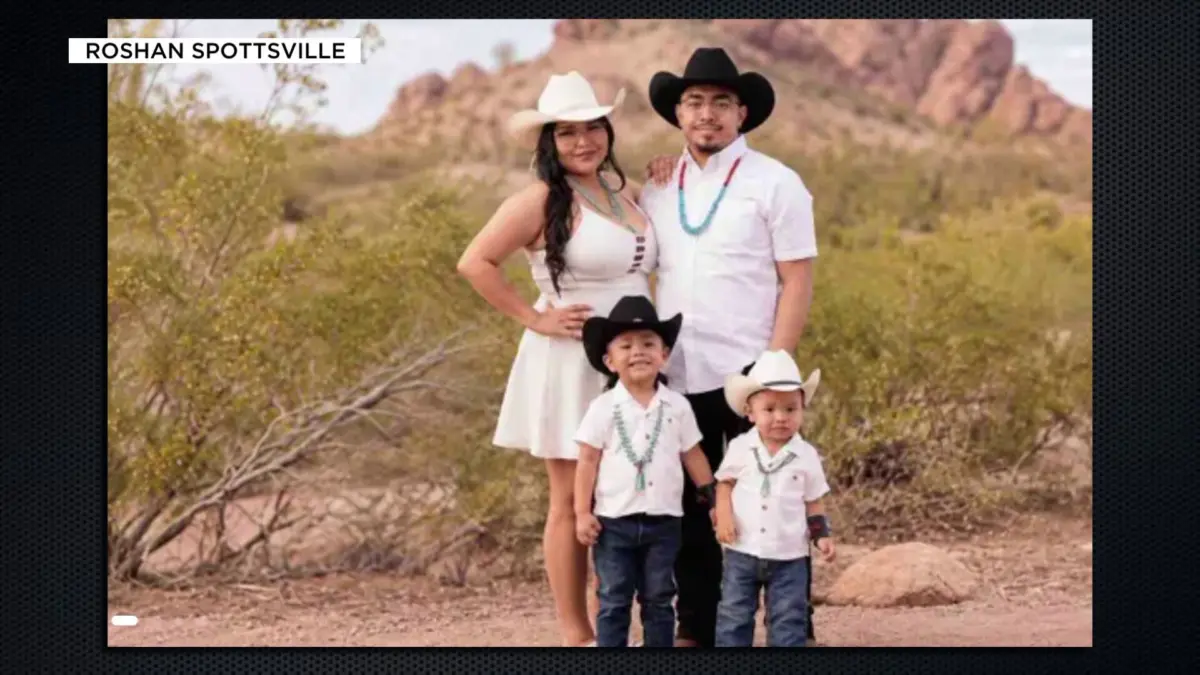
The victims have been identified as 26-year-old Giovanni Huerta, his wife, 26-year-old Kiah Begaye, and their two young sons, 4-year-old Dakota and 2-year-old Malakai. The young couple, high school sweethearts who had only recently married in April, were deeply rooted in their community and possessed boundless promise for the future. Huertra worked diligently as a mechanic, while Begaye was actively launching her own Native American clothing business. In a single, catastrophic moment on Arizona State Route 260 near Heber-Overgaard, two generations of the family were wiped out, plunging their loved ones into a profound and enduring grief.
Law enforcement agencies, including the Arizona Department of Public Safety (AZDPS), responded swiftly to the scene. The driver of the opposing vehicle involved in the head-on crash has been identified as 21-year-old Jesse David Lovato. Following the preliminary investigation, Lovato was taken into custody and subsequently booked into jail, facing four counts of manslaughter and two counts of aggravated assault. Preliminary insights shared with the grieving families indicate that driver fatigue—specifically, the possibility of Lovato falling asleep behind the wheel—may have precipitated the collision.
As the legal proceedings unfold, the families of Giovanni and Kiah are channeling their profound heartbreak into a vital public safety plea. Urging motorists to exercise extreme caution, patience, and vigilance during heavy holiday travel, the grieving relatives hope to prevent other families from enduring similar devastation. Meanwhile, an outpouring of community solidarity, including financial support organized via crowdfunding platforms, is helping the families navigate the immense financial and emotional burdens of planning a collective farewell for four lives taken far too soon.
Detailed Chronology: The Unfolding of a Labor Day Catastrophe
The Journey Home
The final days of the Labor Day weekend were meant to be a time of warmth, reconnection, and safe travel for Giovanni Huerta, Kiah Begaye, and their two sons, Dakota and Malakai. Having spent the extended weekend visiting extended family members across the state line in New Mexico, the young family packed their vehicle on Monday, September afternoon, eager to return to their home in Laveen, Arizona.
By all accounts, the trip north and west had been peaceful. The young parents, described by relatives as exceptionally devoted, spent the drive chatting about their future plans, looking forward to the routine of their workweeks, and tending to their boys. Dakota, at four years old, was full of curious energy, while two-year-old Malakai provided the typical joyful chaos of toddlerhood. Neither parents nor children could have anticipated that the final hours of their holiday would intersect with a fatal sequence of events on a remote stretch of eastern Arizona highway.
The Collision on State Route 260
The Arizona Department of Public Safety received emergency calls reporting a major traffic collision on State Route 260 near the community of Heber-Overgaard. The remote highway, known for winding paths and heavy holiday traffic surges as travelers return from mountain retreats and neighboring states, became the site of a devastating head-on crash.
According to preliminary reports from state troopers, a pickup truck driven by 21-year-old Jesse David Lovato crossed into oncoming traffic, colliding directly and forcefully with the vehicle carrying the Huerta-Begaye family. The impact of the crash was catastrophic. First responders arriving at the scene found a scene of utter devastation. Despite immediate emergency medical intervention, all four occupants of the family vehicle—Giovanni, Kiah, Dakota, and Malakai—succummed to their injuries at the scene.
Investigators immediately cordoned off sections of State Route 260 to conduct a thorough accident reconstruction analysis, causing significant traffic delays as emergency crews worked to clear the wreckage and document physical evidence. The initial phase of the investigation focused heavily on vehicle positioning, skid marks, road conditions, and witness statements to piece together the exact trajectory that led to the fatal impact.
Immediate Aftermath and Arrest
As state troopers processed the scene and notified next of kin, the gravity of the incident escalated within the local law enforcement community. By evaluating the physical evidence and conducting preliminary interviews, investigators turned their attention to the driver of the pickup truck.
Jesse David Lovato was identified as the sole occupant and operator of the striking vehicle. While toxicology results and formal determinations regarding impairment remained pending, information communicated to the victims’ families by an investigating DPS trooper suggested that driver fatigue—specifically, the driver falling asleep behind the wheel—was a primary contributing factor in the tragedy.
Based on the preliminary findings of gross negligence and the catastrophic loss of life, law enforcement formally arrested Lovato. He was subsequently booked into a local correctional facility facing four distinct counts of manslaughter, along with two counts of aggravated assault, setting the stage for a rigorous legal prosecution in the coming weeks and months.
Supporting Context & Metrics: Highway Safety and Holiday Travel Risks
The Perils of State Route 260 and Rural Corridors
State Route 260 serves as a critical artery connecting eastern Arizona communities, the Mogollon Rim, and the greater Phoenix metropolitan area. However, like many two-lane and high-speed rural corridors throughout the American Southwest, the roadway presents unique safety challenges. Long stretches of uninterrupted driving, combined with changes in elevation and variable lighting conditions, create an environment where driver fatigue can quickly become lethal.
Transportation safety advocates point out that head-on collisions on rural highways disproportionately result in fatalities compared to urban accidents, largely due to the higher combined velocities of vehicles traveling in opposite directions. When a distracted or fatigued driver drifts across the centerline on a highway like SR 260, the reaction time afforded oncoming motorists is often measured in fractions of a second—frequently too little time to take evasive action.
The Hidden Danger of Holiday Fatigue
The timing of the crash—occurring on the tail end of a major holiday weekend—underscores a persistent and deadly trend documented by highway safety organizations nationwide: holiday travel fatigue. Labor Day weekend consistently ranks among the periods with the highest volume of vehicular traffic on American roads.
According to data compiled by agencies such as the National Highway Traffic Safety Administration (NHTSA) and the Arizona Department of Transportation (ADOT), several factors compound the risk of crashes during extended holiday weekends:
- Driver Exhaustion: Motorists frequently attempt to maximize their time off by embarking on long drives late at night or driving straight through after exhausting weekend activities.
- Traffic Congestion: Sudden bottlenecks, stop-and-go patterns, and heavy semi-truck traffic increase driver frustration and cognitive load.
- Complacency: Familiarity with routes or the urgency to return home before the workweek begins often leads to speeding and diminished attention spans behind the wheel.
Law enforcement agencies frequently ramp up patrols during holiday weekends specifically to combat speeding, aggressive driving, and driving under the influence. However, as this tragic incident highlights, acute fatigue—manifesting as microsleeps or momentary lapses in concentration—remains an insidious and difficult-to-police hazard that can turn deadly in a heartbeat.
Official Statements & Community Grief
Remembering a Loving Family
In the wake of the tragedy, the families of Giovanni Huerta and Kiah Begaye have opened their hearts to share the memories of the vibrant young lives that were lost. Speaking with local media outlets, relatives painted a picture of a devoted, hardworking couple deeply invested in their children and their community.
"It doesn’t seem fair at all because they were so young," expressed Chrissy Kaibetoney, Kiah’s mother, her voice heavy with grief. "They had a whole life ahead of them. They had plans, goals, and adventures they wanted to go on."
High school sweethearts who solidified their bond by marrying earlier in the spring, Giovanni and Kiah had established their home in Laveen, Arizona. Giovanni earned the respect of colleagues and clients through his dedicated work as a mechanic, while Kiah was channeling her creative and entrepreneurial spirit into launching a Native American clothing business. Beyond their professional aspirations, friends and family members emphasize that their greatest joy stemmed from parenting their two sons.
Joel Huerta, Giovanni’s father, captured the surreal and paralyzing nature of sudden grief, noting that the reality of the loss has been nearly impossible to process.
"It’s like a dream, and I’m still waiting to wake up. I wake up, and I’m still in the dream—more like a nightmare," Joel Huerta shared. "They were my world. My son, my only son. Two generations just gone like that."
A Plea to the Motoring Public
Despite navigating an ocean of personal sorrow, the families are steadfast in their desire to convert their private pain into a public warning. Recognizing that no words can adequately encapsulate the devastation of losing an entire family in an instant, Chrissy Kaibetoney issued a direct appeal to drivers across Arizona and beyond.
"Losing your loved ones in an instant like that has no words to describe it," Kaibetoney said. She urged motorists to reevaluate their habits on the road, emphasizing patience over speed. "Encourage people to take their time driving. There’s no need to rush anywhere, especially on a holiday weekend. It’s not worth it."
Grassroots Support and Community Solidarity
The magnitude of the loss has struck a profound chord within the Phoenix metropolitan area and across online communities. Recognizing the immense financial strain associated with planning simultaneous funeral services and memorials for four family members, friends and concerned community members mobilized rapidly.
A verified fundraising campaign was established via GoFundMe to assist the grieving relatives with funeral expenses and related support. The response from the public has been overwhelming, featuring contributions not only from personal acquaintances but also from complete strangers touched by the story. This outpouring of compassion has provided a small measure of comfort to families navigating the darkest days of their lives.
Future Outlook: Legal Proceedings and Long-Term Safety Advocacy
Navigating the Legal System
As the community begins the painful process of memorialization, the legal system will address the culpability surrounding the crash. Jesse David Lovato, facing four counts of manslaughter and two counts of aggravated assault, will navigate the preliminary hearing and trial phases in the Arizona judicial system.
Legal analysts note that prosecutors will rely heavily on the final accident reconstruction reports, toxicology findings, digital data pulled from the vehicles’ event data recorders (often referred to as "black boxes"), and witness testimonies to build a comprehensive case. If driver fatigue is formally substantiated as the primary cause resulting in a catastrophic failure to maintain control of the vehicle, it will serve as a stark reminder of the legal and moral consequences of operating heavy machinery while exhausted.
Long-Term Implications for Highway Safety Initiatives
The deaths of Giovanni, Kiah, Dakota, and Malakai Huerta serve as a grim catalyst for ongoing discussions regarding rural highway safety enhancements in Arizona. Transportation planners and safety advocates are continually evaluating whether infrastructure improvements—such as the installation of center median barriers, rumble strips, enhanced lighting, and widened shoulders on high-risk stretches of State Route 260—can mitigate the frequency of catastrophic head-on collisions.
At the same time, public awareness campaigns focusing on driver fatigue are expected to receive renewed emphasis. Safety organizations emphasize that fatigue impairs cognitive functions, reaction times, and situational awareness in a manner strikingly similar to alcohol intoxication. Educational initiatives aimed at teaching drivers to recognize the early warning signs of exhaustion—such as heavy eyelids, frequent yawning, or wandering thoughts—could prove critical in preventing future tragedies.
For now, however, the primary focus remains on honoring the memories of a young family whose promising journey was cut short far too soon. Through the collective grief of their loved ones, the legacy of Giovanni, Kiah, Dakota, and Malakai will endure, serving as an enduring reminder of the fragility of life and the paramount importance of safety, patience, and vigilance on the open road.

0 Comments