

Executive Overview
DALLAS, Texas — With the clock ticking down to a high-stakes midterm election cycle, President Donald Trump took center stage in Dallas on the opening night of the 2026 Republican Midterm Convention, delivering a keynote address aimed at defying decades of American political history. Facing the formidable historical headwind that typically punishes the party holding the White House during a midterm contest, the President launched an aggressive mobilization effort to energize the conservative base, defend his administration’s legislative and economic record, and frame the upcoming November ballot as an existential choice for the future of the nation.
In a speech that served as both a retrospective defense of his administration and a forward-looking campaign rally, Trump leaned heavily into his signature populist rhetoric. He urged voters to treat the midterms as a referendum on his own leadership, imploring the packed convention hall in Texas to view his name as figuratively sitting atop the ballot. Seeking to pierce through voter apathy and counter widespread economic anxieties, the President also dropped a political bombshell: a surprise campaign promise to issue a direct $5,000 dividend check to every adult citizen in the United States, contingent entirely on the Republican Party maintaining control of both the House of Representatives and the United States Senate.
The bold proposal immediately electrified the convention floor, providing red meat for a party eager for a rallying cry. However, the announcement has simultaneously ignited a firestorm of controversy in Washington and across the nation’s financial capitals. Critics, economists, and congressional Democrats were quick to point out the staggering fiscal realities of the promise, noting that a nationwide payout of that magnitude would cost the federal treasury upwards of $1 trillion at a fragile economic moment when the national deficit has already eclipsed the $40 trillion threshold.
As the campaign enters its final two months, the Dallas convention has laid bare the central paradox of the 2026 midterms. While Republicans are attempting to run on a platform of historic economic strength and unfinished legislative business, they are simultaneously grappling with persistent voter dissatisfaction fueled by high gas prices, elevated supermarket costs, and the President’s own challenging approval ratings. This comprehensive report examines the opening night of the convention, the mechanics and fallout of the President’s unprecedented economic proposals, the historical context defining the 2026 cycle, and what this high-stakes political gamble means for the future of American governance.
Detailed Chronology of the Dallas Convention Kickoff
Setting the Stage in the Lone Star State
The unusual configuration of the 2026 Republican Midterm Convention in Dallas, Texas, underscored the high anxiety and strategic recalculations currently gripping the GOP leadership. Traditionally, midterms serve as decentralized, state-led skirmishes where national figures often tread lightly to avoid nationalizing local races. Yet, the 2026 cycle has shaped up to be anything but traditional. Recognizing the precarious nature of their congressional majorities, party organizers structured the Dallas gathering to project national unity and project a centralized, unyielding message straight from the executive branch.
From the opening gavel, the atmosphere inside the convention arena was charged with a mixture of fervent loyalty and underlying apprehension. Delegates from all fifty states gathered under the shadow of looming legislative battles, acutely aware that the party’s grip on Capitol Hill is hanging by a thread. The narrative crafted by convention planners was clear: to protect the administration’s agenda, the internal divisions within the party must be suppressed, and the focus must remain squarely on the perceived failures of the opposition.
The Keynote Address: "Pretend I’m on the Ballot"
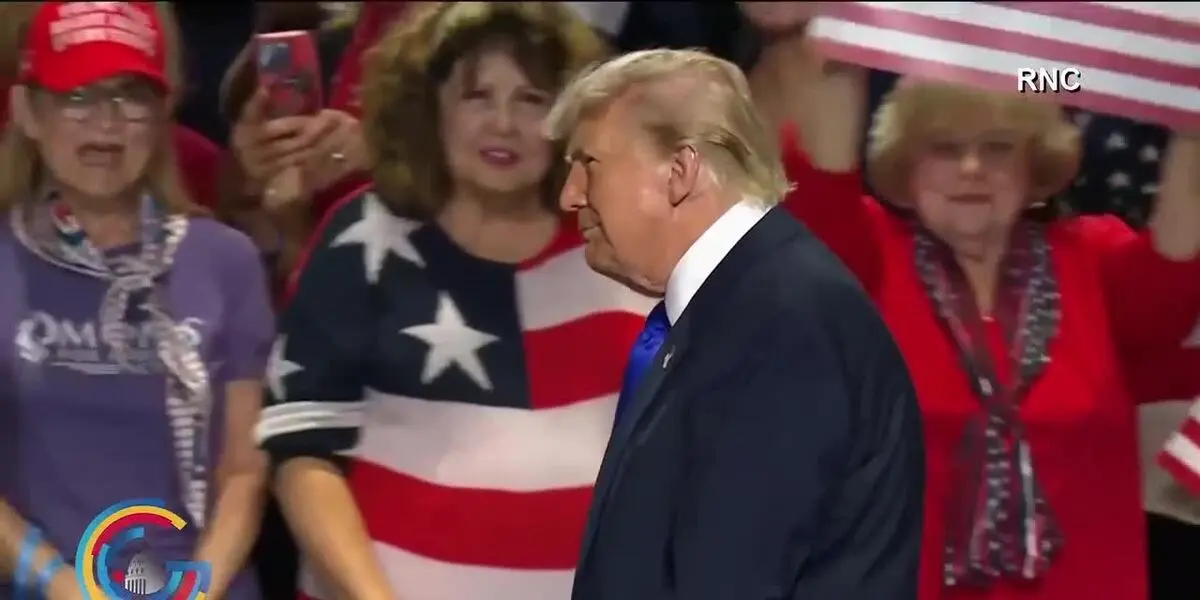
As President Trump stepped to the podium on the first night of the convention, the arena erupted into a sustained ovation that lasted several minutes, complete with chants and waves of red-capped supporters. Eschewing a traditional, teleprompter-heavy policy speech, Trump immediately sought to personalize the midterm election, framing the contest not as a referendum on local congressional candidates, but as a direct validation of his own executive mandate.
"So I’m asking you to pretend that I’m on the ballot. I’m on the ballot. I’m on the. Just one more time."
With those words, the President effectively seized control of the national narrative, transforming a mid-term cycle into a proxy presidential election. He argued that the legislative accomplishments of his administration—which he characterized as the "greatest two years in the history of the presidency"—were in imminent jeopardy unless voters delivered a decisive mandate to his congressional allies.
Trump wasted no time contrasting his vision with what he described as the catastrophic record of the previous administration. Directing his ire toward former President Joe Biden, Trump painted a grim picture of the years preceding his return to the White House:
"The choice in this election is very, very simple. Democrats are asking you to vote for their failed far-left agenda. It’s never worked, that destroyed your finances and delivered you four years of disaster, bedlam, and death under Sleepy Joe Biden. And I’m asking you to let us finish the job we began."
The Blockbuster Policy Drop: The $5,000 Dividend
The climax of the evening’s address arrived when the President unveiled what is arguably the most audacious campaign pledge of the 2026 cycle. Speaking off-script to the roaring approval of the audience, Trump dangled a direct financial incentive tied explicitly to the electoral outcome in November.
"If the Republicans win the House of Representatives and the United States Senate, both of them, because of our economic tremendous economic success like in history—we’ve never had anything like what’s happening—but because of our tremendous strength and success economically, I will issue a dividend to every adult citizen in the United States of America for $5,000."
The promise sent immediate shockwaves through the convention hall, with delegates leaping to their feet. However, veteran political observers recognized the maneuver as a high-stakes gamble designed to shift the public debate away from stubborn inflation metrics and toward direct, tangible financial relief for working-class families. By conditioning the payout on total control of Congress, Trump effectively attempted to bind the fortunes of every down-ballot Republican candidate to his own populist appeal, forcing voters to weigh a direct cash injection against traditional fiscal conservatism.
Supporting Context & Metrics: The Economic and Political Reality
The Historical Midterm Curse
To understand the gravity of the strategy deployed in Dallas, one must examine the unforgiving historical trends that govern American midterm elections. Since the Civil War, the party holding the White House has lost ground in the House of Representatives in nearly every single midterm election, with an average loss of roughly 26 House seats and four Senate seats.
Historical Midterm Seat Loss (Average):
+------------------------------------------+
| House Seats Lost:  ~26 seats             |
| Senate Seats Lost: ~4 seats              |
+------------------------------------------+
*Note: The party in power has bucked this trend only twice in modern history (1934 and 2002).*
President Trump and the GOP leadership are attempting to achieve a statistical anomaly. In a political landscape defined by intense polarization, the traditional playbook—which relies on suburban swing voters breaking away from the incumbent party—has been upended. Yet, Republicans cannot simply rely on base mobilization; they must also contend with economic indicators that cut both ways in the minds of average voters.
The Grassroots Economic Disconnect
While the White House has heavily touted robust gross domestic product (GDP) growth and corporate investment as proof of an economic golden age, the lived experience of millions of Americans tells a more complicated story. Throughout 2025 and into 2026, persistent pressures at the gas pump and the supermarket checkout counter have weighed heavily on consumer confidence.
Polling data leading up to the Dallas convention revealed a persistent vulnerability for the administration:
- Gas Prices: Despite domestic energy production initiatives, regional fluctuations at the pump have kept energy costs front-of-mind for commuters.
- Grocery Inflation: The cost of staple household goods remains elevated compared to pre-pandemic baselines, creating a constant, daily reminder of inflationary pressures.
- Approval Ratings: President Trump’s approval numbers have hovered in a politically vulnerable band, complicating efforts by vulnerable Republican incumbents in competitive suburban districts to distance themselves from presidential controversies while still benefiting from his base’s energy.
The Arithmetic of the $5,000 Dividend
It was against this backdrop of economic anxiety that the $5,000 dividend promise was introduced. However, financial analysts and policy watchdogs quickly set to work analyzing the feasibility and potential fallout of the proposal.
With the adult population of the United States hovering near 260 million individuals, a universal distribution of $5,000 per adult would carry a staggering price tag of approximately $1.3 trillion.
Financial Breakdown of the Proposed Dividend:
+------------------------------------------+
| Approximate US Adult Population: 260M    |
| Payout Per Adult: $5,000                 |
| Total Estimated Cost: ~$1.3 Trillion     |
| Current National Deficit: >$40 Trillion  |
+------------------------------------------+
Critics were quick to contextualize these figures within the broader health of federal finances. At a time when the national debt has crossed the $40 trillion threshold, adding another trillion-plus dollars in unindexed, direct cash payments risks pouring fuel on the very inflationary fires that have plagued consumers at the grocery store. Conservative fiscal hawks, traditionally opposed to massive federal spending sprees reminiscent of pandemic-era stimulus checks, found themselves in an awkward political bind, forced to reconcile free-market orthodoxy with the populist demands of the party’s titular head.
Official Statements and Political Reactions
The Democratic Counter-Offensive
The response from the Democratic Party and progressive think tanks was swift, merciless, and unified. Within minutes of the President stepping off the stage in Dallas, national Democratic committees and congressional leaders issued statements condemning the speech as an exercise in fiscal irresponsibility and political desperation.
House Democratic leadership released a scathing joint statement characterizing the $5,000 dividend as an empty, transactional bribe designed to distract voters from the administration’s policy failures:
"Tonight, Donald Trump proved once again that he is completely detached from the economic reality facing everyday American families. Promising a trillion-dollar gimmick while our national debt eclipses $40 trillion is the height of recklessness. While working Americans struggle with high prices at the grocery store and the gas pump, Trump is offering empty checks in exchange for absolute political control. The American people will not be bought, and they will hold House and Senate Republicans accountable for this fiscal madness in November."
Economic policy experts aligned with the opposition also weighed in, warning that a sudden injection of $1.3 trillion into the consumer economy could trigger a resurgence of inflation, forcing the Federal Reserve to keep interest rates elevated and dampening long-term market stability.
The Republican Defense and Base Reaction
Inside the convention hall, however, the reception could not have been more different. Republican National Committee officials and surrogate speakers rushed to defend the President’s vision, framing the proposed dividend as a bold, innovative reward for the American worker made possible by deregulation and tax policies that have unlocked unprecedented corporate vitality.
Defending the proposal during a post-speech panel, a prominent conservative lawmaker argued that the naysakers simply fail to understand supply-side economics:
"What the President outlined tonight is a direct return of wealth from an overreaching federal apparatus back to the citizens who generated it. For years, Washington has squandered taxpayer money on foreign aid and bloated bureaucracies. President Trump is proposing to cut out the middleman and put hard-earned capital directly into the pockets of the American people. Critics call it irresponsible; we call it economic patriotism."
Grassroots delegates echoed this sentiment, emphasizing that the promise gave them a concrete, easily understood message to take back to their home precincts. For the foot soldiers of the conservative movement, the debate over the national deficit took a back seat to the immediate appeal of direct financial empowerment and the overriding goal of retaining congressional majorities to block the progressive agenda.
Future Outlook: The Path to November
The Battlegrounds That Will Decide Congress
As the dust settles on the opening night of the 2026 Republican Midterm Convention, attention shifts rapidly back to the ground game in the handful of congressional districts and senate races that will ultimately determine the balance of power in Washington.
The strategy laid out in Dallas—nationalizing the election around the President’s persona and dangling a massive financial dividend—creates a distinct set of tactical challenges and opportunities:
- Suburban Tightropes: In swing districts across states like Pennsylvania, Arizona, Georgia, and Michigan, Republican incumbents must navigate the tension between energizing the Trump base and appealing to moderate, fiscally conservative independents who may view a $1.3 trillion payout with deep skepticism.
- The Inflation Debate: Democrats are expected to make the cost of living and the national debt the central pillars of their closing arguments, framing the GOP as the party of reckless fiscal expansion. Republicans, conversely, will attempt to pin inflation on past legislative spending while marketing the Trump dividend as a unique cure for middle-class stagnation.
- Turnout Mechanics: Midterm elections are fundamentally contests of motivation. By placing himself conceptually "on the ballot," President Trump hopes to bypass the historic enthusiasm gap that typically plagues the party in power, driving record conservative turnout in off-year voting booths.
Conclusion: A High-Stakes Wager on the American Electorate
The 2026 Republican Midterm Convention in Dallas has irrevocably altered the trajectory of the election cycle. By transforming a routine legislative defense into a high-octane populist referendum, President Trump has forced both parties to elevate the stakes of the November contest.
Whether the gamble of a $5,000 dividend will succeed in bucking historical trends and preserving the Republican majorities in Congress remains one of the most compelling and consequential questions in modern American politics. As voters prepare to head to the polls in less than two months, the choice before the nation has been cast in stark relief: a referendum on an unfinished executive agenda backed by populist financial promises, or a sweeping rebuke of administration policies by an electorate grappling with deep-seated economic anxieties. The answers will be delivered not in the convention halls of Texas, but in the ballot boxes across the nation this November.

0 Comments