
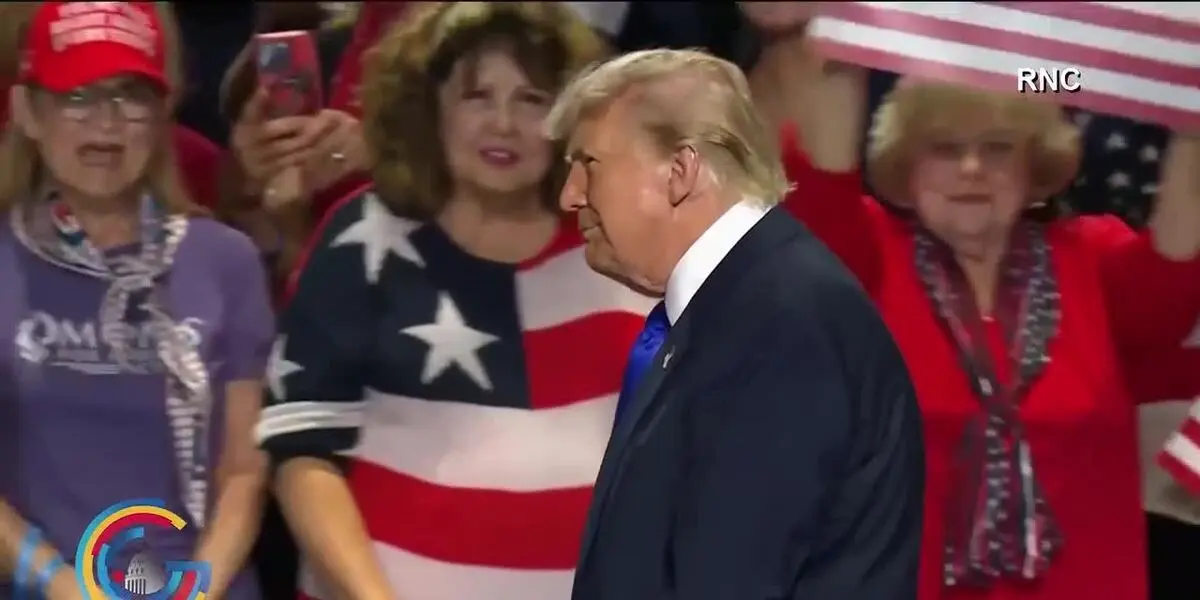

DALLAS, Texas — In a high-stakes address that fundamentally altered the landscape of the 2026 midterm elections, President Donald Trump took center stage on the opening night of the Republican Midterm Convention in Dallas, Texas. Speaking before a raucous, capacity crowd of party faithful, delegates, and conservative organizers, the President sought to rally a base anxious about mounting economic headwinds and historical political precedents.
With the pivotal November elections less than two months away, the gathering—an atypical mid-cycle convention format engineered by the Republican National Committee—served as a crucial bellwether for the party’s legislative survival. Historically, the political party occupying the White House suffers severe legislative attrition during midterm cycles. Recognizing this grim statistical reality, President Trump delivered an aggressive, wide-ranging keynote address explicitly designed to nationalize the local races, bypass historical precedent, and tie the fate of the entire congressional map directly to his own formidable political brand.
The highlight of the evening, however, was not merely a retrospective defense of his administration’s legislative achievements, but a breathtaking and controversial economic pledge: a promised $5,000 direct federal dividend to every adult American citizen, conditional entirely upon maintaining robust Republican majorities in both the House of Representatives and the United States Senate.
As the shockwaves of the speech reverberate across Washington and state capitals nationwide, political analysts, economists, and opposition leaders are grappling with the profound implications of Trump’s Dallas gambit.
Executive Overview
The first night of the 2026 Republican Midterm Convention in Dallas was framed by party strategists as a mobilization pivot. With control of both chambers of Congress resting on razor-thin margins, the GOP faces an uphill battle to retain legislative supremacy. President Trump’s address aimed to pierce through voter apathy by reframing the midterms as an existential referendum on national prosperity versus what he characterized as progressive economic ruin.
Central to the President’s strategy was an explicit personalization of the ballot. Despite not running for executive office himself in this cycle, Trump urged the electorate to treat his name as though it were physically listed on every voting machine across the country. By tethering congressional candidates directly to his executive track record, the President sought to transform localized legislative contests into a nationwide vote of confidence.
Yet, the defining moment of the evening materialized when the President dropped a political bombshell: the promise of a $5,000 federal dividend check for every adult citizen. Tied directly to conditional electoral outcomes—requiring unified Republican control of Capitol Hill—the proposal immediately dominated the post-speech news cycle. While welcomed by enthusiastic supporters on the convention floor, the pledge ignited immediate firestorms among fiscal conservatives, mainstream economists, and Democratic leadership, who were quick to point out the staggering fiscal realities of a $1 trillion payout against a backdrop of a national debt exceeding $40 trillion.
Detailed Chronology: Opening Night in Dallas
Setting the Stage at the Kay Bailey Hutchison Convention Center
The atmosphere inside the Dallas convention venue was electric long before the President took the dais. Gray DC correspondents on the ground reported lines wrapping around the complex hours prior to the evening session. The unusual scheduling of a national-scale convention during a midterm year underscored the gravity with which party leadership views the upcoming November ballot.
State delegations from across the country—ranging from critical battlegrounds like Pennsylvania and Arizona to traditionally safe red states—packed the arena floor, adorned with campaign placards bearing slogans focused on economic nationalism and border security. Warm-up speakers, including congressional leaders and grassroots organizers, repeatedly hammered home a singular message: the legislative gains achieved over the past two years face imminent rollback if the opposition reclaims the gavel.
The President’s Entrance and Direct Appeal
Accompanied by a thunderous ovation, President Trump walked out to Lee Greenwood’s "God Bless the USA," signaling the commencement of the evening’s main event. Eschewing a traditional teleprompter-heavy delivery in favor of his signature improvisational cadence, Trump immediately seized the psychological high ground of the campaign season.
Acknowledging the unconventional nature of a midterm convention speech, Trump made his strategic intentions crystal clear to the millions watching via broadcast and digital streams:
"So I’m asking you to pretend that I’m on the ballot. I’m on the ballot. I’m on the. Just one more time."
By framing the midterms as a proxy presidential election, Trump attempted to short-circuit the traditional dynamic wherein midterm voters express fatigue with the incumbent administration. Instead, he framed the vote as an indispensable continuation of an incomplete national restoration.
The Contrast of Visions
Moving into the core policy portion of his address, the President drew a sharp contrast between his administration’s economic trajectory and the tenure of his predecessor. Blaming the prior administration for widespread financial destabilization, Trump pulled no punches:
"The choice in this election is very, very simple. Democrats are asking you to vote for their failed far left agenda. It’s never worked, that destroyed your finances and delivered you four years of disaster, bedlam, and death under Sleepy Joe Biden. And I’m asking you to let us finish the job we began with the greatest two years in the history of the presidency."
This populist framing served to galvanize the delegates, framing the Republican legislative agenda not merely as a set of conservative policy proposals, but as a defensive shield against macroeconomic volatility.
The $5,000 Dividend Bombshell
The crescendo of the evening occurred midway through the speech when the President introduced his landmark campaign pledge. Addressing the crowd with characteristic dramatic pauses, Trump dangled a massive financial incentive directly tied to voter behavior at the ballot box:
"If the Republicans win the House of Representatives and the United States Senate, both of them, because of our economic tremendous economic success like in history—we’ve never had anything like what’s happening—but because of our tremendous strength and success economically, I will issue a dividend to every adult citizen in the United States of America for $5,000."
The announcement sent ripples of exhilaration through the convention hall, instantly generating viral video clips across social media platforms and shifting the immediate focus of national political commentary.
Supporting Context & Metrics: The Economic and Political Backdrop
While the declaration of a $5,000 citizen dividend electrified the convention floor, political scientists and policy analysts immediately set about evaluating the feasibility, timing, and underlying political motivations of the proposal against a complex backdrop of economic indicators and electoral data.
Historical Midterm Realities
History is replete with cautionary tales for the party holding the White House. Since the Civil War, the sitting president’s party has lost an average of 26 seats in the House of Representatives and roughly 4 seats in the Senate during midterm elections. Only twice in modern history—in 1934 under Franklin D. Roosevelt and in 2002 under George W. Bush—has the party in power managed to buck this trend and gain congressional seats.
President Trump’s strategy of nationalizing the midterms is a calculated gamble to defy this historical gravity. By demanding that voters treat him as an active candidate on the ballot, Trump aims to recreate the high-turnout dynamics of a presidential general election, where his personal magnetism historically drives conservative voter participation higher than standard midterm baselines.
Economic Headwinds and Voter Sentiment
The urgency behind Trump’s aggressive policy pitch stems from underlying vulnerabilities in public opinion polling. Despite the administration’s touting of macro-level economic strength, widespread consumer anxiety persists.
- Inflation and Cost of Living: Persistent high prices at supermarket checkout counters and elevated fuel costs at the pump continue to exert downward pressure on the administration’s approval ratings. For median-income American families, daily living expenses remain a primary point of friction.
- Approval Ratings: Polling averages heading into the fall campaign show the President’s job approval hovering in negative territory, a traditional vulnerability that opposition parties leverage to mobilize anti-incumbent sentiment.
- The Fiscal Equation: Independent financial analysts quickly crunched the numbers behind the proposed $5,000 dividend. With an adult population in the United States exceeding 250 million individuals, a universal payout of $5,000 equates to a federal expenditure in excess of $1.25 trillion. Coming at a time when the cumulative national debt has surpassed the $40 trillion threshold, fiscal watchdogs immediately raised red flags regarding the inflationary pressures and budgetary deficits such a measure would entail.
Official Statements and Political Fallout
The political reactions to President Trump’s Dallas address were swift, polarized, and indicative of the bitter partisan warfare expected to define the final two months of the campaign cycle.
Republican Leadership Reaction
On Capitol Hill and within convention committee rooms, Republican leaders moved quickly to harness the momentum generated by the keynote. While some veteran fiscal hawks privately expressed caution regarding the sheer scale of the proposed dividend, public-facing surrogates embraced the populist energy.
"The President has laid out a bold vision that directly connects national economic triumphs to the pockets of hardworking American families," stated a senior House Republican campaign strategist speaking on condition of anonymity. "When voters look at the alternative—endless tax-and-spend programs from the progressive left—the choice between financial revival and stagnation becomes stark."
Surrogates emphasized that the dividend would serve as a powerful counterweight to voter concerns regarding inflation, effectively returning capital directly to consumers rather than funneling it through federal bureaucratic channels.
Democratic Counter-Offensive
Opposition leaders wasted no time launching a coordinated counter-offensive, seizing upon the fiscal implications of the President’s remarks to paint the proposal as both fiscally irresponsible and politically desperate.
Democratic National Committee spokespersons released scathing statements within hours of the speech concluding:
"Tonight in Dallas, Donald Trump proved once again that he is completely detached from the economic reality facing everyday Americans," the DNC statement read. "Promising trillion-dollar payouts while our national debt surges past $40 trillion is not economic policy—it is a reckless, last-minute bribe designed to bail out a flailing congressional majority whose policies have driven up the cost of groceries and gas."
Prominent progressive lawmakers echoed these sentiments on cable news networks, arguing that a universal payout of that magnitude would reignite inflationary spirals, forcing the Federal Reserve to maintain elevated interest rates and further penalizing prospective homebuyers and small business owners.
Future Outlook: The Road to November
As the dust settles on the opening night of the Republican Midterm Convention, the trajectory of the 2026 election cycle has entered a critical, accelerated phase. With less than sixty days remaining until polling places open nationwide, both political parties are marshaling their financial and organizational resources for a fierce sprint to the finish line.
Key Milestones to Watch
- Legislative Battles in Washington: The debate over the feasibility and mechanics of the proposed $5,000 dividend will undoubtedly dominate congressional committee hearings and floor debates over the coming weeks, forcing incumbent lawmakers to take explicit public stances on the measure.
- Battleground Poll Tracking: Political analysts will closely monitor tracking polls in pivotal suburban congressional districts across states like Michigan, Wisconsin, Georgia, and Texas to determine whether the President’s efforts to nationalize the ballot are successfully shifting independent voter sentiment.
- Early Voting and Mobilization: With many states expanding early and mail-in voting options, party ground operations are shifting from persuasive messaging to direct voter turnout execution. The energy generated in Dallas will need to be successfully translated into disciplined, precinct-level ballot harvesting.
Ultimately, the 2026 midterms will serve as a definitive referendum on executive leadership, fiscal policy, and the enduring political gravity of Donald Trump. Whether the bold promise of a $5,000 dividend will be enough to buck historical trends and secure Republican control of Congress remains one of the most compelling and consequential questions in modern American political history.

0 Comments