

Executive Overview
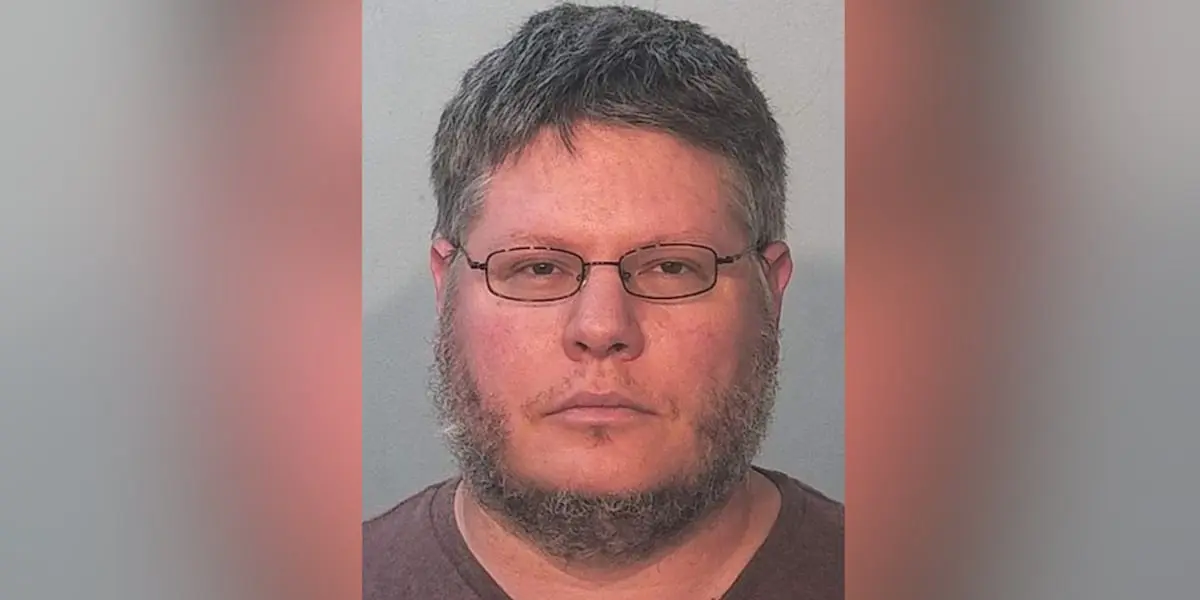
FORT WAYNE, Ind. — In what local judicial authorities are describing as a definitive stand against predatory crimes, an Allen County man has been handed the maximum possible prison sentence following his conviction on multiple felony counts of child molestation and sexual misconduct with a minor. Stephen Bush, 45, was condemned to a staggering 178 years in the custody of the Indiana Department of Correction after a jury returned a swift and unanimous guilty verdict.
The sentencing, handed down this week in an Allen County courtroom, concludes a harrowing multi-year journey toward justice that began when a brave survivor finally broke her silence regarding nearly a decade of sustained abuse. The case against Bush relied heavily on exhaustive forensic investigations, biological evidence tying the defendant directly to the crime scene, and the extraordinary resilience of the victim, who endured predatory trauma spanning her formative childhood years from the age of six until she reached 14.
Despite attempts by the defendant to evade accountability—including his conspicuous refusal to appear for his own trial last month—the judicial process pressed forward relentlessly in absentia. Prosecutors underscored that the maximum penalty reflects not only the severe statutory gravity of Bush’s offenses but also the calculated, predatory nature of his actions against a vulnerable child within her own home.
The successful prosecution was led by Allen County Deputy Prosecutors Tracy Heltz Noetzel and Emily Snyder, whose meticulous presentation of forensic findings and emotional testimony cemented a airtight case. As community leaders and law enforcement agencies reflect on the conclusion of this high-profile case, the narrative remains anchored by the staggering scale of the prison sentence—a clear message from the Allen County judiciary that crimes against children will be met with the absolute ceiling of the law.
Detailed Chronology of an Investigation
The timeline of the Stephen Bush case reveals a methodical, step-by-step pursuit of justice by local and state authorities, navigating complex forensic hurdles and the defendant’s deliberate attempts to subvert the judicial process.
2022: The Initial Disclosure
The investigation trace began in 2022 when the victim, then a teenager, made the courageous decision to report the systemic abuse she had suffered for the better part of a decade. According to court records and statements from the Allen County Prosecutor’s Office, the disclosures detailed a campaign of sexual exploitation that began when the victim was approximately six years old and escalated continuously until she reached the age of 14.
Upon receiving the initial report, specialized trauma-informed investigators and child advocacy professionals immediately stepped in to conduct forensic interviews. Recognizing the credibility and severity of the disclosures, law enforcement officials initiated a comprehensive evidence-gathering operation to substantiate the victim’s account through physical corroboration.
2023: Formal Charges Filed
Armed with preliminary statements, medical evaluations, and initial physical evidence, local investigators presented their findings to the Allen County Prosecutor’s Office. In 2023, formal criminal charges were officially filed against Stephen Bush.
The charging documents laid out a devastating array of allegations, including multiple counts of child molestation—felony offenses carrying severe statutory penalties under Indiana law—alongside related counts of sexual misconduct with a minor. The filing of charges marked the official transition from a preliminary police inquiry into a formal, high-stakes criminal prosecution, prompting the issuance of warrants and the initiation of pretrial discovery phases.
Late 2025 – Early 2026: Trial Preparations and Flight
As the case moved toward its scheduled courtroom adjudication, the legal pressure on Stephen Bush intensified. Realizing the weight of the evidence mounting against him—particularly the devastating forensic DNA profiles compiled by the Indiana State Police—Bush chose the path of avoidance.
In the weeks leading up to his trial last month, Bush systematically failed to appear for court dates, ultimately skipping out on the proceedings altogether. His absence was interpreted by the court as a willful flight from justice. However, under Indiana jurisprudence, a defendant’s decision to abscond does not halt the wheels of justice; the trial proceeded in absentia, allowing the state to present its evidence to a jury without the defendant present to disrupt or delay the proceedings.
The Trial and Verdict
During the trial, the jury was presented with an unyielding wall of evidence. Prosecutors walked the panel through the timeline of the abuse, the emotional toll documented by professional counselors, and, crucially, the irrefutable biological evidence recovered from the crime scene.
After deliberating on the totality of the evidence, the jury returned a decisive guilty verdict across all counts submitted to them. Bush was found guilty on four counts of child molestation and two counts of sexual misconduct with a minor.
Sentencing Week
With the guilty verdicts entered into the public record, the case moved to the sentencing phase this week. Given the absolute severity of the convictions, the multiplicity of the counts, and the egregious violation of trust, the state pressed for the maximum allowable punishment under the law. The presiding judge agreed entirely with the prosecution’s assessment, handing down a cumulative 178-year sentence designed to ensure that Stephen Bush will spend the remainder of his natural life behind bars.
Supporting Context & Metrics: The Forensic Breakthrough
While the emotional testimony of the survivor formed the bedrock of the prosecution’s narrative, the technical verification of the crime relied on cutting-edge forensic science executed by the Indiana State Police laboratory. In cases involving historical abuse where physical injuries may have healed or direct eyewitnesses are absent, forensic biology often provides the definitive bridge between allegation and conviction.
The Collection of Physical Evidence
During the initial phases of the investigation in 2022, crime scene technicians executed targeted evidence collection protocols. Among the items seized for laboratory analysis were the victim’s bed sheets—the primary surface where portions of the prolonged abuse allegedly took place.
Biological samples recovered from these linens were carefully packaged, preserved, and submitted to the Indiana State Police DNA laboratory for advanced serological and genetic screening. The objective was clear: extract any trace biological material, isolate the male DNA profile, and compare it directly against a reference sample obtained from Stephen Bush.
Statistical Certainty in Forensic DNA
The scientific results returned by the state laboratory left virtually zero room for reasonable doubt, dismantling any potential defense theories of alternative contamination or mistaken identity. According to expert testimony presented during the trial, forensic analysts isolated seminal material from the victim’s bed sheets and performed comprehensive short tandem repeat (STR) DNA profiling.
The statistical weight of the match was staggering. Investigators testified that the seminal material recovered from the linens was “at least 1 trillion times more likely” to have originated from Stephen Bush than from an unknown, unrelated individual picked at random from the general population.
In forensic terms, a one-in-a-trillion probability statistic transcends standard identification thresholds, effectively providing a mathematical certainty of contact. This extraordinary metric neutralized any attempts by the defense to challenge the physical linkage between the defendant and the crime scene, sealing the evidentiary foundation of the state’s case.
Official Statements and Legal Perspectives
The successful prosecution and subsequent record-setting sentence of Stephen Bush drew widespread commentary from the legal professionals who steered the case through the complexities of the Allen County judicial system.
Allen County Deputy Prosecutors Tracy Heltz Noetzel and Emily Snyder served as the architects of the state’s courtroom victory. Following the sentencing hearing, Noetzel addressed the media, directing her primary focus not toward the mechanics of the trial, but toward the resilience of the survivor who made the entire process possible.
"This outcome was made possible most importantly by the courage of the victim, who came forward after enduring nearly eight years of abuse," Noetzel stated during her post-sentencing remarks. "We are grateful for the strength and courage it took to come forward and for the many professionals who supported the victim and helped bring this case to justice."
Noetzel’s sentiments underscored a central tenet of modern victim-centered prosecution: that the emotional burden carried by survivors of prolonged childhood trauma is immense, and that the justice system relies entirely on their willingness to step forward, recount the unspeakable, and endure the rigors of a public trial.
Furthermore, prosecutors praised the collaborative framework that brought the case to a successful conclusion. The multi-agency approach—bridging local patrol officers, specialized child abuse detectives, state forensic scientists, and county prosecutors—demonstrated a seamless institutional response to crimes against children. The coordination between the Indiana State Police lab technicians and the Allen County Prosecutor’s Office ensured that every piece of physical evidence was meticulously cataloged, analyzed, and presented with maximum legal impact.
Legal analysts observing the Allen County circuit noted that the 178-year sentence sends an unmistakable signal to perpetrators of sexual violence. By aggressively pursuing maximum consecutive sentencing on multiple felony counts, the judiciary has affirmed that prolonged, calculated abuse of a child will be met with a penalty that effectively removes the offender from society permanently.
Future Outlook: Accountability and Systemic Impact
As Stephen Bush begins what is mathematically a life sentence within the Indiana Department of Correction, the ripples of this high-profile case will continue to resonate throughout the Fort Wayne community and the broader landscape of child advocacy in Indiana.
Ensuring Permanent Incarceration
With a cumulative sentence of 178 years, the immediate future outlook for the defendant is absolute confinement. Under Indiana sentencing guidelines and the specific structure of consecutive maximum terms handed down by the court, Bush will not be eligible for release within any realistic human lifespan. The ruling ensures that the community is permanently shielded from a repeat offender whose predatory behavior spanned nearly a decade. Moreover, his flight from trial and subsequent conviction in absentia serve as a cautionary precedent for defendants attempting to evade justice by refusing to face the court; the legal apparatus will proceed, and accountability cannot be dodged through physical absence.
Empowering Future Survivors
Beyond the punitive dimensions of the case, local advocates emphasize the profound societal impact of a public trial that ends in total accountability. Cases of prolonged childhood abuse—particularly those starting at a very young age and persisting into adolescence—frequently suffer from underreporting due to fear, manipulation, and the psychological dominance of the abuser.
The successful prosecution of Stephen Bush, anchored by the victim’s ultimate decision to speak out in 2022, stands as a powerful beacon for other survivors. Law enforcement and victim advocacy groups in Allen County hope that the massive sentence handed down this week will reinforce a vital message to any child or teenager suffering in silence: that systems exist to listen, believe, and fight relentlessly for justice, no matter how much time has passed.
Continued Vigilance in Forensic and Investigative Standards
Finally, the case highlights the critical importance of sustained funding and technological advancement in forensic science. The ability of the Indiana State Police DNA laboratory to generate a one-in-a-trillion statistical match from historical bedding material demonstrates why investments in evidence collection and genetic genealogy are indispensable to modern policing. As cold cases and complex historical abuse investigations continue to cross the desks of Indiana investigators, the blueprint established by the Bush trial—merging uncompromising forensic science with trauma-informed victim support—will serve as a gold standard for future prosecutions across the state.

0 Comments